


Apple Crisp Cinnamon Roll Casserole is built from the recorded ingredient list and ordered method below. Read each quantity as a working part of the recipe: keeping the listed ingredients measured, using the stated equipment, and following the sequence gives the clearest path to the intended texture and finish. This editorial guide preserves the original recipe facts while explaining the practical cues that help a home cook work carefully and confidently.
Apple Crisp Cinnamon Roll Casserole Ingredients
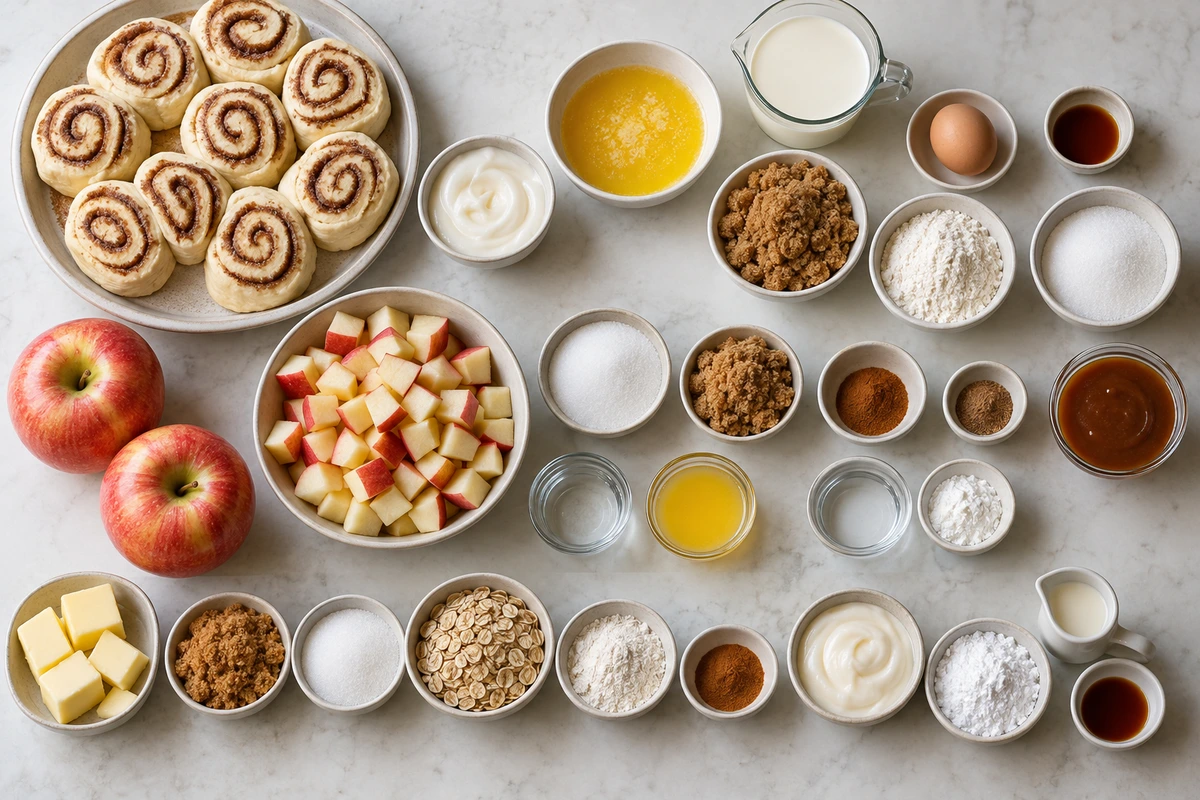
Cinnamon Roll Casserole Base: 1 can Grand cinnamon rolls with icing; 4 tablespoons unsalted butter, melted (divided use); ½ cup heavy cream; 1 egg; 1 teaspoon vanilla extract; 4 tablespoons brown sugar; 2 tablespoons all-purpose flour; 2 tablespoons granulated sugar; 2 teaspoons ground cinnamon; Store-bought caramel sauce (like Smuckers).
Apple Filling: 2 large Honeycrisp apples, cut into 1-inch cubes; ½ cup granulated sugar; ¼ cup brown sugar; 2 teaspoons ground cinnamon; ⅛ teaspoon ground nutmeg; ⅓ cup water; 1 tablespoon fresh squeezed orange juice; 2 tablespoons room temperature water (set aside); 2½ teaspoons cornstarch (set aside); ⅛ teaspoon vanilla extract.
Crumble Topping: 1 tablespoon unsalted butter; 1½ tablespoons brown sugar; 1 tablespoon granulated sugar; 1 tablespoon old-fashioned oats; 1 tablespoon all-purpose flour; ¾ teaspoon ground cinnamon.
Enhanced Icing: Icing from cinnamon roll can; 1 cup powdered sugar; 2 tablespoons half & half; ½ teaspoon vanilla extract.
If you enjoy this recipe, you may also like Crispy Feta Fried Eggs.
How to Make Apple Crisp Cinnamon Roll Casserole
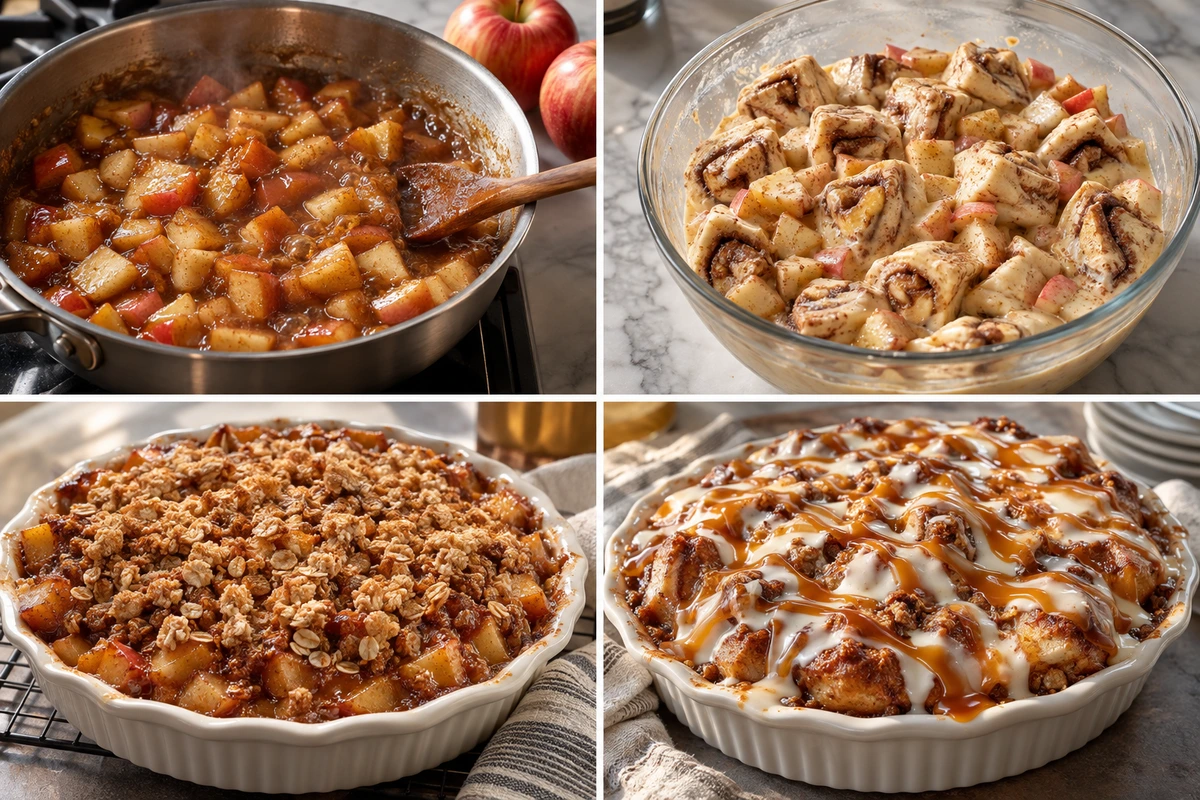
- Prepare Baking Dish: Grease a 10-inch pie pan or cast iron skillet with some of the melted butter. Preheat oven to 350°F (175°C).
- Make Apple Filling: In a medium saucepan over medium heat, combine the cubed apples, granulated sugar, brown sugar, cinnamon, nutmeg, water, and orange juice. Bring to a boil, stirring occasionally.
- Cook Apples: Once boiling, reduce heat slightly and cook for about 5 minutes. Stir and continue cooking for another 5 minutes, or until apples begin to soften but still hold their shape.
- Thicken Apple Filling: In a small bowl, mix the cornstarch with the 2 tablespoons of room temperature water until dissolved. Add this mixture to the apple filling and stir constantly. Cook for an additional 3-4 minutes, until the juices thicken slightly.
- Finish Apple Filling: Remove apple filling from heat and stir in the ⅛ teaspoon vanilla extract. Transfer to a heat-safe bowl and allow to cool slightly. Stir in ½ cup of caramel sauce.
- Prepare Cinnamon Sugar Mixture: In a bowl, combine the brown sugar, granulated sugar, and cinnamon from the casserole base ingredients. Mix well, then divide into two separate bowls.
- Prepare Butter: Divide the melted butter (from the casserole base ingredients) into two separate bowls.
- Make Custard Mixture: In one bowl, combine one portion of the melted butter, egg, heavy cream, vanilla extract, one portion of the sugar-cinnamon mixture, and the flour. Whisk until well combined.
- Prepare Cinnamon Rolls: Cut each cinnamon roll into 4 equal pieces. Add these pieces to the custard mixture and gently toss to coat each piece thoroughly.
- Combine with Apple Filling: Add the coated cinnamon roll pieces to the bowl with the apple filling, using only 2/3 of the liquid but all of the apple pieces. Gently mix to combine.
- Assemble Casserole: Pour the cinnamon roll and apple mixture into the prepared baking dish, spreading evenly.
- Add Topping: Mix the remaining melted butter with the remaining cinnamon-sugar mixture and pour evenly over the top of the casserole.
- Make Crumble: In a small bowl, combine all crumble ingredients and mix until crumbly. Sprinkle over the top of the casserole.
- Bake: Bake for 25-30 minutes, until the top is golden brown and the casserole is set in the center.
- Prepare Icing: While the casserole cools slightly, make the enhanced icing by combining the cinnamon roll icing with powdered sugar, half & half, and vanilla extract. Whisk until smooth.
- Finish and Serve: Pour the icing over the warm casserole, then drizzle with additional caramel sauce. Serve warm.
For storage details after serving, the USDA leftovers and food safety guidance.
Why the Order Matters
The order is useful because it separates preparation, mixing, shaping, cooking, and finishing into deliberate stages. Set out every measured ingredient before starting, use the stated temperature and timing from the source, and pause to check texture at each transition. Combine only as much as the instruction asks; aggressive mixing, early cutting, or changing the listed pan or vessel can alter the result. Use the visual cue in the recorded step alongside its time range, then let the finished dish rest, chill, cool, or set whenever the method specifies.
If you enjoy this recipe, you may also like Small Batch Pistachio Cream Cinnamon Rolls.
Critical Visual and Timing Cues
Work with clean bowls and measured portions so the recipe remains repeatable. Keep wet and dry components separate until the stated joining point. If the source calls for folding, use a broad gentle motion rather than beating; if it calls for chilling, baking, or cooling, allow the full recorded interval. Check colour, firmness, and texture at the point named in each instruction instead of adding unlisted ingredients. These small decisions preserve the intended balance without changing the verified formula.
Serving and Storage
Serve the finished recipe in the form and temperature directed by the source. Cool or chill it fully before storage when the method calls for that step, and keep leftovers covered in an appropriate container. The exact ingredients and quantities remain the reference point; substitutions should only be made where the original recipe explicitly permits them. Use sensible food-safety handling for dairy, eggs, or other perishable ingredients. Present each portion neatly and enjoy it promptly for the best texture.
Details Worth Preserving
The new ingredient photograph and chronological 2×2 process photograph support the written method without replacing it. The current hero image remains unchanged. The earlier repeated body image is excluded, and a separate original image from the source record is retained as the third body image. Before serving, review the finished texture against the final cue in the original instruction rather than relying on an arbitrary clock alone. Keep surfaces clean, portion tools ready, and perishable ingredients appropriately chilled. If you make the recipe ahead, complete every stated cooling or setting stage before covering it. Wash measuring tools promptly and return ingredients to proper storage after use. When portions are shaped or served, work steadily and keep the serving surface dry and clean. A careful final check of colour, aroma, firmness, and temperature helps preserve the recipe's intended result without adding a new ingredient or changing its method. Direct responsive WebP copies preserve orientation and aspect ratio without crop, upscaling, transformations, or a Worker deployment.
Recorded Recipe Tips
- Using room temperature ingredients helps the custard come together smoothly.
- The apple filling can be made a day ahead and refrigerated.
- Leftovers can be refrigerated for 3-5 days in a covered container.
- This recipe transforms simple canned cinnamon rolls into an impressive breakfast or brunch dish.

Conclusion
Apple Crisp Cinnamon Roll Casserole makes 1 10-inch casserole in 45 recorded minutes. Preserve every listed quantity, temperature, timing cue, and ordered instruction for the intended result.
Frequently Asked Questions
- → How many servings does Apple Crisp Cinnamon Roll Casserole make?
It makes 1 10-inch casserole and serves 8.
- → How long does Apple Crisp Cinnamon Roll Casserole take?
The recipe records 20 minutes of preparation, 25 minutes of cooking, and 45 minutes total.
- → What is the best way to keep Apple Crisp Cinnamon Roll Casserole consistent?
Measure every listed ingredient, follow the ordered instructions, and use the stated temperature and timing cues rather than adding unrecorded changes.
- → Why should the recorded cooling or resting directions be followed?
Those directions are part of the method and help the finished recipe reach the texture and structure intended by the source.