

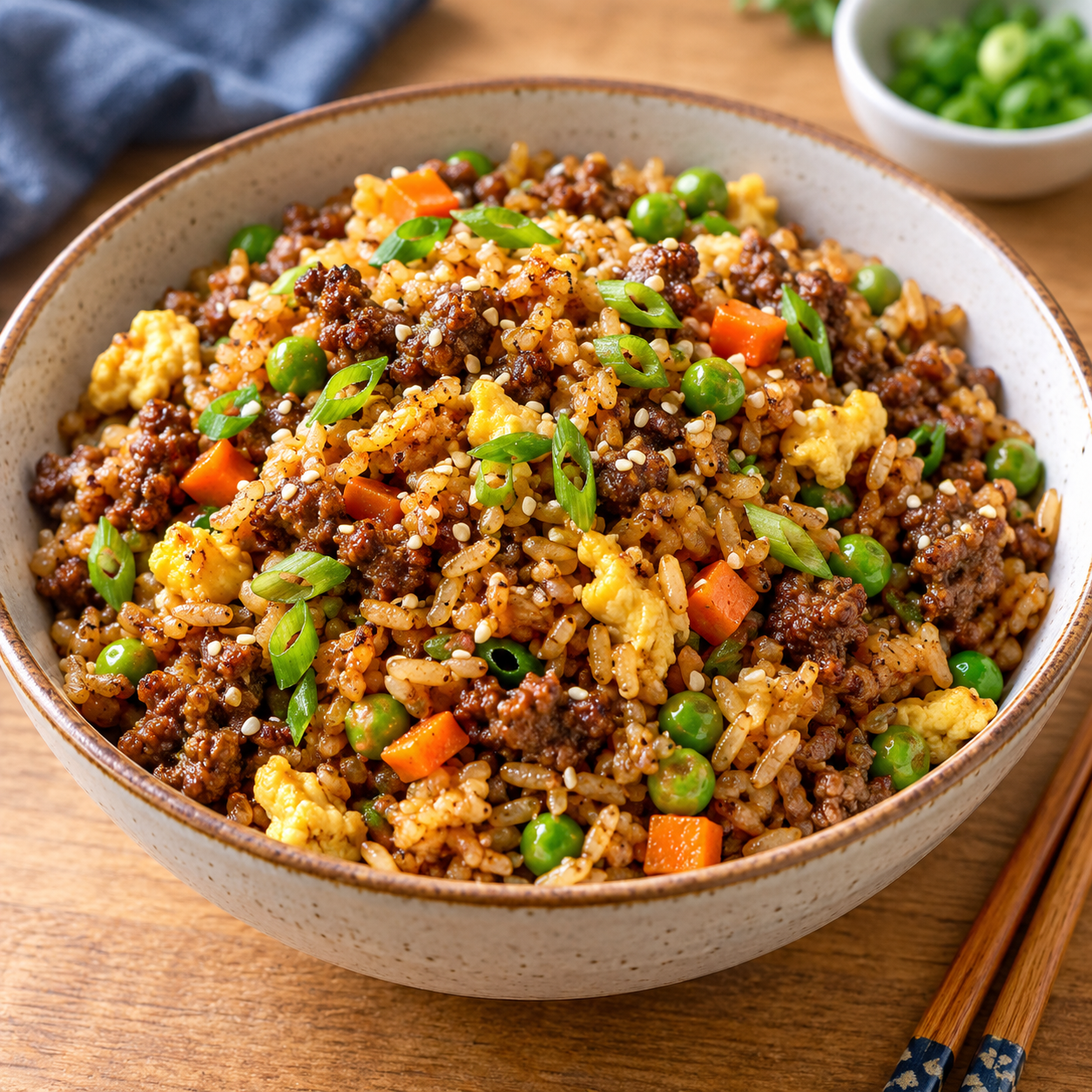
Ground beef fried rice is the dinner that rescues a fridge full of odds and ends: a scoop of leftover rice, half a bag of frozen peas and carrots, and whatever ground beef is in the freezer. It cooks in one pan, in under 20 minutes, and tastes like something from a takeout container.
The dish works because of a few small habits, not a long ingredient list. Cold, day-old rice fries up dry and separate instead of clumping into mush, and a hot pan gives the beef and rice some real char. Get those two things right and the rest is just stirring.
This version leans savory and a little sweet. It's built on garlic, ginger, and a soy-based sauce. Scrambled egg and vegetables get folded through at the end, and the whole bowl comes together as a full meal with no sides required.
The Lineup for a Proper Fried Rice
Everything here is ordinary pantry and freezer food, which is the point. The only ingredient worth planning for ahead of time is the rice. Cook it the night before, or spread fresh rice out to cool and dry for about an hour, so it fries instead of steaming.
If you enjoy this recipe, you may also like Peanut Butter and Jelly Sloppy Joes.
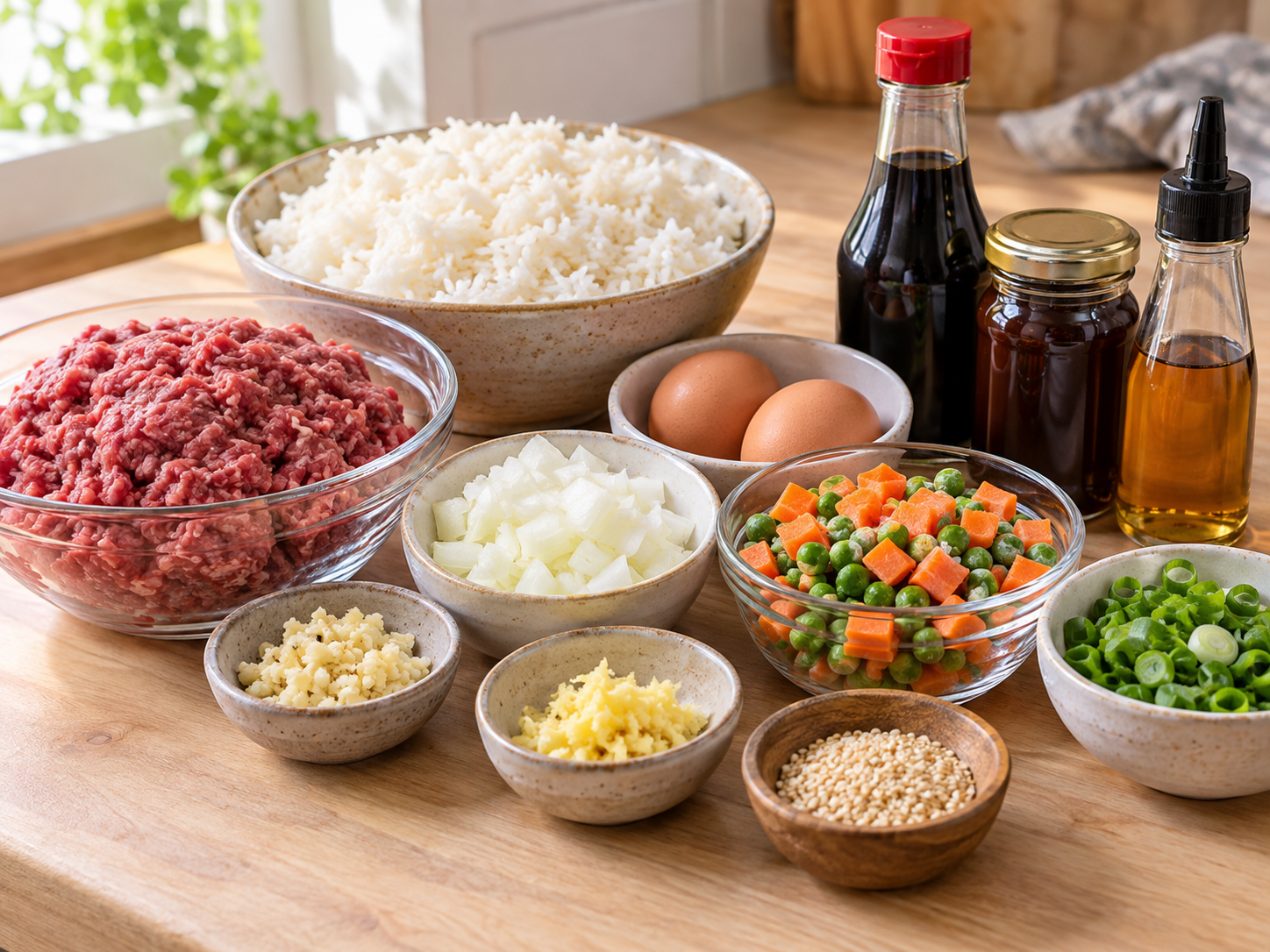
- Ground beef. 85% lean holds its juiciness without flooding the pan with grease.
- Neutral oil. Vegetable or avocado oil for high-heat searing without burning.
- Yellow onion. Diced small, it sweetens as it cooks and builds the base flavor.
- Garlic and ginger. Fried briefly until fragrant, they carry the whole dish.
- Cold, day-old rice. The grains stay separate and pick up a light char instead of turning gummy.
- Eggs. Scrambled soft and folded through for richness and small pockets of protein.
- Frozen peas and carrots. No chopping required, and they thaw in minutes in the hot pan.
- Soy sauce. The backbone of the sauce, salty and deeply savory.
- Oyster sauce. Optional, but it adds a glossy, almost caramel depth.
- Sugar. A small amount balances the saltiness and helps the rice caramelize.
- Toasted sesame oil. Stirred in at the end for a nutty finishing aroma.
- Green onions. Sliced and added raw at the end for color and bite.
- Salt and black pepper. Season the beef directly. The sauce handles the rest.
- Sesame seeds. Optional garnish for crunch and a finished look.
For storage details after serving, the USDA leftovers and food safety guidance.
How the Bowl Comes Together
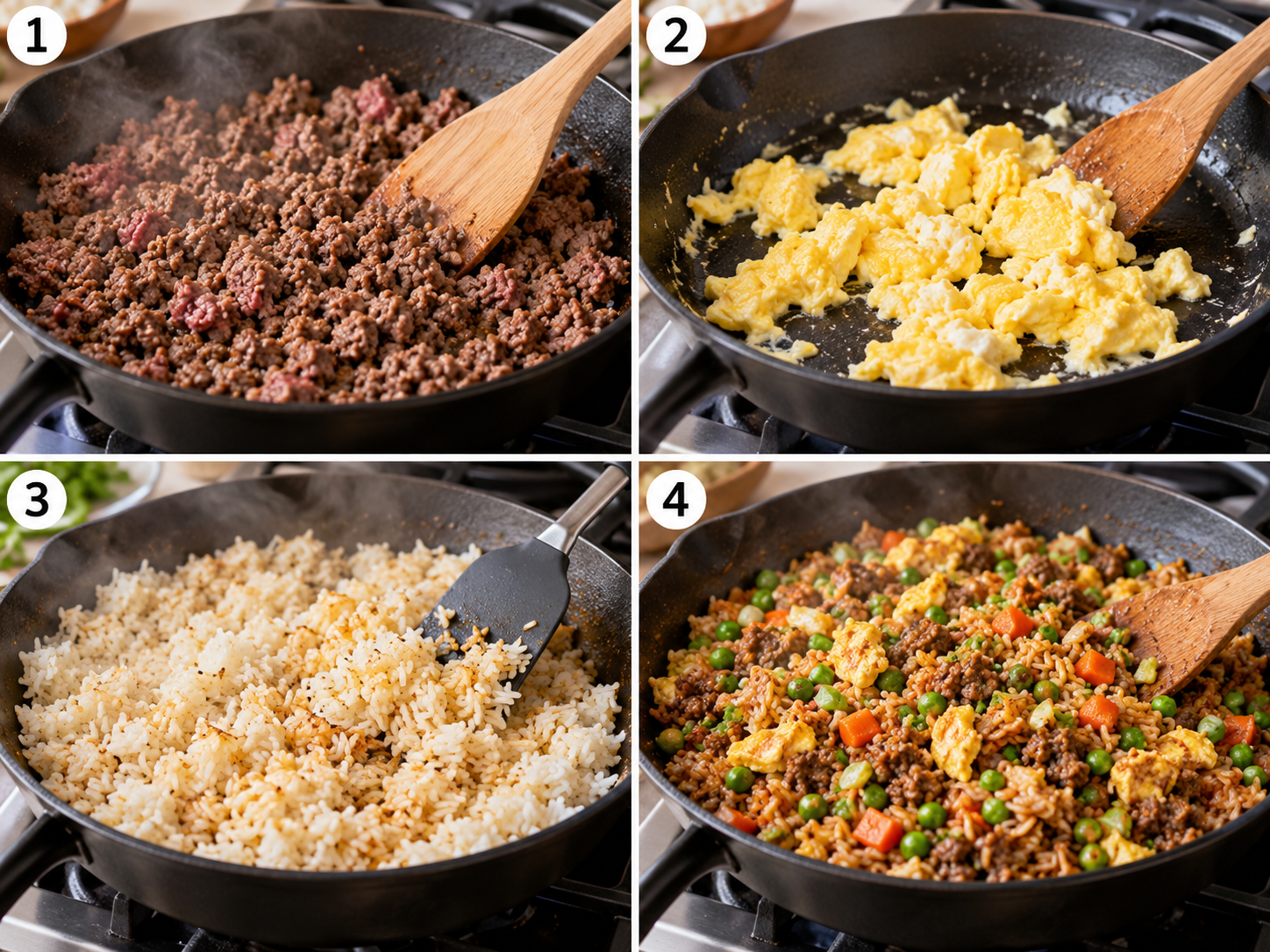
- Brown the beef. Heat the oil in a large skillet or wok over medium-high, add the ground beef, and season with salt and pepper. Break it apart as it cooks until no pink remains, then move it to a bowl, leaving a thin layer of fat in the pan.
- Scramble the eggs. Pour the beaten eggs into the same hot pan and scramble quickly until just set but still soft. Scoop them out with the beef.
- Soften the aromatics. Add the onion, garlic, ginger, and frozen peas and carrots to the pan. Cook for two to three minutes, stirring often, until the onion turns translucent and the vegetables have thawed through.
- Fry the rice. Turn the heat to high, add the cold rice, and break up any clumps with the back of a spatula. Spread it across the pan and let it sit undisturbed for a minute before stirring, so the bottom layer picks up some color.
- Season everything. Whisk the soy sauce, oyster sauce, and sugar together, then pour it over the rice. Return the beef and egg to the pan and toss everything together until evenly coated and heated through, about two minutes.
- Finish and serve. Pull the pan off the heat, drizzle with sesame oil, and stir in the green onions. Taste and adjust the salt, then spoon into bowls and top with sesame seeds.
If you enjoy this recipe, you may also like Queso Salsa Chicken Rice.
The Secret Is Day-Old Rice
Fresh rice straight off the stove is too wet for fried rice. The grains are still coated in surface starch and moisture, so when they hit a hot pan they steam and clump instead of frying separately. Rice that has sat in the fridge overnight loses that extra moisture and firms up, which is why most fried rice recipes call for leftovers on purpose.
If you're starting from scratch, cook the rice a few hours ahead and spread it in a thin layer on a sheet pan. Let it cool uncovered before refrigerating. Breaking up the cold rice with your hands before it goes into the pan also helps, since a spatula alone can leave stubborn clumps that never fully separate.
Don't Crowd a Hot Pan
A wok or a wide skillet matters here. If the pan is too small, the rice piles up instead of spreading into a thin layer, and it steams rather than fries. Work in batches if your pan is on the smaller side, or use the largest skillet you own.
Swap in What You Already Have
Ground beef works well here. Ground pork, chicken, or even chopped leftover steak all fry up the same way too. For a vegetarian version, skip the meat and double the egg, or add cubed tofu that's been pressed and pan-fried until golden first.
The vegetables are just as flexible. Swap the peas and carrots for diced bell pepper, corn, or whatever vegetable is wilting in the crisper drawer. Just make sure anything raw and dense, like carrots or broccoli, gets a couple of extra minutes in the pan before the rice goes in. That way it actually cooks through.
Cooking the Beef the Safe Way
Ground beef needs to reach a higher temperature than a steak or roast, because grinding mixes any surface bacteria throughout the meat. The safe minimum is 160°F (71°C) all the way through. Color alone isn't reliable. Beef can turn brown before it's actually done, and it can also stay slightly pink after it's safe. A quick-read thermometer check on ground beef safety is the easiest way to know for sure, especially the first few times you make this.
In practice, that means cooking the beef until it's fully browned with no raw or translucent patches left, breaking it into small pieces so thick clumps don't hide an undercooked center.
Storing and Reheating Leftovers
Fried rice keeps well, but rice specifically needs to be cooled quickly rather than left out. Spread leftovers in a shallow container so they cool within about an hour, then refrigerate and eat within two days. According to food safety guidance on handling cooked rice, rice that sits at room temperature too long can harbor heat-resistant toxins that reheating won't destroy, so the cooling step matters more than it does for most leftovers.
Frequently Asked Questions
- → Can I use rice straight out of the fridge, cold?
Yes, that's actually the goal. Cold rice separates into individual grains much more easily than warm or fresh rice, and it fries instead of steaming. Break up any large clumps with your hands before it goes into the pan for the best texture.
- → Can I use a different protein instead of ground beef?
Ground pork, ground chicken, or diced leftover steak all work the same way. For a meatless version, skip the meat and add extra scrambled egg or pan-fried cubed tofu instead.
- → How should I store and reheat the leftovers?
Cool the rice quickly, ideally within an hour, then refrigerate in a shallow airtight container and eat within two days. Reheat in a skillet with a splash of water or oil until it's steaming hot all the way through, since rice should only be reheated once.
- → What kind of rice works best for fried rice?
Long-grain rice like jasmine or regular long-grain white rice works best because the grains stay firmer and separate more easily than short-grain or sticky rice. Brown rice is a fine substitute if you prefer more fiber, though the texture will be slightly chewier.
- → Can I make this gluten-free?
Swap the soy sauce and oyster sauce for gluten-free tamari and a gluten-free stir-fry sauce, both widely available. Double check the label on oyster sauce specifically, since some brands use wheat as a thickener.
- → Why did my fried rice turn out mushy instead of fluffy?
The most common cause is using fresh, warm rice instead of cold, day-old rice. A pan that's too small or not hot enough is the other usual culprit, since the rice ends up steaming in its own moisture rather than frying.