


Classic banana bread turns very ripe bananas into a moist, tender loaf with a lightly caramelized crust. Melted butter supplies richness, sour cream keeps the crumb soft, and small pieces of banana leave natural pockets of fruit flavor.
The recipe makes one loaf, about 12 slices, with 10 minutes of preparation and 50 to 60 minutes of baking. Accurate flour measurement, gentle mixing, and a full cooling period prevent the dense or gummy texture that can trouble quick breads.
Ingredients for Classic Banana Bread
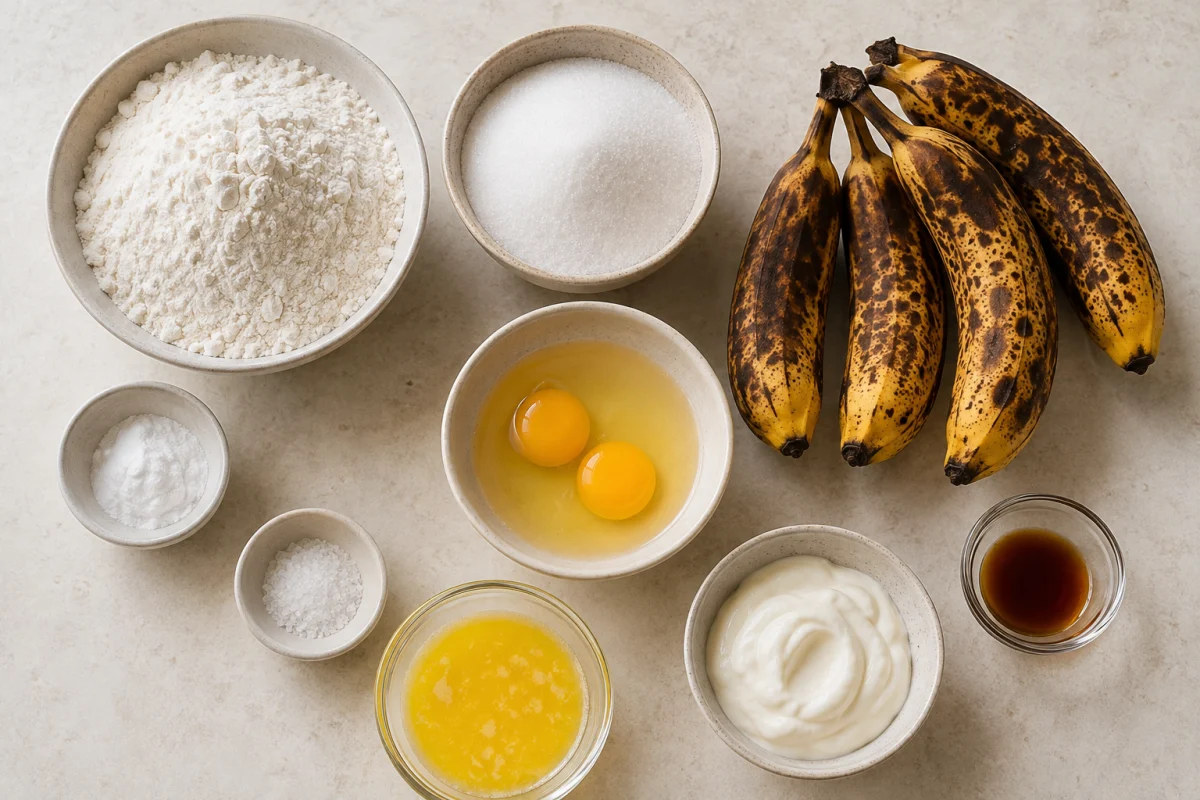
Use 2 cups all-purpose flour, 1 teaspoon baking soda, and 1/2 teaspoon salt. The wet mixture needs 3 to 4 very ripe bananas, mashed to about 1 1/4 cups, 3/4 cup granulated sugar, 2 large eggs, 6 tablespoons melted and cooled unsalted butter, 1/3 cup sour cream, and 1 teaspoon vanilla extract.
Plain Greek yogurt can replace sour cream in the same quantity. Choose bananas covered with brown spots; firm yellow fruit has less sweetness and weaker aroma.
If you enjoy this recipe, you may also like Mozzarella Stuffed Soft Pretzels.
How to Make Banana Bread
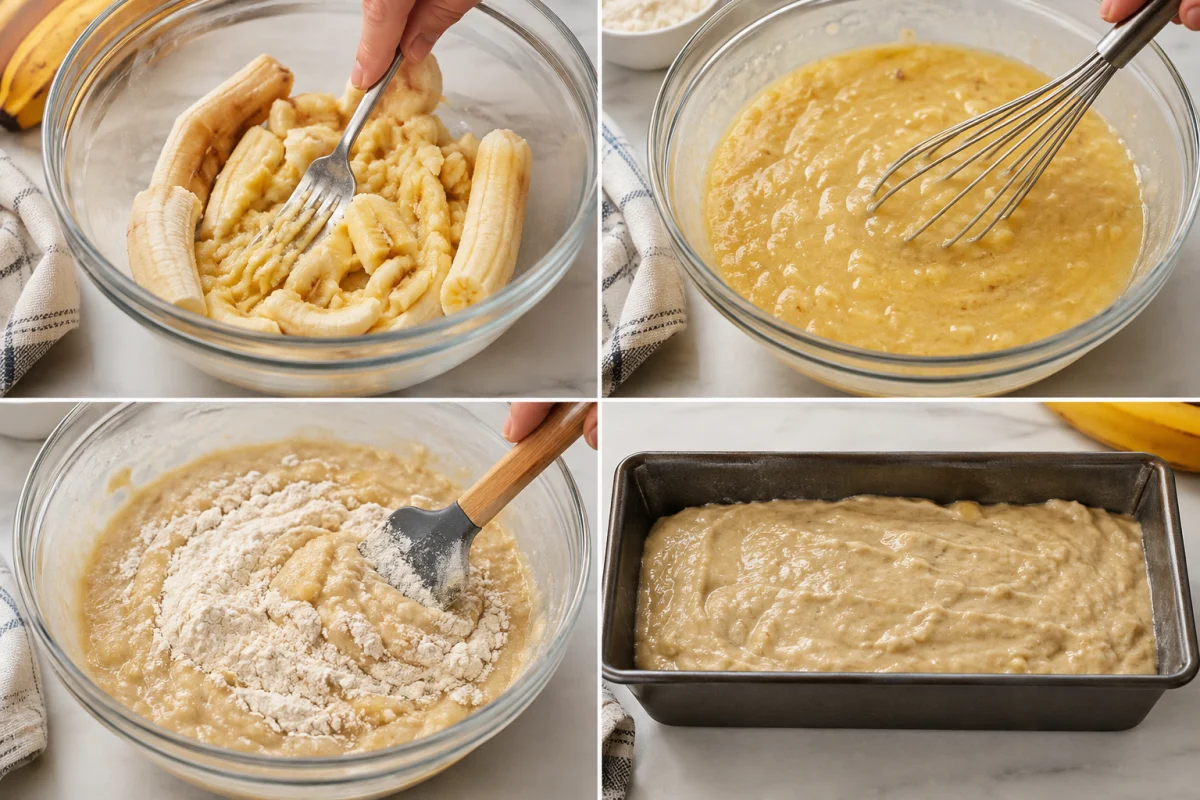
- Prepare. Heat the oven to 350°F and grease an 8 1/2-by-4 1/2-inch loaf pan.
- Combine dry ingredients. Whisk flour, baking soda, and salt in a medium bowl.
- Mash bananas. Mash ripe bananas in a large bowl, leaving a few small pieces.
- Add wet ingredients. Whisk in sugar, eggs, cooled butter, sour cream, and vanilla.
- Fold. Add the flour mixture and stir gently just until no dry pockets remain.
- Bake. Smooth batter in the pan and bake 50 to 60 minutes.
- Cool. Rest 15 to 20 minutes in the pan, remove to a rack, and wait at least one hour before slicing.
For storage details after serving, the USDA leftovers and food safety guidance.
Use Truly Ripe Bananas
Bananas are ready when their skins have many brown spots and the fruit feels soft. At this stage starch has converted to sugar, creating stronger flavor and helping the loaf retain moisture. Completely black skins are acceptable if the flesh smells sweet and shows no mold.
Measure the mashed fruit rather than relying only on the count, since banana sizes differ. More than 1 1/4 cups can make the center heavy and slow to bake.
If you enjoy this recipe, you may also like Bourbon Maple Bacon Cinnamon Rolls.
Measure Flour Without Packing
Stir the flour in its container, spoon it into the measuring cup, and level the top. Scooping directly compresses extra flour and produces dry bread. A scale is even more reliable; two cups generally weigh about 240 grams with the spoon-and-level method.
Whisk baking soda and salt throughout the flour so no salty or bitter pockets remain. Fresh baking soda is essential for a well-risen loaf.
Cool the Melted Butter
Melt butter gently and let it stand until warm rather than hot. Hot butter can partially cook the eggs or thin the sour cream. It should remain liquid so it distributes evenly through the mashed banana.
Unsalted butter allows control over seasoning. If using salted butter, reduce the added salt slightly. Neutral oil can replace butter for an even softer loaf, but it will not provide the same rich flavor.
Build the Wet Mixture First
Mash bananas before adding other ingredients so the texture is easy to control. Leave pea-size pieces for natural fruit pockets, or mash more smoothly for a uniform crumb. Whisk in sugar and eggs, followed by cooled butter, sour cream, and vanilla.
Room-temperature eggs and sour cream combine more readily. If they are cold, the melted butter may firm into small beads; those beads usually melt in the oven but make mixing less even.
Fold the Batter Gently
Add the dry mixture all at once and use a broad spatula. Cut down through the center, scrape along the base, and lift batter over the top while rotating the bowl. Stop as soon as the last streak of flour disappears.
Scrape batter into the prepared pan and smooth the top lightly. Do not press it down. Tap the pan once on a folded towel only if a large air pocket is visible.

Choose the Right Loaf Pan
An 8 1/2-by-4 1/2-inch metal pan produces a taller loaf and the expected 50-to-60-minute bake. A 9-by-5-inch pan gives a wider, shorter loaf that may finish earlier. Glass and dark metal transfer heat differently, so begin checking ahead of schedule.
Grease the corners well and line the long sides with a parchment sling for easy lifting. Leave enough paper above the rim to hold securely.
Test the Center, Not the Edge
Insert a long toothpick or thin skewer into the highest point near the center. It should come out clean or with a few moist crumbs, not wet batter. The internal temperature is generally about 200°F to 205°F when done.
If the top browns before the center sets, place foil loosely over the loaf for the final 10 minutes. Do not seal it tightly, which traps steam and softens the crust.
Cool Before Slicing
Leave the loaf in its pan for 15 to 20 minutes so the structure firms, then lift or turn it onto a rack. Cooling on all sides lets steam escape instead of collecting underneath.
Wait at least one hour before cutting. Warm banana bread smells inviting but its crumb is still setting; early slices compress and may look gummy even when the loaf is fully baked.
Optional Additions
Fold in up to 3/4 cup chopped walnuts, pecans, or chocolate chips after most flour has disappeared. Toast nuts first for stronger flavor and cool them before adding. Tossing chips with a teaspoon of the measured flour can reduce sinking.
Cinnamon, nutmeg, or a mixture of brown and granulated sugar can deepen the flavor. Keep the total sugar quantity at 3/4 cup so the loaf structure remains balanced.
Storage and Freezing
Cool the bread completely, then wrap it tightly and store at room temperature for up to three days. Refrigeration extends storage to about one week but firms the butter, so warm a slice briefly before serving.
Freeze the whole loaf or individual slices for up to three months. Wrap first in plastic or parchment and then in a freezer-safe bag. Thaw while covered at room temperature so condensation stays on the wrapping rather than the crust.
Troubleshooting
- Dense loaf: Measure flour lightly and stop stirring once combined.
- Gummy center: Limit mashed banana to 1 1/4 cups and bake until the center tests clean.
- Dry bread: Begin checking at 50 minutes and avoid packing flour.
- Sunken middle: Use fresh baking soda and do not open the oven early.
- Crumbly slices: Let the loaf cool for at least one hour.
Conclusion
Whisk flour, baking soda, and salt. Mash ripe bananas, then mix in sugar, eggs, cooled melted butter, sour cream, and vanilla. Fold in dry ingredients only until combined, bake at 350°F for 50 to 60 minutes, and cool completely before slicing.
Frequently Asked Questions
- → How ripe should bananas be for banana bread?
Use soft bananas with many brown spots. Measure about 1 1/4 cups mashed fruit for the best flavor and structure.
- → Can Greek yogurt replace sour cream in banana bread?
Yes. Plain Greek yogurt can replace sour cream in the same 1/3-cup quantity.
- → Why is my banana bread gummy in the middle?
It may contain too much banana, be underbaked, or have been sliced while warm. Measure the fruit, test the center, and cool fully.
- → Can banana bread be frozen?
Yes. Wrap the whole cooled loaf or individual slices tightly and freeze for up to three months.