


Blue velvet swirl pound cake combines a vanilla butter cake with a naturally blue portion flavored with butterfly pea powder and a small amount of cocoa. Layering and lightly swirling the two batters creates a dramatic pattern inside a classic Bundt shape.
This is a dense cake baked at the unusually low temperature of 315°F for even cooking. Room-temperature ingredients, restrained flour mixing, careful pan preparation, and complete cooling protect the fine crumb and help the cake release cleanly.
Ingredients for Blue Velvet Swirl Pound Cake
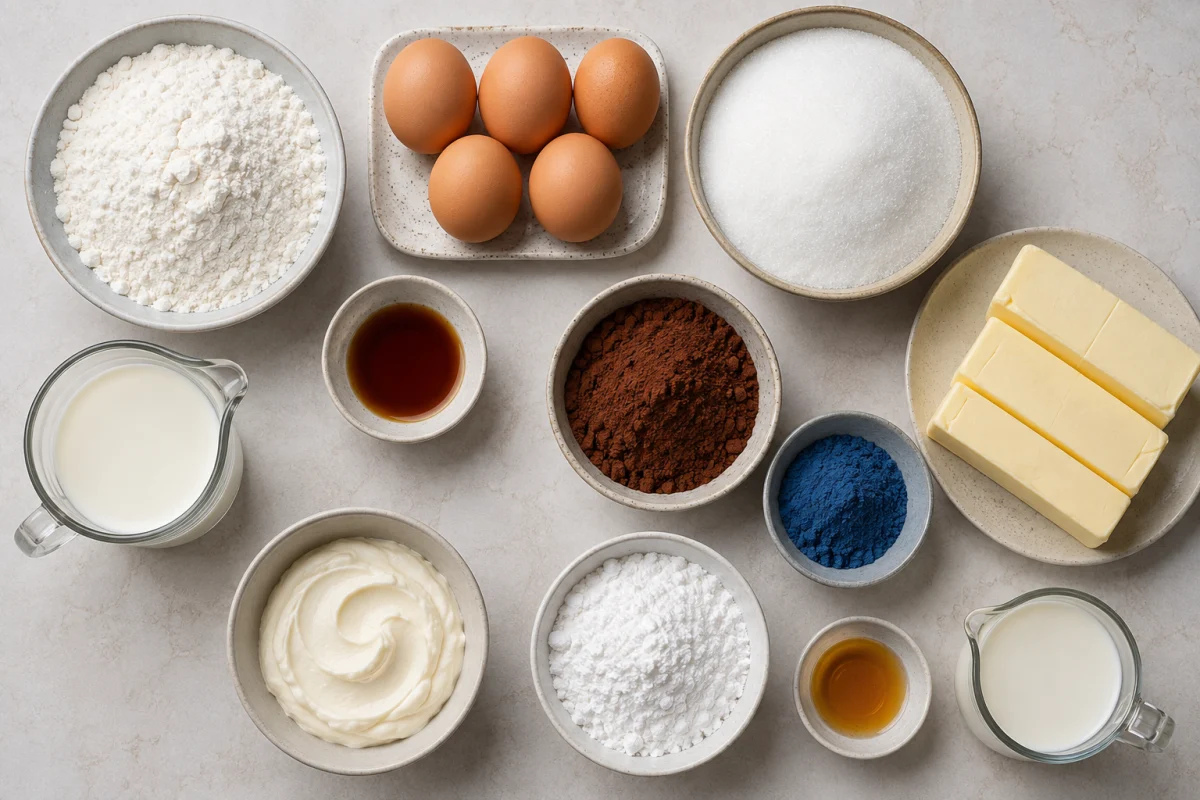
For the cake, use 3 cups cake flour, 5 room-temperature large eggs, 2 1/2 cups granulated sugar, 3 sticks or 1 1/2 cups room-temperature salted butter, 2 teaspoons vanilla extract, and 1 cup room-temperature heavy cream. Color one cup batter with 1 teaspoon unsweetened cocoa and 2 teaspoons butterfly pea powder.
The optional glaze uses 3 cups confectioners' sugar, 1/2 teaspoon vanilla, 1 teaspoon almond extract, and 3 to 4 tablespoons whole milk. Store-bought cream cheese frosting can replace it.
If you enjoy this recipe, you may also like Chick-fil-A Banana Pudding.
How to Make Blue Velvet Swirl Pound Cake
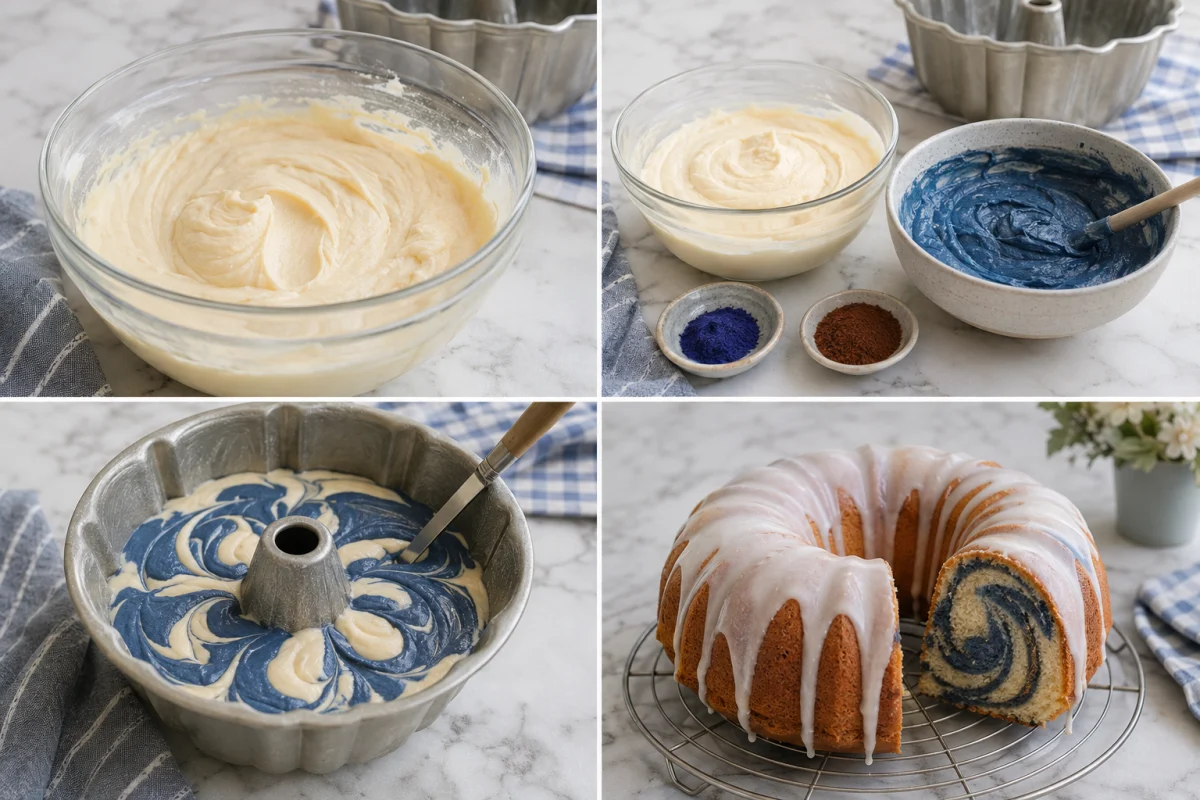
- Preheat. Heat the oven to 315°F and prepare a 10- or 12-cup Bundt pan thoroughly.
- Cream butter. Beat room-temperature butter for about 2 minutes until light.
- Add sugar and eggs. Cream in sugar, then add eggs one at a time. Mix in vanilla.
- Add flour. Mix in cake flour only until no dry streaks remain.
- Fold in cream. Use a spatula to incorporate the heavy cream gently.
- Color a portion. Remove 1 cup batter and mix it with cocoa and butterfly pea powder.
- Layer and swirl. Add half the plain batter to the pan, drop in blue batter, cover with remaining plain batter, and make a few gentle knife passes.
- Bake. Bake about 1 hour 15 minutes, until a tester comes out clean.
- Cool and glaze. Rest in the pan 15 to 20 minutes, invert, cool completely, and add glaze.
For storage details after serving, the USDA leftovers and food safety guidance.
Use Room-Temperature Ingredients
Butter, eggs, and heavy cream should all lose their refrigerator chill. Ingredients at a similar temperature emulsify smoothly and reduce the risk of a curdled batter.
The butter should bend and accept a fingerprint but should not look greasy. Warm eggs in their shells in lukewarm water for several minutes if necessary, and measure the cream early.
If you enjoy this recipe, you may also like Peanut Butter Snowballs.
Prepare the Bundt Pan Carefully
Use a 10- or 12-cup Bundt pan with a clean, unscratched surface. Coat every ridge, corner, and the center tube with baking spray containing flour, or brush with softened butter and dust with flour.
Turn the pan under good light to find dry spots. Excess spray can pool and create a dark crust, but missed crevices can tear the finished design.
Cream the Butter, Then Add Sugar
Beat the butter alone for about two minutes, stopping to scrape the bowl. Add the sugar and continue just until the mixture is evenly lighter and fluffy.
Add eggs one at a time, mixing until each disappears before the next. Scrape the bottom and sides often so dense butter does not remain hidden beneath the airy mixture.
Handle Cake Flour Gently
Cake flour has less protein than all-purpose flour and supports a finer pound-cake crumb. Spoon it into measuring cups and level, or weigh it for consistency.
Add the flour on low speed and stop immediately when dry streaks disappear. Continued mixing develops gluten and can make the cake firm or rubbery.

Fold in Heavy Cream
Add the room-temperature heavy cream after the flour and fold with a broad spatula. Reach beneath the batter and turn the bowl between strokes until no pale liquid remains.
Folding rather than high-speed mixing adds moisture and richness while protecting the cake's structure. The finished batter should be thick, smooth, and scoopable.
Create the Blue Batter
Measure one cup of plain batter into a separate bowl. Sift the cocoa and butterfly pea powder over it so no colored lumps remain, then fold until the shade is even.
Butterfly pea powders vary in intensity. The baked shade may soften, but adding substantially more powder can change flavor and absorb extra moisture.
Layer for a Defined Swirl
Spoon half the plain batter around the prepared pan and level it lightly. Place separate scoops of blue batter around the ring rather than one continuous stripe, then cover with the remaining plain batter.
Insert a table knife partway through the batter and make two or three curved passes. Avoid scraping the prepared pan surface.
Bake Low and Slow
Bake at 315°F for about 1 hour 15 minutes. The lower temperature gives the dense center time to cook before the thick outer crust becomes too dark.
Test in several places near the center ring without striking the pan. A skewer should come out clean or with dry crumbs. Wet batter requires additional time in five-minute increments.
Cool and Release
Rest the cake in its pan for 15 to 20 minutes. Too short a rest leaves it fragile; much longer can allow sugar to adhere to the pan.
Loosen the accessible edges gently, place a rack over the pan, and invert in one confident movement. Let the cake cool completely before glazing.
Mix the Optional Glaze
Whisk confectioners' sugar with vanilla, almond extract, and three tablespoons milk. Add the final tablespoon gradually until the glaze falls in a thick ribbon.
Pour over a fully cool cake so it remains opaque. A warm cake melts the glaze into a translucent coating and can hide the ridges.
Storage and Troubleshooting
Store the uncut cake covered at room temperature for up to three days. Refrigerate if using perishable cream cheese frosting. Freeze well-wrapped unglazed slices for up to two months.
- Cake sticks: Coat every Bundt-pan ridge.
- Swirl disappears: Use fewer knife passes.
- Texture is tough: Stop mixing after flour disappears.
- Center is wet: Continue baking in short increments.
- Glaze turns clear: Cool the cake completely first.
Conclusion
Cream room-temperature butter, sugar, eggs, and vanilla, then mix in cake flour briefly and fold in heavy cream. Color one cup batter with cocoa and butterfly pea powder. Layer and gently swirl the batters in a prepared Bundt pan, bake at 315°F for about 75 minutes, cool, release, and glaze.
Frequently Asked Questions
- → What makes the cake blue?
Butterfly pea powder provides the natural blue color, while a teaspoon of cocoa deepens the velvet tone.
- → Why is the oven set to 315°F?
The low temperature helps the dense pound cake cook evenly before its outer crust becomes too dark.
- → How do I prevent Bundt cake from sticking?
Coat every ridge and the center tube with baking spray containing flour, then invert after a 15- to 20-minute rest.
- → Can blue swirl pound cake be frozen?
Yes. Freeze unglazed slices tightly wrapped for up to two months and thaw them covered at room temperature.