


Easy blueberry Danish uses refrigerated crescent dough to create sixteen fruit-and-cream-cheese pastries in about 30 minutes. Each square holds a diagonal ribbon of tangy filling and blueberries, then two corners fold across the center for a simple open shape.
Cold dough, softened cream cheese, and restrained portions make assembly clean. A coarse sugar topping adds crunch, while a thin glaze goes on only after the pastries cool.
Ingredients for Blueberry Danish
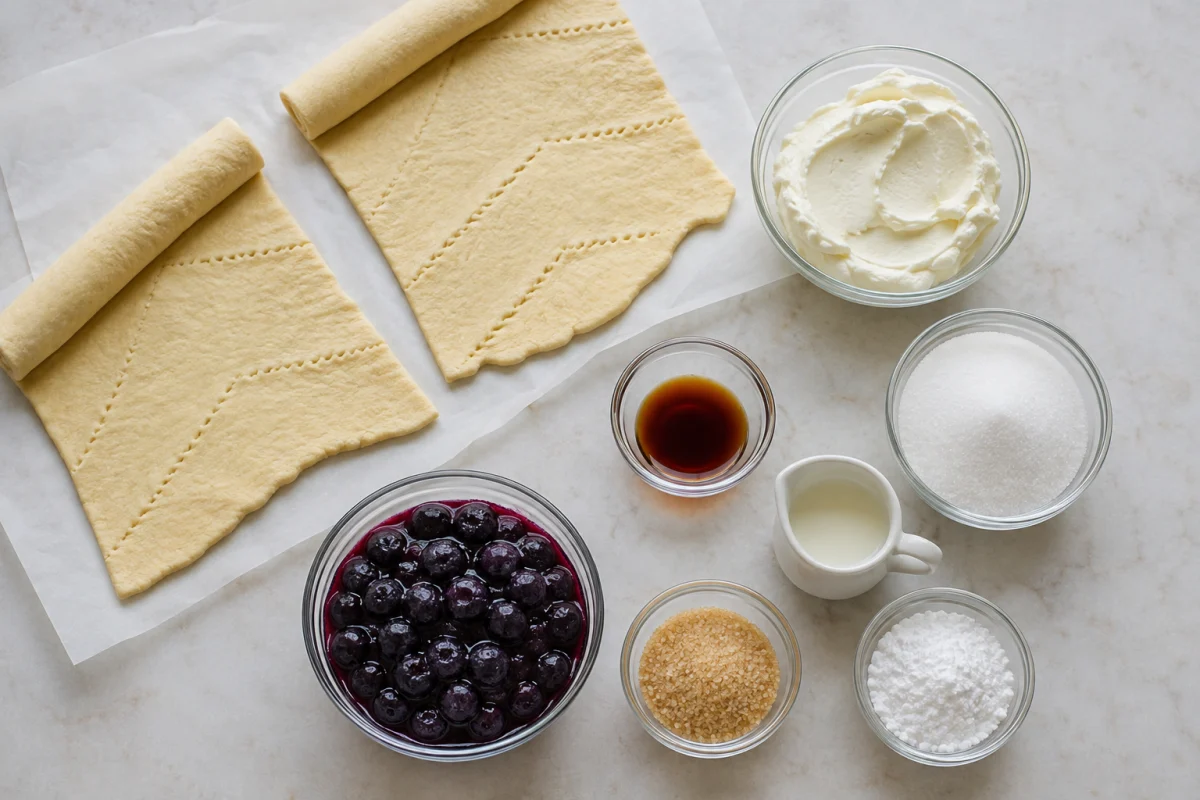
Use two 8-ounce cans refrigerated crescent rolls or two crescent sheets, 8 ounces softened cream cheese, 1/4 cup granulated sugar, 1 teaspoon vanilla, 1 1/4 cups thick blueberry fruit filling, and 3 to 4 tablespoons turbinado sugar. For glaze, combine 3/4 cup powdered sugar with about 3 teaspoons milk.
Crescent sheets save seam-sealing time, but standard rolls work when perforations are pressed closed.
If you enjoy this recipe, you may also like Blueberry Cinnamon Roll Casserole.
How to Make Easy Blueberry Danish
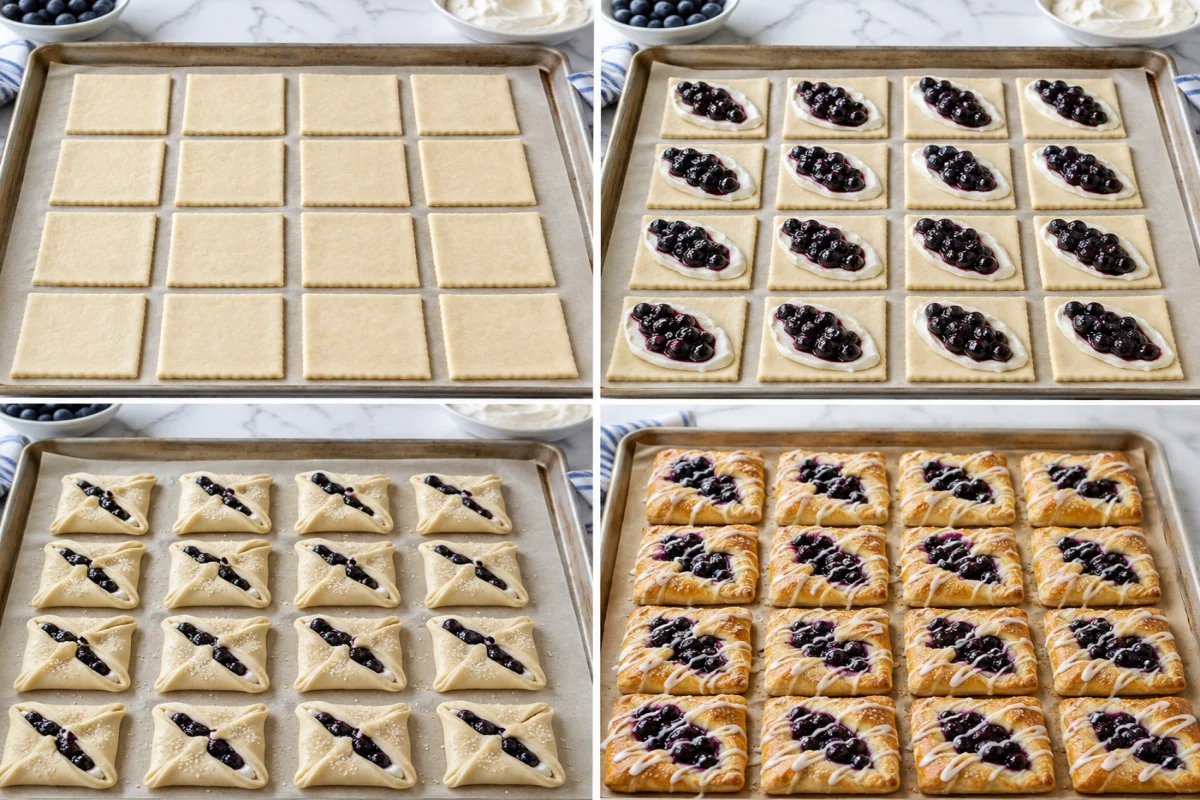
- Prepare. Heat the oven to 375°F and line a large baking sheet.
- Mix filling. Beat cream cheese, granulated sugar, and vanilla until smooth.
- Cut dough. Press crescent seams closed and cut the dough into 16 equal squares.
- Fill. Spread cream cheese diagonally across each square and add a small spoonful of blueberry filling.
- Fold. Bring one bare corner inward, overlap the opposite corner, and press gently.
- Top and bake. Add turbinado sugar and bake 13 to 16 minutes until golden.
- Cool and glaze. Rest on the pan briefly, cool completely, then drizzle with powdered-sugar glaze.
For storage details after serving, the USDA leftovers and food safety guidance.
Soften Cream Cheese, Not Dough
Cream cheese should be soft enough to beat without lumps, so set it out in advance. Crescent dough should remain refrigerated until the filling and baking sheet are ready. Warm dough becomes sticky, stretches during cutting, and loses its neat shape.
If the kitchen is warm, work with one can at a time and return cut squares to the refrigerator briefly. Smooth filling spreads with less pressure, protecting the delicate dough.
If you enjoy this recipe, you may also like Sausage Cheese Sheet Pan Pancakes.
Seal Crescent Perforations
Standard crescent rolls open into triangles. Keep adjacent triangles together as rectangles and pinch the diagonal seams firmly, then roll very lightly to smooth them. Cut each rectangle in half for 16 squares total.
Do not thin the dough substantially. Enough thickness is needed to support cream cheese and fruit. A pizza cutter or sharp knife creates clean edges without pulling.
Prepare a Lump-Free Cheese Filling
Beat softened cream cheese with sugar and vanilla until glossy and uniform. Scrape the bowl so dense cheese at the bottom is incorporated. Do not add milk; the mixture must remain thick enough to sit on the dough.
Divide the cheese visually before filling the last squares. About a rounded teaspoon per pastry gives richness without crowding the folds.
Use Thick Blueberry Filling
Prepared blueberry fruit filling has enough starch to remain in place during baking. Spoon a modest amount over the cream cheese. Large quantities bubble onto the pan and keep the corners from joining.
If the filling contains very large fruit pieces, distribute them evenly so each pastry has berries and thickened juice. Keep the bare folding corners clean.

Fold So the Center Stays Closed
Bring one unfilled corner over the diagonal filling, then place the opposite corner on top. Dab a tiny amount of water under the overlap if the dough is floury, and press gently. The remaining two corners stay open.
Arrange pastries with space between them because crescent dough expands. If a fold springs back, chill it for several minutes and press once more before baking.
Use Turbinado Sugar for Crunch
Sprinkle coarse sugar over exposed dough just before baking. Its large crystals remain distinct and give the pastry a bakery-style crunch. Keep most sugar off the fruit, where it simply dissolves.
Three to four tablespoons covers sixteen pieces lightly. Too much creates a hard layer and can scatter onto the pan, where it caramelizes.
Bake to a True Golden Color
Bake on the center rack for 13 to 16 minutes. Properly cooked dough is golden at the outer corners and dry underneath. Pale centers can remain gummy once the pastries cool.
Rotate the pan near the end only if the oven browns unevenly. Fruit filling may bubble, but remove the pastries promptly if the folded edges begin to darken.
Cool Before Glazing
Rest the Danish on the hot pan for 3 to 4 minutes so the soft centers settle, then transfer them to parchment or a rack. Wait until completely cool.
Whisk powdered sugar with milk until it falls in slow ribbons. Drizzle lightly rather than hiding the blueberries. Add milk by drops because a small amount changes glaze consistency quickly.
Variations and Serving
Cherry, raspberry, apple, or lemon filling can replace blueberry in the same restrained quantity. Keep the cream cheese layer for balance. Lemon zest can be mixed into the cheese for a brighter blueberry version.
Serve at brunch with fruit, eggs, and coffee, or offer the small pastries on a dessert tray. They taste best at room temperature. Arrange them in one layer so the glaze remains distinct and the flaky corners are not compressed. A light dusting of powdered sugar can replace glaze when a less sweet finish is preferred.
Storage and Reheating
Refrigerate cooled pastries in an airtight container for up to four days because they contain cream cheese. Separate layers with parchment. The dough gradually softens in storage.
Warm unglazed Danish in a 300°F oven for about 5 minutes, then cool slightly before glazing. Freeze unglazed pastries for up to one month and thaw overnight in the refrigerator.
Troubleshooting
- Dough sticks: Keep it cold and use parchment.
- Folds open: Keep corners clean, overlap firmly, and chill briefly.
- Filling spills: Reduce the portion.
- Bottom stays doughy: Bake until truly golden.
- Glaze vanishes: Cool completely before drizzling.
Conclusion
Cut cold crescent dough into sixteen squares. Spread sweetened cream cheese diagonally, add thick blueberry filling, overlap two clean corners, sprinkle with coarse sugar, and bake at 375°F until golden. Cool completely before glazing.
Frequently Asked Questions
- → Can blueberry Danish be made with crescent rolls?
Yes. Keep triangle pairs together, press perforations closed, and cut the resulting rectangles into squares.
- → Why do the corners open while baking?
Filling may be touching the corners or the dough may be too warm. Keep the overlap clean, press firmly, and chill briefly.
- → Does blueberry Danish need refrigeration?
Yes. Because it contains cream cheese, refrigerate leftovers in a covered container for up to four days.
- → Can blueberry Danish be frozen?
Freeze cooled, unglazed pastries for up to one month. Thaw in the refrigerator and refresh in a low oven.