
Pin it
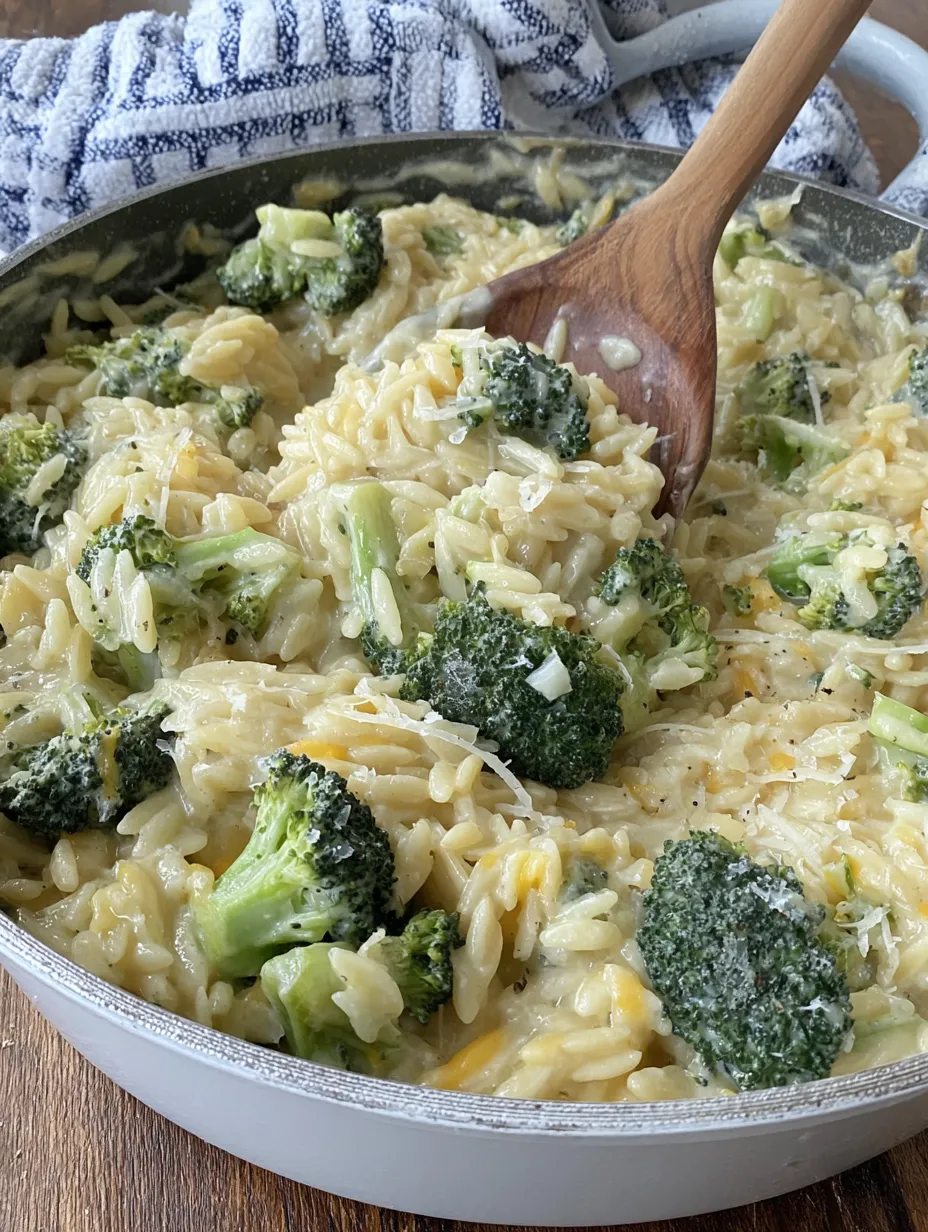
Orzo is one of those ingredients that confuses people because it looks like rice but cooks like pasta, and this broccoli cheddar version is basically the easiest way to make yourself feel like you cooked a real dinner when you've only used one pan. You sauté onions and garlic, toast the orzo briefly, cook it with vegetable broth and cream until it's tender, add broccoli for the last few minutes, then stir in cheddar cheese until everything gets creamy and delicious. The whole thing takes about 20 minutes from start to finish and uses just one skillet, which means minimal cleanup and maximum flavor for minimal effort. I started making this when my youngest went through a phase where pasta was the only acceptable dinner, but I felt guilty serving plain noodles with butter every night like some kind of carb-loading camp. Turns out, telling him it was "special rice pasta" made him willing to eat actual vegetables mixed in, and now he requests this specifically without realizing he's eating a relatively balanced meal. My husband thinks I've suddenly become an excellent cook because I can make creamy pasta dishes on weeknights, and I'm not telling him this is literally just dump everything in a pan and stir.
My friend Sarah is one of those people who claims she can't cook and lives off takeout and frozen dinners. She came over for dinner once when I made this, ate two full servings, then asked how long it took to make. When I told her twenty minutes in one pan, she looked at me like I was lying and demanded I prove it by making it again while she watched. I made it the next week with her standing in my kitchen timing me on her phone, and when it came together exactly as fast as I'd claimed, she got genuinely annoyed that she'd been spending money on takeout when she could have been making this all along. Now she makes it at least twice a week and has started experimenting with different vegetables, which her boyfriend says has significantly improved their grocery budget and his opinion of her cooking abilities.
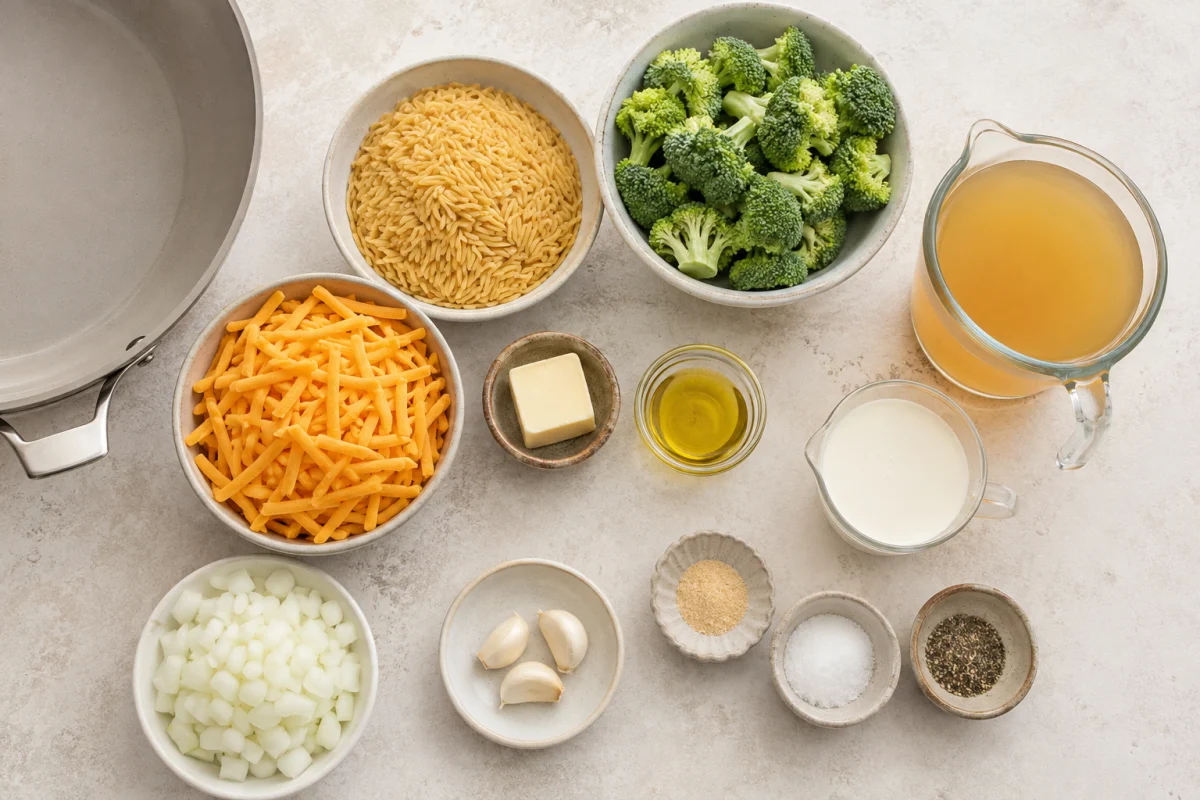
What Goes Into It
- Butter: One tablespoon adds richness and helps sauté the aromatics without burning, creating that base flavor layer most people can't quite identify but definitely taste.
- Olive oil: Two tablespoons work with the butter to prevent burning while adding their own subtle flavor that makes everything taste more sophisticated.
- Small onion: Half of one chopped fine provides aromatic sweetness and depth without overwhelming the dish or leaving you with crunchy onion pieces people pick out.
- Garlic cloves: Three minced add that essential garlic flavor everyone expects in creamy pasta dishes without being so much it tastes like you're trying to ward off vampires.
- Orzo: One cup of this rice-shaped pasta is the base of the whole dish, absorbing liquid and creating creamy texture as it releases starch while cooking.
- Vegetable broth: Two cups provide the cooking liquid that the orzo absorbs, adding savory flavor throughout instead of just plain water that would taste boring.
- Heavy cream: Half a cup at room temperature creates richness and helps form that creamy sauce everyone loves without needing to make an actual roux or cheese sauce separately.
- Cheddar cheese: One and a quarter cups hand-shredded melts smoothly into the hot orzo, creating that signature cheese flavor and creamy texture that makes this comfort food.
- Broccoli florets: Three cups cut small cook quickly in the last few minutes, adding vegetables and bright green color that makes this look healthier than it probably is.
- Salt and pepper: Season to taste while cooking, adjusting based on how salty your broth and cheese are since both contribute significant sodium.
- Garlic powder: One tablespoon might seem like a lot on top of fresh garlic, but it adds different depth that makes the whole dish taste more complex and savory.
Pin it
Making This Dish
- Starting with aromatics:
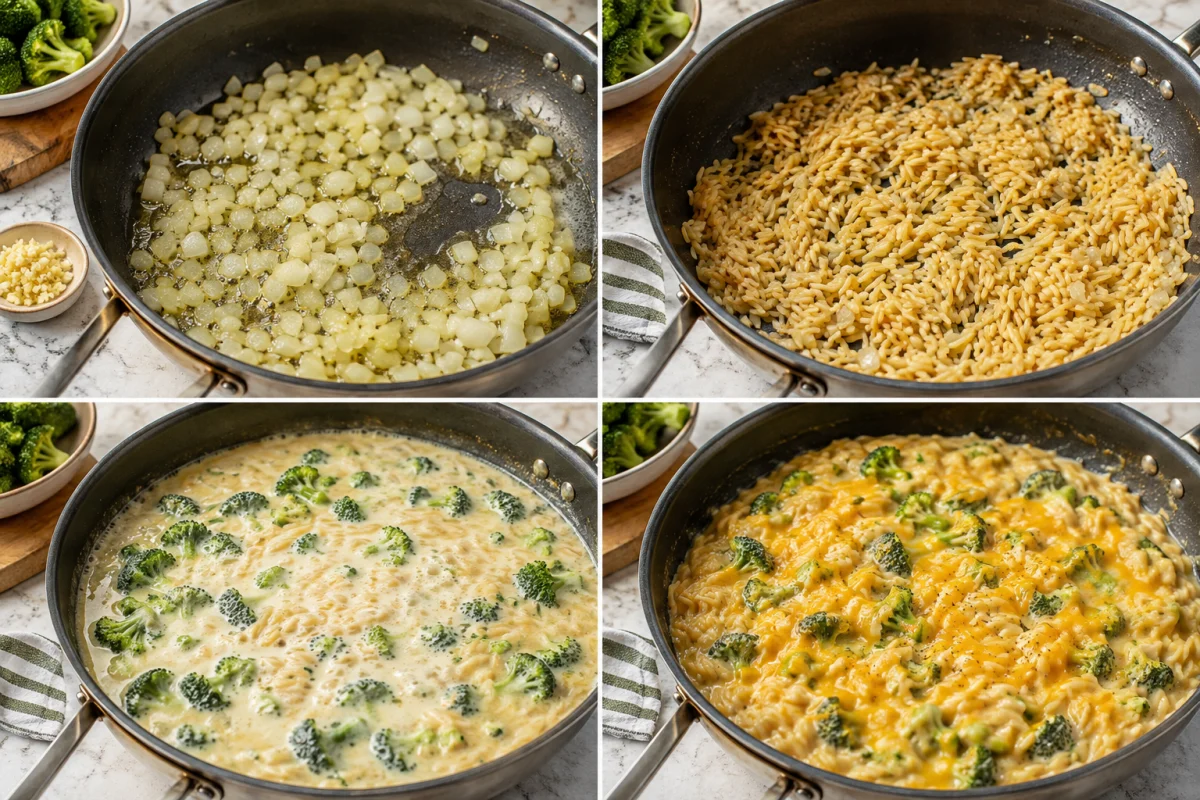
- Set a large skillet over medium high heat and add your tablespoon of butter along with your two tablespoons of olive oil. Let them heat together until the butter melts completely and starts foaming slightly, which takes about 30 seconds. Add your half onion that you've chopped into small pieces and stir it around in the hot fat. Let the onion cook for about 3 to 4 minutes, stirring occasionally, until the pieces turn translucent and start softening without getting brown or crispy. You want them to release their moisture and become tender, creating that sweet aromatic base. When the onion looks good and smells sweet, add your three minced garlic cloves and stir them in, cooking for just one more minute until the garlic becomes fragrant and loses that raw smell. Don't let the garlic burn or it'll taste bitter and ruin everything.
- Toasting the orzo:
- Dump your cup of dry orzo directly into the skillet with the sautéed onions and garlic. Stir everything together with a wooden spoon or spatula, coating all the little pasta pieces with the butter and oil mixture. Keep stirring constantly for about a minute while the orzo toasts slightly in the hot pan, which adds nutty flavor and helps prevent it from getting mushy later when you add liquid. You'll see the orzo start to turn very slightly golden and smell toasty, kind of like making risotto when you toast the rice first. This step seems unnecessary but it genuinely improves the final texture and flavor.
- Adding liquids and seasoning:
- Pour your two cups of vegetable broth slowly into the skillet, followed by your half cup of heavy cream that should be at room temperature so it doesn't curdle from temperature shock. Make sure to pour gradually while stirring so nothing splatters or creates hot spots. Sprinkle in your salt, pepper, and tablespoon of garlic powder, stirring to distribute the seasonings throughout the liquid. Turn your heat up to medium high and watch as the mixture comes to a gentle boil with bubbles breaking across the surface. As soon as you see it boiling, immediately turn the heat down to low and let everything simmer gently. Set a timer for 5 minutes and stir occasionally to prevent the orzo from sticking to the bottom of the pan and burning.
- Adding broccoli:
- When your timer goes off after those first 5 minutes, the orzo will be partially cooked but not quite tender yet. Add your three cups of broccoli florets that you've cut into relatively small, bite sized pieces. Use your wooden spoon or spatula to push the broccoli down into the liquid, moving it around so the florets get partially submerged and covered with the creamy broth. You don't need every piece completely underwater, just make sure they're making contact with the hot liquid so they'll steam and cook. Set another timer for 5 minutes and continue cooking on low heat, stirring occasionally to prevent anything from sticking. During this time, the broccoli will turn bright green and tender, and the orzo will finish cooking and absorb most of the remaining liquid.
- Finishing with cheese:
- After the second 5 minute timer goes off, check your orzo by tasting a piece to make sure it's tender with no hard center remaining. The broccoli should be soft enough to pierce easily with a fork but still bright green and not mushy. If everything's cooked through, turn off the heat completely and immediately add your hand shredded cheddar cheese. Stir vigorously as the cheese melts into the hot orzo, creating this creamy sauce that coats everything. Keep stirring until all the cheese disappears into the mixture and you have a smooth, creamy consistency without visible cheese shreds remaining. Let the whole thing sit for about 2 minutes to cool slightly and let the sauce thicken a bit more as it rests, then serve while everything is still hot and the cheese is gooey.
Things You Should Know
Using room temperature heavy cream instead of cold from the fridge prevents it from curdling when it hits the hot broth, keeping your sauce smooth instead of grainy and separated. Hand-shredding your own cheddar makes a huge difference in how smoothly it melts compared to pre-shredded cheese that's coated with anti-caking agents that prevent proper melting. Adding the broccoli during the last 5 minutes instead of at the beginning keeps it from overcooking and turning into that sad, musty smelling gray vegetable nobody wants to eat.
The first time I made this, I used cold heavy cream straight from the refrigerator because I didn't think temperature mattered. When it hit the hot broth, parts of it separated and looked curdled with little white bits floating around instead of creating smooth sauce. The texture was weird and grainy instead of creamy, though it still tasted okay. Now I always take the cream out when I start prepping so it comes to room temperature by the time I need it, which takes maybe 15 minutes and completely prevents that curdling problem.
I used pre-shredded cheddar once because it was on sale and I thought I'd save time not grating cheese myself. The cheese never fully melted, staying in these weird separated strings throughout the orzo instead of creating a smooth sauce. The texture was grainy and oily with visible shreds of cheese instead of that creamy coating I wanted. Fresh cheese takes literally 2 minutes to shred with a box grater and the difference in the finished dish is so dramatic it's completely worth the minimal extra effort.
The broccoli timing took me a few tries to get right. My first attempt, I added the broccoli at the beginning with the liquid, and by the time the orzo finished cooking the broccoli had turned this grayish green color and gotten mushy with that sulfurous overcooked smell. Adding it during the last 5 minutes keeps it bright green and slightly crisp tender, providing textural contrast against the soft creamy orzo instead of everything being the same mushy consistency.
I tried using chicken broth instead of vegetable broth once thinking it would add more flavor, and while it tasted fine, the dish felt heavier and more like a meat based meal instead of the lighter vegetarian vibe this recipe has. Vegetable broth keeps the flavors brighter and lets the cheese and broccoli shine through without competing with heavy chicken flavor.
The garlic powder on top of fresh garlic seemed redundant when I first read this recipe, and I skipped it thinking three garlic cloves would be enough. The finished dish tasted good but kind of flat, lacking that savory depth I was expecting. That tablespoon of garlic powder adds a different dimension than fresh garlic, creating more complex savory flavor without tasting specifically garlic forward. Now I always include both.
Serving This Meal
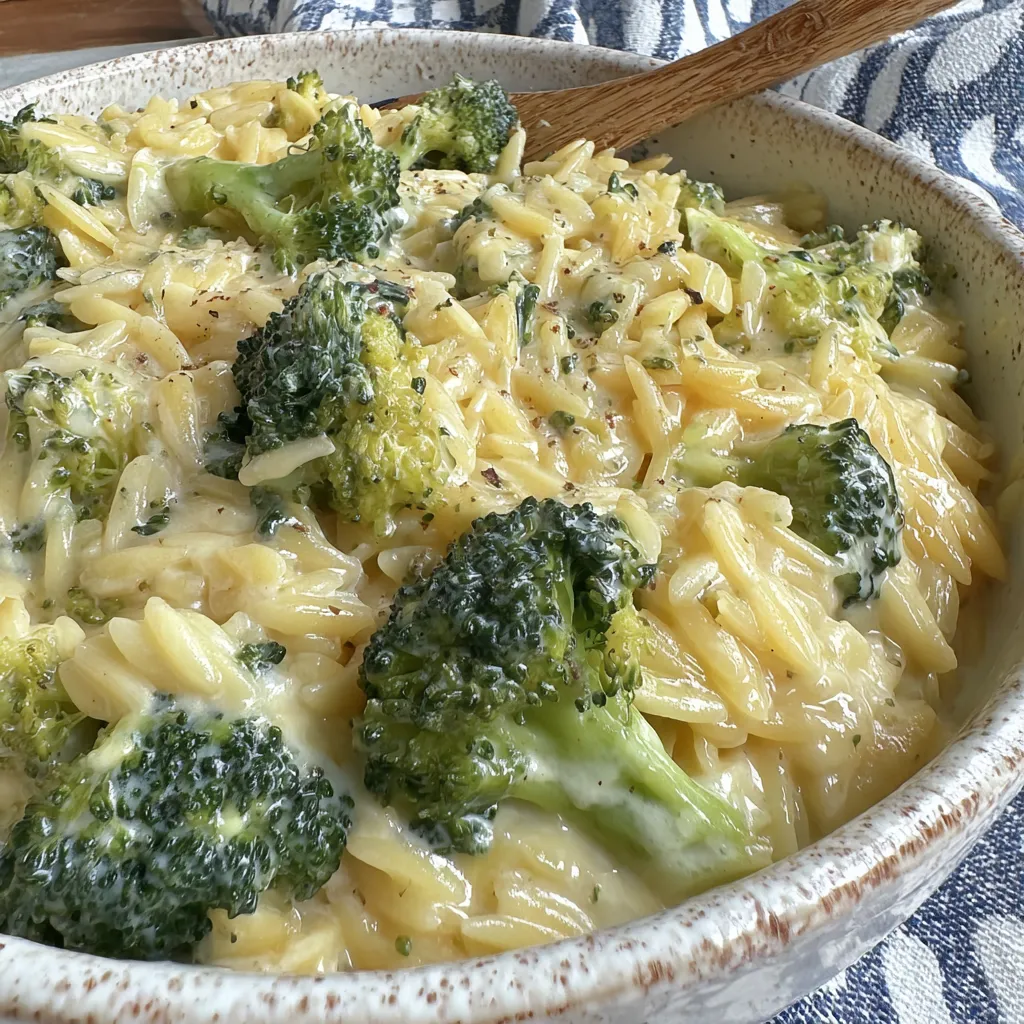
Scoop generous portions into shallow bowls or onto plates while everything is still hot from the pan, when the cheese is at peak creaminess and the broccoli is steaming. This works perfectly as a vegetarian main course that fills people up without needing meat, or as a substantial side dish alongside grilled chicken or fish if you want to add protein. Serve it with crusty bread for soaking up any extra sauce that pools at the bottom of bowls, or with a simple side salad dressed lightly to add freshness that balances the richness. This recipe makes enough to feed about four people as a main dish or six as a generous side, depending on appetites and what else you're serving.
For casual weeknight dinners, this is ideal because it comes together so fast and uses just one pan, making cleanup manageable even when you're tired. Kids generally love this because the orzo looks fun and pasta y, the cheese makes everything taste good, and the broccoli pieces are small enough they can't really pick them all out without effort. Adults appreciate that it tastes like comfort food while still being relatively light and vegetable forward.
The creamy texture and cheesy flavor make this feel indulgent despite being mostly pasta and vegetables, hitting that comfort food spot without being as heavy as fettuccine alfredo or mac and cheese. Each bite gives you tender orzo, soft broccoli, and creamy cheese sauce all together instead of needing to assemble bites carefully on your fork to get the right ratio.
This is substantial enough that vegetarians can eat it as a complete meal and feel satisfied for hours instead of being hungry again thirty minutes later. The orzo provides carbs for energy, the broccoli adds fiber and vitamins, and the cheese contributes protein and fat, creating a relatively balanced plate that happens to taste like indulgent pasta.
Different Ways to Try It
Add cooked chicken or shrimp stirred in at the end for meat-eaters who want extra protein without changing the whole recipe. Use different vegetables like cauliflower, peas, or asparagus depending on what's in season or what you have in the fridge. Try different cheeses like gruyere for nuttier flavor, pepper jack for spice, or a combination of cheddar and parmesan for more complexity. Mix in some sun-dried tomatoes with the broccoli for tangy sweetness that cuts through the richness. Add white beans or chickpeas for extra protein without meat. Use chicken broth instead of vegetable broth if you're not worried about keeping it vegetarian. Stir in some spinach along with the broccoli for even more vegetables without much extra effort. Add red pepper flakes or cayenne if you want heat throughout the creamy sauce.
Keeping It Fresh
Leftover orzo keeps in the refrigerator for up to 4 days stored in an airtight container, though the texture changes slightly as the pasta continues absorbing sauce while it sits. Reheat individual portions in the microwave for about 2 minutes, stirring halfway through and adding a splash of milk or broth if it seems dry since the orzo absorbs liquid as it sits. You can also reheat it in a skillet over medium low heat with a little added cream or broth to loosen the sauce back up. This doesn't freeze particularly well because the cream sauce separates and gets grainy when thawed, and the broccoli loses its texture becoming mushy and sad. For best results, just make what you'll eat within a few days and enjoy it fresh rather than trying to freeze portions.
Pin it
I've made this broccoli cheddar orzo more times than I can count over the past year since discovering how easy and delicious it is for weeknight dinners. There's something really satisfying about a meal that comes together this quickly in one pan but still tastes like you put in actual effort instead of just reheating leftovers or opening a jar of pasta sauce. The creamy cheese sauce coating tender orzo with bright green broccoli throughout creates that perfect comfort food experience without being so heavy you need a nap afterward. My kids genuinely get excited when I announce we're having this for dinner, which almost never happens with meals involving vegetables they can clearly see. I love that it's accidentally vegetarian while still being filling enough that nobody misses the meat, making it perfect for feeding mixed groups where some people eat meat and others don't. This has earned its permanent spot in my regular dinner rotation, joining that small group of meals I make constantly because they're foolproof, fast, and consistently make everyone happy without requiring me to spend an hour in the kitchen!
Frequently Asked Questions
- → Can I use frozen broccoli?
- You can, but fresh works better. If using frozen, make sure to thaw it first and pat it dry so you don't add extra water to the dish.
- → What can I substitute for heavy cream?
- Half and half works, or even whole milk in a pinch. The sauce won't be quite as rich but it'll still taste good. You could also use Greek yogurt added at the end.
- → Can I add protein to this?
- Absolutely! Cooked chicken, shrimp, or even chickpeas would be great. Just stir them in at the end when you add the cheese.
- → Why is my orzo mushy?
- It might have cooked too long or you had too much liquid. Keep the heat low and check it at 10 minutes total cooking time to make sure it's not overdone.
- → Can I make this ahead?
- It's best fresh, but you can make it a few hours ahead. It will thicken up, so add extra broth or cream when reheating to loosen it back up.
- → What other vegetables work in this?
- Cauliflower, peas, spinach, or mushrooms would all be delicious. Just add them at the same time you'd add the broccoli.