


Buffalo chicken tortellini Alfredo pairs crisp-edged chicken with tender cheese tortellini and a creamy Parmesan sauce. Mild buffalo sauce coats the chicken separately, so each bowl has a clear contrast between tangy heat and rich Alfredo rather than one indistinct sauce.
The recipe serves about six in roughly 30 minutes. A light flour coating helps the chicken brown, while moderate heat keeps the cream sauce smooth. Cooking the tortellini directly in the Alfredo also saves a pot and lets the pasta take on more flavor.
Ingredients for Buffalo Chicken Tortellini Alfredo
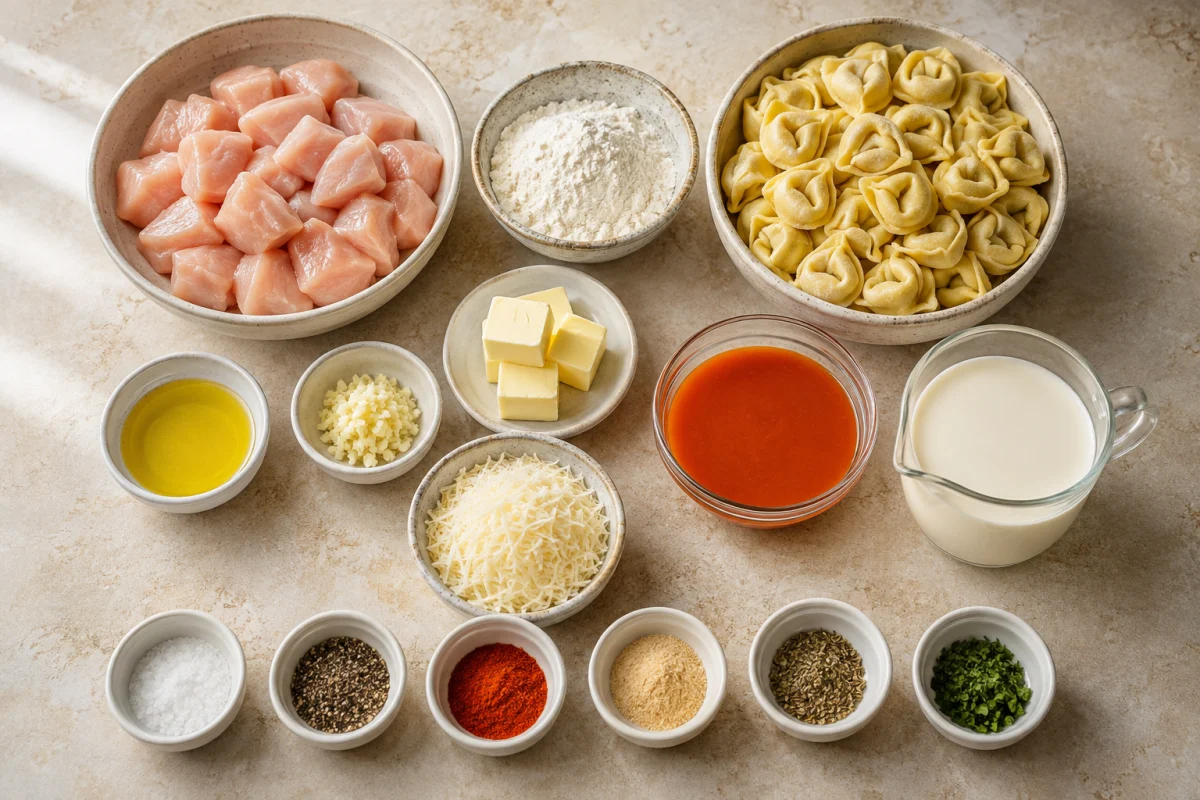
For the chicken, use 2 large chicken breasts cut into cubes, 1/2 cup all-purpose flour, 1 tablespoon olive oil, and 2 tablespoons butter. Season the chicken first with salt, pepper, and garlic powder, then season the flour with 1/2 teaspoon each salt, pepper, paprika, and garlic powder plus 1 teaspoon Italian seasoning.
The Alfredo needs 1/2 cup butter, 2 tablespoons minced garlic, 1 1/4 cups heavy cream, 1 1/4 cups shredded Parmesan, 1/2 teaspoon each salt and pepper, and 1 teaspoon each garlic powder and Italian seasoning. Finish with one 19-ounce bag frozen cheese tortellini, enough mild buffalo sauce to coat the chicken, extra Parmesan, and dried parsley.
If you enjoy this recipe, you may also like Creamy Chicken and Gnocchi.
How to Make Buffalo Chicken Tortellini Alfredo
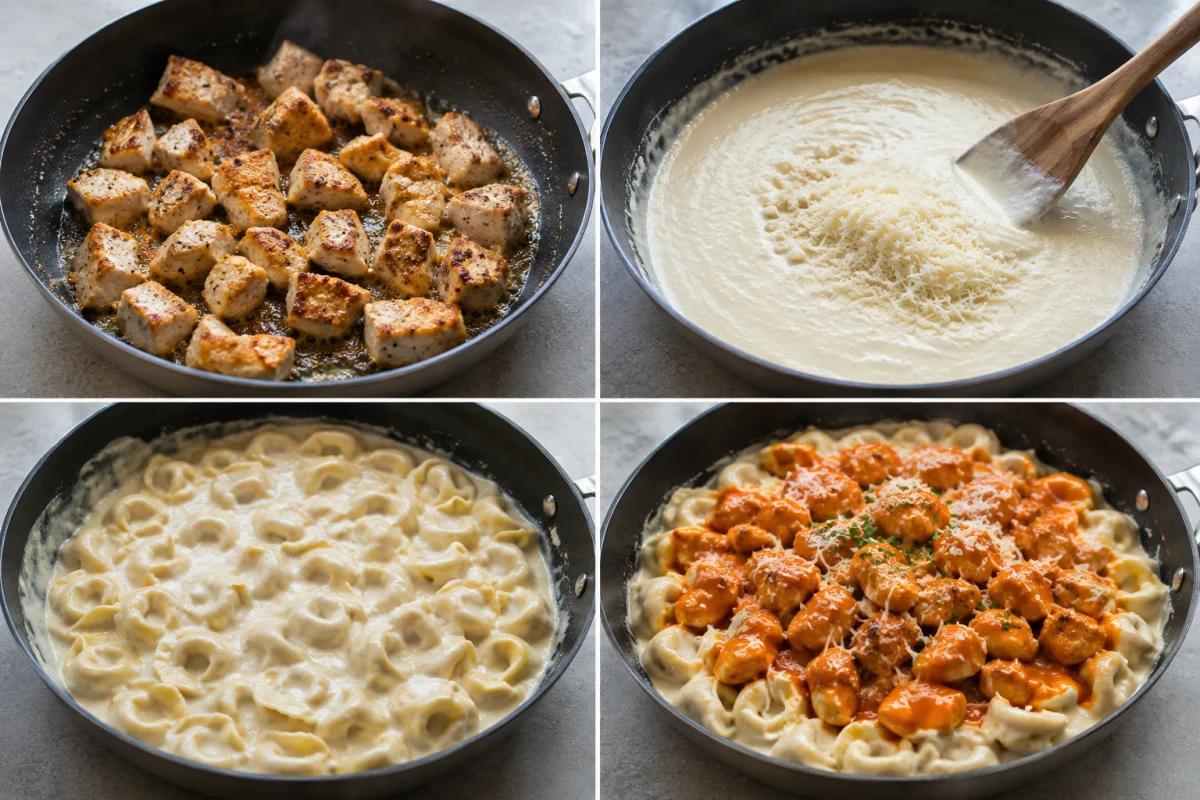
- Prepare the chicken. Cut it into even cubes and season lightly.
- Dredge. Combine flour with the measured seasonings and coat each piece, shaking off excess.
- Cook. Brown chicken in olive oil and 2 tablespoons butter until it reaches 165°F, then remove it.
- Start Alfredo. Wipe away excess grease, melt 1/2 cup butter, and cook garlic for 30 seconds.
- Finish the sauce. Add cream, seasonings, and Parmesan over moderate heat, stirring until smooth.
- Cook tortellini. Add it frozen, cover, and simmer gently for about 5 minutes.
- Coat the chicken. Toss the cooked pieces with buffalo sauce.
- Assemble. Spoon buffalo chicken over the tortellini and finish with Parmesan and parsley.
For storage details after serving, the USDA leftovers and food safety guidance.
Cut the Chicken Evenly
Trim the chicken breasts and cut them into pieces close to 1 inch. Similar sizes cook at the same rate, which helps the smallest pieces stay juicy while the largest reach a safe temperature. Pat the chicken dry before seasoning so the flour coating adheres instead of forming wet clumps.
Use a separate cutting board for raw poultry and wash the board, knife, and hands with hot soapy water afterward. Keep cooked chicken on a clean plate rather than returning it to the dish that held the raw pieces.
If you enjoy this recipe, you may also like Cheesy Enchilada Hamburger Helper.
Build a Thin, Seasoned Coating
Mix the flour with salt, black pepper, paprika, garlic powder, and Italian seasoning before adding any chicken. Distributing the spices through the flour prevents heavily seasoned patches. Toss the cubes until lightly covered, then shake away loose flour.
A thick layer of flour can fall into the skillet and burn before the chicken is cooked. The goal is a dry veil that encourages browning and gives the buffalo sauce something to cling to, not a heavy fried crust.
Brown the Chicken Without Drying It Out
Heat the olive oil and 2 tablespoons butter over medium-high heat until the butter foams. Arrange the chicken in a single layer and leave it untouched long enough to develop color before turning. Cook all sides rather than stirring constantly.
Chicken breast is safe at 165°F in the thickest piece. A thermometer is more reliable than judging color alone. Transfer pieces as soon as they reach temperature because they will stay warm while the sauce is prepared.
Reset the Skillet for the Sauce
Pour away excess cooking fat and wipe out any dark or burned flour residue. Keep clean golden browned bits because they add savory flavor, but scorched particles can make a pale Alfredo taste bitter.
Lower the heat to medium before adding the full stick of butter. Once melted, stir in minced garlic for about 30 seconds, just until fragrant. Garlic burns quickly in a hot pan, so have the cream measured and ready.
Keep Alfredo Smooth
Pour in the heavy cream gradually while stirring. Add salt, pepper, garlic powder, and Italian seasoning, then bring the mixture only to a gentle simmer. A hard boil can reduce the cream too fast and encourage separation.
Add finely shredded Parmesan in several handfuls, stirring each one into the warm sauce before adding the next. Cheese grated from a block generally melts more smoothly than pre-shredded Parmesan, which may contain anti-caking ingredients.

Control the Sauce Thickness
The Alfredo should coat the back of a spoon but remain loose enough for frozen tortellini to move through it. It thickens further when the pasta releases starch and again as the skillet cools.
If the sauce becomes too thick before the tortellini is tender, stir in a few tablespoons of milk or water. If it seems thin after the pasta is cooked, uncover and simmer briefly over low heat rather than adding more cheese all at once.
Simmer the Tortellini Gently
Fold frozen tortellini into the warm sauce and reduce the heat to medium-low. Cover the skillet so trapped steam helps thaw and cook the pasta. Stir once or twice from the bottom with a flexible spatula.
Begin checking after about 5 minutes, but follow the package timing when it differs. The pasta should be tender through the folded edges without becoming so soft that the filling escapes. Avoid a vigorous boil, which can tear the tortellini.
Coat the Chicken Separately
Place the warm chicken in a clean bowl and add enough buffalo sauce to coat it lightly. Toss until every piece is glossy. Keeping it separate from the Alfredo preserves both flavors and gives the plate a clear orange-and-cream contrast.
Start with less sauce and add more as needed. Buffalo sauces vary in heat and salt. Serving extra on the side lets each person adjust the intensity without making the entire skillet too spicy.
Assemble at the Last Moment
Spoon the buffalo chicken over the finished tortellini just before serving. This keeps the browned coating from softening completely in the cream sauce. Sprinkle with extra Parmesan and a modest amount of dried parsley.
For a cooler contrast, offer a little ranch or blue cheese dressing at the table, but taste first because the Alfredo already brings considerable richness. Celery sticks, a crisp salad, or roasted green beans balance the meal.
Useful Variations
Refrigerated tortellini can replace frozen; it usually cooks faster, so check the package and begin testing early. Chicken thighs can replace breasts for a richer result, but trim them well and cook to at least 165°F.
For less heat, combine buffalo sauce with a small spoonful of melted butter before coating the chicken. For more heat, serve additional sauce separately rather than pouring it into the Alfredo, where it can overwhelm the Parmesan.
Storage and Reheating
Refrigerate leftovers within two hours and use them within four days. If possible, store extra buffalo chicken separately from the tortellini so its coating holds up better.
Reheat the pasta gently in a covered skillet with a splash of milk, stirring as little as possible. Warm the chicken separately and add it at the end. Heat leftovers to 165°F. Freezing is possible for up to two months, though cream sauce may be less smooth after thawing.
Troubleshooting
- Pale chicken: Pat it dry, use a thin flour coating, and leave room in the skillet.
- Burned flour bits: Wipe dark residue away before starting Alfredo.
- Grainy sauce: Use moderate heat and add finely grated Parmesan gradually.
- Thick sauce: Loosen it with milk or water before the pasta overcooks.
- Torn tortellini: Maintain a gentle simmer and fold with a soft spatula.
Conclusion
Season and lightly flour chicken cubes, brown them to 165°F, and set them aside. Make a gentle garlic-Parmesan Alfredo in the same cleaned skillet, then cover and simmer frozen tortellini in the sauce until tender. Toss the chicken with buffalo sauce and place it over the creamy pasta just before serving.
Frequently Asked Questions
- → How do I keep Alfredo sauce from turning grainy?
Keep the heat moderate, avoid a hard boil, and stir finely shredded Parmesan into the cream in small additions.
- → Can I use refrigerated tortellini instead of frozen?
Yes. Refrigerated tortellini usually cooks faster, so follow its package timing and begin checking early.
- → How spicy is buffalo chicken tortellini Alfredo?
That depends on the sauce. Start with a mild buffalo sauce and coat the chicken lightly, then serve extra sauce on the side.
- → How long do leftovers keep?
Refrigerate them for up to four days and reheat gently with a splash of milk until the center reaches 165°F.