


Cheesy enchilada hamburger helper is a one-skillet dinner with seasoned beef, tender shell pasta, red enchilada sauce, and melted Colby Jack. It has the comforting texture of a creamy beef-and-pasta meal with cumin, chili, and cilantro giving it a clear Southwestern direction.
The uncooked pasta simmers directly in the sauce, broth, and milk, so there is no separate pot to drain. The recipe serves about six in 30 minutes. Gentle simmering and an occasional scrape along the skillet base keep the shells evenly cooked without scorching the dairy-rich sauce.
Ingredients for Cheesy Enchilada Hamburger Helper
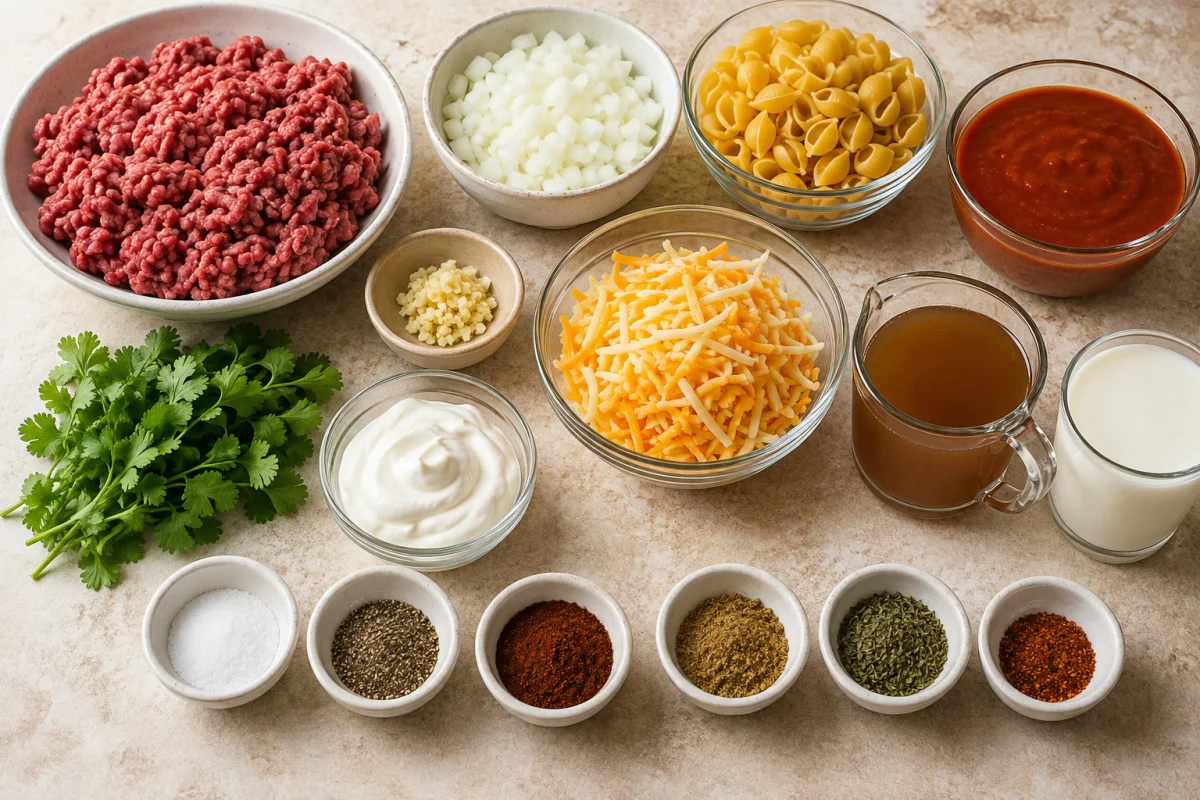
The beef base uses 1 pound ground beef, 1 chopped onion, and 1 tablespoon minced garlic. Add two 10-ounce cans mild red enchilada sauce, 1 cup beef broth, 1 cup milk, and 2 1/2 cups uncooked medium shell pasta.
Season with 1/2 teaspoon each salt and black pepper, 2 teaspoons chili powder, 1 teaspoon each ground cumin and dried cilantro, and 1/4 teaspoon cayenne. Finish with 2 cups shredded Colby Jack cheese, fresh chopped cilantro, and sour cream.
If you enjoy this recipe, you may also like Creamy Tuscan Ravioli.
How to Make Cheesy Enchilada Hamburger Helper
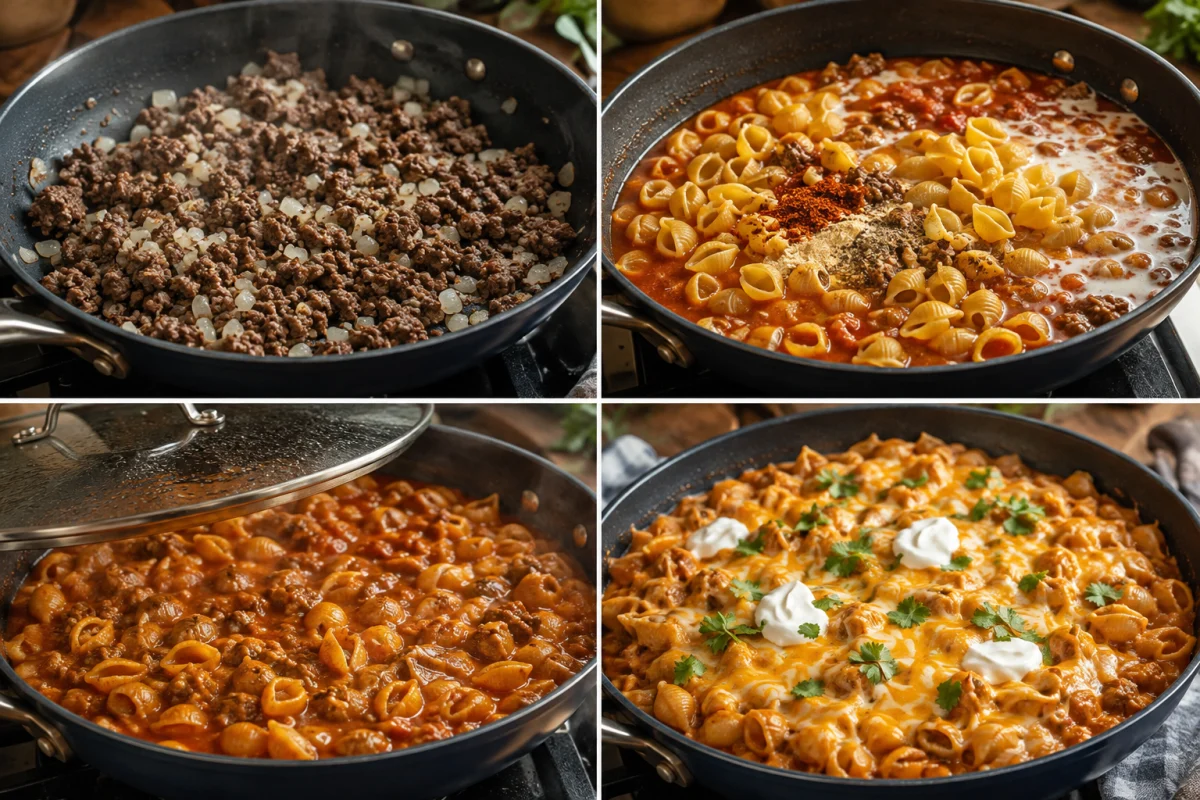
- Brown beef and onion. Cook them in a deep skillet until the beef reaches 160°F and the onion softens.
- Drain. Carefully remove excess grease.
- Add seasonings. Stir in garlic, salt, pepper, chili powder, cumin, dried cilantro, and cayenne.
- Add pasta and liquids. Pour in broth, enchilada sauce, milk, and dry shells.
- Simmer. Bring to a brief boil, reduce the heat, cover, and cook about 12 minutes, stirring halfway.
- Add cheese. Stir in 1 cup Colby Jack and scatter the remaining cup over the top.
- Rest and garnish. Remove from heat, cover briefly, then add cilantro and sour cream.
For storage details after serving, the USDA leftovers and food safety guidance.
Choose a Deep Skillet With a Lid
A 12-inch deep skillet or wide sauté pan gives the shells enough room to cook in an even layer. The pan needs a fitted lid because trapped steam is part of the cooking method. A thin, shallow skillet loses moisture too quickly and is more likely to scorch.
Keep a flexible spatula or flat wooden spoon nearby. Its broad edge can reach the base of the pan and release shells that begin to settle without crushing them.
If you enjoy this recipe, you may also like Sheet Pan Parmesan Garlic Chicken.
Brown the Beef and Onion Together
Add the ground beef and chopped onion to the heated skillet. Break the meat into small crumbles and allow some of it to remain against the hot surface long enough to brown. The onion softens in the rendered fat and contributes sweetness to the sauce.
Cook until no pink remains and the beef reaches 160°F. Drain obvious pools of grease. A small coating in the pan is fine, but too much fat can make the finished cheese sauce oily.
Bloom the Spices Briefly
Add salt, black pepper, chili powder, cumin, dried cilantro, and cayenne with the garlic. Stir for about 30 seconds so the spices contact the warm fat and release their aroma before liquid enters the pan.
Cayenne controls the heat more than the chili powder in this recipe. Use the full 1/4 teaspoon for a noticeable warmth or reduce it for a milder family dinner. Remember that the enchilada sauce may already contain chile seasoning.
Add the Liquids in the Right Order
Pour in beef broth and scrape the skillet base to dissolve the browned residue. Add both cans of enchilada sauce, followed by milk, then stir in the dry medium shells. The pasta should be mostly surrounded by liquid.
Use regular milk for a creamy result and keep the heat moderate once it is added. Very high heat can cause dairy to catch on the bottom even when the rest of the mixture looks fluid.

Simmer the Pasta Gently
Bring the mixture only to a quick boil, then immediately reduce the heat to medium-low and cover. A steady gentle simmer cooks the shells while limiting evaporation. Set a timer for about 12 minutes.
Stir once halfway through, scraping the full skillet base and moving shells from the center toward the edges. Replace the lid promptly. Begin checking near the end because pasta thickness and burner strength can change the timing.
Adjust Before Adding Cheese
When the shells are tender, the sauce should look a little looser than the desired final consistency. It thickens when cheese melts and again during the short rest. If the pasta is firm and the pan seems dry, add a few tablespoons of broth or water and continue covered.
If excess liquid remains after the pasta is tender, simmer uncovered for 1 to 2 minutes while stirring. Do not add dry pasta at this point because it will not have enough time to cook evenly.
Melt Colby Jack in Two Layers
Remove the skillet from vigorous heat and stir in 1 cup shredded Colby Jack until it disappears into the sauce. Scatter the second cup across the top, cover, and let residual heat melt it.
Freshly shredded cheese melts most smoothly. Bagged cheese can still work, but its anti-caking coating may make the sauce slightly less fluid. Avoid boiling once the cheese has been added.
Finish With Fresh Contrast
Fresh cilantro and cool sour cream brighten the rich skillet. Add them after the cheese has melted so the herbs stay vivid and the sour cream keeps its clean flavor. Serve extra garnishes at the table for individual portions.
Diced tomato, sliced scallions, avocado, or a squeeze of lime can also add freshness. A crunchy cabbage salad or steamed vegetables make easy side dishes.
Make It Your Own
Ground turkey can replace the beef; cook it to 165°F and add a teaspoon of oil if the pan is dry. Black beans can replace part of the meat, but rinse and drain them and add them with the liquids so they warm without breaking apart.
Medium shells hold the sauce especially well. Elbows or small rotini can work, though the liquid and timing may need minor adjustment. Choose a shape with a package cooking time close to the shells.
Storage and Reheating
Cool leftovers promptly and refrigerate in a covered container for up to four days. The pasta continues absorbing sauce, so it will be thicker the next day.
Reheat over low heat with a splash of milk or broth, stirring gently, or microwave individual portions in short intervals. Heat to 165°F. Freeze for up to two months if needed, understanding that thawed pasta will be somewhat softer.
Troubleshooting
- Shells stick: Use a heavy skillet, maintain gentle heat, and scrape the base halfway through.
- Pasta stays firm: Add a splash of liquid, cover, and cook a little longer.
- Sauce is thin: Simmer uncovered briefly before adding cheese.
- Sauce looks oily: Drain the beef well and avoid boiling the cheese.
- Dish is too spicy: Reduce cayenne and choose a mild enchilada sauce.
Conclusion
Brown ground beef with onion, drain, and stir in garlic and Southwestern spices. Add broth, enchilada sauce, milk, and dry shell pasta, then cover and simmer gently until the shells are tender. Stir in half the Colby Jack, melt the rest over the top, and finish with cilantro and sour cream.
Frequently Asked Questions
- → Does the pasta need to be boiled separately?
No. The dry shells cook directly in the covered skillet with enchilada sauce, broth, and milk.
- → How can I make enchilada hamburger helper less spicy?
Use mild enchilada sauce and reduce or omit the cayenne. Keep the chili powder and cumin for flavor without as much heat.
- → Can ground turkey replace ground beef?
Yes. Cook ground turkey to 165°F and add a small amount of oil if the skillet seems dry.
- → How long do leftovers keep?
Refrigerate for up to four days and reheat gently with a splash of milk or broth until the center reaches 165°F.