


Cheesy Hamburger Casserole turns 1½ pounds of lean ground beef, macaroni, slow-simmered tomato sauce, and two cheeses into a generous family meal. It serves 8 and records 115 minutes total: 10 minutes of preparation and 105 minutes of cooking. The pasta is deliberately only half cooked before baking so it can absorb flavor without becoming soft, while cheddar and mozzarella are held for the final bubbling top.
Cheesy Hamburger Casserole Ingredients
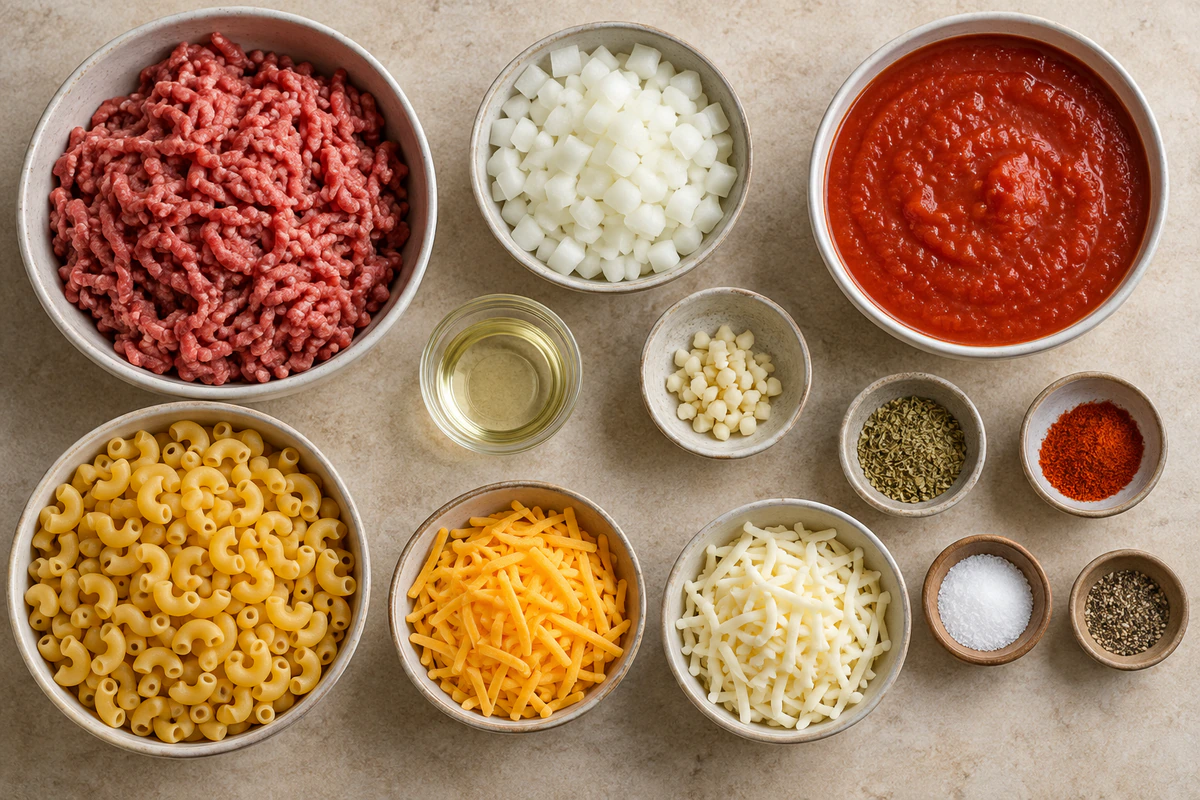
For the Meat Sauce: 1½ pounds lean ground beef; 1 large onion, diced; 1 tablespoon canola oil (or any neutral cooking oil); 2 cloves garlic, finely chopped; 1 can (28 ounces) pureed tomatoes (or your favorite pasta sauce); ½ teaspoon dried oregano; ½ teaspoon paprika; Salt, to taste (about 2-3 three-fingered pinches); Freshly ground black pepper, to taste.
For Assembly: 1 box (16 ounces) macaroni noodles (or other medium pasta shape); ½ cup cheddar cheese, freshly grated; ½ cup mozzarella cheese, freshly grated.
If you enjoy this recipe, you may also like Braised Brisket Tacos.
How to Make Cheesy Hamburger Casserole
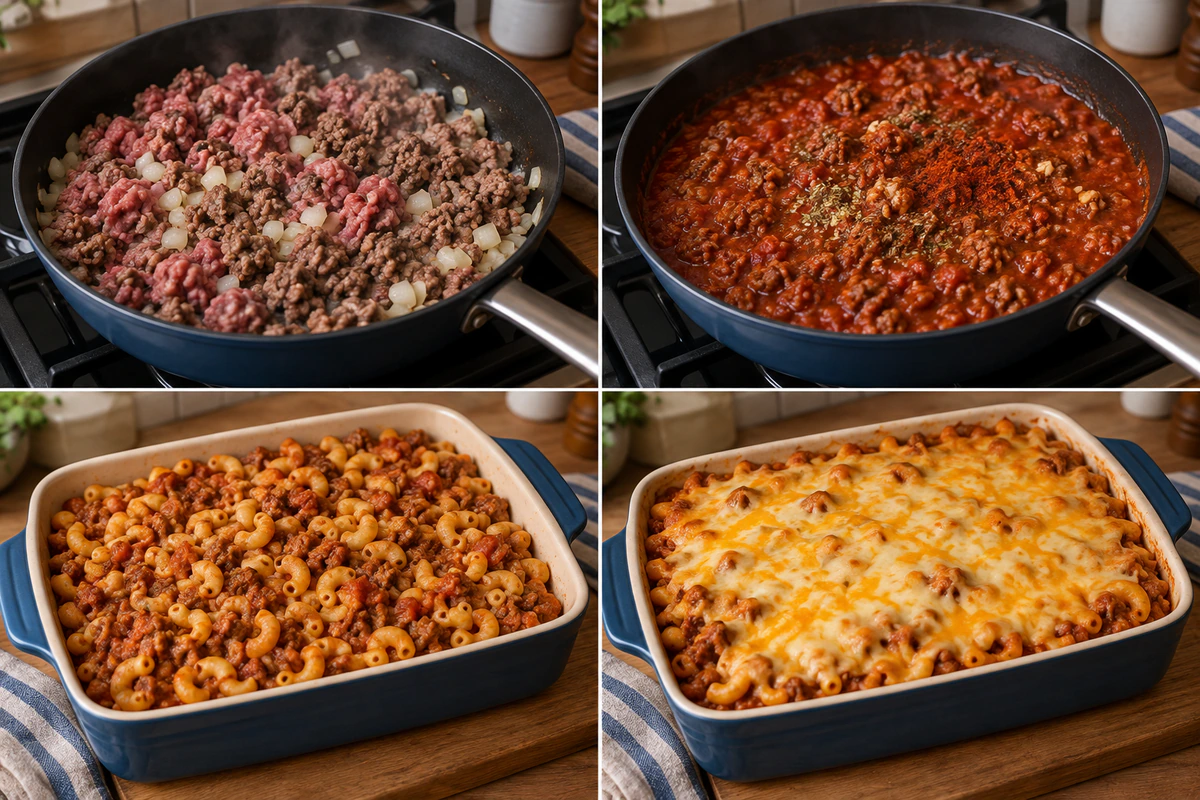
- Start the sauce base: Heat the canola oil in a large, deep skillet or Dutch oven over medium heat. Add the diced onions and a three-fingered pinch of salt (about ¼ teaspoon). Cook, stirring occasionally, until the onions have softened and become translucent, about 5-7 minutes. They should sweat, not brown.
- Cook the ground beef: Add the ground beef to the softened onions. Use a wooden spoon or spatula to break up the meat into small pieces as it cooks. Continue cooking until all the beef is browned and no pink remains, about 8-10 minutes. Drain excess fat if necessary, especially if not using lean beef.
- Season and build flavor: Add the chopped garlic to the meat mixture and cook for about 30 seconds until fragrant. Sprinkle in the oregano, paprika, another three-fingered pinch of salt, and some freshly ground black pepper. Stir to incorporate all the seasonings evenly throughout the meat.
- Add tomatoes and simmer: Pour in the can of pureed tomatoes (or your favorite pasta sauce) and stir well to combine with the meat mixture. Bring the sauce to a gentle simmer, then reduce the heat to low. Cover partially with a lid and let it simmer slowly for about 1 hour, stirring occasionally. This long, slow cooking develops deep flavors in the sauce.
- Cook the pasta: While the sauce is in its final 15 minutes of simmering, bring a large pot of generously salted water to a boil. Add the macaroni and cook until it's about half done - typically about 3-4 minutes, or half the time suggested on the package. The pasta should be quite firm as it will continue cooking in the oven. Drain well.
- Combine pasta and sauce: Add the drained, half-cooked pasta directly to the meat sauce. Stir gently but thoroughly to combine, making sure all the pasta is coated with sauce. At this point, taste and adjust seasonings if needed, adding more salt and pepper to your preference.
- Prepare for baking: You have two options here: either leave the mixture in your oven-safe Dutch oven/skillet, or transfer it to a large baking dish (about 9x13 inches). Cover with aluminum foil. At this point, you can refrigerate the casserole for up to 2 days, or freeze it for a few weeks if you're making it ahead.
- Bake the casserole: Preheat your oven to 400°F (200°C). If the casserole is coming straight from the refrigerator, place the covered dish in the oven and bake for about 45 minutes, or until heated through and bubbling around the edges. If it's room temperature, about 30 minutes should be sufficient.
- Add the cheese topping: Once the casserole is hot throughout, remove the foil and sprinkle the grated cheddar and mozzarella cheeses evenly over the top. Switch your oven to the broiler setting (high).
- Broil and serve: Place the casserole under the broiler for 2-3 minutes, watching carefully, until the cheese is melted, bubbly, and develops some golden brown spots. Don't walk away during this step - broilers work quickly and can burn the cheese if left unattended! Remove from the oven and let the casserole rest for about 5 minutes before serving.
For storage details after serving, the USDA leftovers and food safety guidance.
Why the Order Matters
Canola oil warms in a deep skillet or Dutch oven before the single diced onion cooks with about ¼ teaspoon salt for five to seven minutes. The onion should sweat and turn translucent rather than brown. Ground beef is then broken into small pieces and cooked eight to ten minutes until no pink remains; excess fat is drained only if needed. Garlic cooks for about 30 seconds before oregano, paprika, salt, and pepper are distributed through the beef. The pureed tomatoes are stirred in, brought to a gentle simmer, then partially covered and kept on low for about one hour. During the final 15 minutes, the macaroni boils for only three to four minutes, drains, and is folded through the sauce. The mixture stays in an oven-safe vessel or moves to a 9×13-inch dish, is covered for baking, then receives both cheeses only after it is thoroughly hot.
If you enjoy this recipe, you may also like Greek Chicken Meatballs with Lemon Orzo.
Critical Visual and Timing Cues
Preheat to 400°F (200°C) for the baking stage. Watch the onion first: translucency without browning keeps its flavor sweet. Brown every piece of beef and drain only visible excess fat. The tomato mixture should maintain a gentle, occasional bubble during its one-hour simmer; stir periodically so the base does not catch. Macaroni must remain very firm after its three-to-four-minute boil because the oven completes it. A chilled casserole needs about 45 covered minutes, while a room-temperature one needs about 30; in either case, look for bubbling edges and a hot center. Remove the foil, distribute the half cup cheddar and half cup mozzarella evenly, switch to high broil, and watch constantly for two to three minutes until melted with golden spots. Rest five minutes before serving.
Serving and Storage
Spoon the rested casserole into eight portions while the cheese remains stretchy and the sauce hot. The recipe is designed for advance preparation: the assembled covered dish can be refrigerated up to two days or frozen for a few weeks, but its center must be reheated fully and its longer chilled baking time respected. Cool leftovers promptly and refrigerate in a sealed container. The dish contains dairy and gluten, and prepared pasta sauce may introduce other allergens, so labels should be checked. Keep raw beef and its utensils away from cooked macaroni, cheese, and serving ware, and wash the skillet rim and work surface after browning. Worcestershire sauce or Italian seasoning are source-listed optional flavor ideas, not replacements for the verified oregano, paprika, garlic, salt, and pepper base.
Recorded Recipe Tips
- This homemade version of a Hamburger Helper-style dish lets you control the ingredients while still being just as convenient for busy weeknights.
- The recipe makes a generous amount and is perfect for splitting into two meals - enjoy half now and freeze half for later.
- For extra flavor, try adding a tablespoon of Worcestershire sauce or a teaspoon of Italian seasoning to the meat sauce.

Conclusion
Cheesy Hamburger Casserole makes 8 servings in 115 minutes of recorded preparation and cooking, plus any separately stated chilling or resting time. Follow the exact ingredient list and ordered method for the intended texture and doneness.
Frequently Asked Questions
- → How many servings does Cheesy Hamburger Casserole make?
It serves 8 and makes 8 servings.
- → How long does Cheesy Hamburger Casserole take?
The recipe records 10 minutes of preparation, 105 minutes of cooking, and 115 minutes total, plus any separately stated chilling, resting, or cooling time.
- → What equipment should be ready?
Prepare Large deep skillet or Dutch oven; Large pot for boiling pasta; Colander for draining pasta; 9x13 inch baking dish (if not using an oven-safe skillet); Aluminum foil; Wooden spoon or spatula before starting.
- → Can I change the recorded method?
For the verified result, keep the listed quantities, temperatures, timing, and ordered instructions exactly as written. Use only optional variations explicitly recorded in the recipe tips.