


Cheesy pizza tortellini combines a pepperoni-and-beef pizza flavor with tender cheese-filled pasta in one skillet. Marinara and cream cheese create a smooth sauce, then mozzarella and cheddar melt over the top for the bubbling finish.
This is a practical 25-minute dinner for about six servings. The method keeps the tortellini in the same pan as the sauce, saving a separate pot while allowing the pasta to absorb flavor. Managing the heat and stirring gently are the keys to tender tortellini that stay intact.
Ingredients for Cheesy Pizza Tortellini
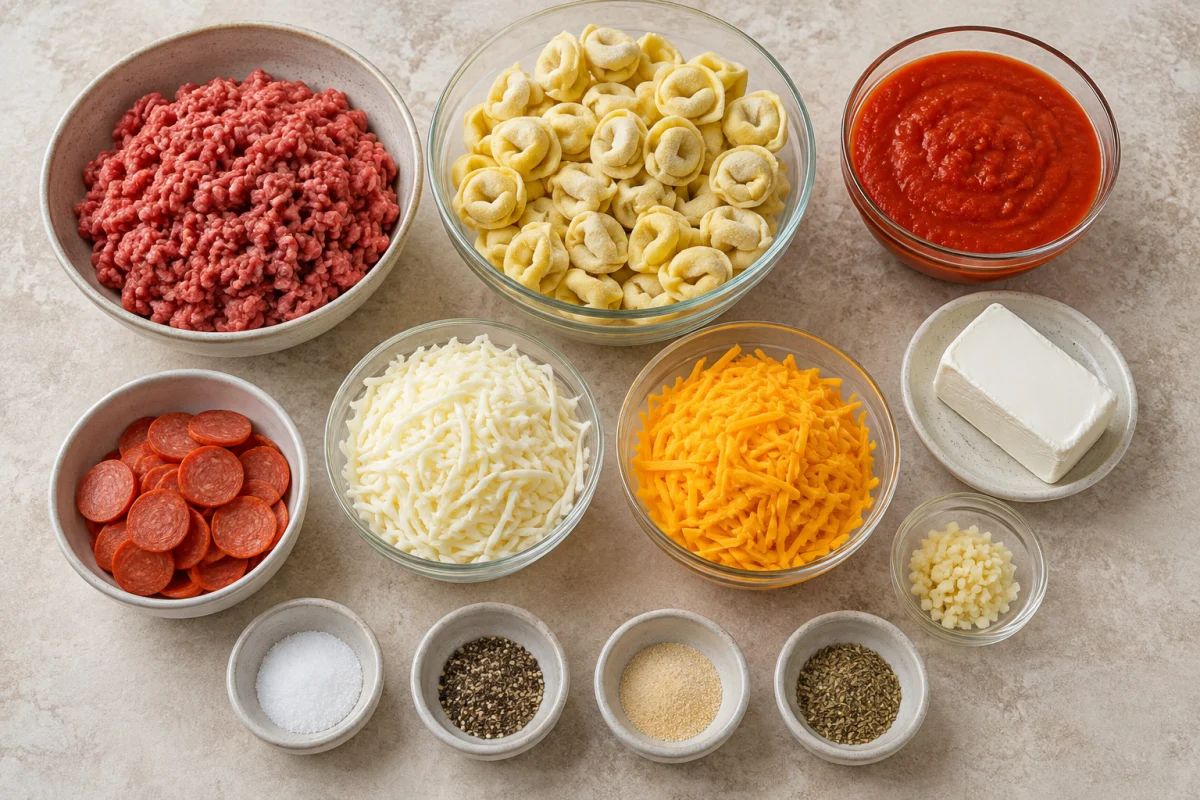
The skillet starts with 1 pound ground beef, 1/2 teaspoon each salt and black pepper, 1 teaspoon each onion powder and Italian seasoning, and 1 tablespoon minced garlic. For the sauce and pasta, use one 24-ounce jar marinara, 4 ounces cream cheese, and one 19-ounce bag frozen cheese tortellini.
Add about 1/3 cup mini pepperoni to the beef and reserve more for the top. Finish with enough shredded mozzarella and cheddar to cover the skillet in a light, even layer. A balanced blend melts well without hiding the tortellini beneath too much cheese.
If you enjoy this recipe, you may also like Sheet Pan Parmesan Garlic Chicken.
How to Make Cheesy Pizza Tortellini
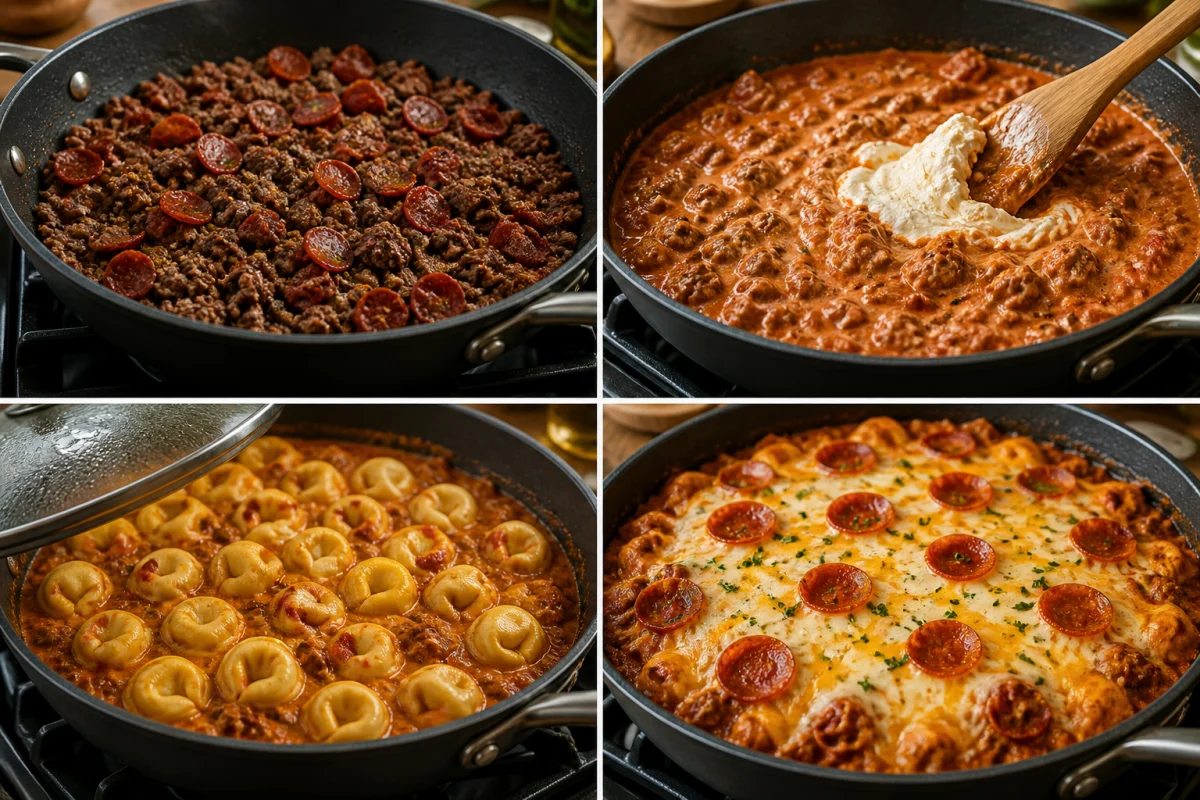
- Brown the beef. Season and cook it in a large skillet over medium-high heat until it reaches 160°F.
- Crisp the pepperoni. Add about 1/3 cup and cook until the edges begin to brown.
- Drain and season. Remove excess fat, then stir in garlic for 30 seconds.
- Make the sauce. Add marinara and cream cheese, stirring until smooth.
- Cook the tortellini. Add it frozen, cover, and simmer gently for about 5 minutes, stirring once or twice.
- Add toppings. Scatter mozzarella, cheddar, and reserved pepperoni over the pasta.
- Melt the cheese. Cover over low heat or broil briefly in an oven-safe skillet.
- Rest and serve. Wait a few minutes so the sauce settles.
For storage details after serving, the USDA leftovers and food safety guidance.
Use a Wide, Deep Skillet
A 12-inch skillet gives the beef room to brown and the tortellini enough surface area to simmer without piling too deeply. Choose a pan with a fitted lid. If you plan to use the broiler, confirm that both the skillet and handle are oven-safe.
A crowded small pan traps steam around the beef and makes gentle stirring difficult. If your skillet is smaller, cook the meat in two batches or use a Dutch oven, then keep the final cheese layer reasonably thin.
If you enjoy this recipe, you may also like Buffalo Chicken Tortellini Alfredo.
Brown the Beef for Better Flavor
Heat the pan before adding the ground beef. Season with salt, pepper, onion powder, and Italian seasoning, then spread the meat over the surface. Leave it undisturbed for short intervals before breaking it into small crumbles so some edges can brown.
Cook until no pink remains and the beef reaches 160°F. This browning builds a savory base that keeps the finished sauce from tasting like plain marinara. Drain pooled grease before adding garlic and cream cheese.
Crisp the Pepperoni Edges
Mini pepperoni distributes easily, but regular slices cut into quarters work just as well. Add it after the beef is mostly browned and let the pieces contact the hot skillet. Their edges should darken slightly and release a little flavorful oil.
Reserve some pepperoni for the top so the pizza character is immediately visible. Do not cook all of it until hard or brittle; the pieces continue heating in the sauce and beneath the cheese.
Soften the Cream Cheese Quickly
Cut the 4-ounce portion of cream cheese into several pieces before adding it to the marinara. Smaller pieces warm and disperse faster. Stir over medium heat, pressing any soft lumps against the side of the skillet until the sauce looks uniform.
Full-fat cream cheese produces the smoothest texture, though reduced-fat can be used with slightly gentler heat. Avoid a hard boil after it is added because intense heat can make a dairy sauce look grainy.
Cook Frozen Tortellini in the Sauce
Add the cheese tortellini directly from the freezer and fold gently to coat. Cover the skillet and reduce the heat to medium-low. Steam trapped under the lid helps thaw the pasta while the marinara provides enough moisture to finish cooking it.
Check the package timing because brands and pasta sizes vary. Five minutes is a useful starting point. Stir once or twice from the bottom with a flexible spatula, taking care not to tear the filled pasta.

Adjust the Sauce Consistency
The finished sauce should cling to the tortellini while still moving easily around the pan. If it becomes too thick before the pasta is tender, stir in a few tablespoons of water or low-sodium broth and replace the lid.
If it looks thin, uncover the skillet and simmer for a minute or two before adding the cheese. Remember that the pasta continues absorbing sauce and the mixture thickens as it rests.
Layer the Cheese Evenly
Scatter mozzarella first for stretch, then cheddar for deeper flavor and color. An even layer melts faster than thick handfuls concentrated in the center. Finish with the reserved pepperoni so its edges stay visible and lightly crisp.
There is no need to stir this final layer into the sauce. Keeping it on top creates the familiar baked-pizza finish while the sauce beneath remains creamy.
Stovetop or Broiler Finish
For a simple stovetop finish, lower the heat, cover, and wait until the cheese melts. This method is dependable and does not require an oven-safe pan. Remove the skillet promptly once the cheese is fluid.
For browned spots, place an oven-safe skillet under a preheated broiler for 1 to 2 minutes. Stay beside the oven because cheese and pepperoni can darken quickly. Protect any handle that remains hot after the pan returns to the counter.
Rest Before Serving
Let the skillet stand off the heat for 3 to 5 minutes. The sauce thickens enough to coat each piece instead of running onto the plate. This brief pause also makes the very hot cheese safer to eat.
Serve with a crisp salad, roasted broccoli, or garlic bread. Because the dish is rich, a vegetable dressed with a bright vinaigrette provides a useful contrast.
Substitutions That Work
Ground turkey or Italian sausage can replace the beef; cook either to its safe internal temperature and drain as needed. Refrigerated tortellini also works, but it usually needs less cooking time, so begin checking early.
Use a marinara you already enjoy because it supplies most of the tomato flavor. For a milder dish, replace part of the pepperoni with sautéed mushrooms or bell peppers, adding vegetables before the garlic so their moisture can cook away.
Storage and Reheating
Refrigerate cooled leftovers in a covered container for up to four days. The tortellini absorbs sauce while it rests, so add a spoonful of marinara or water before reheating.
Warm gently in a covered skillet over low heat or microwave in short intervals, stirring carefully. Freezing is possible for up to two months, although the filled pasta will be softer after thawing. Reheat until the center reaches 165°F.
Troubleshooting
- Greasy sauce: Drain the meat before adding marinara and cream cheese.
- Firm tortellini: Add a splash of water, cover, and continue at a gentle simmer.
- Torn pasta: Stir with a flexible spatula and fold instead of scraping aggressively.
- Grainy sauce: Keep the heat moderate after adding cream cheese.
- Burned topping: Broil only briefly and watch continuously.
Conclusion
Brown seasoned beef and pepperoni, drain excess fat, and briefly cook the garlic. Stir in marinara and cream cheese until smooth, then cover and simmer frozen tortellini in the sauce until tender. Top with mozzarella, cheddar, and more pepperoni, melt the cheese, and rest before serving.
Frequently Asked Questions
- → Can frozen tortellini cook directly in the sauce?
Yes. Cover the skillet and keep the sauce at a gentle simmer, adding a small splash of water if it becomes too thick before the pasta is tender.
- → Can I make pizza tortellini without a broiler?
Yes. Sprinkle on the cheese, cover the skillet, and keep it over low heat just until the topping melts.
- → What can replace ground beef?
Ground turkey or Italian sausage works well. Cook the meat to a safe temperature and drain excess fat before building the sauce.
- → How long does cheesy pizza tortellini keep?
Refrigerate it for up to four days and reheat gently with a small spoonful of water or marinara to loosen the sauce.