


Chicken avocado quesadillas combine seasoned chicken, sautéed peppers and onion, creamy avocado, and melted cheese inside crisp flour tortillas. They are substantial enough for dinner but straightforward enough for a quick lunch.
The best result comes from cooking each component with moisture in mind. The chicken should be juicy but fully cooked, the vegetables should be tender without pooled liquid, and the avocado should be added just before the tortillas are folded and toasted.
Ingredients for Chicken Avocado Quesadillas
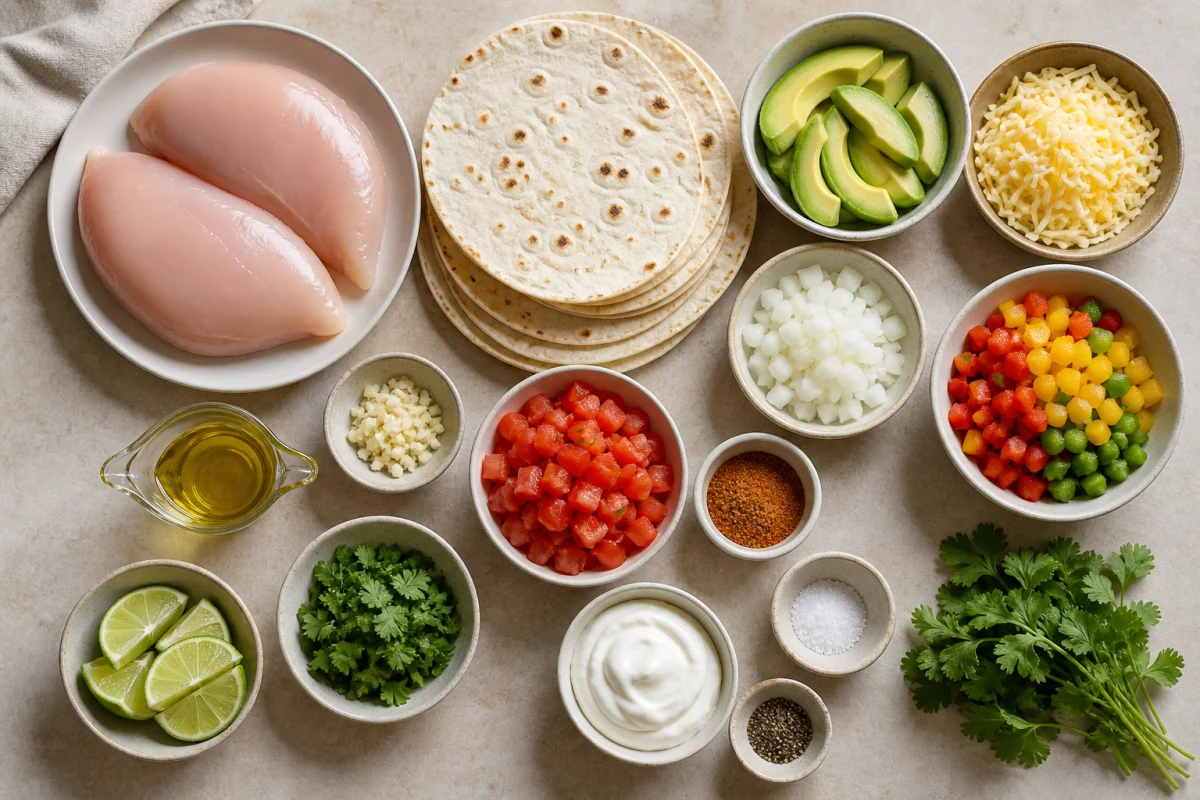
You need 2 boneless skinless chicken breasts, salt, black pepper, and 2 teaspoons olive oil. For the vegetable mixture, prepare 1 sliced onion, sliced bell peppers, minced garlic, chopped tomatoes, and 2 tablespoons fajita or taco seasoning.
For assembly, use 4 large flour tortillas, 1 ripe avocado, 4 teaspoons low-fat sour cream, 1/2 cup shredded melting cheese, and optional lime wedges and chopped cilantro. Monterey Jack, cheddar, or a Mexican blend all melt well.
If you enjoy this recipe, you may also like Garlic Butter Chicken Rigatoni.
How to Make Chicken Avocado Quesadillas
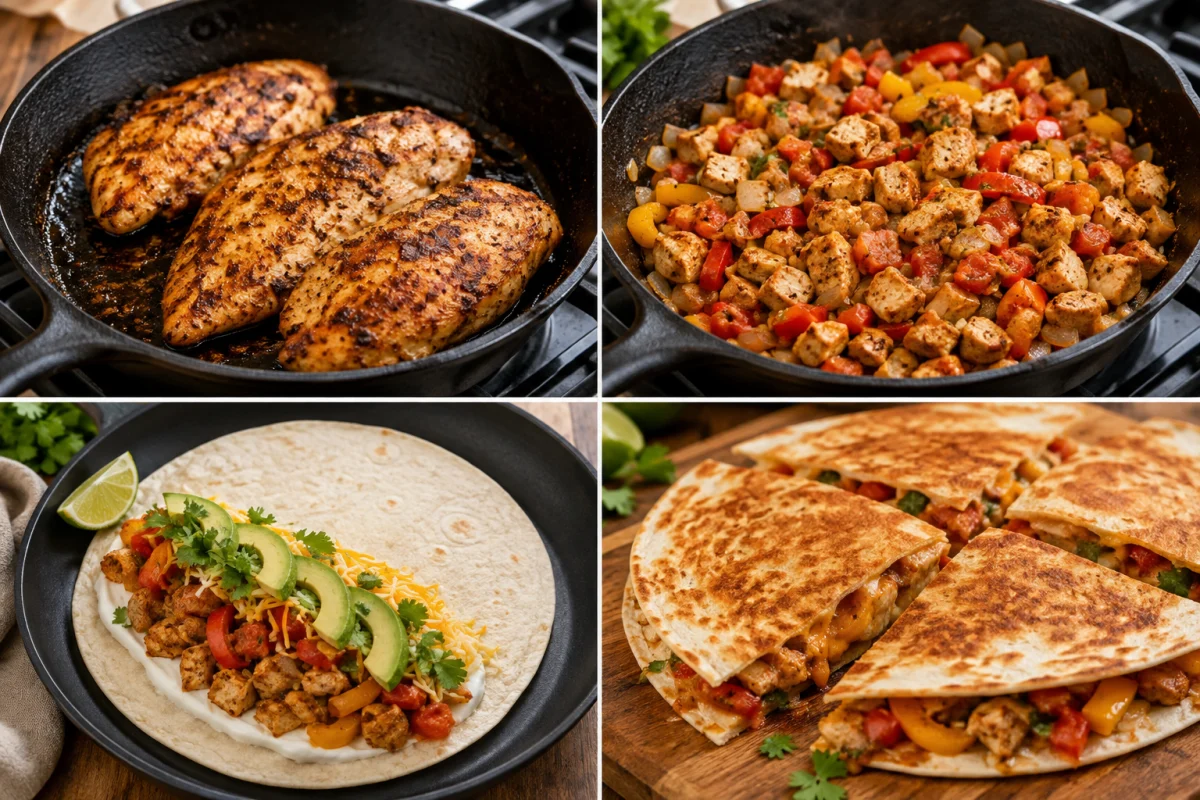
- Season the chicken. Pat dry and season both sides with salt and pepper.
- Cook. Heat olive oil in a skillet over medium and cook chicken about 5 to 6 minutes per side, until the center reaches 165°F. Rest before dicing.
- Sauté vegetables. Cook onion and peppers until tender-crisp. Add garlic, tomatoes, and seasoning, then cook until excess moisture evaporates.
- Combine. Fold diced chicken into the vegetables and remove from heat.
- Fill. Spread each tortilla with 1 teaspoon sour cream. Add cheese, avocado, chicken mixture, and optional cilantro or lime.
- Fold. Close each tortilla into a half moon and press gently.
- Toast. Cook in a dry or lightly oiled skillet over medium-low heat for 2 to 3 minutes per side, until golden and the cheese melts.
- Rest. Wait 1 minute, then cut into wedges and serve.
For storage details after serving, the USDA leftovers and food safety guidance.
Cook the Chicken Safely
Choose breasts of similar thickness so they finish together. If one end is much thicker, pound the chicken gently between sheets of parchment until the shape is more even. Pat the surface dry before seasoning so it browns rather than steams.
Cook over medium heat for roughly 5 to 6 minutes per side, adjusting for thickness. The only reliable finish test is 165°F in the thickest part. Rest the chicken for five minutes before dicing so its juices remain in the meat.
If you enjoy this recipe, you may also like Beef Enchilada Casserole.
Build Flavor in the Vegetable Filling
Cook onion and peppers first because they need more time than garlic and tomatoes. Let their edges soften and take on a little color before adding the remaining ingredients.
Garlic can burn if it goes in too early. Add it near the end, followed by tomatoes and the fajita or taco seasoning. Continue cooking until the tomatoes soften and any visible liquid has evaporated.
Choose a Balanced Seasoning
Two tablespoons of fajita or taco seasoning provide salt, chile, cumin, and aromatics. Commercial blends vary, so taste the cooked vegetables before adding more salt. A low-sodium blend gives more control.
If the mixture tastes flat, add a squeeze of lime after removing it from the heat. Acidity brightens the tomatoes and avocado without requiring extra seasoning.
Select a Ripe Avocado
A ripe avocado should yield slightly to gentle pressure but should not feel hollow or mushy. Cut it just before assembly and remove any bruised flesh. Thin slices stay in place better than large cubes.
Add lime if the quesadillas will wait a few minutes before cooking. Avoid salting the avocado separately far in advance because salt draws moisture to the surface.

Use Cheese as the Binder
Shredded Monterey Jack melts smoothly, cheddar adds sharper flavor, and a Mexican blend offers both. Distribute cheese beneath and above parts of the filling so it adheres to both tortilla surfaces as it melts.
One-half cup across four quesadillas is enough for cohesion without making them greasy. Finely shredded cheese melts during the short cooking time more reliably than thick slices.
Do Not Overfill
Spread a teaspoon of sour cream thinly over one half of each tortilla, leaving a clear border. Add a restrained layer of cheese, avocado, and chicken mixture. The tortilla should close without the filling reaching the edge.
If your tortillas are smaller, make more quesadillas rather than forcing in the filling. Overfilled tortillas are difficult to turn and lose their ingredients in the skillet.
Toast Over Moderate Heat
Preheat a wide skillet over medium-low to medium heat. A dry pan works well, though a very thin film of oil creates a slightly crisper surface. Place the folded edge toward the center of the pan where heat is most even.
Cook for 2 to 3 minutes per side. Press gently with a spatula, but do not crush the filling. If the tortilla browns before the cheese melts, lower the heat and cover the pan briefly.
Turn Without Spilling
Slide a broad spatula completely beneath the quesadilla and support the top with a second spatula if needed. Flip toward the folded edge, which acts like a hinge and helps contain the filling.
Once both sides are golden, rest the quesadilla for one minute. Melted cheese thickens slightly during the pause, making cleaner wedges.
Serving Ideas
Serve the wedges with salsa, pico de gallo, extra sour cream, hot sauce, or lime. A cabbage slaw or black bean salad adds freshness without making the meal heavy.
For a simple family platter, arrange the wedges around bowls of toppings so each person can add heat and acidity to taste.
Make-Ahead and Storage
Cook the chicken and vegetable mixture up to two days ahead and refrigerate it in a covered container. Reheat or bring it closer to room temperature before assembly so the cheese can melt before the tortilla darkens. Slice avocado only when ready to cook.
Refrigerate cooked quesadillas for up to three days. Reheat in a skillet, air fryer, or 350°F oven until the chicken reaches 165°F. A microwave warms them but softens the crisp exterior.
Troubleshooting
- Soggy tortilla: Cook excess moisture out of the tomato and pepper mixture.
- Cheese does not melt: Shred it finely and lower the heat so the center warms.
- Filling falls out: Use less filling and flip toward the folded edge.
- Chicken is dry: Cook only to 165°F and rest before cutting.
- Avocado browns: Cut it last and add a little lime juice.
Conclusion
Cook seasoned chicken to 165°F and rest before dicing. Sauté onion and peppers, then add garlic, tomatoes, and fajita seasoning until the mixture is flavorful and dry. Fill tortillas with sour cream, cheese, avocado, and chicken, fold, and toast over moderate heat until crisp and melted.
Frequently Asked Questions
- → Can I use leftover chicken in quesadillas?
Yes. Use fully cooked chicken, cut it into small pieces, and warm it with the seasoned vegetables before assembling.
- → How do I keep quesadillas from getting soggy?
Cook the vegetable mixture until no liquid remains, use a thin layer of sour cream, and avoid overfilling.
- → What cheese is best for chicken quesadillas?
Monterey Jack, cheddar, mozzarella, or a Mexican blend all work. Finely shredded cheese melts fastest and helps bind the filling.
- → How should chicken avocado quesadillas be reheated?
Reheat them in a skillet, air fryer, or 350°F oven until hot throughout. These methods restore more crispness than a microwave.