


Creamy chicken dumpling soup turns rotisserie chicken, familiar vegetables, and refrigerated biscuit dough into a generous one-pot dinner. The broth is rich without becoming heavy, while the biscuit pieces steam into soft dumplings that stay tender in the middle.
The soup takes about 35 minutes of active cooking and serves eight. Most of the work is simple chopping and stirring, but a gentle simmer and a short rest make an important difference to the final texture.
Ingredients for Creamy Chicken Dumpling Soup
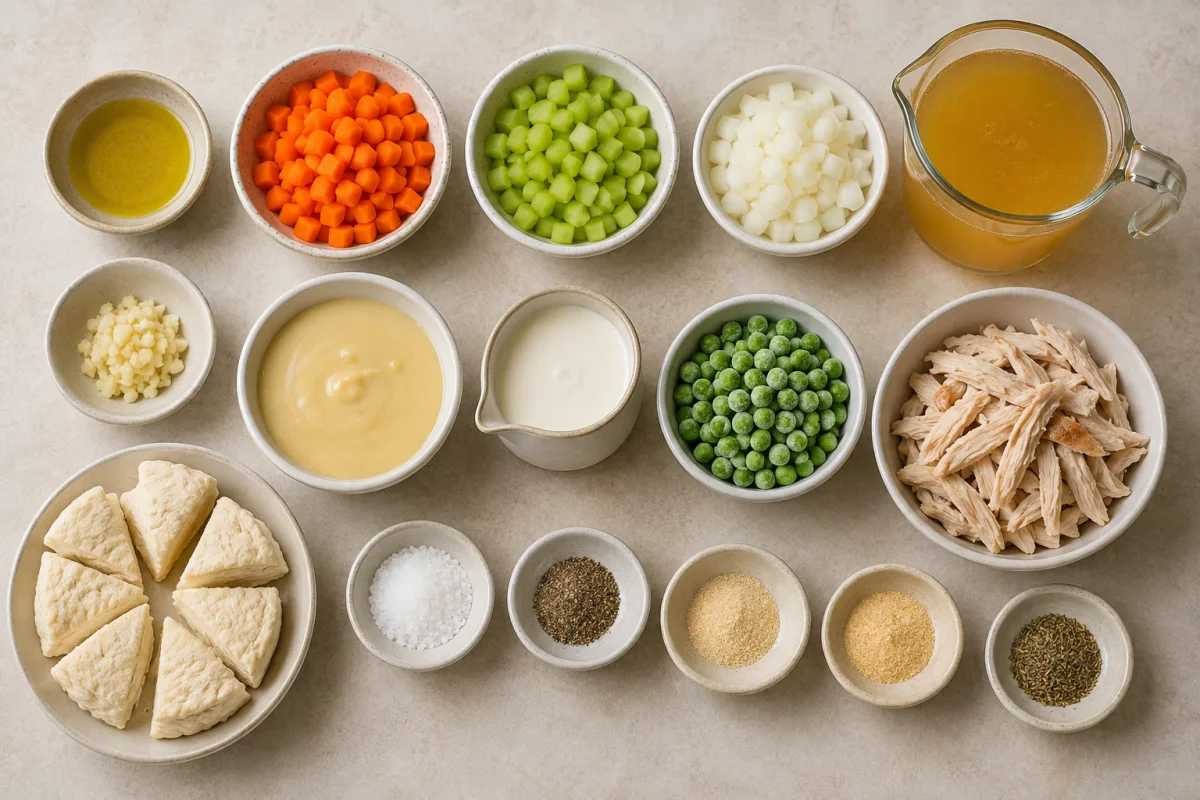
For the vegetable base, use 2 tablespoons olive oil, 3 large peeled and diced carrots, 3 to 4 diced celery ribs, 1 small diced onion, and 3 minced garlic cloves. Cut the vegetables to a similar small size so they soften at the same rate.
The soup needs 32 ounces or 4 cups chicken broth, one 10.5-ounce can cream of chicken soup, 1 cup heavy cream, 1 cup frozen peas, and the shredded meat from 1 large rotisserie chicken. One can of Southern-style homestyle biscuits, cut into quarters, forms the dumplings. Season with salt, black pepper, 1 teaspoon each onion powder and garlic powder, and 1 teaspoon poultry seasoning.
If you enjoy this recipe, you may also like Air Fryer Stuffed Peppers.
How to Make Chicken and Biscuit Dumpling Soup
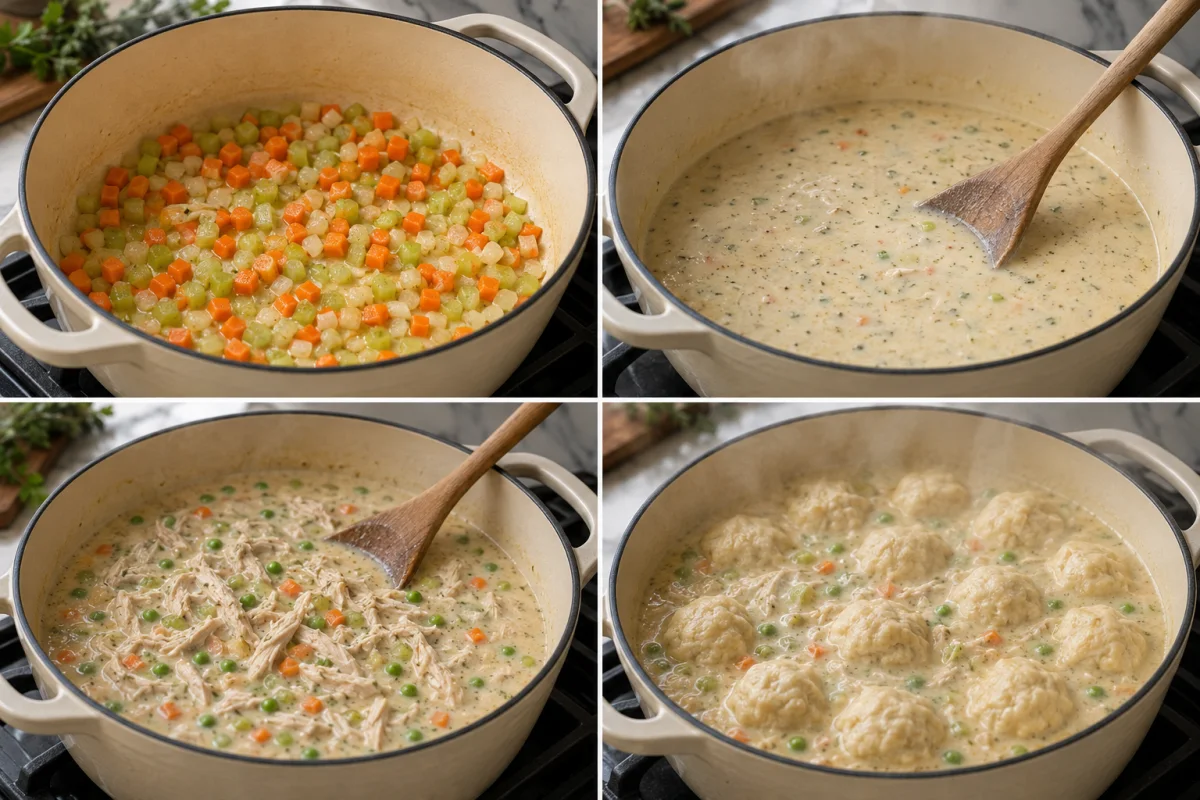
- Soften the vegetables. Heat olive oil in a large heavy pot over medium heat. Cook carrots, celery, and onion for 5 to 7 minutes. Add garlic for the final 30 seconds.
- Build the broth. Stir in chicken broth, cream of chicken soup, heavy cream, salt, pepper, onion powder, garlic powder, and poultry seasoning. Bring it only to a gentle simmer.
- Add chicken and peas. Fold in the shredded chicken and frozen peas and let them heat through.
- Cook the dumplings. Cut each biscuit into four pieces. Add them in an even layer, press them lightly into the broth, and simmer uncovered until puffed and cooked through.
- Rest. Remove the pot from the heat and leave it undisturbed for 10 minutes before serving.
For storage details after serving, the USDA leftovers and food safety guidance.
Choose a Wide, Heavy Pot
A Dutch oven or another wide, heavy-bottomed pot gives the vegetables room to soften and provides enough surface area for the biscuit pieces. In a narrow saucepan, the dumplings crowd together, cook unevenly, and can form a dense layer.
The recipe produces a large pot, so leave several inches of headroom. The soup expands as the dumplings puff and may boil over if the pan is filled to the rim.
If you enjoy this recipe, you may also like Loaded Chicken Garlic Toast.
Cut Vegetables Evenly
Dice carrots, celery, and onion into pieces close to 1/4 inch. Carrots take longest to soften, so especially large chunks can remain firm after the soup is finished. A uniform dice also distributes vegetables through every serving.
Cook them in oil before adding liquid. This brief sauté removes the raw onion taste and creates a sweeter, more rounded base than simply boiling everything together.
Make the Creamy Broth Smooth
Add the broth gradually while stirring the condensed soup so it dissolves without lumps. Once smooth, stir in the cream and dry seasonings. Taste before adding much salt because rotisserie chicken, broth, and condensed soup are already seasoned.
If the pot begins to boil hard, lower the heat immediately. Dairy stays smoother at moderate heat, and the vegetables continue cooking perfectly well at a quiet simmer.
Prepare Rotisserie Chicken
Remove the skin and bones, then shred the meat into bite-size pieces. A mixture of breast and thigh meat gives the best balance of tenderness and flavor. Add the chicken only after the broth is hot so it warms without becoming stringy.
Freshly cooked chicken also works. Poach or roast about 1 1/2 pounds boneless chicken, cool it enough to handle, and shred it before adding. The chicken must already be fully cooked because the short soup simmer is meant only to heat it.
Cut and Add Biscuit Dumplings
Separate the refrigerated biscuits and cut each round into four equal wedges. Keep the dough cold until the broth is ready; warm dough becomes sticky and difficult to separate. Place the pieces across the surface instead of dropping them into one mound.
Give the pot one gentle stir or use a spoon to moisten the tops. Avoid repeated stirring once the dough begins to soften. Too much movement breaks the dumplings and thickens the broth unevenly.

Check Dumplings for Doneness
The dumplings should look puffed and matte rather than shiny with raw dough. Split the largest piece near the center of the pot; its middle should be fluffy and breadlike with no wet streak. Cooking time varies slightly with pot width and simmer strength.
If the center remains raw, continue simmering for two or three minutes and check again. Do not increase to a hard boil, which cooks the outside faster but leaves the middle dense.
Why the Rest Matters
A 10-minute rest off the heat lets the dumplings finish steaming and allows starch from their surface to lightly thicken the broth. The soup changes from loose and bubbling to creamy and spoon-coating without extra flour.
Keep the pot uncovered during this rest. Condensation from a tight lid can drip back onto the dumplings and make their tops gummy.
Useful Variations
For more herbs, add chopped parsley or thyme just before serving. Corn or cut green beans can replace part of the peas. Avoid adding too many extra vegetables, since they reduce the room available for dumplings and may require more broth.
For a slightly lighter soup, replace half the heavy cream with whole milk. Do not use only low-fat milk because it is more likely to separate and produces a thin broth.
Storage and Reheating
Cool leftovers promptly and refrigerate them in a covered container for up to three days. The dumplings absorb broth as they sit, so the chilled soup will be much thicker. Add a splash of chicken broth or milk when reheating.
Warm it slowly on the stovetop over medium-low heat, stirring around rather than through the dumplings. Freezing is not ideal because the dairy can separate and the biscuit dumplings become soft. For make-ahead preparation, cook the soup base, refrigerate it, and add fresh biscuit pieces while reheating the next day.
Troubleshooting
- Raw dumpling centers: Keep a steady gentle simmer and cut every biscuit into equal quarters.
- Broken dumplings: Stir only once after adding the dough.
- Thin broth: Allow the full 10-minute rest before adjusting it.
- Overly thick leftovers: Loosen them gradually with warm broth.
- Salty soup: Use lower-sodium broth and taste after adding the rotisserie chicken.
Conclusion
Sauté carrots, celery, and onion, then add garlic. Stir in broth, condensed soup, cream, and seasonings. Add shredded chicken and peas, arrange quartered biscuit dough over the gentle simmer, and cook until fluffy. Rest the pot for 10 minutes before serving.
Frequently Asked Questions
- → Can I use homemade dumpling dough?
Yes. Drop small spoonfuls of a soft baking-powder dumpling dough over the simmering soup and cook until the centers are no longer wet. Timing may differ from refrigerated biscuits.
- → Can I make chicken dumpling soup ahead?
Prepare the soup base up to one day ahead, then reheat it gently and cook fresh biscuit dumplings shortly before serving. This keeps their texture light.
- → How do I know biscuit dumplings are cooked?
They should be puffed and dry-looking outside. Split the largest dumpling; the center should be fluffy with no glossy raw dough.
- → Can chicken dumpling soup be frozen?
Freezing the completed soup is not recommended because the creamy base can separate and the dumplings soften. Freeze the broth base without cream or dumplings, then finish it after thawing.