

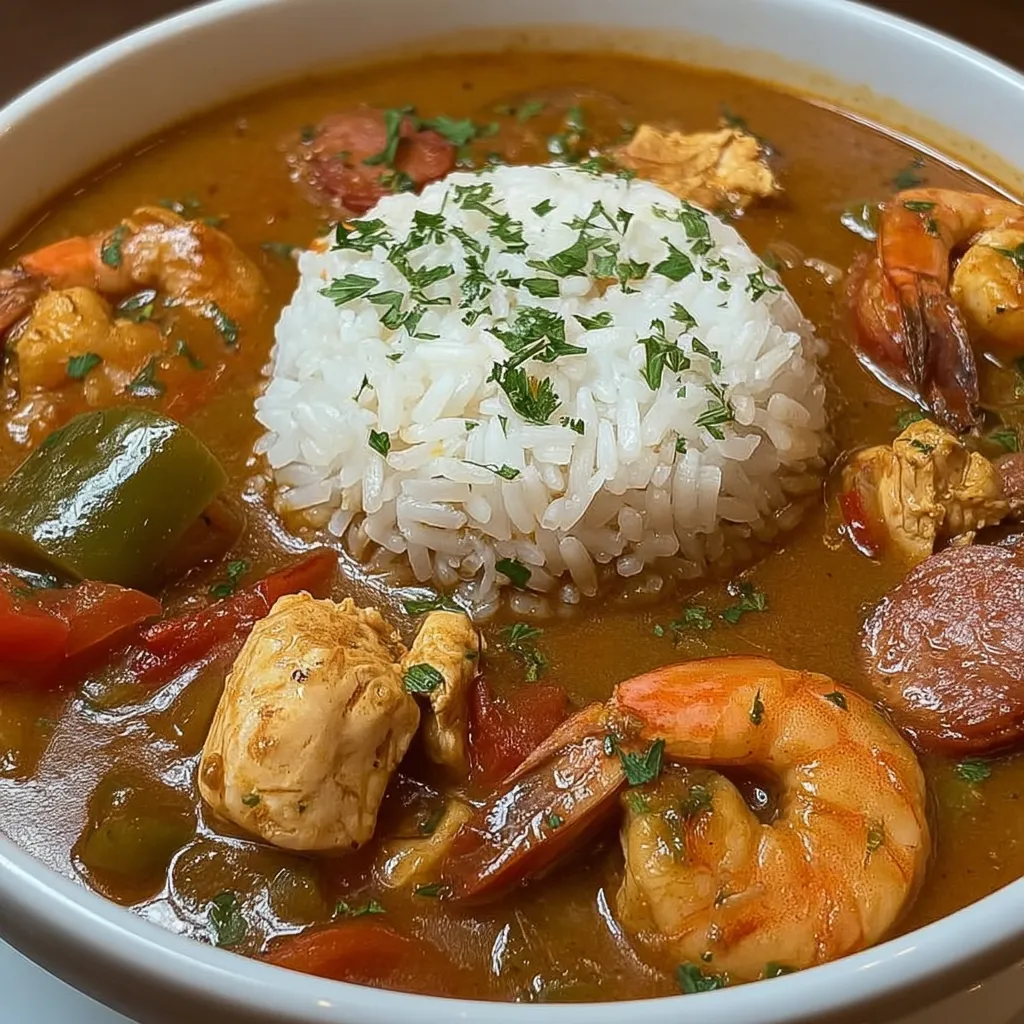
Chicken, shrimp, and sausage gumbo builds deep flavor from a dark flour-and-oil roux, the classic combination of onion, green bell pepper, and celery, smoky sausage, shredded chicken, tomatoes, broth, and Cajun seasonings. Shrimp enters only at the end so it stays tender.
The recipe serves six and takes about 20 minutes to prepare plus 50 minutes to cook. The roux demands 15 to 20 minutes of constant whisking, followed by a 30-to-40-minute uncovered simmer. That patient foundation produces the gumbo's characteristic body and color.
Chicken Shrimp Sausage Gumbo Ingredients
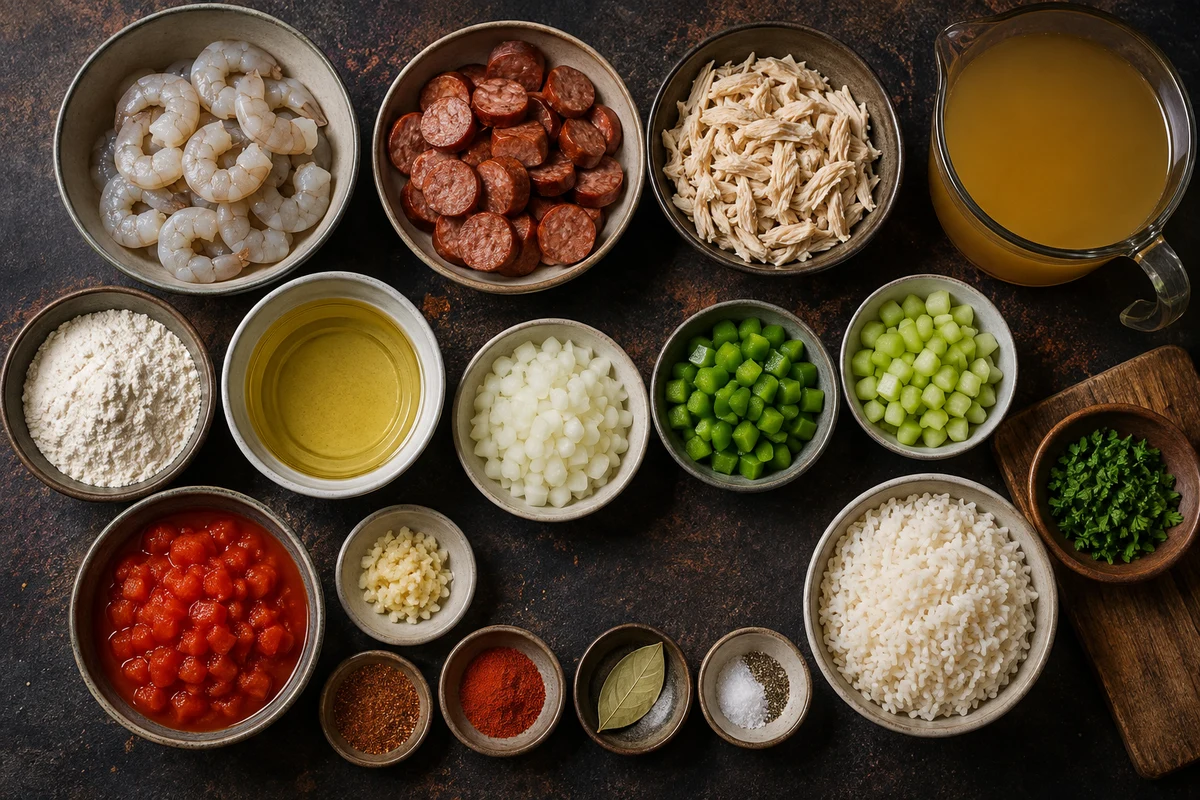
The proteins are ½ pound peeled and deveined shrimp, ½ pound sliced smoked sausage, and ½ pound cooked shredded chicken breast. Make the roux with ½ cup all-purpose flour and ½ cup vegetable oil. Dice 1 onion, 1 green bell pepper, and 2 celery stalks.
Add 4 cups chicken broth, one 14-ounce can diced tomatoes, 2 minced garlic cloves, 1 teaspoon Cajun seasoning, 1 teaspoon paprika, 1 bay leaf, and salt and black pepper to taste. Serve with 2 cups cooked white rice and chopped fresh parsley.
If you enjoy this recipe, you may also like Taco Pasta Bake.
How to Make Chicken Shrimp Sausage Gumbo
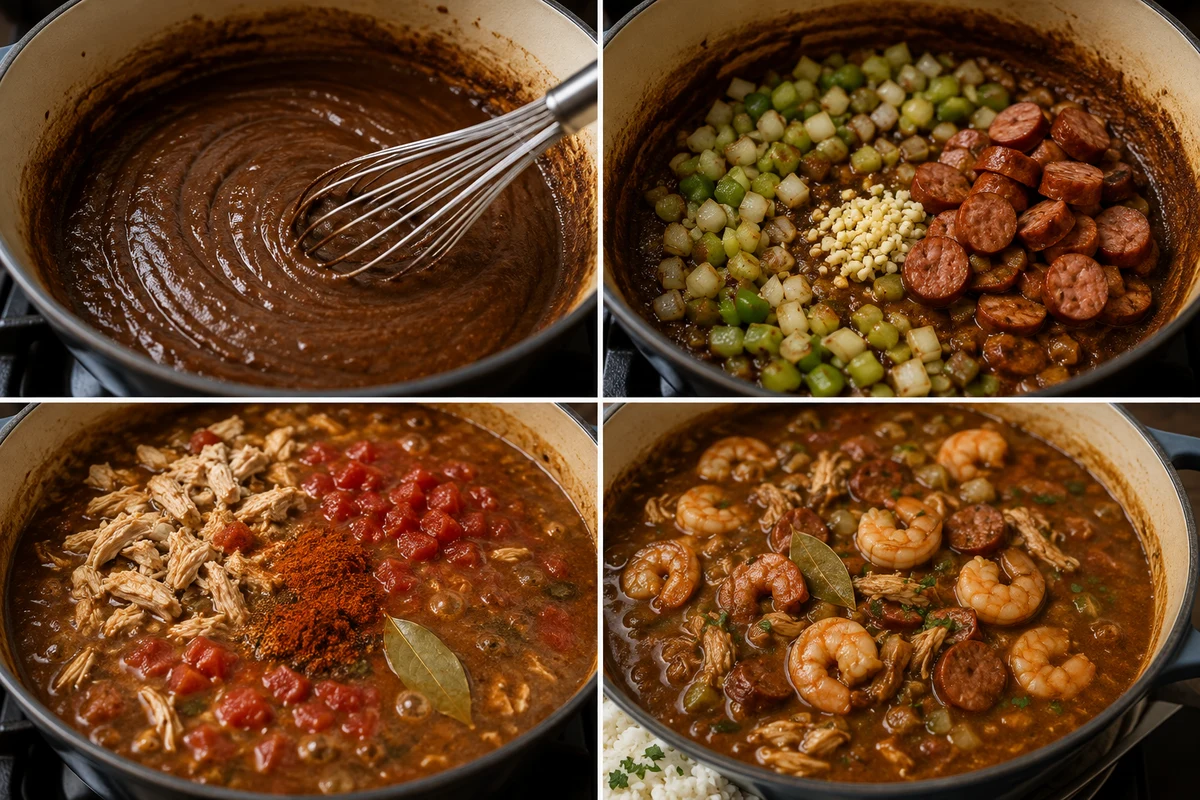
- Make roux. Whisk flour and vegetable oil in a large pot over medium heat for 15 to 20 minutes, until dark brown like chocolate.
- Cook vegetables. Add onion, bell pepper, and celery. Stir often for about 5 minutes.
- Add sausage and garlic. Cook them with the vegetables for 3 to 4 minutes.
- Build gumbo. Add shredded chicken, tomatoes, broth, Cajun seasoning, paprika, bay leaf, salt, and pepper.
- Simmer. Cook uncovered for 30 to 40 minutes, stirring occasionally.
- Add shrimp. Stir it in during only the final 5 minutes.
- Serve. Remove the bay leaf, adjust seasoning, and ladle over white rice with parsley.
For storage details after serving, the USDA leftovers and food safety guidance.
Prepare the Proteins and Vegetables
Peel and devein the ½ pound shrimp if needed, slice the ½ pound smoked sausage, and shred ½ pound already-cooked chicken breast. Rotisserie chicken can save preparation time. Keep the raw shrimp refrigerated until the last stage.
Dice the onion, green bell pepper, and 2 celery stalks into similarly sized pieces so they soften evenly. Mince the 2 garlic cloves separately because they are added later with the sausage and need less cooking time.
If you enjoy this recipe, you may also like Shrimp & Beef Nacho Fries.
Whisk a Dark Roux
Combine ½ cup flour and ½ cup vegetable oil in a large pot or Dutch oven over medium heat. Whisk constantly for 15 to 20 minutes. The mixture passes from pale to tan and finally dark brown, with a color comparable to chocolate.
Do not raise the heat to hurry this stage and do not stop whisking. Roux can scorch quickly, and a burned taste cannot be removed from the finished gumbo. If black flecks or a harsh smell appear, the safest choice is to start the roux again.
Add the Vegetable Base
Once the roux reaches dark chocolate-brown, stir in the diced onion, green bell pepper, and celery. Cook for about 5 minutes, stirring often. The vegetables begin to soften while their moisture slows further browning of the roux.
Add the minced garlic and sliced smoked sausage. Continue cooking for 3 to 4 minutes, stirring occasionally. This warms the sausage and blooms the garlic in the rich base before liquid enters the pot.
Build the Gumbo
Add the ½ pound shredded cooked chicken, the entire 14-ounce can diced tomatoes, and 4 cups chicken broth. Stir carefully so the dark roux disperses through the liquid without leaving thick pockets at the bottom.
Season with 1 teaspoon Cajun seasoning, 1 teaspoon paprika, 1 bay leaf, plus salt and black pepper to taste. Start conservatively with additional salt because broth, smoked sausage, and Cajun blends can already be seasoned.
Simmer Uncovered
Bring the combined gumbo to a steady simmer and cook uncovered for 30 to 40 minutes. Stir occasionally, scraping along the base of the pot. The liquid reduces, the roux thickens it, and the chicken and sausage flavors blend through the broth.
Keep the simmer controlled rather than violently boiling. An uncovered pot permits gradual reduction, while occasional stirring prevents the dense solids from settling and sticking.
Add Shrimp for the Final Five Minutes
Stir the peeled, deveined shrimp into the pot during the last 5 minutes of cooking. They need only enough time to turn opaque and cook through. Adding them with the chicken at the start would make their texture rubbery during the long simmer.
Watch for the shrimp to curl gently and lose their translucent centers. Remove the pot from the heat when they are done rather than extending the simmer.
Finish and Serve
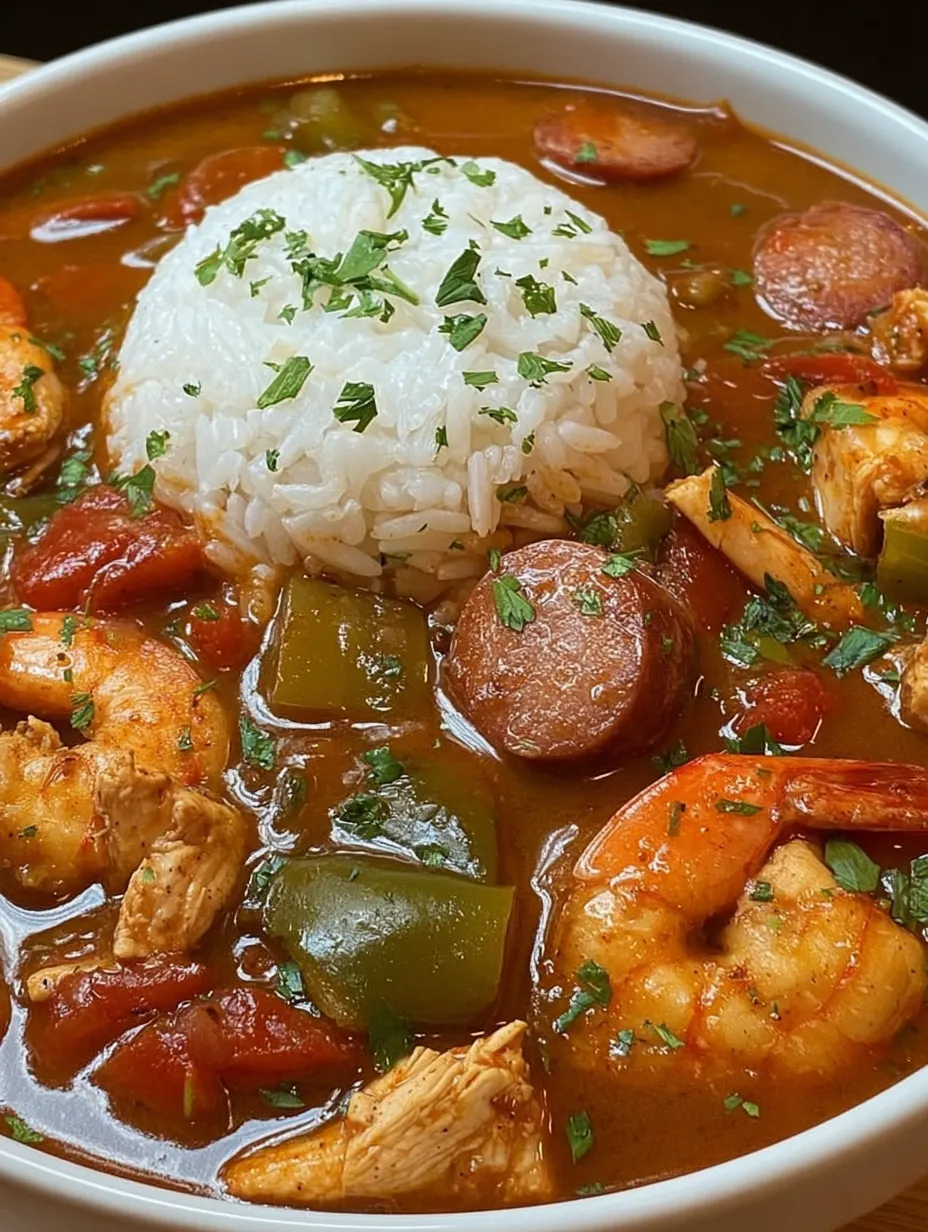
Find and discard the bay leaf before serving. Taste the gumbo and adjust salt and black pepper only after the full simmer. Spoon portions over the 2 cups cooked white rice and scatter chopped fresh parsley across the top.
Serve hot, making sure every bowl receives chicken, sausage, and shrimp. The rice balances the concentrated sauce and makes six satisfying portions.
Storage and Next-Day Flavor
Gumbo often tastes even more integrated the next day. Cool leftovers promptly and refrigerate in a covered container for up to 3 days. Store rice separately so it does not continue absorbing the sauce.
Reheat gently until steaming, avoiding a prolonged boil that toughens the shrimp. Add freshly cooked rice and parsley when serving again.
Conclusion
Whisk ½ cup flour and ½ cup vegetable oil over medium heat for 15 to 20 minutes until chocolate-brown. Add onion, bell pepper, and celery for 5 minutes, then garlic and sliced sausage for 3 to 4 minutes. Stir in shredded chicken, tomatoes, 4 cups broth, Cajun seasoning, paprika, bay leaf, salt, and pepper. Simmer uncovered 30 to 40 minutes. Add ½ pound shrimp only for the last 5 minutes. Remove the bay leaf and serve over 2 cups rice with parsley.
Frequently Asked Questions
- → How dark should gumbo roux become?
Whisk it over medium heat until it reaches a dark brown color like chocolate, usually after 15 to 20 minutes of constant attention.
- → Can the roux be cooked faster over high heat?
No. Higher heat greatly increases the chance of scorching. Use medium heat and whisk constantly because burned roux must be discarded.
- → When should shrimp be added to gumbo?
Add the peeled shrimp only during the final 5 minutes. Earlier addition exposes them to the long simmer and can make them rubbery.
- → How long does leftover gumbo keep?
Refrigerate it promptly in a covered container for up to 3 days, preferably with the cooked rice stored separately.