


Chocolate peppermint cookies pair a dark cocoa dough with semisweet chocolate chips and a bright peppermint finish. Crushed candy cane pressed onto the warm tops gives the cookies a crisp seasonal contrast while the centers remain soft and chewy.
The dough comes together without chilling, so ingredient temperature and baking time matter. Room-temperature butter and eggs form a smooth base, Dutch-processed cocoa supplies deep color, and removing the cookies while the centers still look soft prevents a dry result.
Ingredients for Chocolate Peppermint Cookies
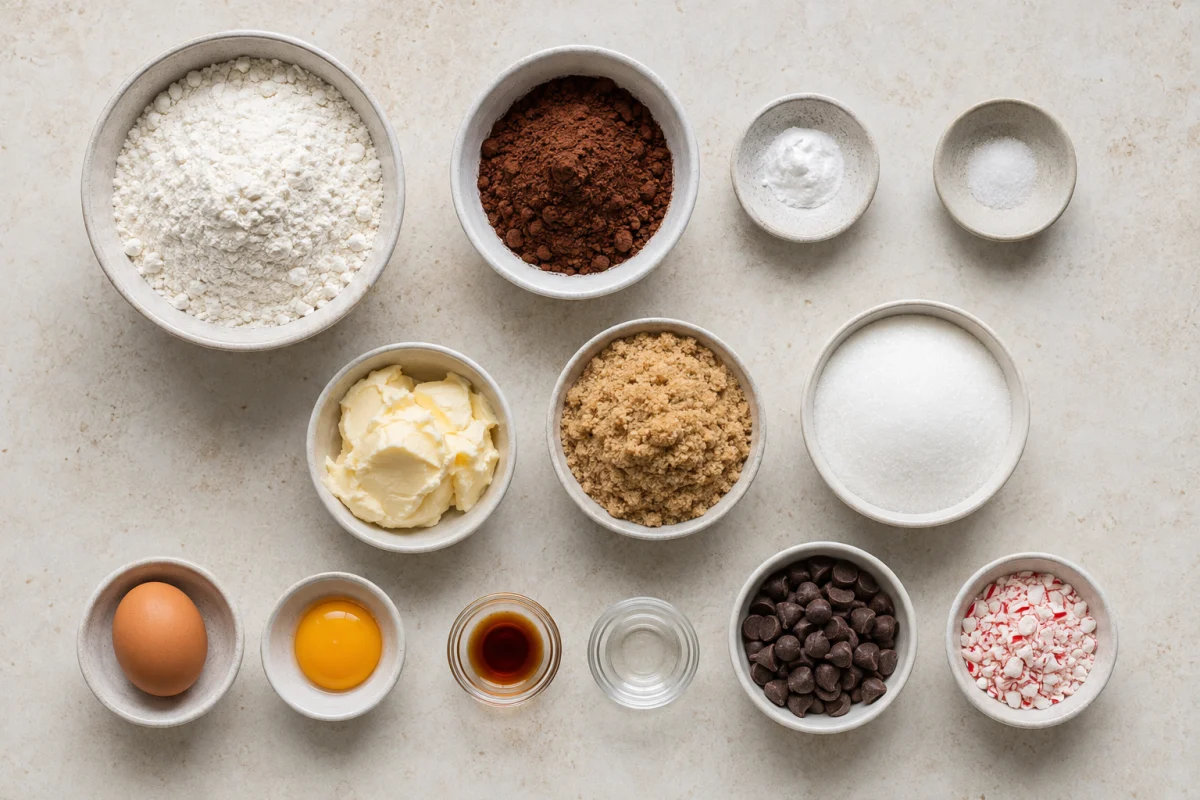
For the dry mixture, measure 1 1/3 cups all-purpose flour, 1/3 cup unsweetened Dutch-processed cocoa powder, 1/2 teaspoon baking soda, and 1/2 teaspoon salt. The wet mixture uses 1/2 cup room-temperature unsalted butter, 2/3 cup packed light brown sugar, 1/3 cup granulated sugar, 1 large egg, 1 large egg yolk, 1 1/2 teaspoons vanilla extract, and 1 teaspoon peppermint extract.
Fold in 1 cup semisweet chocolate chips. For the optional finish, prepare 3 to 4 tablespoons crushed candy cane before the cookies enter the oven.
If you enjoy this recipe, you may also like Blue Velvet Swirl Pound Cake.
How to Make Chocolate Peppermint Cookies
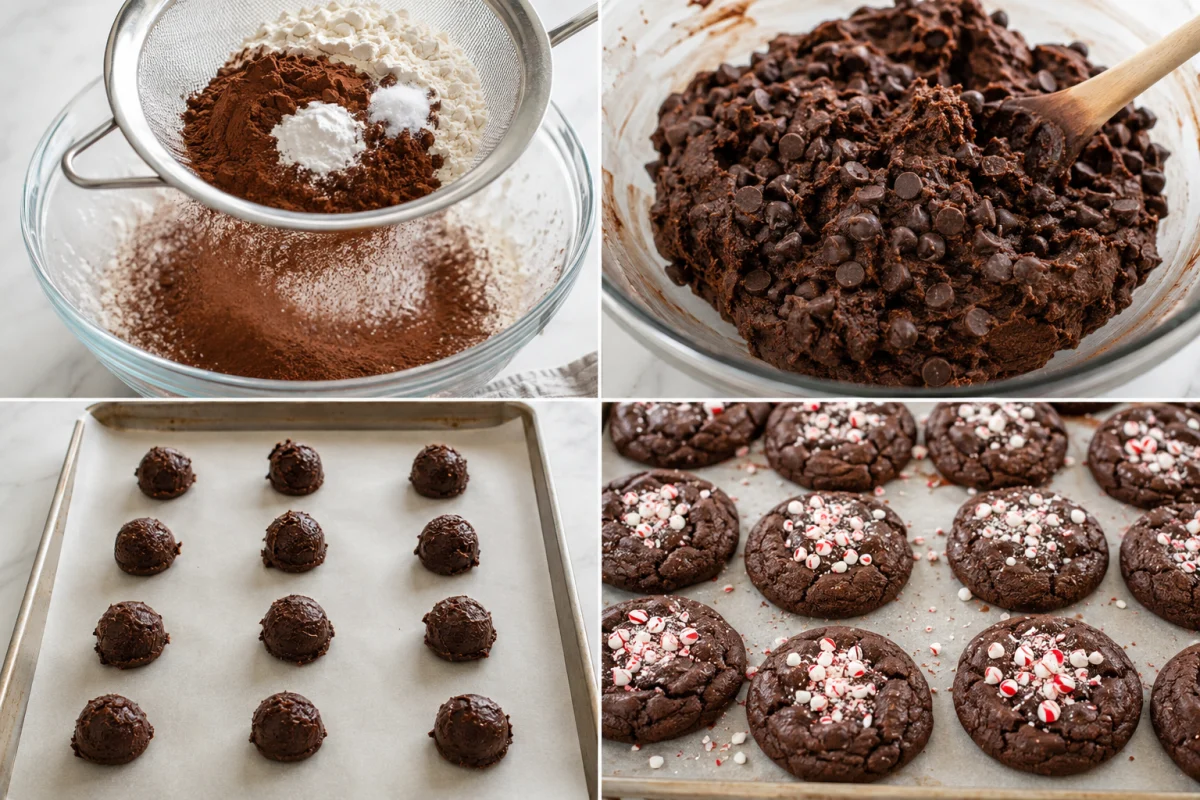
- Preheat. Heat the oven to 350°F and line a large baking sheet with parchment.
- Sift. Combine flour, cocoa, baking soda, and salt in a medium bowl.
- Cream. Beat softened butter with brown and granulated sugars for 2 to 3 minutes, until lighter and fluffy.
- Add liquids. Mix in the egg, extra yolk, vanilla, and peppermint just until smooth.
- Combine. Add the dry ingredients on low speed and stop when the flour disappears.
- Fold. Stir in chocolate chips by hand.
- Scoop. Portion 2 1/2-tablespoon mounds about 2 inches apart.
- Bake. Bake for 10 to 12 minutes, until the edges set and centers remain soft.
- Finish. Immediately add crushed candy cane, cool 3 to 4 minutes on the pan, then transfer to a rack.
For storage details after serving, the USDA leftovers and food safety guidance.
Why Dutch-Processed Cocoa Matters
Dutch-processed cocoa has been alkalized, giving it a darker color and smoother, less acidic chocolate flavor. That rounded flavor supports peppermint without adding a sharp tang.
Natural cocoa behaves differently with leavening and may produce a lighter cookie. For the intended color and balance, use cocoa specifically labeled Dutch process and measure it by spooning it lightly into the cup or, preferably, by weight.
If you enjoy this recipe, you may also like Cranberry Cake.
Sift the Dry Ingredients
Cocoa powder forms small firm clumps in storage. Sifting it with the flour, baking soda, and salt breaks those clumps before they reach the thick dough.
Whisk the sifted mixture for several seconds so the leavener and salt are evenly dispersed. Uneven baking soda can create isolated bitter spots and irregular spreading.
Bring Butter and Eggs to Room Temperature
Butter should indent when pressed but should not look melted or oily. Properly softened butter traps tiny air pockets when creamed with sugar, supporting a tender cookie.
Room-temperature egg and yolk blend into the butter instead of chilling it into small lumps. To warm eggs quickly, place them in their shells in a bowl of lukewarm water for five minutes.
Use Two Sugars and an Extra Yolk
Brown sugar contributes moisture and a soft center, while granulated sugar encourages lightly crisp edges. Pack the brown sugar into the measuring cup so the ratio remains consistent.
The additional yolk adds fat and richness without the drying effect of another egg white. Mix the egg, yolk, and extracts only until the batter is uniform; excessive beating at this stage can add too much air.

Stop Mixing as Soon as the Dough Forms
Add the dry ingredients with the mixer on low. The dough will become thick quickly. Stop as soon as no obvious streaks of flour remain, then scrape the bottom and fold once or twice with a spatula.
Extended mixing develops gluten and can make the cookies tougher. Fold in the chocolate chips by hand so they are evenly distributed without further working the flour.
Portion Evenly
A 2 1/2-tablespoon cookie scoop produces roughly 20 substantial cookies. Level each scoop consistently and place only 8 or 9 portions on a large sheet, leaving about 2 inches between them.
Uneven mounds finish at different times. If the first tray reveals that the dough spreads more than expected, cool the remaining dough briefly while the first batch bakes.
Bake for a Soft Center
Bake on the center rack for 10 to 12 minutes. The edges should appear set and the centers should lose their wet shine but still look soft. They continue cooking from the sheet's retained heat.
If the cookies look completely firm before leaving the oven, they will likely cool dry. Bake one test cookie when using an unfamiliar pan or oven, then adjust the remaining batch by a minute if needed.
Add Candy Cane After Baking
Crush candy canes into small irregular pieces rather than fine dust. Sprinkle them over the cookies immediately after the pan leaves the oven and press very lightly if needed.
The residual heat softens the candy enough to adhere without dissolving it into the dough. Adding it before baking can cause the sugar to melt, spread, and harden against the pan.
Cool in Two Stages
Leave the cookies on the baking sheet for 3 to 4 minutes. Their delicate centers set during this pause. Transfer them with a thin spatula to a wire rack and let them cool completely before stacking.
Candy cane pieces remain slightly tacky while warm. Separating layers with parchment prevents finished cookies from sticking together.
Storage and Freezing
Store cooled cookies in an airtight container at room temperature for up to five days. Keep them away from humid areas because peppermint candy absorbs moisture and becomes sticky.
Freeze portioned unbaked dough for up to two months. Bake from frozen at 350°F, allowing an extra minute or two, and add crushed candy cane after baking. Baked cookies can also be frozen without the topping.
Troubleshooting
- Cookies are dry: Remove them while the centers still look soft.
- Dough spreads widely: Butter was too warm; chill the remaining portions briefly.
- Cocoa lumps remain: Sift cocoa with the flour before mixing.
- Mint is overpowering: Measure extract away from the bowl and use a level teaspoon.
- Candy becomes sticky: Add it after baking and store the cookies airtight.
Conclusion
Sift flour, Dutch cocoa, baking soda, and salt. Cream softened butter with brown and granulated sugars, then add one egg, an extra yolk, vanilla, and peppermint. Mix in the dry ingredients briefly, fold in chocolate chips, scoop, and bake at 350°F for 10 to 12 minutes. Add crushed candy cane while warm.
Frequently Asked Questions
- → Can I use natural cocoa powder?
The cookies may bake, but their color, acidity, and flavor will differ. Dutch-processed cocoa gives the intended dark, smooth chocolate base.
- → Why are my chocolate cookies dry?
They were probably baked too long. Remove them when the edges are set but the centers still appear soft, then let them finish on the hot pan.
- → When should crushed candy cane be added?
Sprinkle it on immediately after baking. The warm surface holds the pieces without melting them into hard spots on the pan.
- → Can chocolate peppermint cookie dough be frozen?
Yes. Freeze scooped portions for up to two months and bake from frozen, adding a minute or two as needed.