


Christmas poke cake turns a simple white sheet cake into a bright holiday dessert with ribbons of cherry and lime gelatin. The colorful liquid settles into holes throughout the crumb, so every slice has red and green pockets beneath a light whipped topping.
This version serves 12 and takes about 55 minutes of active baking and assembly, plus chilling. Boxed cake mix keeps the method approachable, while careful cooling, evenly spaced holes, and controlled pouring give the finished cake its cleanest pattern.
Ingredients for Christmas Poke Cake
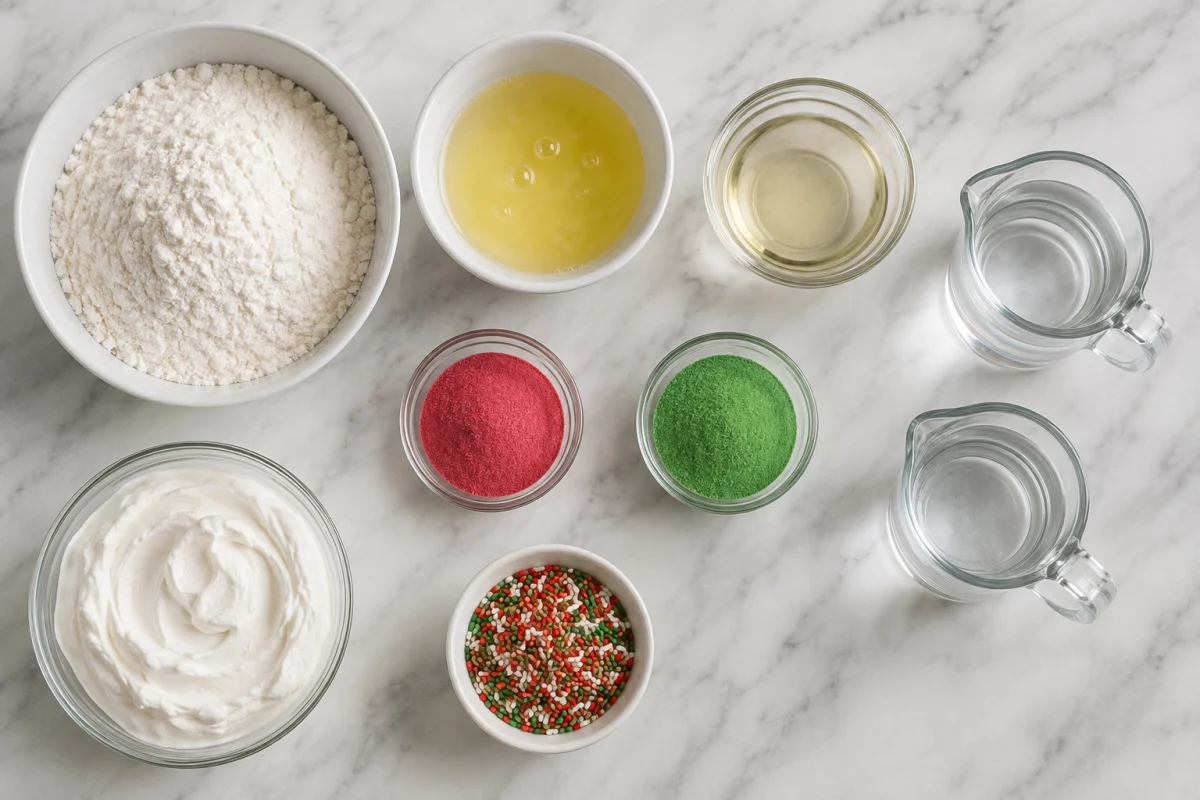
Prepare one 15.25-ounce box of white cake mix with the water, neutral oil, and three egg whites called for on the package. Using egg whites rather than whole eggs keeps the crumb pale, which makes the red and green stripes easier to see.
For the filling, use one 3-ounce box cherry gelatin, one 3-ounce box lime gelatin, 1 cup boiling water divided between them, and 1 cup cold water divided between them. Finish with one 8-ounce tub of thawed whipped topping and about 1/4 cup Christmas sprinkles.
If you enjoy this recipe, you may also like Sweet Cream Cheese Rolls.
How to Make the Cake
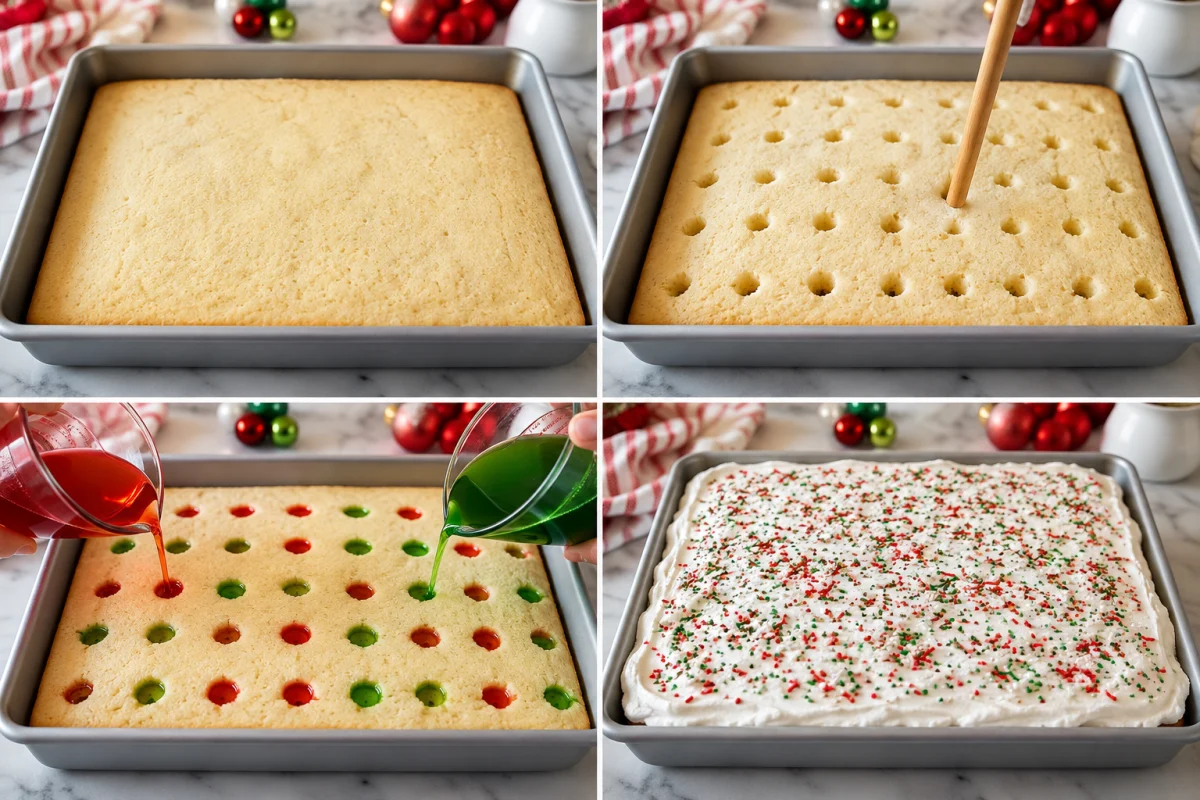
- Bake the base. Prepare the white cake batter according to the package and bake it in a 9-by-13-inch pan.
- Cool briefly. Let the cake stand until warm rather than steaming hot.
- Poke the holes. Use the round handle of a wooden spoon to make evenly spaced holes without cutting through the bottom.
- Mix the gelatin. Dissolve each flavor separately in 1/2 cup boiling water, then stir 1/2 cup cold water into each bowl.
- Add the colors. Pour the cherry and lime mixtures in alternating rows, aiming most of the liquid into the holes.
- Chill. Refrigerate for at least one hour so the gelatin sets inside the cake.
- Finish. Spread thawed whipped topping over the cold cake, add sprinkles, and chill again before slicing.
For storage details after serving, the USDA leftovers and food safety guidance.
Choose a Pale Cake Base
A white cake provides the strongest contrast for the holiday colors. Yellow cake will still taste good, but its deeper crumb makes the red and green filling look less distinct. Follow the exact liquid and oil quantities printed on the box because formulas vary slightly by brand and package size.
Mix only until the dry streaks disappear. Excess beating can build a coarse, airy crumb that tears when holes are made. Scrape the bowl once, then pour the batter into a greased pan and level the surface so the gelatin reaches slices evenly.
If you enjoy this recipe, you may also like Peppermint Chocolate Bundt Cake.
Cool Before Poking
Give the baked cake enough time to settle before making holes. A cake that is still steaming is fragile and may cling to the spoon handle. It does not need to become refrigerator-cold; slightly warm is ideal because the crumb remains receptive to the liquid.
Set the pan on a rack so air can circulate underneath. If the center is domed, do not press it flat. A gentle dome is normal and will be hidden under the topping.
Dissolve Each Gelatin Completely
Keep the cherry and lime mixtures in separate heatproof bowls. Stir each powder with boiling water until no crystals remain along the base or sides, then add the cold water. Undissolved granules can leave gritty spots and uneven color.
Use clean spoons and measuring cups for each flavor. Even a small amount of red stirred into the green bowl can muddy the bright holiday colors. Let the mixtures cool for several minutes if they are still releasing strong steam.
Pour in a Controlled Pattern
A small measuring cup with a spout gives better control than pouring directly from a mixing bowl. Alternate narrow rows of cherry and lime across the pan, pausing to let the liquid sink before adding more. Concentrate on the holes rather than flooding the entire surface.
Some color spreading between the holes is expected. Avoid pouring both flavors into the same opening because they may blend into a dark brownish shade. If liquid pools at one edge, gently tip the pan for only a moment, then return it to level.

Give the Filling Time to Set
Refrigeration changes the warm liquid into soft, sliceable ribbons inside the crumb. One hour is the minimum, but two hours produces cleaner layers and a cooler surface for the topping. Keep the pan level and uncovered until the steam has escaped, then cover it without touching the cake.
Do not frost while the surface is warm. Whipped topping will soften, slide, and pick up loose crumbs. The cake should feel cool across the center before finishing.
Spread the Whipped Topping
Thaw frozen whipped topping in the refrigerator, not on the counter. Stir it gently once to make it smooth, then drop spoonfuls across the cake before spreading. This distributes pressure and keeps the top layer from pulling.
Use an offset spatula to form an even layer. Add sprinkles shortly before serving when possible, since some colored coatings bleed after a long stay in moisture. For tidy squares, chill the finished cake at least 30 minutes.
Slicing and Serving
Wipe a sharp knife between cuts so the white topping stays clean and the colors remain distinct. Cut three rows by four rows for 12 generous servings, or smaller squares for a buffet. A thin metal spatula helps lift the first piece from the pan.
Serve the cake cold. It is sweet and moist on its own, so it does not need sauce. Fresh raspberries, strawberries, or a few mint leaves can add a simple garnish without competing with the Christmas pattern.
Make-Ahead and Storage
The cake can be baked, filled, and chilled one day ahead. Add the whipped topping later that day or the next morning, then keep the pan covered in the refrigerator. The flavor and texture are often best after several hours because the filling has fully settled.
Refrigerate leftovers for up to four days. Cover the pan tightly so the exposed crumb does not dry out or absorb refrigerator odors. Freezing is possible before topping, but thawing may release moisture and soften the gelatin pattern, so refrigeration is preferable.
Troubleshooting
- Soggy cake: Measure the water accurately and pour mainly into the holes rather than repeatedly soaking the surface.
- Weak colors: Use white cake and dissolve the full gelatin packet in the stated amount of water.
- Muddy stripes: Keep utensils separate and do not pour both flavors into one hole.
- Topping slides: Chill the filled cake completely before spreading it.
- Ragged slices: Chill after topping and clean the knife between cuts.
Conclusion
Bake white cake in a 9-by-13-inch pan and cool until just warm. Poke evenly spaced holes. Dissolve cherry and lime gelatin separately with boiling and cold water, then pour them in alternating rows. Chill at least one hour, spread with whipped topping, add sprinkles, and serve cold.
Frequently Asked Questions
- → How long should Christmas poke cake chill?
Chill the gelatin-filled cake for at least one hour, then refrigerate it again after adding the topping. Two hours before topping gives especially clean slices.
- → Can Christmas poke cake be made the day before?
Yes. Bake, fill, and refrigerate it a day ahead. Add the whipped topping once the cake is fully cold and keep it covered.
- → Why did the red and green gelatin turn muddy?
The colors likely met in the same holes or utensils. Mix them in separate bowls and pour alternating rows without overlapping heavily.
- → Does Christmas poke cake need refrigeration?
Yes. The gelatin filling and whipped topping should remain refrigerated. Return leftovers to the refrigerator within two hours.