


Cookie Butter Caramel Cheesecake pairs a Biscoff-style crumb crust with a creamy cookie-butter filling and a glossy caramel finish. The source offers baked and no-bake paths, but its recorded forty-five-minute cooking time corresponds to the baked version, which uses two eggs and produces one cheesecake cut into eight to ten slices. This guide follows that baked route precisely: an eight-minute crust at 350°F, a 40-to-45-minute filling at 325°F, and thorough chilling before caramel, whipped cream, and crumbs are added. The result concentrates warm caramelized-cookie flavor without losing the tang and structure that identify cheesecake.
Cookie Butter Caramel Cheesecake Ingredients
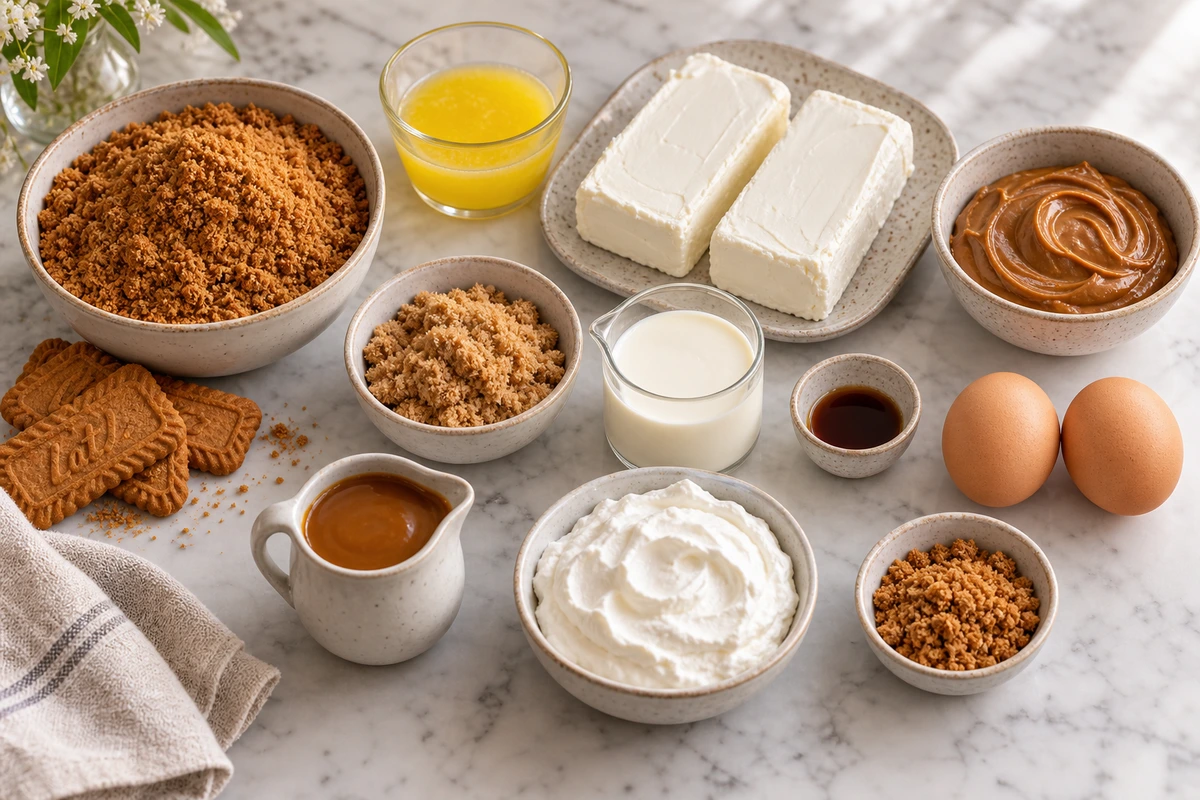
Crust: 1 ½ cups Biscoff cookie crumbs (or graham crackers); ¼ cup melted butter.
Cheesecake Filling: 16 oz cream cheese, softened; ½ cup cookie butter (Biscoff spread); ½ cup brown sugar; ½ cup heavy whipping cream; 1 tsp vanilla extract; 2 eggs (for baked version).
Topping: ½ cup caramel sauce; Whipped cream; Extra Biscoff crumbs.
If you enjoy this recipe, you may also like Hershey's Chocolate S'mores Cookies.
How to Make Cookie Butter Caramel Cheesecake
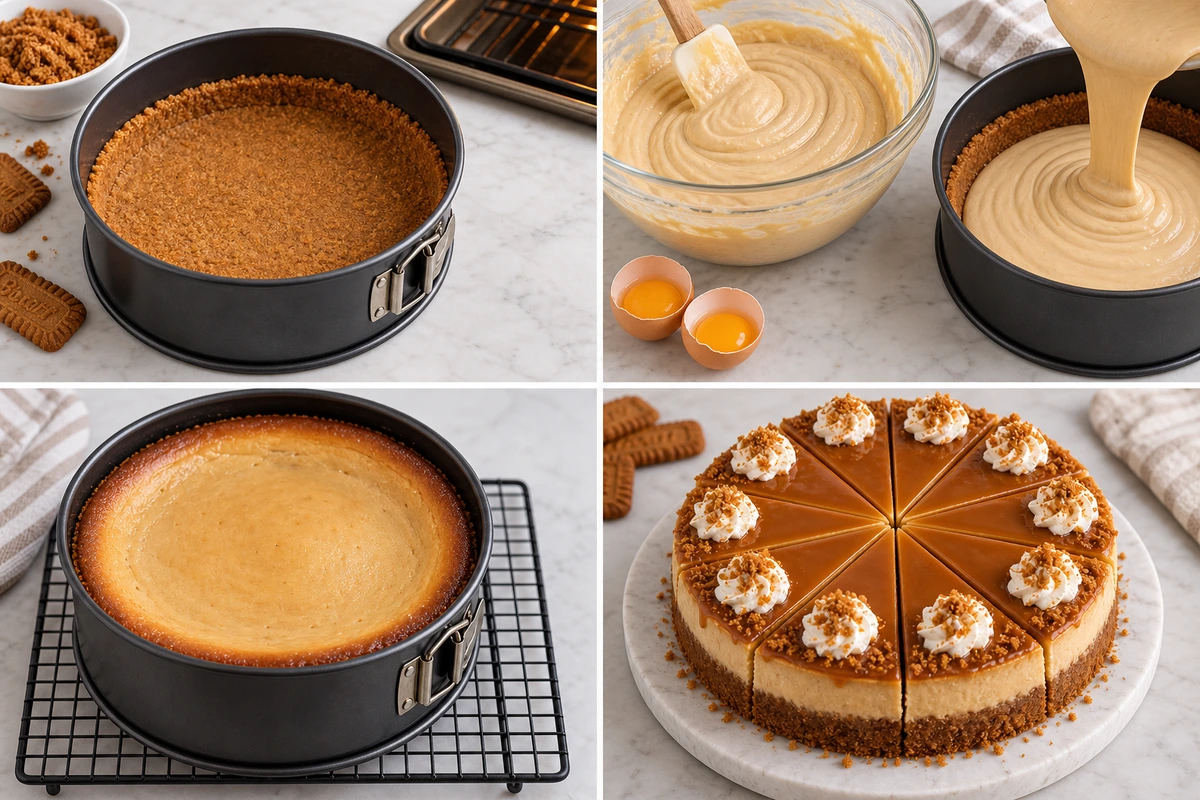
- Prepare the Crust: Mix cookie crumbs & melted butter, then press into a springform pan or dessert cups. Chill for 15 minutes (or bake at 350°F (175°C) for 8 minutes for a firmer crust).
- Make the Cheesecake Filling: Beat cream cheese, cookie butter, and brown sugar until smooth. Add heavy cream & vanilla, and mix until combined. (For baked version) Add eggs one at a time and mix on low speed.
- Bake or Chill: For baked: Bake at 325°F (163°C) for 40-45 minutes (until center is slightly jiggly). For no-bake: Refrigerate for 4 hours (or overnight) until set.
- Add the Caramel Topping: Once chilled, drizzle with caramel sauce and top with whipped cream & extra cookie crumbs. Slice & Enjoy!
For storage details after serving, the USDA leftovers and food safety guidance.
Why the Order Matters
Mix one and one-half cups Biscoff crumbs, or graham crumbs, with the quarter cup melted butter. Press firmly into a springform pan and use the recorded baked option: 350°F for eight minutes. Let the base cool while making the filling. Beat sixteen ounces softened cream cheese, half cup cookie butter, and half cup brown sugar until smooth. Add half cup heavy cream and one teaspoon vanilla, mixing just until combined. For this baked version, add the two eggs one at a time on low speed. Pour the filling over the prepared crust, reduce the oven to 325°F, and bake 40 to 45 minutes until the perimeter is set and the center is slightly jiggly. Cool, then refrigerate until fully chilled; overnight gives the flavor and structure ample time to settle. Finish only after chilling with the half cup caramel sauce, whipped cream, and extra Biscoff crumbs, then cut the recorded eight to ten slices.
If you enjoy this recipe, you may also like Butter Pecan Cheesecake.
Critical Visual and Timing Cues
The crumb base must be firmly packed and should look set after eight minutes without becoming dark. Softened cream cheese blends cleanly with the cookie butter and brown sugar; scrape the bowl before adding liquids to expose any dense streaks. Once the two eggs enter, low-speed mixing limits excess air. At 40 minutes, check movement rather than color: the outer ring should be stable while a small center area trembles gently. A sloshing middle needs more time, but a completely rigid center can signal overbaking. Let the cake cool before refrigeration so condensation does not collect on the surface. Chilling is complete when the center feels firm enough to slice without flowing. If the caramel is too thick to drizzle, warm it gently rather than pouring a heavy layer that hides the cookie-butter flavor. Add crumbs last so they retain crunch.
Serving and Storage
Serve the cheesecake cold in eight to ten slices; the structured image uses ten divisions to match the recorded serving count of ten. For clean portions, warm and dry a thin knife, wiping it between cuts. A small caramel drizzle on each plate can echo the topping without changing the cake itself. Whipped cream rosettes and crumbs make a complete garnish, and whole cookies may be used only if desired. Refrigerate the finished cheesecake covered, preferably without pressing wrap into the caramel. It keeps well as a make-ahead dessert because chilling improves its set and lets the spice notes meld. For longer planning, freeze the plain baked cheesecake without caramel, thaw it overnight in the refrigerator, and add the fresh topping before service. Do not leave the dairy-and-egg filling at room temperature for extended periods.
Practical Kitchen Notes
The permitted graham-cracker substitution makes a sound crust, but Biscoff crumbs provide the defining caramelized spice. Measure crumbs after crushing and mix until evenly moistened. Cookie butter should be smooth Biscoff-style spread, not peanut butter or a loose cookie sauce. The heavy cream is mixed directly into the baked filling; the eggs supply the custard structure. This differs from the alternate no-bake path, where cream would typically be whipped and the eggs omitted. Do not combine the two methods. The official data records twenty-five minutes prep, forty-five minutes cook, and seventy minutes total, so the baked branch is the coherent choice for this edition. Cooling and chilling extend the elapsed serving schedule beyond that active total. A pan of water on the lower oven rack is an optional crack-reduction note, not a required water bath.
Details Worth Preserving
Preserve both oven settings: the optional firm crust bakes at 350°F for eight minutes, whereas the filled cheesecake bakes at 325°F for 40 to 45 minutes. The visible slight jiggle is more dependable than waiting for a browned top. Add caramel only to a cold surface so it remains decorative, and reserve crumbs until the end. The recipe lists dairy, eggs for the baked version, and gluten from Biscoff cookies as allergens. Its reported 450 calories relate to the recorded serving basis and will vary if only eight larger slices are cut. The unchanged hero image continues to represent the recipe in search and listings; the new ingredient and process images explain the verified baked branch, and the last original finished image is retained as the third body image without crossover.
Recorded Recipe Tips
- Let the cheesecake chill overnight for the best flavor.
- Use homemade caramel sauce for an extra indulgent touch.
- For a crunch, sprinkle crushed Biscoff cookies on top.

Conclusion
Cookie Butter Caramel Cheesecake makes 1 cheesecake (8-10 slices) in 70 recorded minutes. Preserve every listed quantity, temperature, timing cue, and ordered instruction for the intended result.
Frequently Asked Questions
- → How many servings does Cookie Butter Caramel Cheesecake make?
It makes 1 cheesecake (8-10 slices) and serves 10.
- → How long does Cookie Butter Caramel Cheesecake take?
The recipe records 25 minutes of preparation, 45 minutes of cooking, and 70 minutes total.
- → Should I use the baked or no-bake method?
This article follows the baked method because the official recipe records 45 minutes of cooking; include both eggs and bake at 325°F for 40–45 minutes.
- → When should the caramel topping be added?
Add caramel, whipped cream, and extra crumbs only after the cheesecake has cooled and chilled completely.