


Cranberry pistachio shortbread cookies pair a tender, buttery crumb with tart-sweet dried fruit and crisp green nuts. The red and green pieces make the cookies naturally festive, while a Christmas-tree cutter turns one simple dough into a polished holiday cookie. The recipe makes about 30 medium cookies and uses familiar pantry ingredients rather than icing or elaborate decorations.
Shortbread rewards gentle handling. The butter should be soft enough to blend with powdered sugar, but the dough should never become warm or overmixed. A 45- to 60-minute chill firms the butter, and rolling the dough about one-third inch thick gives the cookies enough substance to stay tender. Bake at 325°F until only the edges are lightly golden, then let the fragile hot cookies firm as they cool.
Ingredients for Cranberry Pistachio Shortbread Cookies
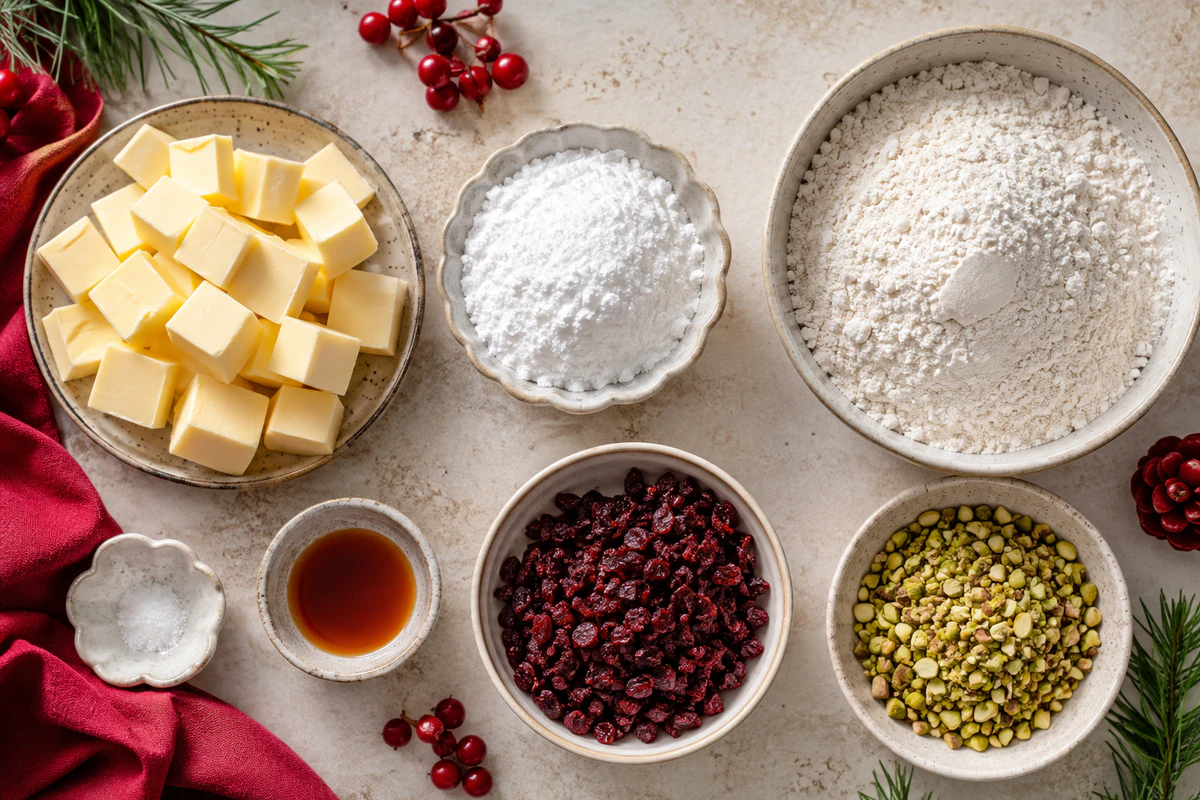
Use 1 cup unsalted butter at room temperature, ¾ cup powdered sugar, 1 teaspoon vanilla extract, a dash of salt, and 2½ cups all-purpose flour. Powdered sugar dissolves readily into the butter and supports the fine, delicate texture expected from shortbread. Unsalted butter keeps the seasoning under control, while vanilla rounds out the flavor without competing with the fruit and nuts.
The dough also needs ½ cup plus 2 tablespoons chopped sweetened dried cranberries and ½ cup plus 2 tablespoons chopped pistachios. Mix ½ cup of each into the dough and reserve the final 2 tablespoons of each for the top. Chop both additions into small pieces so the cutter can pass through the dough cleanly and the cookie edges do not split around oversized chunks.
If you enjoy this recipe, you may also like Easter Cake Roll.
How to Make the Cookies
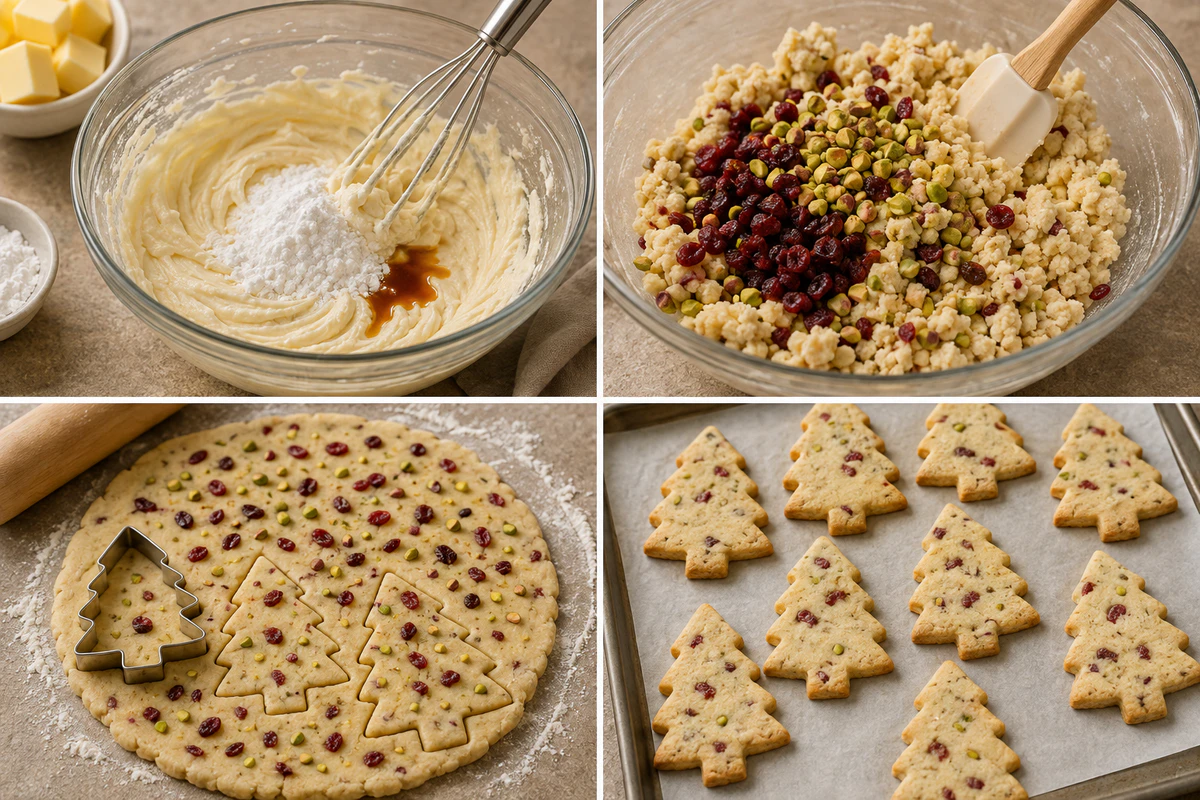
- Mix the base. Beat the room-temperature butter, powdered sugar, and vanilla until combined.
- Add the dry ingredients. Gradually mix in the flour and salt just until a crumbly dough forms; do not overmix.
- Add the inclusions. Mix in ½ cup cranberries and ½ cup pistachios. Knead a few times by hand until the dough holds together.
- Chill. Shape the dough into a disk, wrap it in plastic, and refrigerate for 45 to 60 minutes.
- Prepare to bake. Heat the oven to 325°F and line baking sheets with parchment.
- Roll and decorate. Roll the dough about one-third inch thick. Scatter the reserved 2 tablespoons each of cranberries and pistachios over it, then press them in gently with your palms or rolling pin.
- Cut. Stamp out Christmas trees and gently repair any crumbly edges with your fingers.
- Bake. Space the cookies at least 1 inch apart and bake for 18 to 20 minutes, until the edges are lightly golden.
For storage details after serving, the USDA leftovers and food safety guidance.
Bring the Dough Together Without Overmixing
After the flour is added, the mixture is supposed to look crumbly. Stop the mixer once no large pockets of dry flour remain, then squeeze a portion in your hand. If it holds when pressed, the dough has enough moisture. Knead it only a few times to gather the crumbs into a cohesive mass.
Continuing to beat until the bowl looks like smooth cookie dough develops more gluten and warms the butter. Both changes work against a tender shortbread texture. Hand pressure is enough to finish the job, and it also makes it easier to notice whether the cranberries and pistachios are distributed evenly.
If you enjoy this recipe, you may also like Cherry Chocolate Shortbread Cookies.
Why Chilling Is Essential
Wrap the disk closely so its surface does not dry out, and chill it for the full 45 to 60 minutes. The butter becomes firm enough for rolling and cutting, and the flour has time to hydrate. Dough that skips this rest feels greasy, sticks to the pin, and loses its clean outline more readily in the oven.
If the disk becomes very hard after a longer chill, leave it at room temperature for a few minutes before rolling. It should yield under the rolling pin without cracking into large pieces. Work efficiently once it becomes flexible; a warm kitchen can soften the butter again before the shapes reach the baking sheet.
Roll to an Even One-Third Inch
Roll from the center outward and rotate the disk regularly. Aim for approximately one-third inch from edge to edge, not a thin center with a thick rim. Even thickness matters more than achieving a perfectly round sheet because it allows every cookie on the tray to finish at nearly the same time.
Use only a light dusting of flour if sticking occurs. Too much bench flour becomes incorporated into scraps when they are rerolled and can make the final cookies dry. Parchment above and below the dough is another useful option, especially when the room is warm.
Cut Clean Christmas-Tree Shapes
Press the cutter straight down instead of twisting it. Lift away the surrounding dough, then transfer each tree with a thin spatula. Cranberry and pistachio pieces can interrupt a narrow branch or corner; pinch those spots together gently rather than rerolling an otherwise good cookie.
Gather scraps with minimal kneading and roll them once more. Any cutter shape can replace the Christmas tree, but pieces baked together should be similar in size. Smaller shapes may finish before 18 minutes, so watch their edges closely.

Bake for Pale Centers and Lightly Golden Edges
Arrange the shapes on parchment-lined sheets with at least 1 inch between them. Bake at 325°F for 18 to 20 minutes. Shortbread should remain pale through the center; a light golden line at the edges is the signal to remove the tray. A deeply browned surface means the cookies have baked past their most tender stage.
They may feel crumbly and delicate immediately after baking. Leave them undisturbed on the sheet until they are firm enough to lift, then move them carefully to a rack. Cooling finishes the structure, so judging them while hot can lead to unnecessary extra baking.
Troubleshooting Texture and Shape
If the dough will not hold together, first press and knead it briefly; the butter may simply need help coating the flour. If it is sticky or the cutouts slump, return it to the refrigerator until firm. Ragged edges usually come from fruit or nut pieces that are too large, so chop the inclusions more finely for the next tray.
Spreading points to warm dough or overly soft butter. Crumbly baked cookies are normal while hot, but persistent dryness after cooling can result from excess flour, heavy bench flour, or overbaking. Measure the flour carefully and stop when the edges first color.
Serving, Storage, and Make-Ahead Options
Serve the cookies after they have cooled completely. They fit neatly on a holiday platter and are sturdy enough for gift tins when packed between parchment. Their red and green finish needs no glaze.
Store the cooled cookies in an airtight container at room temperature for up to one week. The wrapped dough disk can be refrigerated until firm; let it soften only enough to roll. For longer planning, freeze the well-wrapped disk, thaw it in the refrigerator, and continue with the original method.
Conclusion
Cream butter, powdered sugar, and vanilla, then add flour and salt without overmixing. Fold ½ cup each of cranberries and pistachios into the crumbly dough, knead briefly, shape into a disk, and chill for 45 to 60 minutes. Roll one-third inch thick, press the reserved fruit and nuts on top, cut tree shapes, and bake at 325°F for 18 to 20 minutes until the edges are lightly golden.
Frequently Asked Questions
- → Why does the shortbread dough look crumbly?
That appearance is expected after the flour is added. Stop mixing and knead the dough by hand a few times; it should come together when pressed without needing extra liquid.
- → Why must the dough chill for 45 to 60 minutes?
Chilling firms the butter and hydrates the flour, making the dough easier to roll and helping the cut shapes keep their edges while baking.
- → Can a different cookie cutter be used?
Yes. Use any shape you prefer, but keep the cookies on each tray similar in size and begin checking smaller shapes before the full 18-minute mark.
- → How should cranberry pistachio shortbread cookies be stored?
Cool them completely and keep them in an airtight container at room temperature for up to one week, with parchment between layers if needed.