


Cranberry spinach stuffed chicken fills tender chicken breasts with goat cheese, greens, dried fruit, garlic, and herbs. The filling is creamy, tangy, and lightly sweet, while a quick skillet sear gives the outside appetizing color before the chicken finishes in the oven.
This recipe makes four servings in about 40 minutes. Cutting secure pockets, using a sensible amount of filling, and checking the meat with a thermometer are the important details. An optional honey drizzle adds gloss and reinforces the cranberry flavor without turning dinner into a sweet dish.
Ingredients for Cranberry Spinach Stuffed Chicken
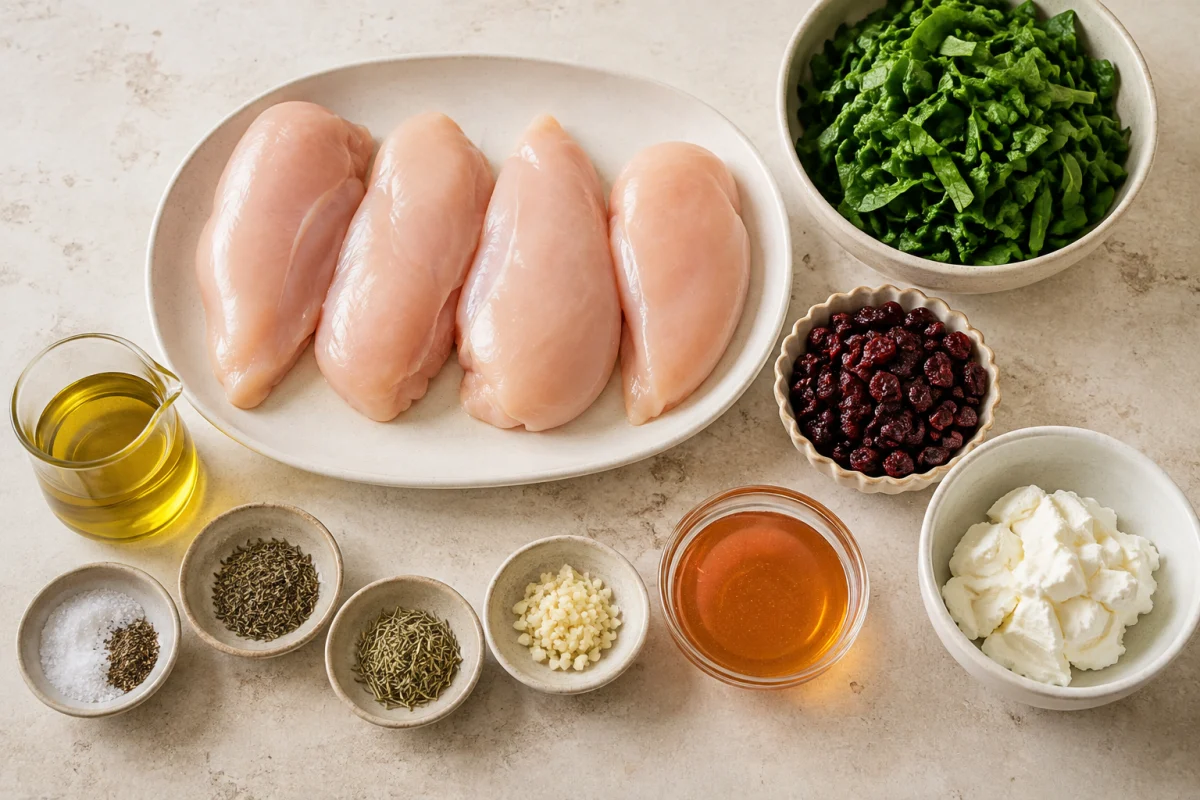
Use 4 boneless skinless chicken breasts, 1 tablespoon olive oil for searing, and salt and black pepper. The stuffing combines 1 cup chopped fresh spinach, 1/2 cup dried cranberries, 1/2 cup softened goat cheese, 2 minced garlic cloves, 1 teaspoon dried thyme, and 1 teaspoon dried rosemary.
One tablespoon honey is optional for drizzling over the chicken before baking. Choose breasts of similar size so they cook at approximately the same rate.
If you enjoy this recipe, you may also like Chicken Avocado Quesadillas.
How to Make Cranberry Spinach Stuffed Chicken
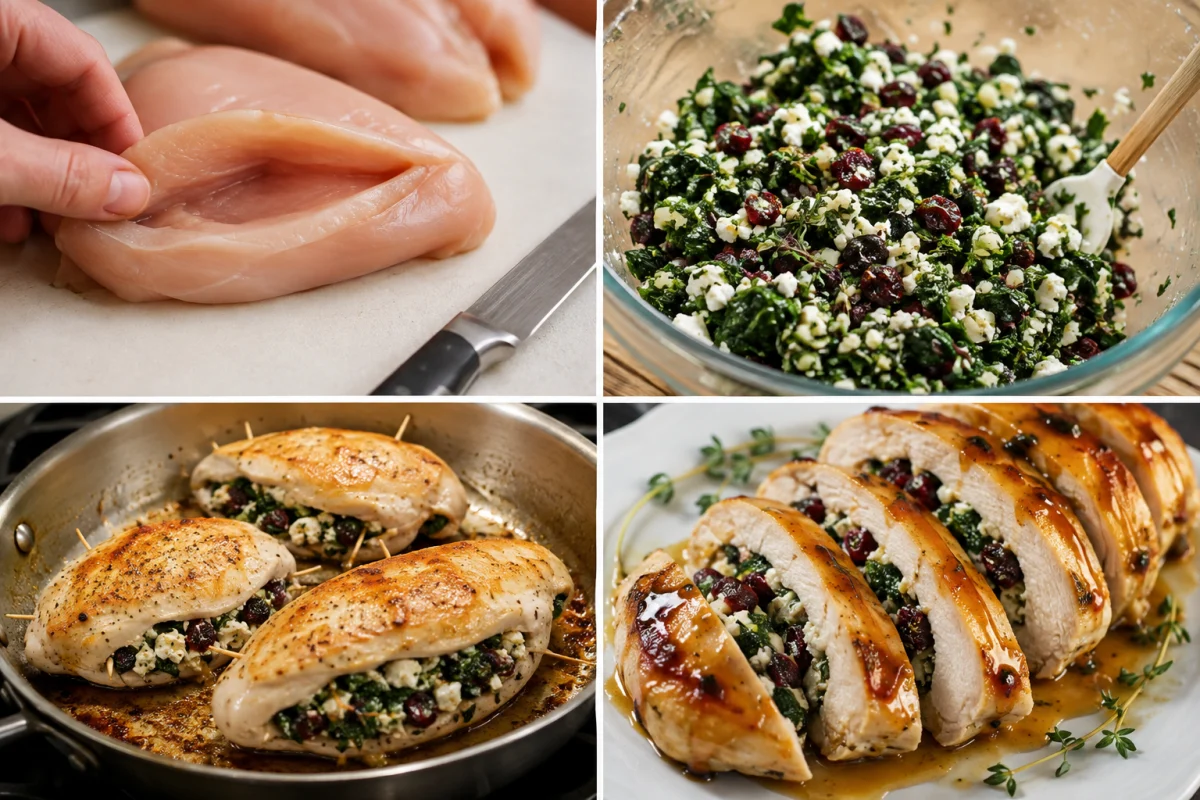
- Heat the oven. Set it to 375°F and lightly grease a baking dish.
- Cut pockets. Slice horizontally into the thick side of each chicken breast without cutting through the back or ends.
- Mix filling. Combine spinach, cranberries, goat cheese, garlic, thyme, rosemary, salt, and pepper.
- Stuff. Divide filling among the pockets and secure the openings with toothpicks if needed.
- Sear. Brown chicken in olive oil over medium heat for 2 to 3 minutes per side.
- Bake. Transfer to the dish, drizzle with honey if using, and bake 22 to 25 minutes or until the thickest meat reaches 165°F.
- Rest. Remove every toothpick, wait 5 minutes, and slice.
For storage details after serving, the USDA leftovers and food safety guidance.
Choose Even Chicken Breasts
Look for four breasts that are close in weight and thickness. Very thin pieces do not leave enough room for a pocket, while one unusually large breast may need much longer in the oven than the others.
Pat the chicken dry with paper towels. Dry surfaces are easier to hold safely while cutting and develop better color in the skillet. Keep raw poultry away from the filling bowl and clean utensils.
If you enjoy this recipe, you may also like Spinach Mushroom Lasagna.
Cut a Secure Pocket
Place a breast flat on a clean board and hold it steady with your palm well above the knife path. Insert a sharp knife into the thick side and slice horizontally, stopping before the blade reaches the opposite edge and both ends.
The pocket should open like a book but remain connected. A small opening holds filling better than a wide butterfly cut. Work slowly and keep fingers clear of the blade.
Make a Balanced Filling
Soften goat cheese at room temperature for about 15 minutes so it combines easily. Chop the spinach and dried cranberries into manageable pieces, then mix them with garlic, thyme, rosemary, salt, and pepper.
The mixture should hold together when pressed. If the spinach was washed, dry it well first. Extra surface water thins the cheese and encourages filling to escape during cooking.
Fill and Secure
Divide the mixture into four portions before stuffing so every breast receives a similar amount. Press it gently into the deepest part of each pocket, leaving a clean margin near the opening.
Close the flap and insert one or two wooden toothpicks across the edge if it does not stay shut. Count the toothpicks and remove the same number before serving. Never leave a hidden toothpick in sliced chicken.

Season the Outside Simply
Season both sides of the stuffed chicken with salt and black pepper just before it enters the skillet. The goat cheese and dried fruit already bring strong flavor, so the exterior does not need a complicated coating.
A light film of olive oil is sufficient. Too much oil can make the chicken slide while turning and can cause splatter when moisture escapes from the filling.
Sear for Color, Not Doneness
Heat an oven-safe skillet or regular skillet over medium heat. Add the olive oil, then place the chicken in without crowding. Sear for 2 to 3 minutes per side until lightly golden.
The center will still be raw, and that is expected. Turn with a wide spatula and tongs, supporting the filled opening rather than squeezing the breast. Transfer carefully to the prepared baking dish if the skillet is not oven-safe.
Use Honey With Restraint
Drizzle the optional tablespoon of honey thinly across all four breasts. A small amount gives a glossy surface and complements the cranberries. A heavy coating can burn at the pan edges and overpower the herbs.
For a less sweet finish, omit honey entirely. The filling remains flavorful from goat cheese, garlic, rosemary, and thyme.
Bake Until the Chicken Reaches 165°F
Bake at 375°F for approximately 22 to 25 minutes after searing. Insert an instant-read thermometer into the thickest solid chicken meat, approaching from the side so the tip does not sit in the warm filling.
The chicken is safe when the coolest thick section reaches 165°F. Time varies with breast size and starting temperature, so the thermometer should decide when it leaves the oven.
Rest and Slice Cleanly
Move the chicken to a clean board and rest for 5 minutes. Remove every toothpick before slicing. The brief rest allows juices to settle and lets the goat cheese firm slightly.
Use a sharp knife and cut crosswise into thick slices to display the filling. Wipe the blade between breasts if needed for a cleaner presentation.
Serving Suggestions
Roasted sweet potatoes, wild rice, or mashed potatoes pair naturally with the cranberries and herbs. Green beans, Brussels sprouts, or a simple salad add freshness and color.
Spoon any clear juices from the baking dish over the chicken. Avoid serving liquid that contacted undercooked poultry unless it has remained in the oven and reached a safe temperature.
Make-Ahead and Storage
Mix the filling up to one day ahead and refrigerate it covered. For best food safety and texture, cut and stuff the raw chicken shortly before cooking rather than storing assembled breasts for a long period.
Refrigerate cooked leftovers within two hours and use within four days. Reheat covered at 325°F until the center reaches 165°F. Freeze cooked portions for up to two months; thaw overnight before reheating.
Troubleshooting
- Filling leaks: Leave a margin, avoid overfilling, and secure the opening.
- Chicken cooks unevenly: Select similar breasts and verify each one with a thermometer.
- Outside stays pale: Pat chicken dry and preheat the skillet before searing.
- Honey darkens too fast: Use only a thin drizzle or omit it.
- Chicken seems dry: Remove it as soon as the thickest meat reaches 165°F and let it rest.
Conclusion
Cut a deep side pocket into each chicken breast and fill with chopped spinach, dried cranberries, softened goat cheese, garlic, thyme, and rosemary. Secure if needed, sear both sides in olive oil, then bake at 375°F with an optional light honey drizzle until the thickest meat reaches 165°F. Remove all toothpicks and rest before slicing.
Frequently Asked Questions
- → How do I keep the filling inside stuffed chicken?
Leave the back and ends of the pocket intact, avoid overfilling, and close the opening with one or two toothpicks.
- → What temperature should stuffed chicken reach?
The thickest solid chicken meat must reach 165°F. Position the thermometer tip in the meat rather than the warm filling.
- → Can I prepare the stuffing ahead?
Yes. Mix and refrigerate the filling for up to one day, then stuff the chicken shortly before cooking.
- → What can replace goat cheese?
Soft cream cheese or feta can work. Cream cheese is milder, while feta is saltier and more crumbly, so adjust seasoning accordingly.