

Creamy chicken gnocchi pairs golden chicken pieces with tender potato dumplings, sun-dried tomatoes, herbs, and Parmesan sauce in one skillet. Cooking the gnocchi directly in the sauce saves a second pot and lets their starch give the cream a naturally silky finish.
The meal serves four in about 35 minutes. Brown the chicken in batches, scrape up the flavorful pan residue with broth, and simmer the dairy gently. An instant-read thermometer confirms that the chicken reaches 165°F without becoming dry.
Ingredients for Creamy Chicken Gnocchi
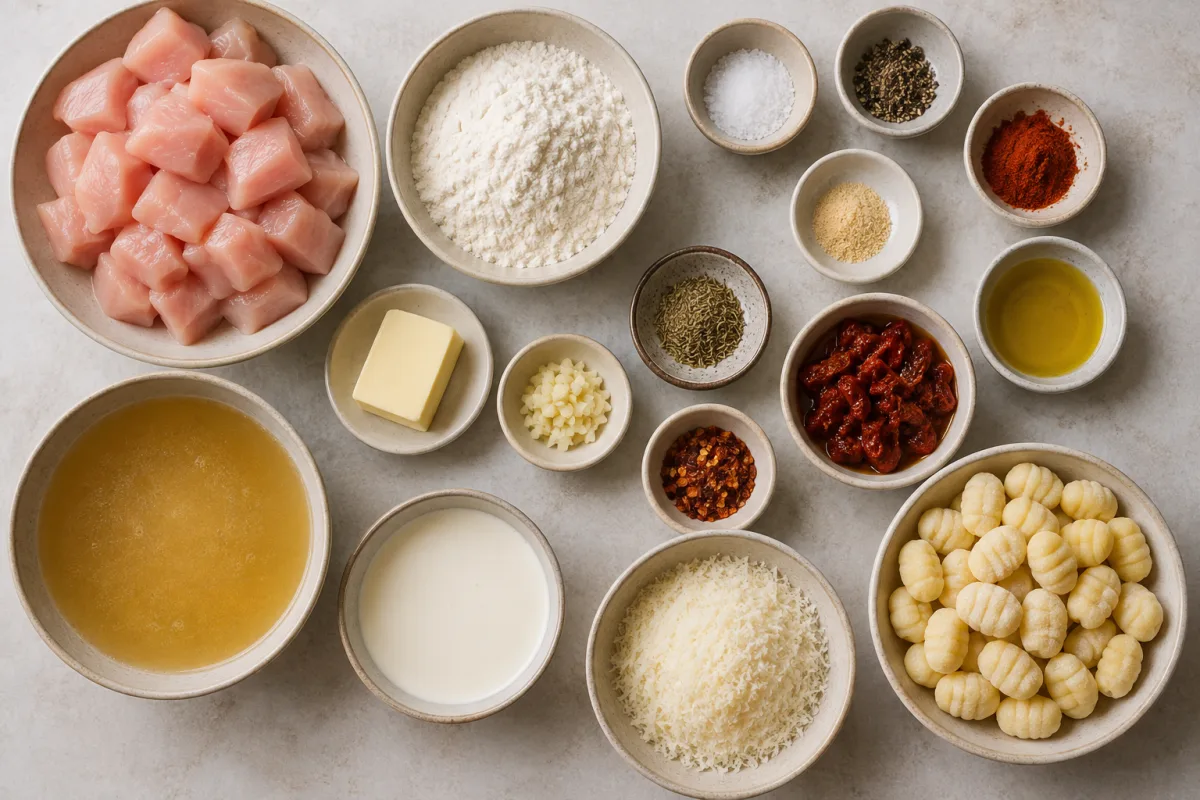
For the chicken, prepare 2 large chicken breasts cut into one-inch cubes, 1/2 cup all-purpose flour, 1/2 teaspoon each salt, black pepper, paprika, and garlic powder, 2 tablespoons olive oil, and 2 tablespoons butter.
For the sauce, use 2 tablespoons minced garlic, 1 cup chicken broth, 1 cup heavy cream, 1 cup finely grated Parmesan, 1/2 teaspoon each dried oregano, dried thyme, and red pepper flakes, plus 1/3 cup chopped sun-dried tomatoes. Add one 16-ounce package fresh or shelf-stable potato gnocchi.
If you enjoy this recipe, you may also like Loaded Chicken Garlic Toast.
How to Make One-Pan Chicken Gnocchi
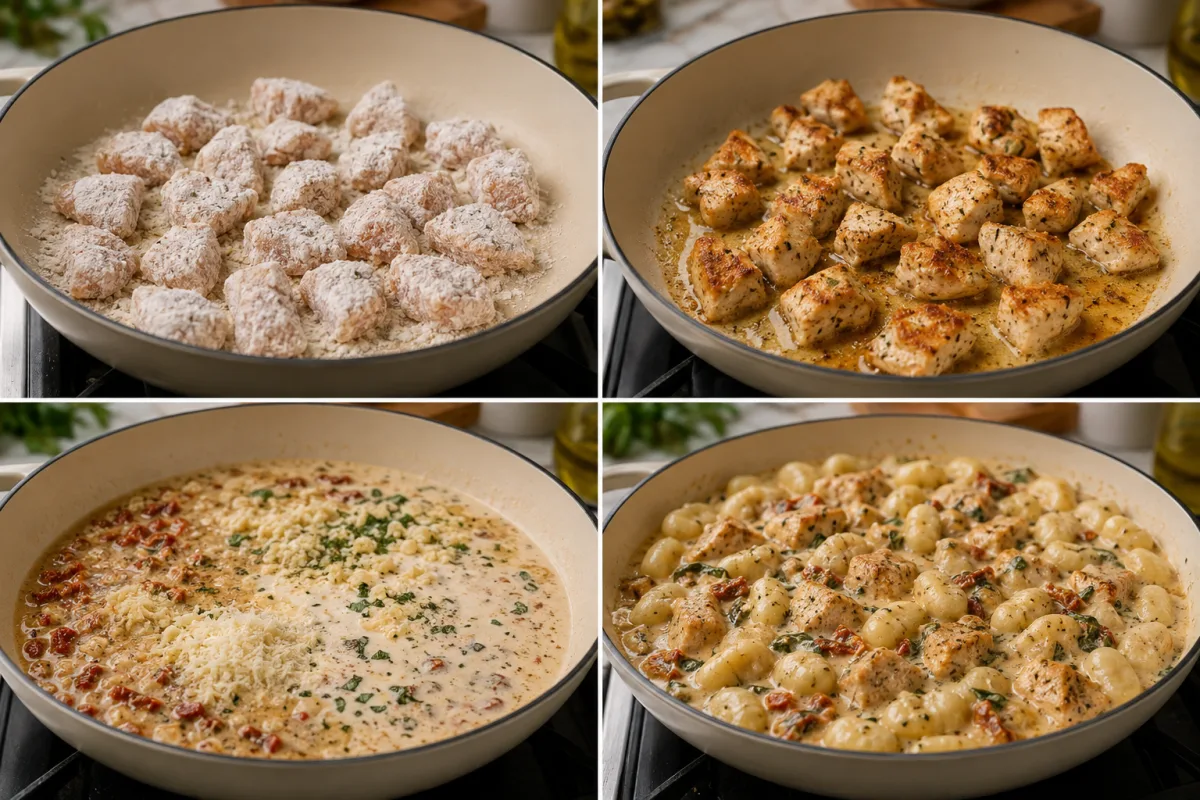
- Season and coat. Combine flour and seasonings, then toss with dry chicken cubes.
- Sear. Heat oil and butter in a large skillet. Brown chicken in one layer, cooking to 165°F, then transfer to a plate.
- Deglaze. Briefly cook garlic, pour in broth, and scrape the browned residue from the pan.
- Build the sauce. Add cream, Parmesan, oregano, thyme, pepper flakes, and sun-dried tomatoes. Stir over medium-low heat.
- Cook gnocchi. Add gnocchi, cover, and simmer two to three minutes or according to package needs.
- Finish. Return chicken and its juices, warm one minute, and serve.
For storage details after serving, the USDA leftovers and food safety guidance.
Cut Chicken into Equal Pieces
Trim the chicken and cut it into roughly one-inch cubes. Uniform pieces reach a safe temperature at nearly the same time, reducing the chance that small pieces dry out while large ones remain raw. Pat the surface dry before coating.
Keep raw poultry and its cutting board separate from ingredients that will not be cooked. Wash hands, the knife, and work surfaces with hot soapy water immediately afterward.
If you enjoy this recipe, you may also like Baked Rigatoni Casserole.
Apply a Light Flour Coating
Mix flour with salt, pepper, paprika, and garlic powder before adding chicken. Toss until every surface carries a thin, even dusting, then shake away loose excess. Heavy clumps can burn in the skillet and produce a pasty sauce.
The small amount that adheres helps the chicken brown and later thickens the pan sauce. Coat just before cooking so moisture from the chicken does not turn the flour gummy.
Sear Without Crowding
Heat olive oil and butter over medium-high until the butter foams. Add chicken in one layer with gaps between pieces. If the skillet is crowded, divide the chicken into two batches and add a little more oil as needed.
Let one side brown before turning. Constant stirring prevents a crust from forming. Transfer cooked chicken to a clean plate while preparing the sauce.
Deglaze the Flavorful Pan
Lower the heat and cook garlic for about 30 seconds, just until fragrant. Add chicken broth and scrape the skillet with a wooden spoon. The browned coating left by the chicken dissolves into the liquid and provides much of the sauce's savory depth.
Let the broth simmer briefly to reduce slightly. Discard any black burned fragments, which taste bitter rather than pleasantly toasted.

Keep the Parmesan Sauce Smooth
Reduce the heat to medium-low before adding heavy cream. Stir in finely grated Parmesan gradually so it melts rather than clumping. A hard boil can make the dairy separate, so maintain only a gentle simmer.
Add oregano, thyme, pepper flakes, and chopped sun-dried tomatoes. Oil-packed tomatoes should be drained but not rinsed; a trace of their seasoned oil enriches the sauce.
Cook Gnocchi in the Sauce
Fresh and shelf-stable gnocchi can usually cook directly in the skillet. Stir them into the simmering sauce, cover, and cook two to three minutes, checking the package and tasting one. Frozen gnocchi may require extra liquid and time.
Stir gently because tender potato dumplings can break. Their released starch thickens the cream, so the sauce may appear loose at first and then tighten quickly.
Adjust the Final Consistency
Return the chicken and any collected juices once the gnocchi are tender. Warm for about one minute. If the sauce becomes too thick, add broth one tablespoon at a time. If it is loose, simmer uncovered briefly.
Remember that Parmesan adds salt. Taste only after the cheese and chicken return, then adjust seasoning. Serve promptly because gnocchi continue absorbing sauce as they stand.
Variations and Serving Ideas
Baby spinach can be folded in during the final minute, and sliced mushrooms may be browned before the garlic. Use boneless thighs for richer flavor, still cooking to a safe internal temperature. Reduce pepper flakes for a mild version.
Serve with a crisp salad, steamed green beans, or roasted broccoli. A little bread is useful for the sauce, but the gnocchi already makes this a complete, filling meal.
For the cleanest presentation, reserve a spoonful of Parmesan and several pieces of sun-dried tomato for the top. Warm shallow bowls before serving so the cream remains fluid longer. Add delicate herbs only after the skillet leaves the heat; prolonged cooking dulls their color and aroma.
Storage and Troubleshooting
Refrigerate leftovers promptly for up to three days. Reheat gently with a splash of broth or cream because the gnocchi absorbs liquid. Freezing is not ideal; dairy sauce may separate and potato gnocchi can soften.
- Pale chicken: Dry it and leave space in the skillet.
- Broken sauce: Lower the heat and avoid boiling cream.
- Dense gnocchi: Stop cooking when tender.
- Thick leftovers: Add broth during reheating.
Conclusion
Coat chicken cubes lightly in seasoned flour, sear to 165°F, and remove. Deglaze with broth, add cream, Parmesan, herbs, and sun-dried tomatoes, then cook gnocchi gently in the sauce. Return chicken and serve as soon as hot.
Frequently Asked Questions
- → Do I need to boil gnocchi separately?
No. Fresh or shelf-stable gnocchi usually cooks directly in the covered sauce; follow the package if it specifies otherwise.
- → How do I keep cream sauce from separating?
Use medium-low heat, add finely grated Parmesan gradually, and never let the cream boil hard.
- → Can I use chicken thighs?
Yes. Cut boneless thighs evenly and cook the thickest pieces to a safe internal temperature.
- → How long do leftovers keep?
Refrigerate for up to three days and reheat gently with a small splash of broth or cream.