

Crème Brûlée Cookies is built from the recorded ingredient list and ordered method below. Read every quantity as a working part of the recipe: measuring the listed ingredients, using the stated equipment, and keeping the recorded sequence gives the clearest path to the intended texture and finish. This editorial guide preserves the source facts while explaining the practical cues that help a home cook work carefully and confidently. Before beginning, read the complete instruction list once, prepare the work surface, and place the measured components in the order they will be used.
Crème Brûlée Cookies Ingredients
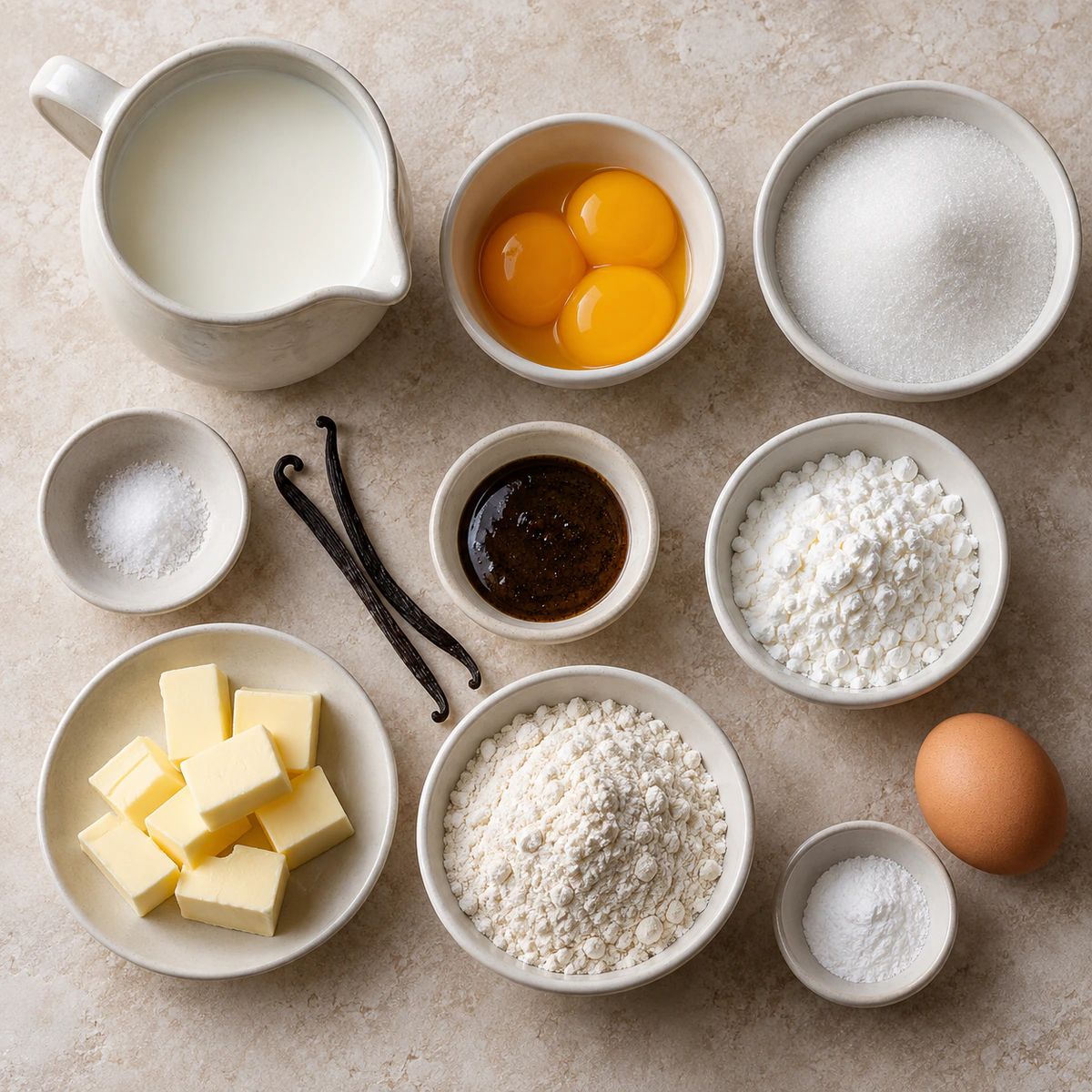
Ingredients: 2 1/4 cups (540 ml) whole milk (for the vanilla pastry cream).; 6 egg yolks (for the vanilla pastry cream).; 1 cup + 2 tbsp (225 g) granulated sugar (for the vanilla pastry cream).; 1/8 tsp salt (for the vanilla pastry cream).; 1 1/2 tbsp vanilla bean paste (for the vanilla pastry cream).; 3 1/2 tbsp (28 g) cornstarch (for the vanilla pastry cream).; 3 tbsp (42 g) unsalted butter (cut in cubes, for the vanilla pastry cream).; 2 1/2 cups (313 g) all-purpose flour (spooned and leveled, for the sugar cookies).; 1/2 tsp baking powder (for the sugar cookies).; 1/2 tsp salt (for the sugar cookies).; 1 1/4 cup (250 g) granulated sugar (for the sugar cookies).; 1 cup (224 g) unsalted butter (softened, for the sugar cookies).; 1 egg (for the sugar cookies).; 1 tbsp vanilla bean paste (for the sugar cookies).; 1/2 cup (100 g) granulated sugar (for rolling the dough).; 1/2 cup (100 g) granulated sugar (for brûlée topping)..
If you enjoy this recipe, you may also like Blueberry Jam Cookies.
How to Make Crème Brûlée Cookies
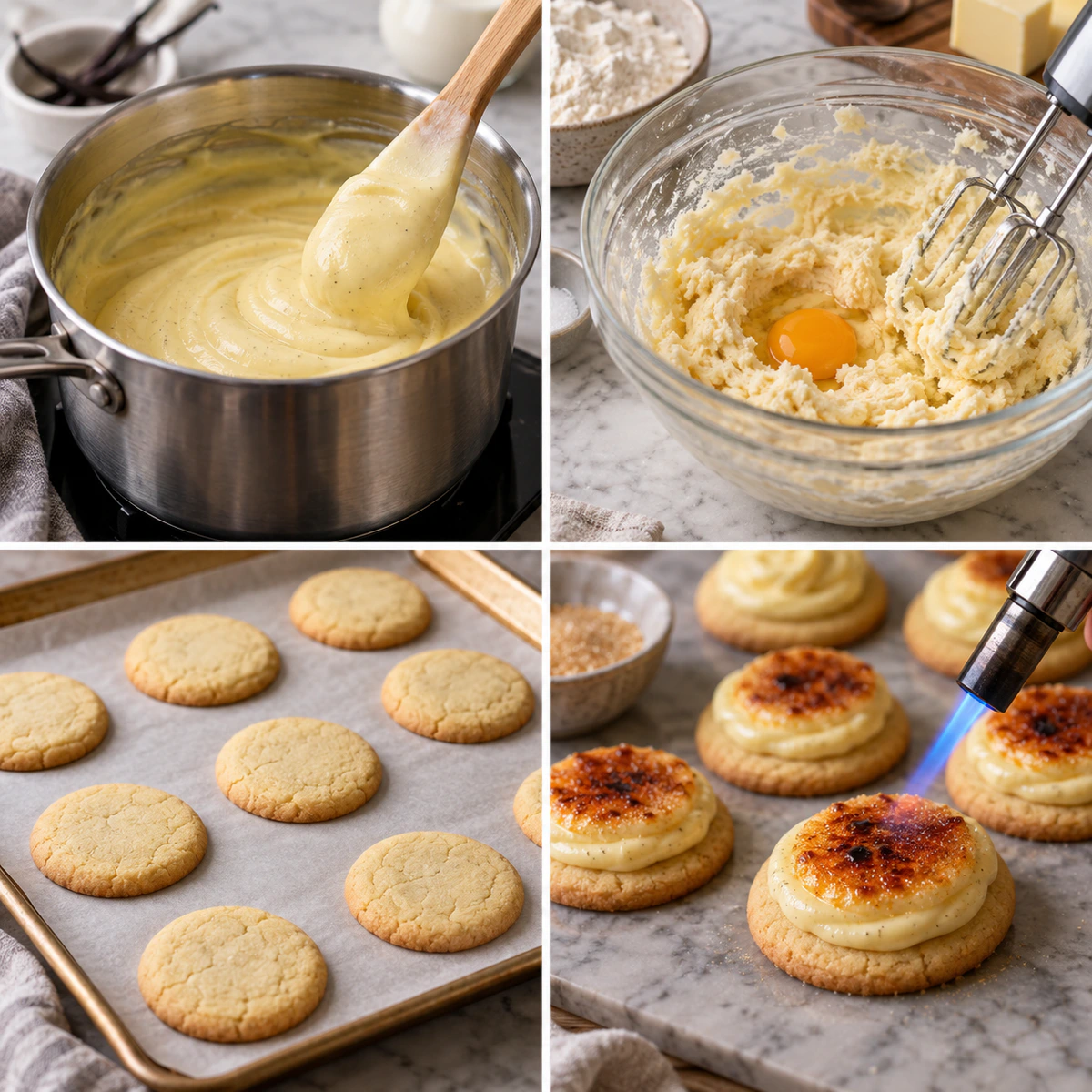
- Make Pastry Cream: Heat milk over medium-low heat until steaming. In a bowl, whisk egg yolks, sugar, salt, vanilla, and cornstarch until pale. Gradually whisk in the heated milk. Pour back into the saucepan and cook for 8-12 minutes until thick. Remove from heat, add butter, mix, cover with plastic wrap, and chill.
- Prepare Sugar Cookies: Preheat oven to 350°F (175°C) and line cookie sheets with parchment paper. In a bowl, whisk together flour, baking powder, and salt. Set aside.
- Cream Butter And Sugar: Cream butter and sugar with a mixer until fluffy. Add egg and vanilla, mixing until pale and fluffy.
- Mix And Bake Dough: Gradually add dry ingredients, mixing until dough forms. Scoop into balls, roll in sugar, and flatten slightly on the baking sheet. Bake for 9-10 minutes. Cool for 5 minutes on the sheet, then transfer to a cooling rack.
- Assemble Cookies: Pipe chilled pastry cream on top of each cookie. Sprinkle with sugar, then brûlée with a kitchen torch until golden brown. Let cool for 10 minutes before enjoying.
For storage details after serving, the USDA leftovers and food safety guidance.
A Calm, Accurate Kitchen Workflow
Before beginning, read the complete ingredient list and method once, then arrange the measured components in the order they will be used. This simple preparation makes the written sequence easier to follow without changing it. Use clean, dry equipment, keep chilled ingredients cold until their recorded step, and choose a pan or bowl large enough for comfortable stirring. As each stage finishes, pause briefly to check the cue given in the recipe: a mixture may need to look smooth, a dough may need to feel firm but not sticky, or a cooked component may need to be hot, golden, tender, or set. Those cues matter alongside the stated minutes, because they help account for normal differences in cookware and kitchen conditions. Avoid adding extra ingredients, changing the heat, or rushing a rest merely to make the process faster. Keep raw ingredients separate from foods that are ready to serve, wash tools after they contact raw proteins, and use a fresh utensil for tasting. Once the final step is complete, serve in the form the source specifies and refrigerate leftovers promptly in a covered container. This approach keeps the recipe practical, faithful, and repeatable every time.
If you enjoy this recipe, you may also like Raspberry Sugar.
Why the Order Matters
The order matters because it separates preparation, cooking, sauce-building, pasta handling, and finishing into deliberate stages. Set out every measured ingredient before starting and use the visual cue named in each instruction alongside its stated time. Keep components separate until the method tells you to join them. Avoid adding familiar extras or changing the order merely for convenience: a sauce can thicken differently, chicken can overcook, and cheese can become grainy when the sequence is altered. The source recipe remains the controlling reference for every temperature, timing cue, and cooking step.
Critical Visual and Timing Cues
Work with clean bowls, measured portions, and the named pan or pot so the method is repeatable. Keep perishables appropriately chilled until they are needed. Brown meat only as directed, let liquids reach the stated boil or simmer stage, and lower heat before gradual dairy additions. Check texture and colour at the point named by the source instead of relying on an arbitrary clock. When pasta is folded into sauce, stir steadily and gently so it remains intact and coated. These small decisions preserve the intended balance without introducing unrecorded ingredients or substitutions.
Serving and Storage
Serve the finished recipe in the form and temperature directed by the source. Keep leftovers covered in a suitable container and refrigerate promptly after cooling. The verified ingredient list and quantities remain the reference point; substitutions should be limited to options the original recipe explicitly permits. Use sensible food-safety handling for chicken, beef, dairy, and cooked pasta. Present each portion neatly and enjoy it promptly for the best texture, because creamy sauces and cooked pasta are at their most appealing just after the final combine stage.
Finishing Check
Stage-by-Stage Checkpoint
Make the Most of the Ingredients You Have
The ingredient list is intentionally the full working reference for this recipe. Set out every item before beginning and use the listed form where it is specified: a softened ingredient behaves differently from a cold one, and a measured garnish or topping belongs at its recorded point in the sequence. A steady, unhurried setup also helps prevent overmixing, crowding a pan, or reaching the final stage before the serving dish is ready. If an ingredient needs washing, slicing, thawing, or bringing to room temperature, complete that preparation before the method begins, while keeping the quantity unchanged. This small bit of organisation is not an extra recipe step; it simply makes the original directions easier to execute accurately from start to finish.
Image and Recipe Integrity
The new ingredient photograph and chronological 2×2 process photograph support the written method without replacing it. The site’s original hero remains unchanged. The earlier repeated body image is excluded, while a separate original final-serving image is retained as the third body image. Direct responsive WebP copies preserve aspect ratio and orientation without crop, upscaling, image transformations, or a Worker deployment.
Recorded Recipe Tips
- These indulgent Crème Brûlée Cookies combine a chewy, buttery sugar cookie with a creamy vanilla pastry filling and a crispy, caramelized sugar topping, giving you the ultimate dessert experience.
- Be sure to chill the pastry cream before piping it onto the cookies for the perfect consistency.

Conclusion
Crème Brûlée Cookies makes 18 cookies in 60 recorded minutes. Preserve listed quantities, temperatures, timing cues, and ordered instructions.
Frequently Asked Questions
- → How many servings does Crème Brûlée Cookies make?
It makes 18 cookies and serves 18.
- → How long does Crème Brûlée Cookies take?
The recipe records 40 minutes of preparation, 20 minutes of cooking, and 60 minutes total.
- → How do I keep Crème Brûlée Cookies consistent?
Measure every listed ingredient, follow the ordered instructions, and use the stated visual, temperature, and timing cues rather than adding unrecorded changes.
- → Why should I preserve the written method?
The sequence is part of the verified recipe: it guides texture, food safety, and the intended finish without changing the original formula.