

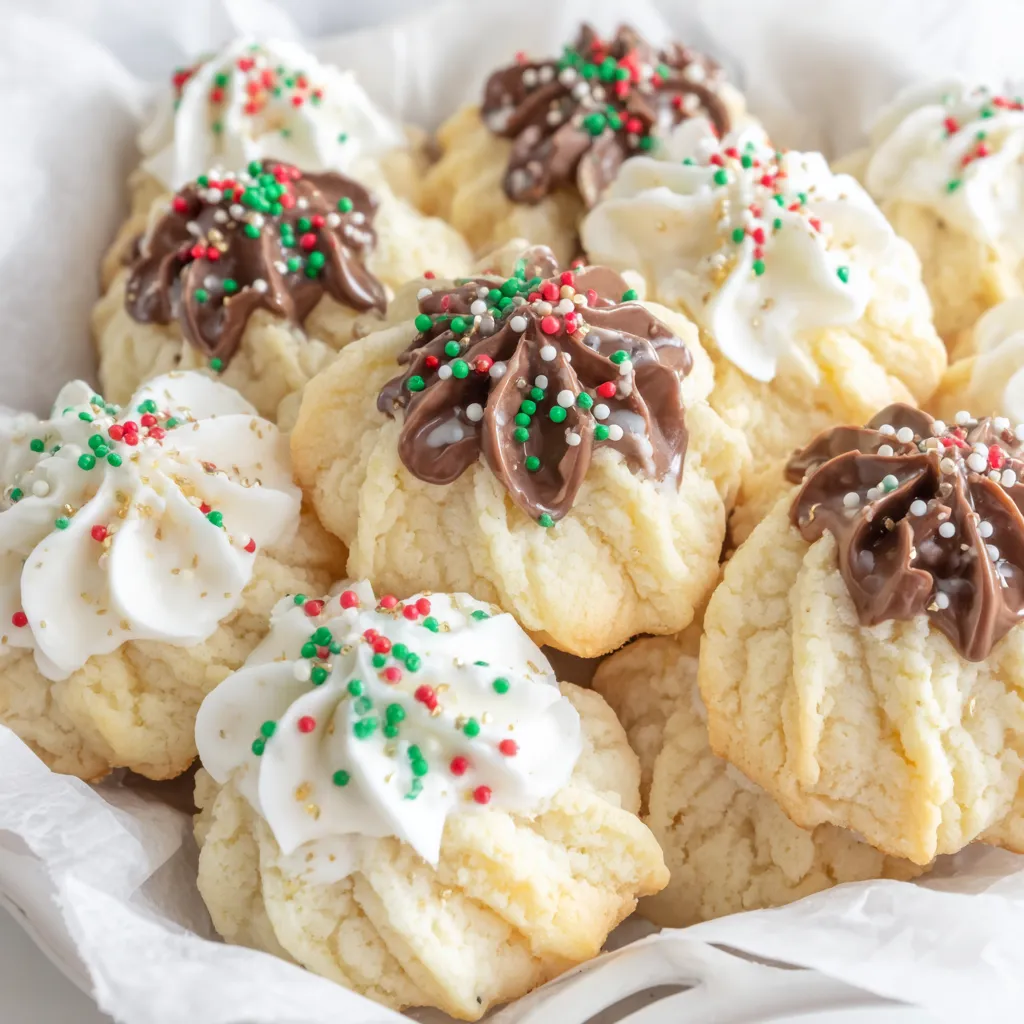
Classic Danish butter cookies are crisp at the edges, delicate through the center, and defined by deep ridges from a star piping tip. This small-batch dough uses powdered sugar and cornstarch for a fine crumb, with optional dark and white chocolate for decoration.
The recipe makes about 24 cookies. Softening the butter correctly, adjusting the dough with only a teaspoon or two of cream, and chilling the piped shapes are the keys to cookies that pipe easily without spreading flat.
Ingredients for Danish Butter Cookies
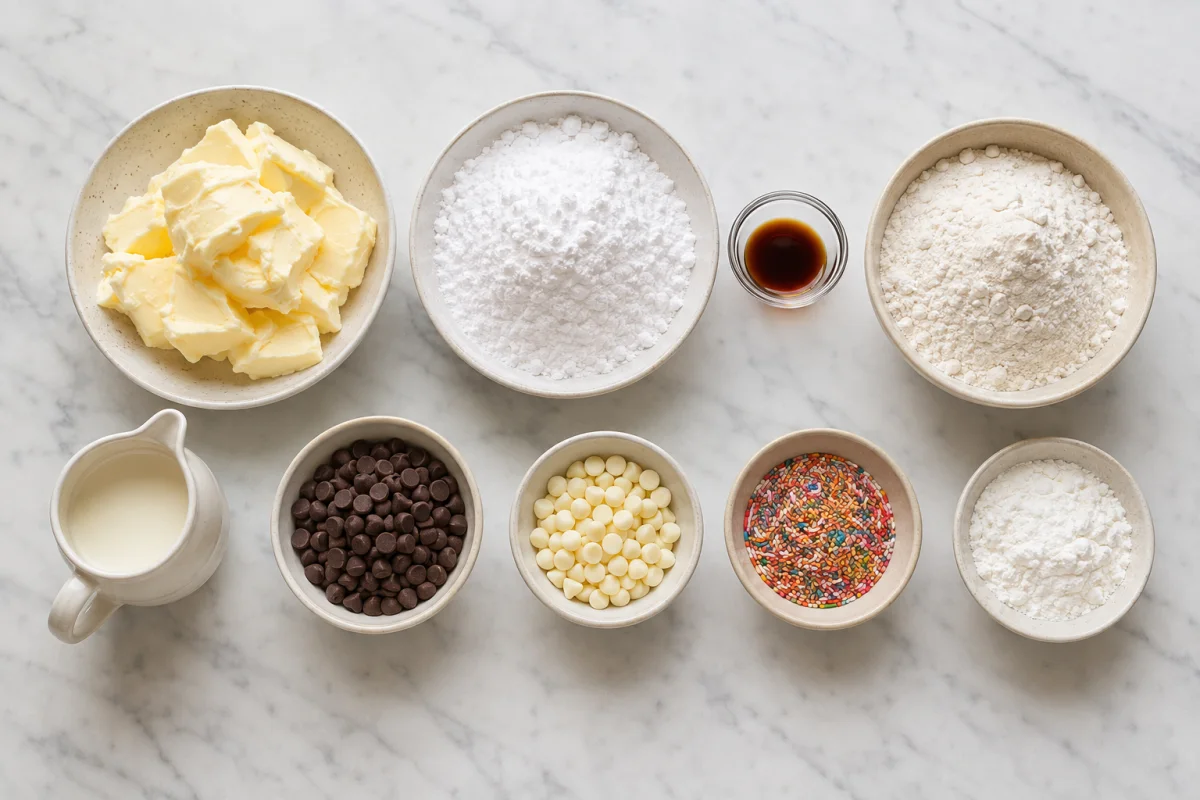
The cookie dough needs 255 grams softened unsalted butter, 30 grams powdered sugar, 1 teaspoon vanilla extract, 160 grams all-purpose flour, and 8 grams cornstarch. Keep 1 to 2 teaspoons heavy cream nearby, but add it only if the dough is too stiff to pipe.
For optional decoration, melt about 170 grams dark chocolate chips or chocolate almond bark and the same amount of white chocolate chips or white almond bark. A small amount of colorful sprinkles can be added before the coating sets.
If you enjoy this recipe, you may also like Pink Strawberry Cookies.
How to Make Piped Butter Cookies
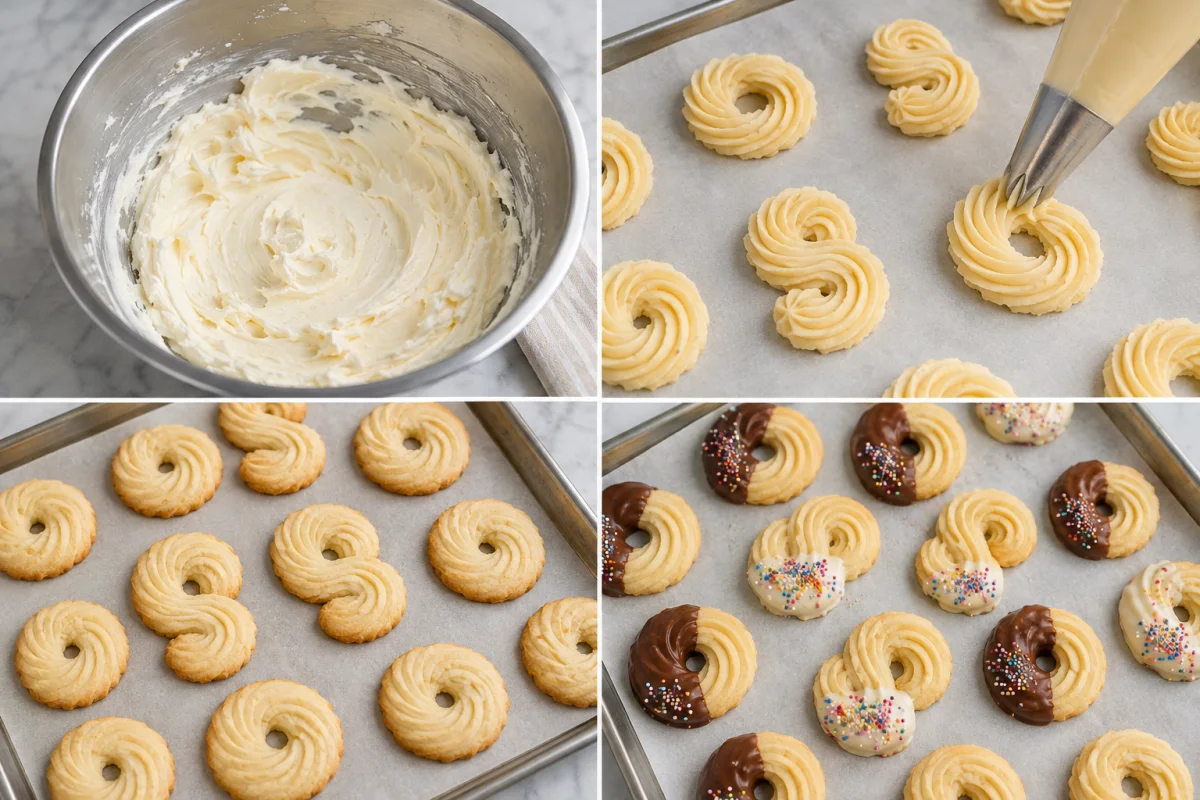
- Prepare. Line a baking sheet with parchment.
- Whip butter. Beat softened butter for 2 to 3 minutes. Add powdered sugar and beat another 2 minutes, then mix in vanilla.
- Make the dough. Add flour and cornstarch and mix only until combined. Blend in cream by the teaspoon only if needed.
- Pipe. Transfer dough to a sturdy bag fitted with a large open-star tip and pipe rings, S-shapes, or short lines.
- Chill. Refrigerate the tray for 30 minutes while the oven heats to 350°F.
- Bake. Bake 8 to 10 minutes, until the edges are faintly golden. Cool completely.
- Decorate. Dip in melted chocolate, add sprinkles, and leave on parchment until set.
For storage details after serving, the USDA leftovers and food safety guidance.
Soften Butter to the Right Temperature
Butter should be pliable enough to indent with gentle finger pressure but should not look glossy, oily, or partly melted. Butter near 65°F usually whips well and still has enough structure to hold piped ridges.
Cut cold butter into pieces and let it stand at room temperature. Avoid microwaving, which often creates melted pockets. If the butter becomes overly warm, chill it briefly before mixing.
If you enjoy this recipe, you may also like Halloween Eyeball Cupcakes.
Weigh the Flour
This dough contains no egg and very little added liquid, so a small flour error has a large effect. A scale is the most reliable way to measure 160 grams all-purpose flour and 8 grams cornstarch.
If cups are necessary, fluff the flour, spoon it into the cup, and level the top. Scooping directly from a compact bag can add enough flour to make piping difficult and the baked cookies dry.
Whip Butter and Sugar Thoroughly
Beat the butter alone until smooth and paler, then add powdered sugar. The full mixing time incorporates tiny air pockets that lighten the dense, eggless dough. Scrape the bowl and beater at least once.
Powdered sugar dissolves more readily than granulated sugar and helps create the fine, short texture associated with tin-style butter cookies. Mix in vanilla only after the base looks uniform.
Mix Without Toughening the Dough
Add flour and cornstarch at low speed to avoid a cloud of powder. Stop as soon as the mixture comes together. Continued mixing develops gluten and can make the cookies hard rather than tender.
The finished dough should be soft and smooth, not sticky. Add heavy cream only when necessary and in very small amounts. Too much liquid makes the shapes spread and softens their crisp texture.
Use a Strong Piping Bag
A reusable cloth bag or heavy disposable piping bag is safer than a thin sandwich bag. Fit it with a large open-star tip; a narrow tip requires excessive force and can split the bag.
Fill the bag halfway so it remains easy to control. Hold it perpendicular to the tray for rings and apply even pressure. Keep shapes similar in thickness so every cookie finishes baking at the same time.
Chill the Piped Cookies
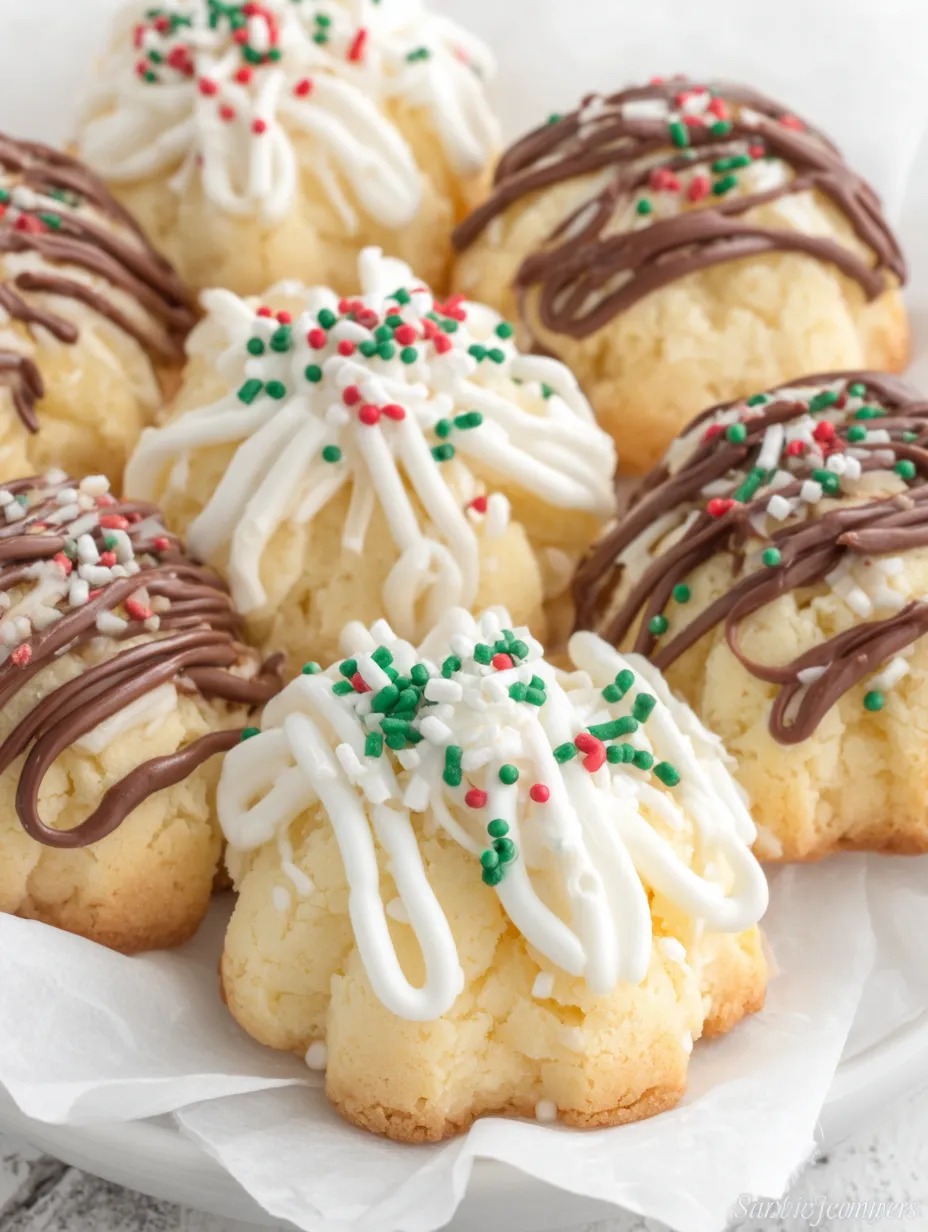
Place the entire tray in the refrigerator for 30 minutes. Chilling firms the butter after handling and helps the ridges remain sharp in the oven. Do not cover the tray tightly because plastic can damage the shapes.
Preheat the oven during the chill so it is fully at 350°F when the cookies go in. Starting in a cool oven allows the butter to melt before the dough sets.
Bake Until Barely Golden
Arrange the tray on the center rack and bake for 8 to 10 minutes. The tops should stay pale and the very edges should show only a light golden color. Deep browning overwhelms the clean butter flavor.
Let the cookies stand on the hot sheet for three minutes before transferring them to a rack. They are fragile while warm and become crisp as they cool.
Melt Chocolate Gently
Microwave chocolate in a dry bowl for 20-second intervals, stirring well after each. Stop heating when a few small pieces remain and let residual heat melt them. Even one drop of water can make ordinary chocolate seize.
Almond bark is easier to set at room temperature, while real chocolate has a richer flavor. If using chocolate chips, allow extra setting time or refrigerate the dipped cookies for a few minutes.
Decorate with Restraint
Dip one end or half of each completely cooled cookie and let excess coating drip back into the bowl. Place it on fresh parchment. Add sprinkles immediately, before the surface begins to firm.
The cookies are also excellent plain. Decorating only part of the batch gives a varied platter and keeps the butter flavor prominent.
Storage and Freezing
Store fully set cookies in an airtight tin at room temperature for up to one week. Separate decorated layers with parchment. Keep them away from heat and humidity, which soften the cookies and chocolate.
Freeze undecorated baked cookies for up to two months. Thaw them in their closed container so condensation forms outside rather than on the cookies, then dip them after they reach room temperature.
Troubleshooting
- Dough will not pipe: Check tip size and add cream one teaspoon at a time.
- Cookies spread: Use cool softened butter and complete the 30-minute chill.
- Ridges disappear: Avoid excess cream and preheat the oven fully.
- Cookies are hard: Weigh flour, mix briefly, and remove them while pale.
- Chocolate is thick: Warm it in short intervals and keep all tools completely dry.
Conclusion
Whip softened butter with powdered sugar, add vanilla, then mix in flour and cornstarch. Adjust with no more than 1 to 2 teaspoons cream, pipe through a large star tip, chill 30 minutes, and bake at 350°F for 8 to 10 minutes. Cool before decorating.
Frequently Asked Questions
- → Why is Danish butter cookie dough hard to pipe?
The butter may be too cold, the flour may be overmeasured, or the tip may be too narrow. Use a large open-star tip and add heavy cream one teaspoon at a time only if needed.
- → Why did my piped cookies lose their shape?
Warm butter, excess cream, or skipping the chill can cause spreading. Refrigerate piped shapes for 30 minutes and bake them in a fully heated oven.
- → Can Danish butter cookies be made without chocolate?
Yes. The plain cookies have a classic buttery flavor and crisp texture. Chocolate and sprinkles are optional decorations.
- → How long do butter cookies stay fresh?
They keep for about one week in an airtight tin at cool room temperature. Separate decorated layers with parchment.