


Garlic butter chicken rigatoni combines golden chicken, sturdy pasta, and a cheddar-Parmesan cream sauce in one skillet. The dish is rich, but it should not feel greasy or heavy. Properly browned chicken supplies savory depth, broth loosens the browned bits, and low heat helps the cheese melt into a smooth sauce.
The timing is practical: cook the rigatoni while the chicken sears, then finish the sauce in the same skillet. Keep the pasta al dente and reserve the gentlest heat for the cheese. Those two decisions prevent soft pasta and a grainy sauce.
Ingredients for Garlic Butter Chicken Rigatoni
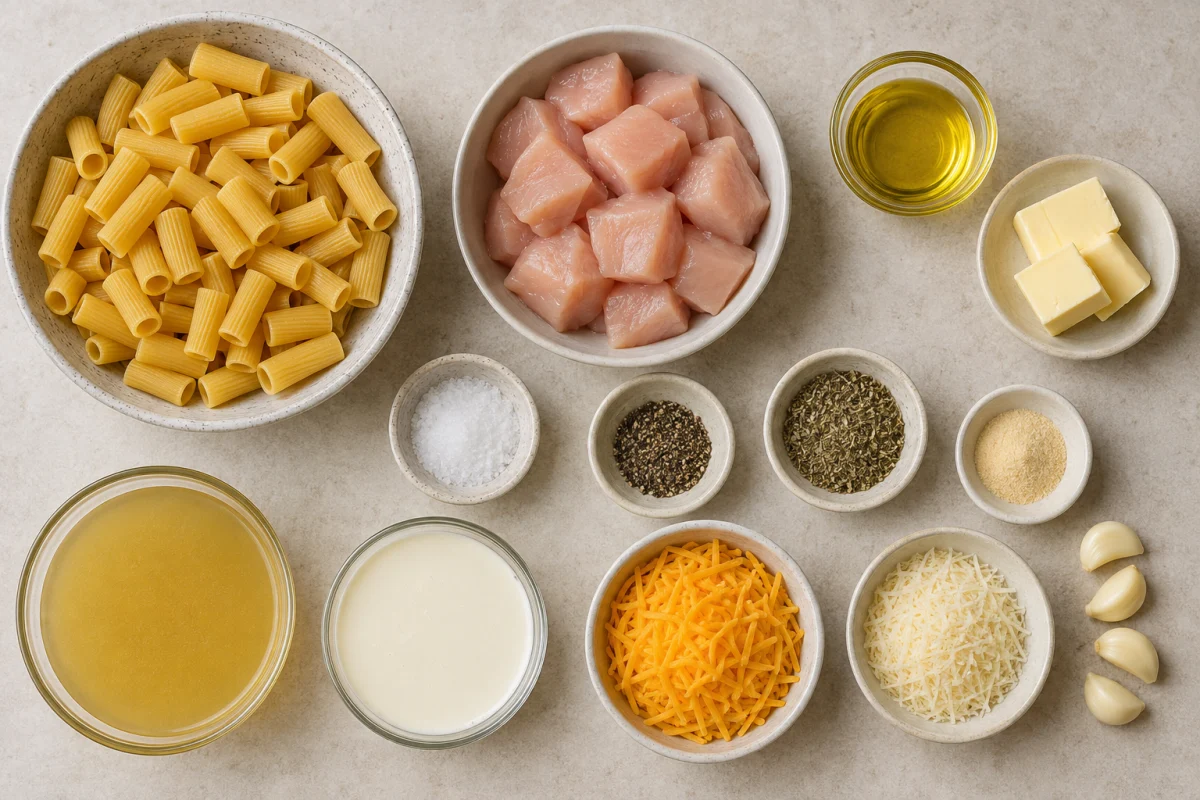
You need 12 ounces rigatoni and 1 1/2 pounds boneless skinless chicken breasts cut into bite-size pieces. The skillet starts with 2 tablespoons olive oil and 4 tablespoons unsalted butter, divided. Season with salt, cracked black pepper, 1 teaspoon Italian seasoning, 1/2 teaspoon garlic powder, and four finely minced garlic cloves.
For the sauce, use 3/4 cup chicken broth, 1 1/2 cups heavy cream, 1 cup shredded sharp cheddar, and 1/2 cup freshly grated Parmesan. Grate the cheeses before the skillet gets hot so they can be added promptly at low temperature.
If you enjoy this recipe, you may also like Chicken Pepperoni Pizza Melts.
How to Make Garlic Butter Chicken Rigatoni
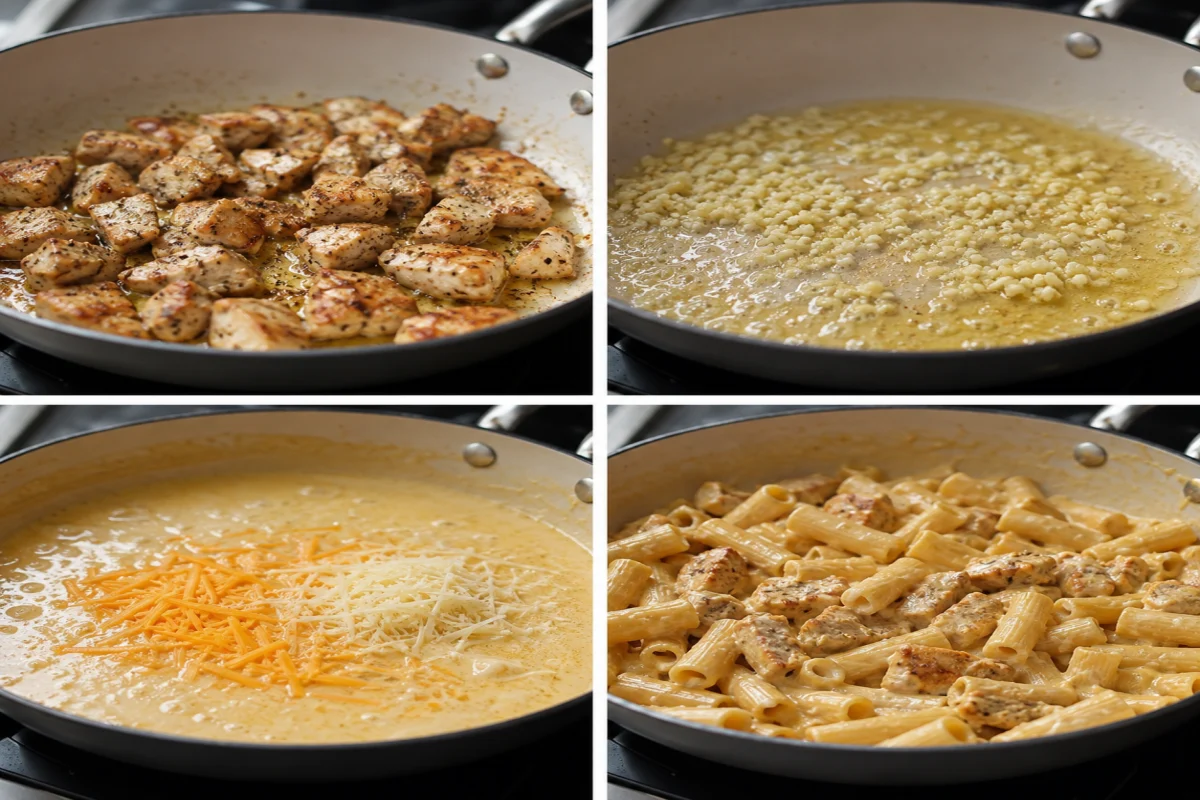
- Cook the pasta. Boil the rigatoni in generously salted water until just al dente. Drain it and set it aside.
- Season the chicken. Pat the pieces dry, then season with salt, pepper, Italian seasoning, and garlic powder.
- Sear. Heat the olive oil and 2 tablespoons butter in a wide skillet over medium-high. Arrange the chicken in a roomy layer and cook until golden and cooked through. Transfer it to a plate.
- Cook the garlic. Lower the heat to medium, add the remaining 2 tablespoons butter, and cook the minced garlic for about 30 seconds.
- Deglaze. Pour in the chicken broth and scrape the browned bits from the skillet. Add the cream and bring it to a gentle simmer.
- Melt the cheese. Reduce the heat to low. Stir in cheddar and Parmesan gradually until the sauce is smooth and glossy.
- Combine. Toss in the rigatoni, then fold the chicken back into the skillet. Remove from the heat and rest for one minute before serving.
For storage details after serving, the USDA leftovers and food safety guidance.
Cut and Dry the Chicken
Cut the breasts into pieces close to one inch so they cook at the same rate as they brown. Very small pieces dry out before developing color, while large chunks can remain undercooked in the center. Blot the cut surfaces with paper towel before seasoning.
Surface moisture turns to steam and prevents searing. A dry, lightly oiled piece of chicken meets the hot pan directly and forms a golden crust. Season immediately before cooking so salt does not pull fresh moisture onto the surface.
If you enjoy this recipe, you may also like Shrimp and Creamed Corn.
Give the Chicken Room to Sear
Use a wide skillet and let the oil and butter become hot before adding the chicken. Arrange the pieces in one layer with small gaps. If they overlap, work in two batches and return all of the chicken to the sauce at the end.
Leave the first side undisturbed until it releases easily and shows browned edges. Constant stirring keeps the surface pale. Turn the pieces and finish until the centers reach 165°F, then move them to a clean plate so they do not overcook while the sauce is built.
Use the Browned Bits
The caramelized layer on the skillet is concentrated chicken flavor, not waste. Chicken broth dissolves it and carries that flavor into the sauce. Pour in the broth while the pan is still warm and scrape with a wooden spoon or silicone spatula.
Dark golden bits are desirable; black bits taste burned and should be wiped away before continuing. Let the broth simmer briefly after deglazing so it reduces slightly before the heavy cream is added.
Keep the Cheese Sauce Smooth
Heavy cream can tolerate gentle simmering, but cheese should enter over low heat. Add small handfuls and stir until each addition has nearly melted before adding more. Freshly grated cheese melts more evenly than bagged shreds coated with anti-caking powder.
Do not boil the sauce after the cheese is in the pan. Excessive heat can squeeze fat out of the cheese and create a grainy or oily texture. If the sauce thickens too quickly, add a small splash of broth or reserved pasta water.
Cook Rigatoni Just to Al Dente
Rigatoni works because the ridges hold sauce and the hollow centers catch small pieces of chicken and cheese. Begin checking the pasta one or two minutes before the package time. It should be tender at the surface with a slight firmness at the center.
The pasta continues absorbing liquid in the hot skillet. Fully soft pasta from the boiling pot becomes mushy after it is tossed and rested. Drain well, but do not rinse; the surface starch helps the sauce cling.
Combine Without Breaking the Pasta
Add the drained rigatoni to the sauce first and fold from the bottom until every tube is coated. Return the chicken and any juices on the plate only after the pasta is evenly covered. A broad spoon is gentler than vigorous stirring.
Take the skillet off the heat when the sauce still looks slightly looser than the desired final texture. One minute of resting allows the starch and cheese to tighten around the pasta without leaving the dish dry.

Serving Suggestions
Serve the rigatoni immediately in warm shallow bowls. Because the sauce is rich, a crisp green salad with a sharp vinaigrette makes a useful contrast. Roasted broccoli, green beans, or asparagus also adds freshness without competing with the garlic and cheese.
Black pepper and a small amount of grated Parmesan are enough for garnish. Avoid adding another heavy sauce. Warm crusty bread is useful for catching the last spoonfuls, but a modest portion keeps the meal balanced.
Storage and Reheating
Cool leftovers promptly and refrigerate them in a sealed container for up to three days. The pasta continues taking in sauce, so the refrigerated dish will look much thicker than it did from the skillet.
Reheat gently in a covered skillet over low heat with a splash of milk, cream, or chicken broth. Stir only as needed and stop once hot. High microwave power can split the cheese sauce and toughen the chicken; short intervals at reduced power are safer.
Conclusion
Sear dry, evenly cut chicken in a roomy skillet, cook the garlic briefly, and use broth to lift the browned flavor from the pan. Add cream, melt cheddar and Parmesan over low heat, then fold in al dente rigatoni and chicken. Rest only one minute so the sauce clings without becoming dry.
Frequently Asked Questions
- → Why did my cheese sauce turn grainy?
The pan was likely too hot when the cheese was added. Reduce the heat to low, add freshly grated cheese gradually, and do not let the finished sauce boil.
- → Can chicken thighs replace chicken breasts?
Yes. Use boneless skinless thighs cut into even pieces and cook them to at least 165°F before removing them from the skillet.
- → Can I use another pasta shape?
Yes. Penne, ziti, or another sturdy tube works well. Cook it just to al dente so it stays firm in the sauce.
- → How do I reheat creamy chicken rigatoni?
Warm it slowly with a small splash of milk, cream, or broth. Low heat helps loosen the sauce without separating the cheese or drying the chicken.