


Greek Chicken Meatballs with Lemon Orzo pair herb-and-feta chicken meatballs with orzo cooked in the same skillet's savory browned bits. The recipe serves 4 and records 40 minutes total: 15 minutes of preparation and 25 minutes of cooking. Lemon zest seasons the meatballs, while fresh lemon juice finishes the orzo after heat is turned off.
Greek Chicken Meatballs with Lemon Orzo Ingredients
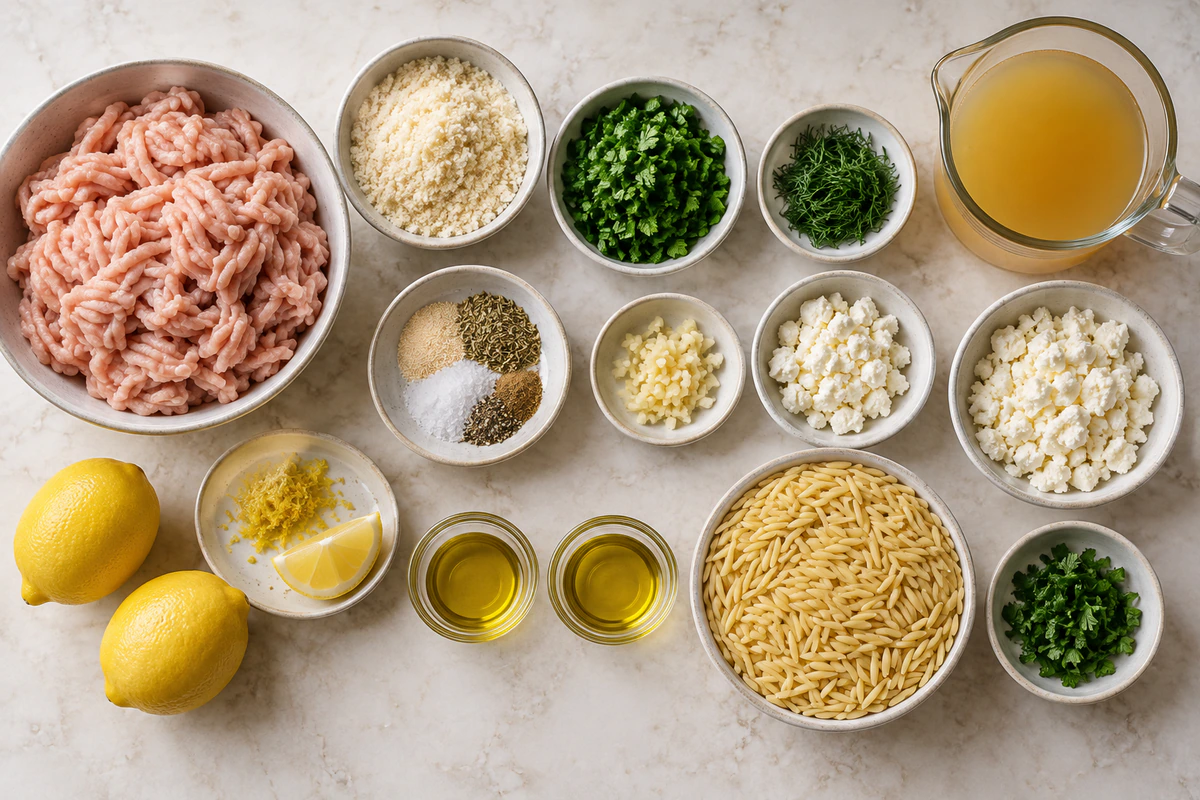
For the Chicken Meatballs: 1 pound ground chicken (dark meat preferred for more flavor and moisture); 1/3 cup almond flour (or 1/4 cup finely chopped walnuts or pecans); 1/4 cup fresh parsley, finely chopped; 2 teaspoons fresh dill, chopped; 3 cloves garlic, minced; 1/4 cup feta cheese, crumbled; 1/2 tablespoon onion powder (or 2 tablespoons finely chopped scallions or red onion); 2 teaspoons dried oregano (or fresh oregano); 2 teaspoons ground cumin; 1/2 teaspoon salt, plus extra for sprinkling; 1/2 teaspoon freshly cracked black pepper; Zest of 1 lemon; 1 tablespoon extra virgin olive oil, for cooking.
For the Lemon Orzo: 1 cup orzo pasta; 2 cups chicken broth; Juice of 1 lemon (about 2-3 tablespoons); 1 tablespoon extra virgin olive oil; 1/3 cup feta cheese, crumbled, for topping; Fresh parsley, chopped, for garnish; Salt, to taste; Lemon wedges, for serving (optional).
If you enjoy this recipe, you may also like Smash Burgers with Baconnaise Sauce.
How to Make Greek Chicken Meatballs with Lemon Orzo
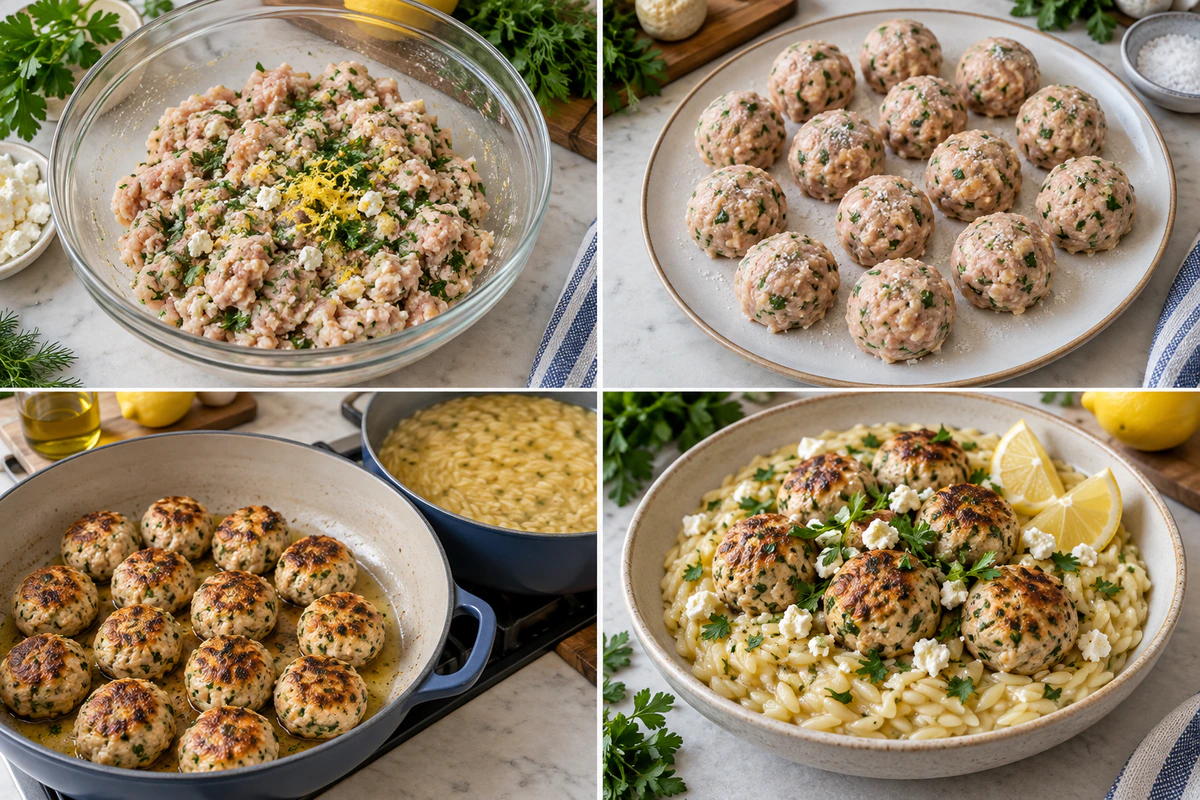
- Prepare the meatball mixture: In a large mixing bowl, combine the ground chicken, almond flour (or chopped nuts), chopped parsley, dill, minced garlic, crumbled feta, onion powder (or chopped onion), dried oregano, cumin, salt, pepper, and lemon zest. Using clean hands or a rubber spatula, gently mix everything together until just combined. Be careful not to overmix, as this can make the meatballs tough.
- Form the meatballs: With slightly damp hands (to prevent sticking), portion the mixture and roll into 1½-2 inch meatballs. You should get about 12-16 meatballs depending on size. Place them on a plate and sprinkle with a pinch of additional salt just before cooking to enhance the flavor of the exterior.
- Cook the meatballs: Heat the tablespoon of olive oil in a large skillet over medium heat. When the oil is hot but not smoking, carefully add the meatballs, working in batches if necessary to avoid crowding the pan. Sear them for 3-4 minutes until nicely browned on the bottom, then gently turn them with tongs or a spatula. Continue cooking for another 2-3 minutes to brown the other sides.
- Finish cooking the meatballs: Once the meatballs are browned on all sides, reduce the heat to medium-low, cover the skillet, and continue cooking for another 5-6 minutes until the meatballs are cooked through (internal temperature of 165°F/74°C). Be careful not to overcook them as chicken meatballs can quickly become dry. Once done, transfer the meatballs to a clean plate and cover loosely with foil to keep warm.
- Cook the orzo: In the same skillet you used for the meatballs (no need to clean it - those browned bits add flavor!), pour in the chicken broth and bring to a boil over high heat, scraping the bottom of the pan to incorporate any flavorful bits left from the meatballs. Once boiling, add the orzo pasta and stir to prevent sticking. Reduce heat to medium-low and simmer, stirring occasionally, for 8-10 minutes until the orzo is tender and most of the liquid has been absorbed.
- Finish the orzo: When the orzo is cooked, remove the skillet from heat. Stir in the fresh lemon juice and tablespoon of olive oil. Taste and adjust seasoning with salt if needed - the amount will depend on how salty your chicken broth was.
- Serve: Spoon the lemony orzo onto plates or into shallow bowls. Top with the Greek chicken meatballs, sprinkle with crumbled feta cheese, and garnish generously with additional chopped fresh parsley. Serve with lemon wedges on the side for those who enjoy an extra burst of citrus. For a complete meal, consider adding a simple Greek salad or some tzatziki sauce on the side.
For storage details after serving, the USDA leftovers and food safety guidance.
Why the Order Matters
Ground chicken is gently combined with almond flour, chopped parsley, dill, three minced garlic cloves, one-quarter cup feta, onion powder, oregano, cumin, salt, pepper, and the zest of one lemon. Damp hands shape 12 to 16 meatballs measuring about 1½ to 2 inches; a final pinch of salt goes on just before cooking. One tablespoon olive oil heats over medium, and the meatballs sear three to four minutes on the first side and two to three on the others. Covered medium-low cooking for another five to six minutes brings their centers to 165°F (74°C). Once they move to a clean covered plate, chicken broth deglazes that same skillet. Orzo simmers in it for eight to ten minutes until tender and most liquid is absorbed. Off heat, lemon juice and the second tablespoon olive oil are stirred through before seasoning is adjusted.
If you enjoy this recipe, you may also like Chicken Shawarma.
Critical Visual and Timing Cues
Mix the chicken only until the additions are distributed; heavy handling makes lean meatballs tight. Keep the formed count between 12 and 16 and their size uniform so they finish together. The skillet oil should be hot but not smoking. Develop a brown crust before turning, then lower the heat and cover rather than continuing a hard sear. Check a center with a clean thermometer for 165°F (74°C), since color alone is unreliable for ground poultry. Scrape the browned skillet bits into the two cups broth when it boils. Stir the orzo occasionally during its eight-to-ten-minute simmer to prevent sticking, and stop when tender with most—not necessarily every drop—of broth absorbed. Lemon juice and olive oil enter off heat. Taste before adding more salt because broth and feta already contribute salinity.
Serving and Storage
Divide the lemon orzo among four shallow bowls, top with the cooked meatballs, and finish with the separate one-third cup feta, chopped parsley, and optional lemon wedges. Tzatziki or Greek salad can accompany the meal, but neither belongs in the verified base recipe. Refrigerate leftovers promptly in a sealed container; for best texture, reheat gently with a small splash of broth or water so the orzo loosens without drying the chicken. The recipe contains dairy, nuts, and gluten when made with the selected feta, almond flour, and standard orzo. Prevent raw ground chicken from touching the clean plate used for cooked meatballs, garnish, or serving bowls. Wash hands, tools, and work surfaces thoroughly, and clean the thermometer between checks.
Recorded Recipe Tips
- These meatballs stay juicier if you use dark meat ground chicken, but white meat works too if you prefer a leaner option - just be especially careful not to overcook them.
- The almond flour or chopped nuts not only act as a binder but also add moisture and flavor to these meatballs while keeping them gluten-free.
- For a more traditional Greek flavor, try serving these with a side of tzatziki sauce for dipping or drizzling over the top.

Conclusion
Greek Chicken Meatballs with Lemon Orzo makes 4 servings in 40 minutes of recorded preparation and cooking, plus any separately stated chilling or resting time. Follow the exact ingredient list and ordered method for the intended texture and doneness.
Frequently Asked Questions
- → How many servings does Greek Chicken Meatballs with Lemon Orzo make?
It serves 4 and makes 4 servings.
- → How long does Greek Chicken Meatballs with Lemon Orzo take?
The recipe records 15 minutes of preparation, 25 minutes of cooking, and 40 minutes total, plus any separately stated chilling, resting, or cooling time.
- → What equipment should be ready?
Prepare Large mixing bowl for combining the meatball ingredients; Large skillet with lid for cooking both the meatballs and orzo; Tongs or spatula for turning the meatballs; Measuring cups and spoons; Zester or microplane for the lemon zest; Knife and cutting board for preparing herbs and garlic before starting.
- → Can I change the recorded method?
For the verified result, keep the listed quantities, temperatures, timing, and ordered instructions exactly as written. Use only optional variations explicitly recorded in the recipe tips.