

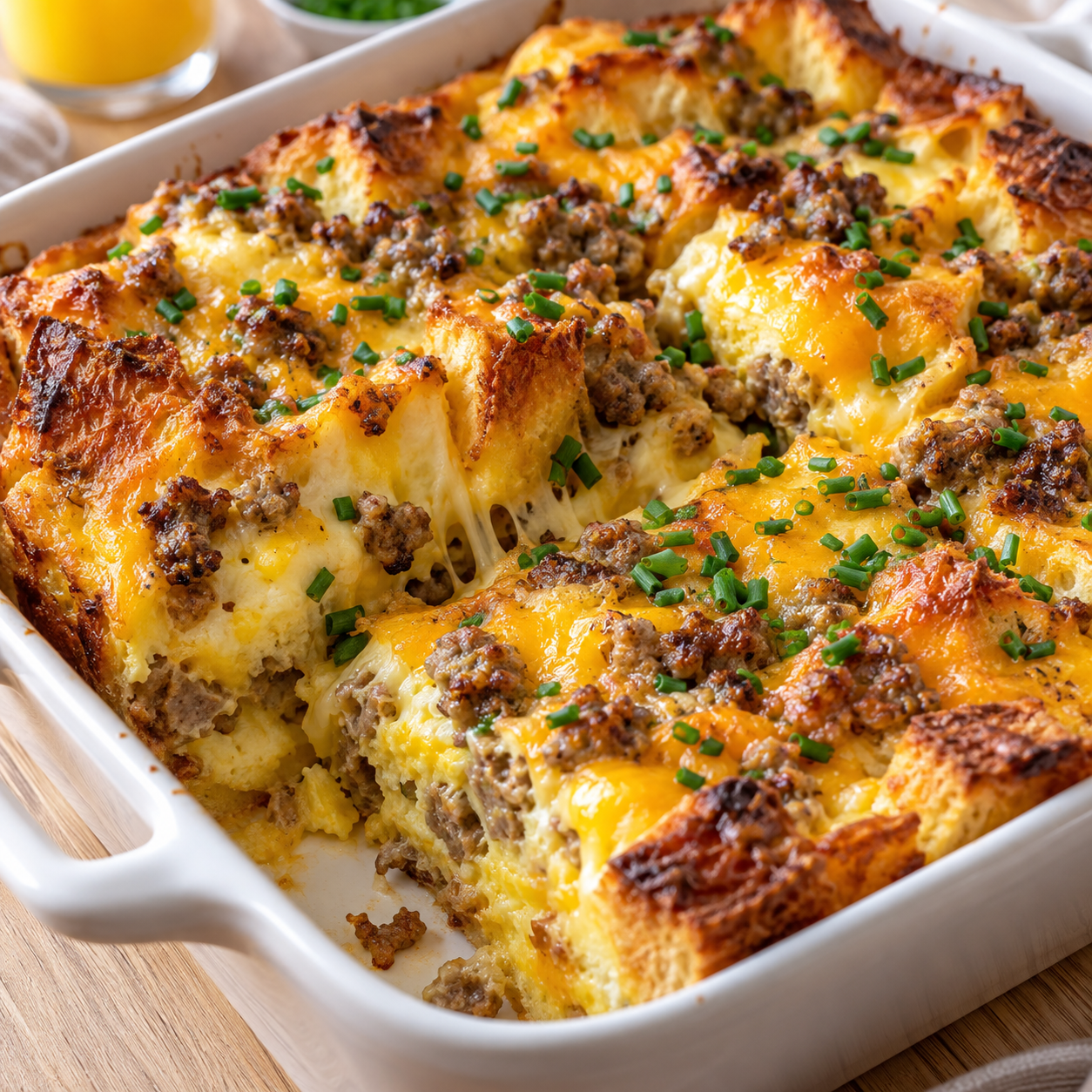
Grilled Cheese Sausage and Egg Breakfast Casserole turns a diner-style breakfast into one golden baking dish. The bread is not tossed in plain. It gets buttered, filled with cheese, toasted, and cut into pieces so the top bakes crisp while the center stays custardy.
Browned breakfast sausage brings the savory edge. A simple egg and milk custard holds everything together without making the casserole heavy or wet.
This is a good choice when you want something generous for a weekend table. It also reheats well when baked in clean slices.
What Gives The Casserole Its Bite
Choose bread that can hold up to custard and cheese. Sharp cheddar gives the strongest grilled-cheese flavor, while mozzarella helps the layers stretch and melt.
If you enjoy this recipe, you may also like Breakfast Tater Tot Casserole.
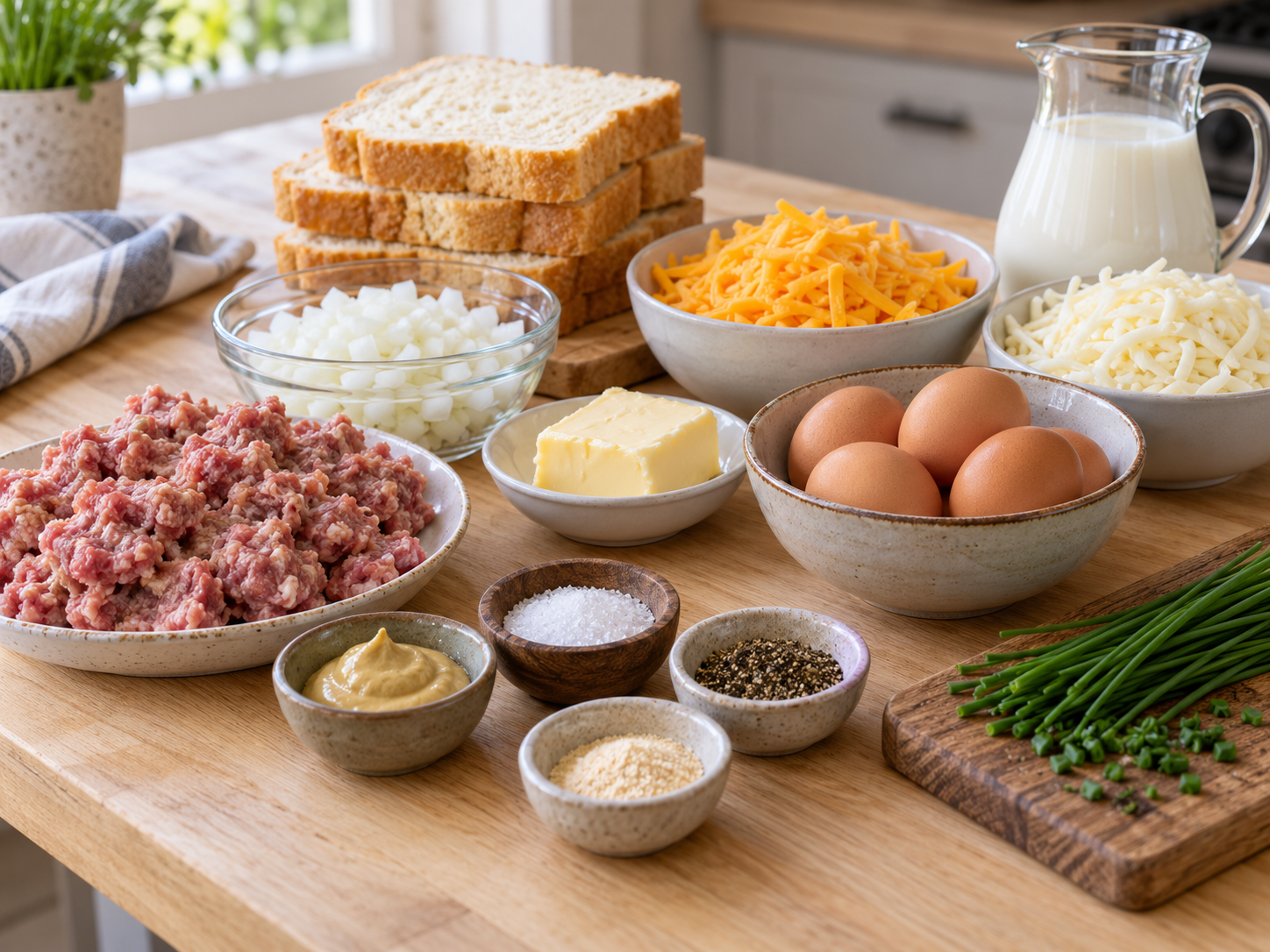
- Pork breakfast sausage. Browns into savory crumbles that season the whole casserole.
- Sturdy sandwich bread. Turns into crisp-edged grilled-cheese pieces instead of soft filler.
- Unsalted butter. Helps the bread toast golden before it goes into the baking dish.
- Sharp cheddar. Brings the bold grilled-cheese flavor.
- Mozzarella. Adds melt and stretch without overpowering the cheddar.
- Large eggs. Set the casserole and give each slice structure.
- Whole milk. Softens the eggs into a custard instead of a rubbery bake.
- Dijon mustard. Adds a small savory lift that keeps the cheese from tasting flat.
- Chives. Finish the rich casserole with a fresh onion note.
For storage details after serving, the USDA leftovers and food safety guidance.
Build The Buttery Layers
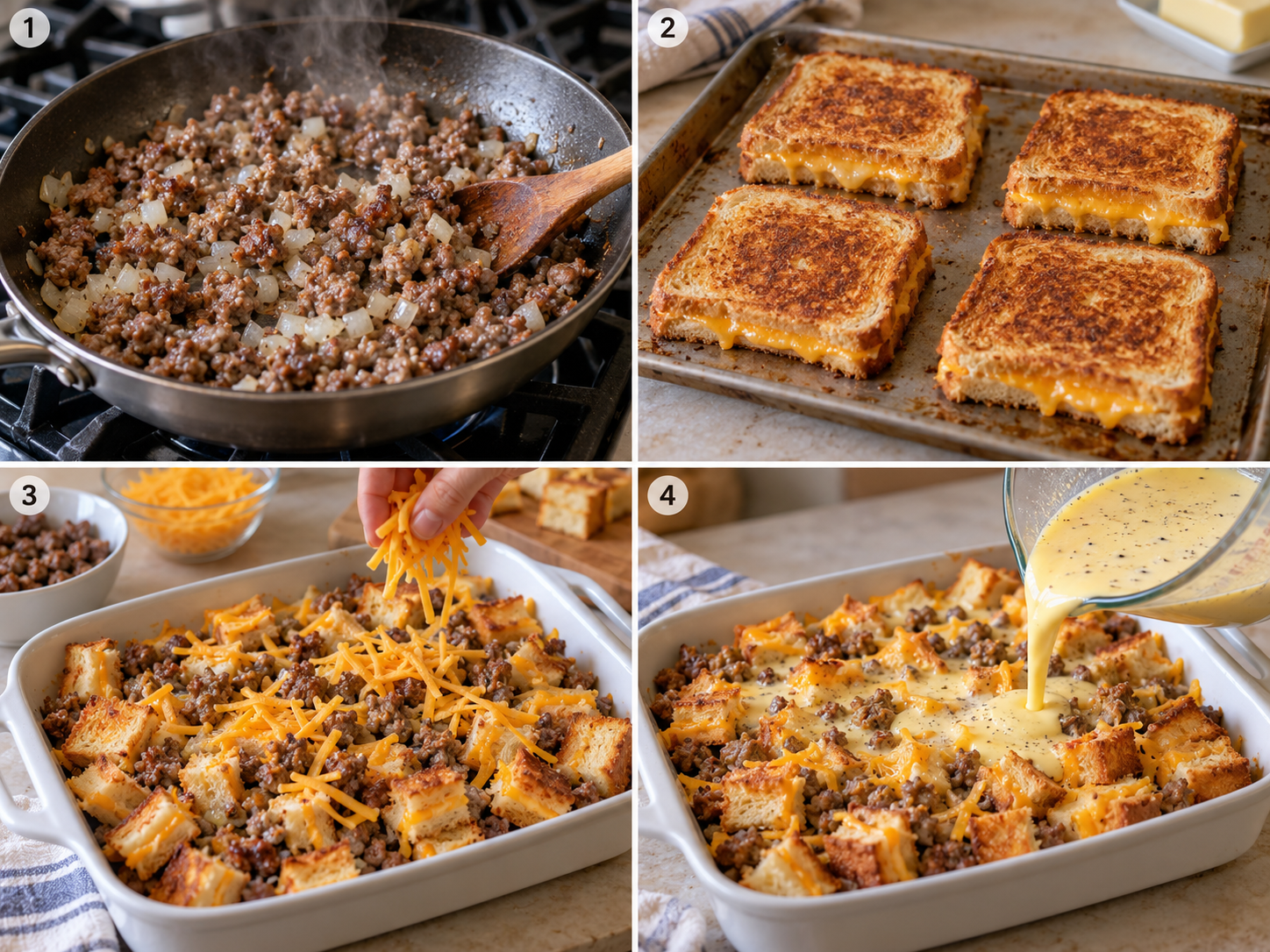
- Brown the sausage. Cook the sausage with onion until the meat is no longer pink and the edges are browned. Drain off extra fat so the casserole does not turn greasy.
- Toast the sandwiches. Butter the bread, fill it with cheddar and mozzarella, and bake until the outside is golden and the cheese is melted.
- Cut the bread. Let the sandwiches cool for a few minutes, then cut them into bite-size cubes so every slice has cheesy pockets.
- Whisk the custard. Beat the eggs, milk, Dijon, salt, pepper, and garlic powder until smooth.
- Layer the dish. Add half the grilled-cheese cubes, the sausage, more cheddar, and the remaining cubes. Pour the custard over the top and press gently.
- Bake until set. Cover first so the center cooks through, then uncover so the top browns and the cheese bubbles.
If you enjoy this recipe, you may also like Breakfast Enchiladas.
Why Toast The Bread First
The grilled-cheese step is what makes this casserole taste different from a regular egg bake. Toasted bread brings browned butter flavor and a firmer edge. That matters because the custard needs something sturdy to soak into.
If the bread goes in soft, it can collapse before the eggs set. Toasting gives each cube a thin crust. The bottom turns tender and savory, while the pieces on top stay crisp and cheesy.
Use medium heat if you toast the sandwiches in a skillet, or use a sheet pan for a faster batch. Either way, let them cool before cutting. Hot melted cheese can slide out if you rush it.
Grilled Cheese Sausage and Egg Breakfast Casserole
The center should be set, not loose. Since this casserole contains both eggs and sausage, use a thermometer in the middle of the dish. FoodSafety.gov lists 160°F for ground meat and sausage, 160°F for egg dishes, and 165°F for casseroles that contain meat or poultry in its safe minimum temperature chart. Aim for 165°F in the center for this recipe.
Covering the pan for the first part of baking helps the custard cook evenly. Uncovering at the end gives the top time to brown. If the top darkens too quickly, lay the foil back on loosely for the last few minutes.
Make-Ahead Timing
You can assemble the casserole the night before. Cover the dish tightly and keep it refrigerated until baking. The FDA egg safety guidance recommends keeping eggs refrigerated and cooking egg dishes thoroughly.
For the best texture, do not soak the bread for more than overnight. The sandwich cubes need enough time to absorb custard, but not so long that the crisp edges disappear. If the dish is very cold when it goes into the oven, plan on an extra 5-10 minutes of baking time.
Storage And Reheating
Let the casserole rest for 10 minutes before slicing. This keeps the custard from spilling out and gives you cleaner pieces. Refrigerate leftovers in shallow airtight containers once the casserole has cooled enough to handle.
FoodSafety.gov advises refrigerating leftovers within 2 hours and eating them within 3-4 days in its leftover safety guidance. Reheat slices covered in a 325°F oven until hot in the center. For a quicker breakfast, microwave a slice at half power, then finish it in a skillet for a crisper bottom.
Frequently Asked Questions
- → Can I make this breakfast casserole the night before?
Yes. Assemble it, cover it, and refrigerate it overnight. Bake it straight from the refrigerator, adding 5-10 minutes as needed, and check the center with a thermometer.
- → Can I use turkey sausage instead of pork sausage?
Yes, turkey sausage works well. Cook it fully before layering it into the casserole, and keep in mind that poultry sausage needs a safe internal temperature of 165°F.
- → What bread works best?
Use sturdy sandwich bread, sourdough, or Texas toast. Very soft bread can turn mushy once the custard is added, so toast it well before cutting it into cubes.
- → Can I use a different cheese?
Cheddar gives the casserole a sharp grilled-cheese flavor. Monterey Jack, Colby, mozzarella, or provolone can replace part of the cheddar if you want a softer melt.
- → How do I keep the casserole from getting soggy?
Toast the sandwiches until the outside is golden and let the assembled casserole sit only long enough for the custard to soak in. Bake uncovered at the end so the top can dry slightly and crisp.
- → What should I serve with it?
Serve it with fruit, a simple green salad, roasted tomatoes, or hot sauce. The casserole is rich, so something bright or acidic on the side keeps the plate balanced.