


Hot honey steak and shrimp turns surf and turf into a bold sweet-heat dinner. Filet mignon gets a slow smoke and a quick high-heat sear, while seasoned shrimp cooks in cast iron just before serving. The contrast between smoky beef, juicy shrimp, chile-spiked honey, and butter makes this a centerpiece meal for four.
The original method uses a long honey cure. This version preserves that idea while separating the raw steak and shrimp at every stage. Use fresh honey for each protein, keep both covered and refrigerated, and discard every portion of honey that has touched raw meat or seafood.
Ingredients for Hot Honey Steak and Shrimp
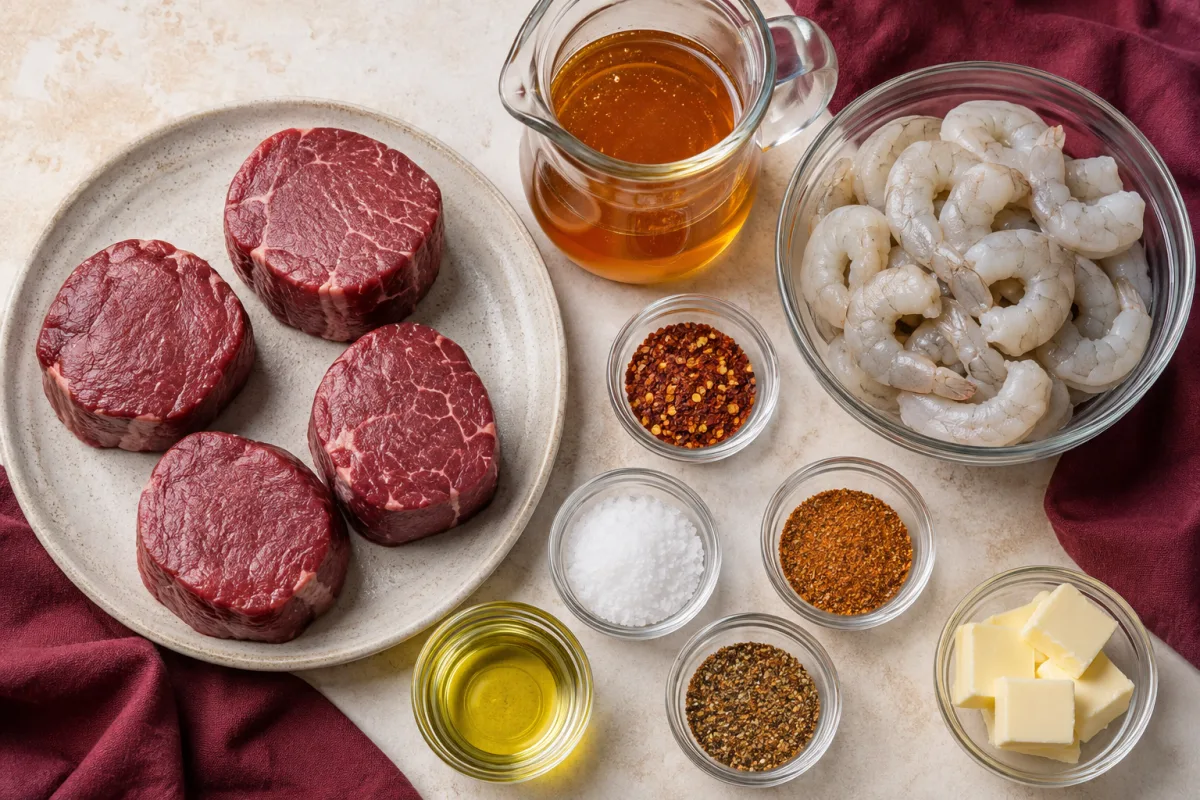
You need 3 to 4 filet mignons and 1 1/2 pounds peeled and deveined shrimp. Season the beef with 2 tablespoons Cowboy Candy Rub or another steak rub, and use 2 tablespoons seafood rub for the shrimp. Kosher salt starts the beef cure, while a small amount of neutral oil helps the shrimp cook cleanly in cast iron. Butter is optional at the table.
The source formula lists 1 gallon honey and 1/2 cup red chili flakes. The important point is complete coverage, not forcing an excessive quantity into a small container. Divide fresh honey and chile between two clearly labeled, nonreactive containers: one only for steak and a second only for shrimp. Never transfer honey, tools, or raw juices from one container to the other.
If you enjoy this recipe, you may also like All-American Bacon Cheeseburger.
How to Make Hot Honey Steak and Shrimp
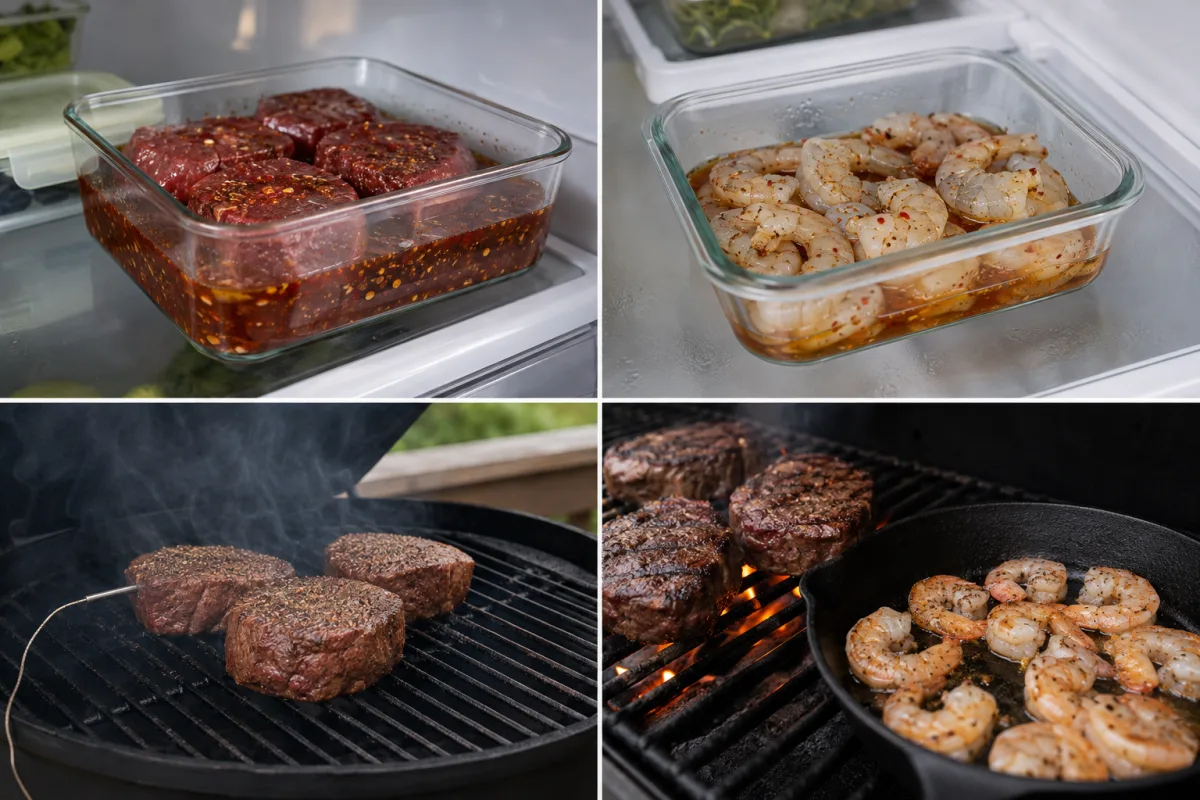
- Prepare separate cures. Gently warm only clean honey until fluid, never boiling. Divide it between separate containers, stir chile flakes into each, and cool before adding raw protein.
- Cure the steak. Salt the filets, cover them with their dedicated honey mixture, seal, and refrigerate for 24 hours. Turn with clean utensils if needed for even coverage.
- Add shrimp to its own cure. About 1 hour before cooking, place cold shrimp in the second chilled honey mixture. Keep refrigerated.
- Season. Remove the proteins separately, discard both cures, and blot well. Apply steak rub to the filets and seafood rub to the shrimp.
- Smoke the steak. Heat the smoker to 250°F. Smoke about 30 minutes, monitoring internal temperature.
- Rest and sear. Rest the steak for 10 minutes, then sear over roughly 400°F heat for about 1 minute per side.
- Cook the shrimp. Heat oil in clean cast iron and cook shrimp 1 to 2 minutes per side until opaque and 145°F.
- Serve. Plate the steak and shrimp immediately, adding butter if desired.
For storage details after serving, the USDA leftovers and food safety guidance.
Keep the Two Honey Cures Completely Separate
Cross-contamination is the main risk in this unusual preparation. Set out two containers, two sets of tongs, and two clean plates before opening the raw packages. Label one container STEAK and the other SHRIMP. Fresh honey goes into each; nothing travels from one to the other.
Honey is not a substitute for refrigeration and does not make raw meat safe. Both containers must remain cold for the entire cure. Once the raw protein comes out, pour the used honey away. The finishing flavor should come from the rub, smoke, sear, and optional butter, not from reused marinade.
If you enjoy this recipe, you may also like Steak Fajita Quesadilla.
Manage the Sweetness Before Cooking
Blotting the proteins is essential because a heavy coating of honey burns quickly. Let excess honey drip back into its original disposable container, then use paper towels to dry the surface. Do not rinse the meat, which can spread raw juices around the sink.
The surface should feel tacky rather than wet before the seasoning goes on. That light residue helps the rub adhere and caramelize, while removing the excess prevents the chile and sugar from turning bitter during the sear.
Smoke the Filets Gently
Preheat the smoker fully to 250°F so the cooking environment is stable before the filets go on. Place the steaks with space around each one and insert a thermometer into the thickest piece from the side. The source method estimates about 30 minutes to reach 120°F before resting and searing.
Time is only a guide because filet thickness, starting temperature, and smoker behavior vary. Decide on your final preferred doneness and account for the temperature gained during the rest and sear. For food-safety guidance, USDA recommends 145°F for whole cuts of beef followed by at least a 3-minute rest.
Use a Short, Hot Sear
After the 10-minute rest, bring the grill or fire to approximately 400°F. The steak already has smoke flavor and much of its cooking completed, so this stage is about building a browned crust. About 1 minute per side is usually enough.
Watch the surface closely because the residual honey caramelizes faster than an unsweetened steak. Move the filets away from flare-ups, and use clean tongs rather than the utensil that handled them raw. Check the final internal temperature before serving.
Cook the Shrimp at the Last Minute
Use a clean cast-iron skillet and a thin film of neutral oil. Once the pan is hot, add the shrimp in a single layer. Crowding traps steam and makes it difficult to develop color, so cook in two batches if the skillet is small.
Shrimp cook rapidly, generally 1 to 2 minutes per side depending on size. Turn when the first side is pink at the edges, then remove them when the centers are opaque and the internal temperature reaches 145°F. Carryover heat continues briefly, so leaving them in the pan too long can make them rubbery.

Balance the Final Plate
Serve the sliced or whole filet beside the shrimp so each component remains distinct. A small pat of butter can soften the chile heat and enrich the lean seafood. The plate is already sweet, smoky, salty, and rich, so simple sides work best.
Try roasted green vegetables, a crisp salad, or plain rice that can absorb the juices without competing with the glaze. If you want more heat, offer dry chile flakes at the table rather than spooning on any used curing liquid.
Make-Ahead and Storage
The steak cure must begin a day ahead, while the shrimp needs only the final hour. Measure the seasonings and prepare separate labeled containers in advance. Do not leave either protein at room temperature while the grill heats.
Refrigerate cooked leftovers in shallow airtight containers within 2 hours and use within 3 days. Reheat steak gently to avoid overcooking. Warm shrimp only until hot, preferably in a skillet over low heat. Do not store or reuse the discarded honey cures.
Troubleshooting
- The surface burns: Blot away more honey and move the food away from flare-ups.
- The steak cooks unevenly: Choose filets of similar thickness and rely on a thermometer.
- The shrimp release water: Dry them well and avoid crowding the skillet.
- The shrimp turn tough: Remove them as soon as they are opaque and reach 145°F.
- The flavor is too sweet: Use a thorough blot, a savory rub, and fresh green or acidic side dishes.
Conclusion
Cure steak and shrimp in separate portions of chile-spiked honey under refrigeration, discard both used cures, and dry and season the proteins. Smoke and sear the filets, then cook the shrimp quickly in clean cast iron and serve at once.
Frequently Asked Questions
- → Can I use the steak honey to cure the shrimp?
No. Raw steak and shrimp must have separate fresh honey cures, separate tools, and separate containers. Discard both cures after use.
- → Does honey make raw meat safe at room temperature?
No. Keep both proteins refrigerated at 40°F or colder throughout the cure. Honey does not replace safe cold storage.
- → How do I prevent the honey from burning?
Let excess cure drain, blot the proteins thoroughly, and watch them closely during the short high-heat sear.
- → When are the shrimp done?
They should be opaque through the center and reach 145°F. This normally takes about 1 to 2 minutes per side in a hot skillet.