

Ina Garten's Pastitsio is a layered baked pasta for eight, combining a long-simmered beef-and-lamb tomato sauce with al dente shells or ziti and a Parmesan-Greek-yogurt béchamel. The recipe records 60 minutes of preparation, 45 minutes of cooking, and 105 minutes total, while the detailed method also includes a 40-to-45-minute sauce simmer and a 45-to-60-minute bake. Preserve those explicit stages rather than forcing them into a shorter promise. Cinnamon, oregano, thyme, cayenne, red wine, nutmeg, Parmesan, and yogurt give this casserole its specific character, and a 9-by-13-inch dish supports eight clean portions after the layers settle.
Ina Garten's Pastitsio Ingredients
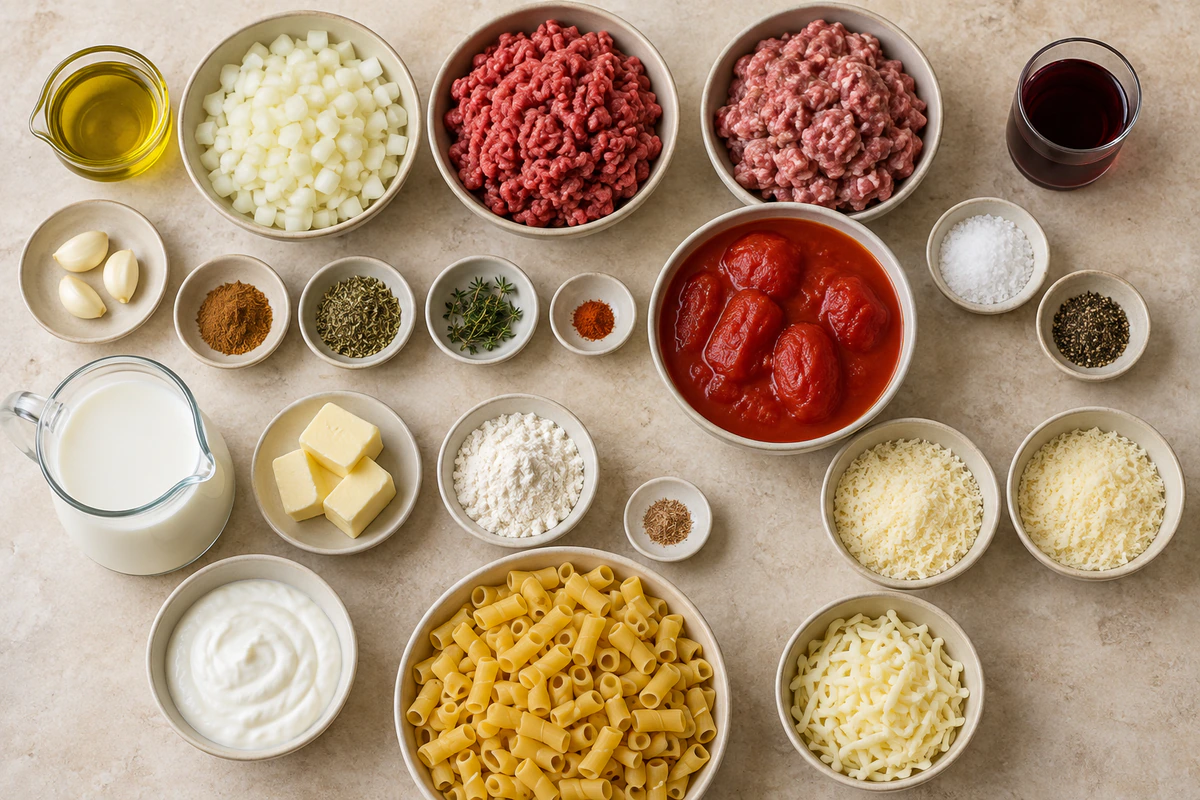
Meat Sauce: 3 tablespoons olive oil; 1 large yellow onion, diced; 1 pound lean ground beef; 1 pound lean ground lamb (can substitute for pork); 1/2 cup dry red wine; 1 tablespoon minced garlic (3 large cloves); 1 tablespoon ground cinnamon; 1 teaspoon dried oregano; 1 teaspoon fresh thyme leaves; Pinch of cayenne pepper; 1 can (28 ounces) San Marzano tomatoes; Kosher salt and freshly ground black pepper.
Bechamel: 2 1/2 cups low-fat milk; 4 tablespoons unsalted butter; 1/4 cup all-purpose flour; 1/4 teaspoon freshly grated nutmeg; Salt and freshly ground black pepper; 1 1/2 cups freshly grated Parmesan, divided; 2/3 cup Greek yogurt.
Pasta: 3/4 pound small shells or ziti noodles.
Optional Topping: Shredded mozzarella.
If you enjoy this recipe, you may also like Low Carb Pizza Casserole.
How to Make Ina Garten's Pastitsio
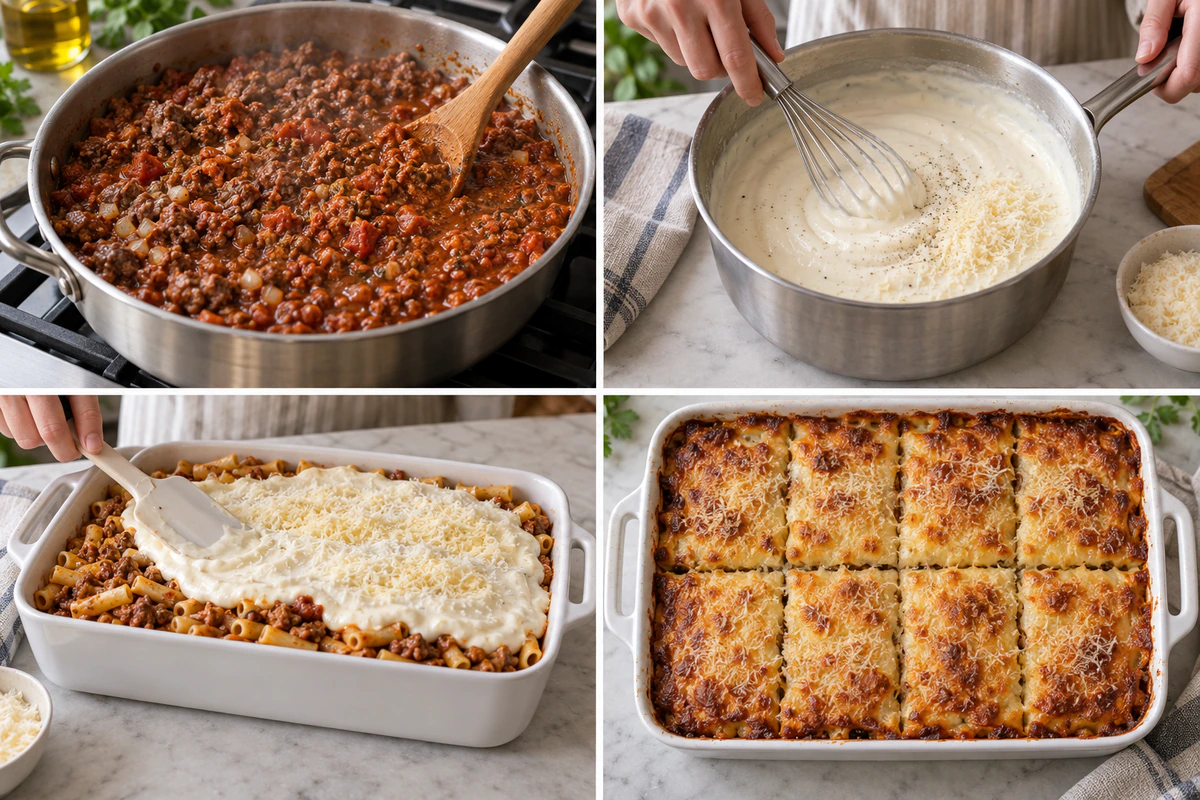
- Prepare the Meat Sauce: In a large pot, heat olive oil over medium-high heat. Add diced onion and sauté for 5 minutes until softened. Add ground beef and lamb, cook for 10 minutes, and crumble with a spoon until no longer pink. Drain excess liquid and add red wine. Cook for 2-3 minutes until almost all the wine is absorbed. Stir in garlic, cinnamon, oregano, thyme, and cayenne. Cook for 5 minutes. Add crushed San Marzano tomatoes, 2 teaspoons salt, and 1 teaspoon black pepper. Simmer for 40-45 minutes, stirring occasionally. Set aside.
- Prepare the Bechamel: Preheat oven to 350°F (175°C). In a small saucepan, melt butter over medium heat. Stir in all-purpose flour and cook for 2 minutes until the raw flour smell dissipates. Gradually add milk, whisking constantly. Increase heat to a simmer and stir frequently for 7-8 minutes until the mixture thickens. Add nutmeg, 1 teaspoon salt, and 1 teaspoon black pepper. Stir in 3/4 cup Parmesan cheese. Remove from heat and allow to cool for 10 minutes. Stir in Greek yogurt and set aside.
- Cook the Pasta: Boil pasta in a large pot of salted water until just al dente. Drain and mix with the prepared meat sauce.
- Assemble: In a 9x13-inch baking dish, spread the pasta and sauce mixture evenly. Top with bechamel sauce, spreading evenly. Sprinkle with remaining Parmesan and optional shredded mozzarella.
- Bake: Bake in the preheated oven for 45-60 minutes, or until golden brown and bubbly. Adjust baking time if components were prepared ahead of time.
For storage details after serving, the USDA leftovers and food safety guidance.
Why the Order Matters
Heat three tablespoons olive oil over medium-high heat and soften the diced large yellow onion for five minutes. Add one pound lean ground beef and one pound lean ground lamb, cooking and crumbling for 10 minutes until no pink remains; pork is the recorded substitute for lamb. Drain, add one-half cup dry red wine, and cook two to three minutes until almost absorbed. Add one tablespoon minced garlic, cinnamon, oregano, thyme, and cayenne for five minutes, then crushed San Marzano tomatoes, two teaspoons salt, and one teaspoon pepper. Simmer 40 to 45 minutes. Separately make béchamel with four tablespoons butter, one-quarter cup flour, two and one-half cups milk, nutmeg, seasonings, three-quarter cup Parmesan, then cool 10 minutes before adding two-thirds cup Greek yogurt. Combine al dente pasta with sauce, layer with béchamel and remaining cheese, and bake at 350°F.
If you enjoy this recipe, you may also like Lemon Chicken Romano.
Critical Visual and Timing Cues
For the meat sauce, onions should soften before meat enters, and the beef and lamb should be finely crumbled with no pink remaining before draining. The wine stage is complete when liquid is almost absorbed, not while a visible pool remains. During the long simmer, stir occasionally and look for a cohesive sauce that can cling to pasta. For béchamel, cook flour in melted butter for two minutes so its raw smell dissipates, then add milk gradually while whisking. After seven to eight minutes at a simmer, the sauce should visibly thicken. Remove it from heat before the 10-minute cooling period; adding yogurt while the base is fiercely hot can compromise its smooth texture. The baked top should be golden and bubbling, while the pasta underneath remains structured rather than mushy.
Serving and Storage
Bake the assembled 9-by-13-inch casserole for 45 to 60 minutes at 350°F or 175°C. If the sauce or béchamel was prepared the night before, the source explicitly says to adjust baking time, so judge the center as well as the top. Letting the dish settle briefly before cutting helps the pasta, meat sauce, and béchamel hold together in eight portions. Serve warm with no need to add unrecorded sauce. Refrigerate leftovers promptly because the casserole contains meat, milk, butter, Parmesan, yogurt, and optional mozzarella. Reheat until the center is hot. The recipe contains dairy, gluten, and meat; check pasta and packaged cheese for additional allergen or cross-contact information. Dry red wine remains part of the original meat sauce and should not be presented as an optional garnish.
Practical Kitchen Notes
The one and one-half cups Parmesan is divided: three-quarter cup melts into the béchamel and the remaining three-quarter cup finishes the assembled dish. Shredded mozzarella is listed without a numeric quantity and is optional in the assembly instruction, so do not invent an amount. Salt and pepper appear in both components with exact sauce and béchamel measures provided in the method. Use three large garlic cloves to supply the recorded tablespoon of minced garlic. The lamb line explicitly permits pork as a substitute; other meat substitutions are not part of this source. Small shells or ziti should be boiled only until just al dente because they cook again in the oven. Drain them well, but do not rinse away the surface starch that helps the meat sauce adhere.
Details Worth Preserving
This recipe becomes manageable when treated as coordinated components. Prepare and simmer the meat sauce first; during that stage measure the béchamel ingredients and grate Parmesan. Preheat the oven to 350°F before making the white sauce. Whisk milk in gradually to avoid lumps, season only with the recorded nutmeg, salt, and pepper, and allow the Parmesan-enriched base to cool before folding in yogurt. Boil the three-quarter pound pasta near the end of the sauce simmer so it does not sit and clump. Mix pasta and meat sauce before transferring them to the baking dish, then spread béchamel edge to edge. Finish with remaining Parmesan and optional mozzarella. The sauce and béchamel may be made the night before, but assembly and baking are recommended on serving day.
Recorded Recipe Tips
- The Meat Sauce and Bechamel can be prepared the night before. Assemble and bake on the day of serving for optimal results.

Conclusion
Ina Garten's Pastitsio makes 8 servings in 105 recorded minutes, plus any separately stated baking, chilling, rising, resting, or cooling time. Preserve every listed quantity and instruction for the intended result.
Frequently Asked Questions
- → How many servings does Ina Garten's Pastitsio make?
It makes 8 servings and serves 8.
- → How long does Ina Garten's Pastitsio take?
The recipe records 60 minutes of preparation, 45 minutes of cooking, and 105 minutes total, plus any separately stated baking, chilling, rising, resting, or cooling time.
- → What equipment should be ready?
Prepare Large pot or Dutch oven; Small saucepan; Large pot for boiling pasta; 9x13-inch baking dish; Wooden spoon; Whisk before starting.
- → Can I change the recorded method?
For the verified result, keep the listed quantities, temperatures, timing, and ordered instructions exactly as written. Use only optional variations explicitly recorded in the source.