


Jalapeño popper salmon pinwheels roll a whole skinless fillet around cream cheese, fresh jalapeño, crisp bacon, and cheddar, then cook the slices over apple-wood smoke on a cedar plank. The result combines rich salmon with a smoky, gently spicy center.
This recipe makes about three large pinwheels in 60 minutes. Soak the plank first, chill the filled roll if it feels soft, and use a thermometer because the spiral shape makes appearance alone an unreliable guide.
Ingredients for Jalapeño Popper Salmon Pinwheels
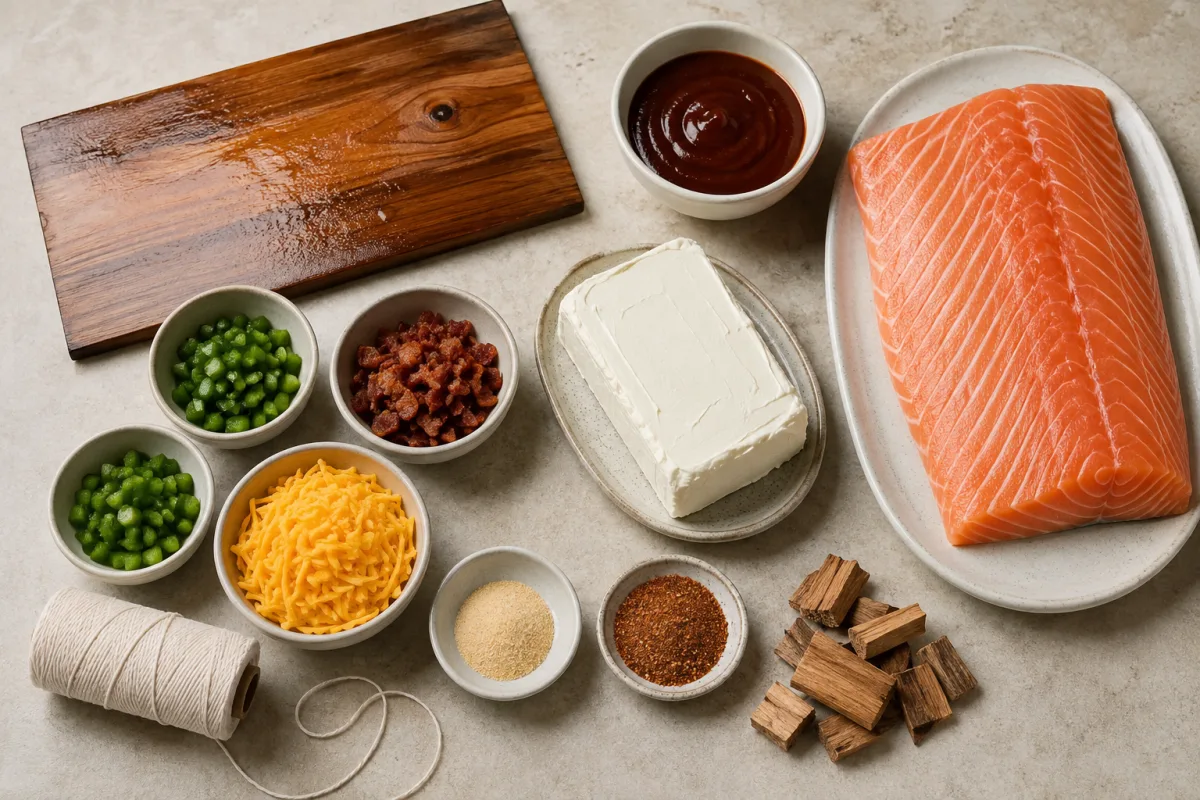
The filling uses one softened 8-ounce block cream cheese, 2 diced fresh jalapeños, 1/2 pound cooked crisp bacon, 1/4 cup shredded cheddar, and 1 tablespoon garlic powder. Drain the bacon and cool it before mixing so it does not melt the cream cheese.
You also need one large skinless salmon fillet, barbecue rub, barbecue sauce for glazing, kitchen twine, a cedar plank soaked at least 30 minutes, and apple wood for smoke. Check the rub and sauce labels if gluten-free preparation matters.
If you enjoy this recipe, you may also like Chicken Fajita Quesadillas.
How to Make Salmon Pinwheels
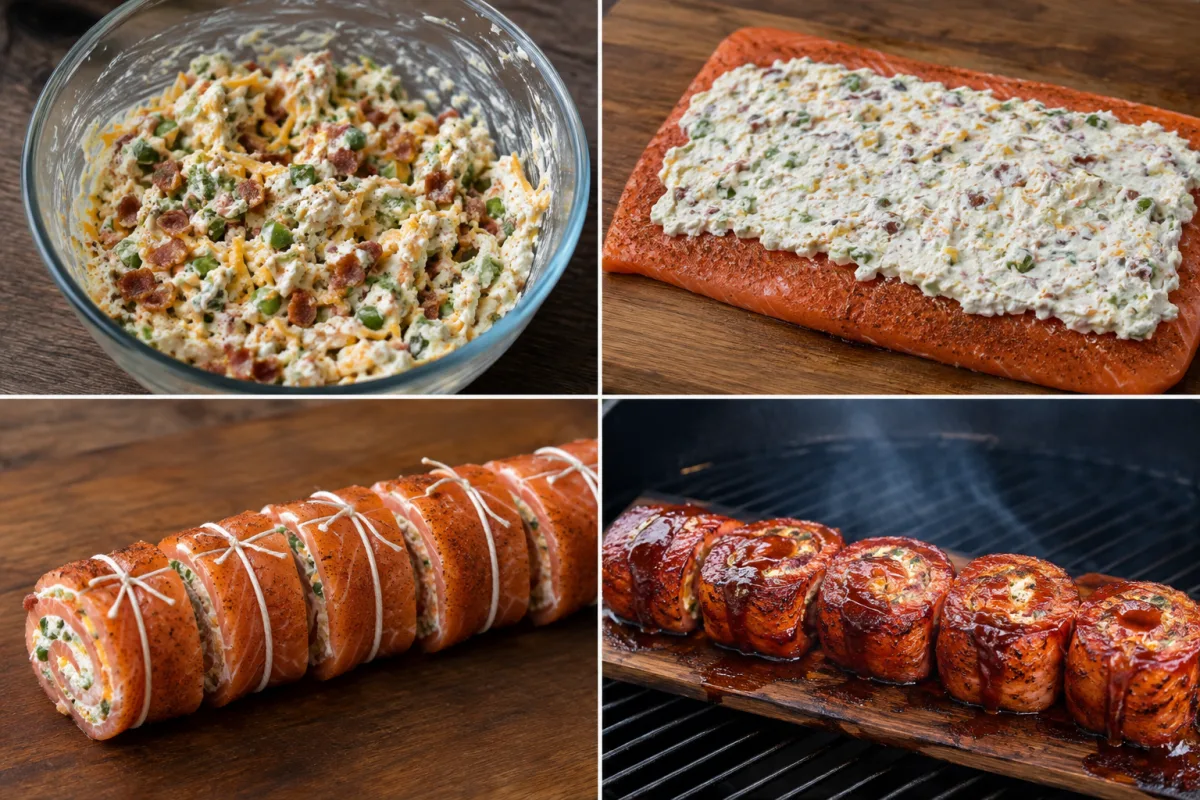
- Soak the plank. Submerge it in water for at least 30 minutes.
- Heat the grill. Set up indirect heat at 250°F and add apple wood.
- Mix the filling. Combine cream cheese, jalapeños, bacon, cheddar, and garlic powder.
- Season. Pat the skinless salmon dry and apply barbecue rub.
- Fill and roll. Spread the mixture evenly, roll from the tail end, and tie at regular intervals.
- Slice. Cut between the ties to create pinwheels and season the cut surfaces lightly.
- Cook. Set the pinwheels on the soaked plank over indirect heat for about 40 minutes.
- Glaze. Brush with barbecue sauce during the final 15 minutes.
- Finish. Remove when the center reaches your safe target and rest three minutes.
For storage details after serving, the USDA leftovers and food safety guidance.
Soak and Position the Cedar Plank
Fully submerge the plank for at least 30 minutes, weighting it with a bowl if it floats. A wet surface slows scorching and releases gentle cedar aroma as it heats. Soaking does not make wood fireproof.
Place the plank away from direct flame and keep the grill lid closed as much as possible. Have water nearby for flare-ups. If an edge begins burning rather than smoldering, move it to a cooler zone.
If you enjoy this recipe, you may also like BBQ Brisket Elote Tacos.
Prepare a Firm Filling
Soften cream cheese only until it mixes easily; it should not be warm or glossy. Fold in diced jalapeño, cooled bacon, cheddar, and garlic powder until evenly distributed. Small pieces make the roll easier to slice.
For less heat, remove the jalapeño ribs and seeds. Wear gloves if your skin is sensitive and avoid touching your eyes. Refrigerate the filling briefly if it becomes loose.
Flatten, Season, and Fill Evenly
Use a broad fillet of fairly even thickness. Remove pin bones, pat dry, and place it presentation-side down. Apply a moderate layer of barbecue rub, remembering that bacon, cheddar, and sauce add salt.
Spread filling in a thin, even layer and leave a small bare border. A thick central mound will squeeze out when the salmon rolls. Keep every utensil that touches raw fish away from leftover filling.
Roll from the Narrow End
Beginning near the tail creates a compact center. Roll firmly without crushing the fish, then tie kitchen twine at equal intervals. Each loop should hold the spiral closed but should not cut deeply into the flesh.
If the cylinder feels soft, refrigerate it for 10 to 15 minutes. A chilled roll slices more cleanly and keeps the filling inside.
Cut Between the Ties
Use a long sharp knife and cut between each loop of twine. Wipe the blade between cuts instead of sawing repeatedly. Equal thickness helps all pinwheels finish together.
Set each spiral flat on the plank and add only a light dusting of rub to exposed salmon. Confirm the twine remains tied around every portion.
Smoke Gently and Glaze Late
Cook at 250°F over indirect heat for about 40 minutes. Apple wood adds a mild sweetness that does not overwhelm salmon. Keep space between the spirals so smoke and heat circulate.
Brush barbecue sauce on during the final 15 minutes. Adding it earlier risks darkening the sugar before the center is done. Use a clean brush and fresh sauce, never sauce contaminated by raw salmon.

Rest and Serve
Rest three minutes before moving the pinwheels. This helps the salmon and filling settle and reduces breakage. Snip and remove every piece of twine before plating.
Serve with a crisp salad, grilled vegetables, or rice. The fish is already rich, smoky, salty, and creamy, so simple sides create a more balanced plate.
Storage and Reheating
Refrigerate cooked leftovers within two hours and use within two days. Keep them in a shallow airtight container. Reheat gently in a covered skillet or low oven only until hot.
High heat can split the cream cheese filling and dry the salmon. These pinwheels are best fresh, but the filling can be mixed one day ahead and refrigerated separately.
Planning the Grill Timeline
Start soaking the plank before mixing the filling. While the wood sits underwater, cook and cool the bacon, dice the jalapeños, remove pin bones, and arrange separate clean and raw-fish work areas. Heat the grill after the roll is tied so it does not sit empty for too long.
Once the pinwheels begin cooking, prepare side dishes and clean the raw-fish tools. Have fresh barbecue sauce, a clean brush, thermometer, scissors for the twine, and a serving platter ready before the glazing stage.
Troubleshooting
- Filling leaks: Use a thinner layer, leave a border, and chill before slicing.
- Roll opens: Tie at regular intervals before cutting.
- Plank flames: Move to indirect heat and keep water nearby.
- Sauce burns: Apply only in the final 15 minutes.
- Pinwheels cook unevenly: Slice equal thicknesses and check each center.
Conclusion
Mix the jalapeño popper filling, spread it over seasoned skinless salmon, roll, tie, and slice. Cook the pinwheels over indirect apple-wood smoke on a soaked cedar plank, glaze late, verify temperature, and rest before removing twine.
Frequently Asked Questions
- → How long should I soak the cedar plank?
At least 30 minutes, fully submerged. Keep it over indirect heat because soaked wood can still burn.
- → How do I stop the filling from leaking?
Spread a thin layer, leave a border, roll firmly, and chill the tied cylinder before slicing if it feels soft.
- → When should I add barbecue sauce?
Brush it on during the final 15 minutes so its sugars do not darken before the salmon cooks.
- → What temperature should salmon reach?
USDA guidance is 145°F. Measure the thickest section of each spiral with an instant-read thermometer.