

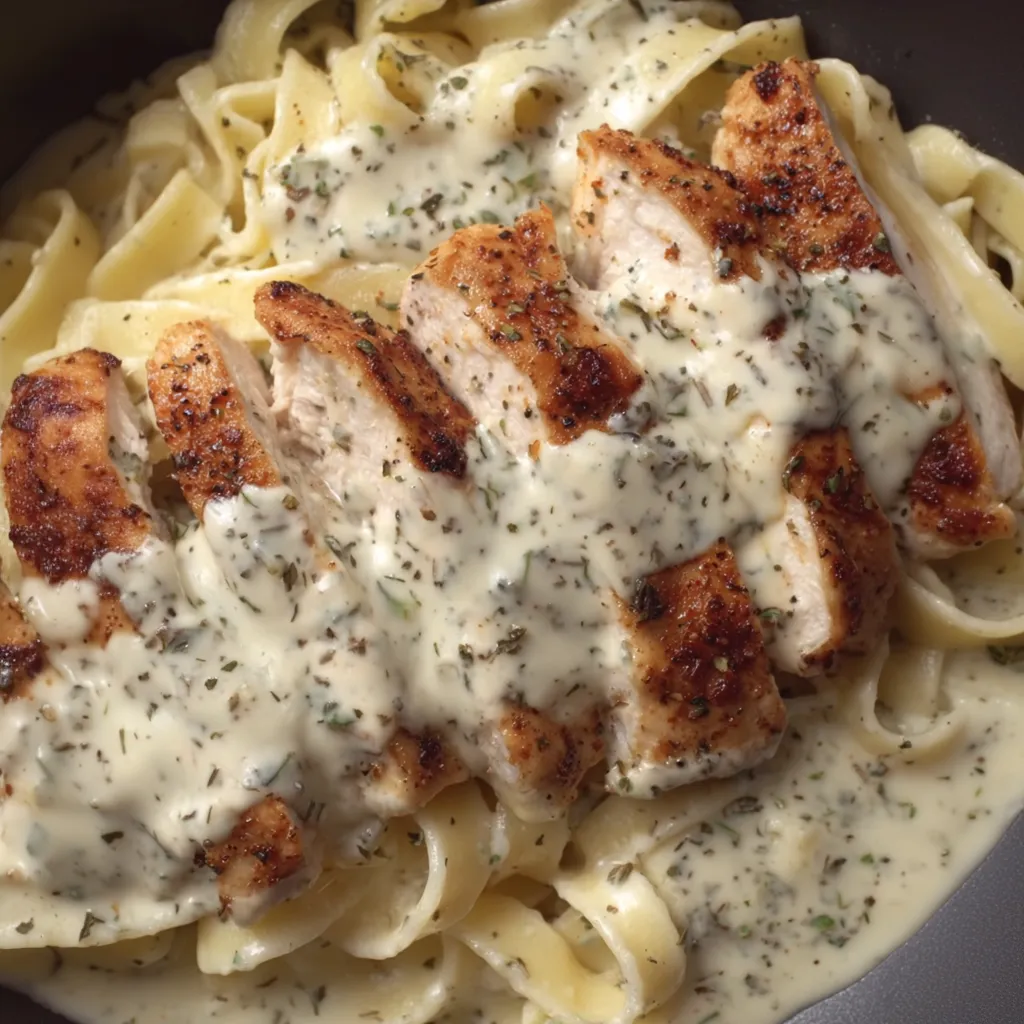
Lemon garlic chicken Alfredo pairs seasoned pan-cooked chicken with fettuccine in a silky Parmesan cream sauce. Lemon zest and juice cut through the richness without turning the dish sharply sour, while garlic, Italian seasoning, and parsley build a savory background.
The sauce begins with butter and a small amount of flour, followed by room-temperature cream and freshly grated Parmesan. Gentle heat is the key: it keeps the dairy smooth and gives the pasta time to absorb flavor. Reserved pasta water lets you correct the consistency just before serving.
Ingredients for Lemon Garlic Chicken Alfredo
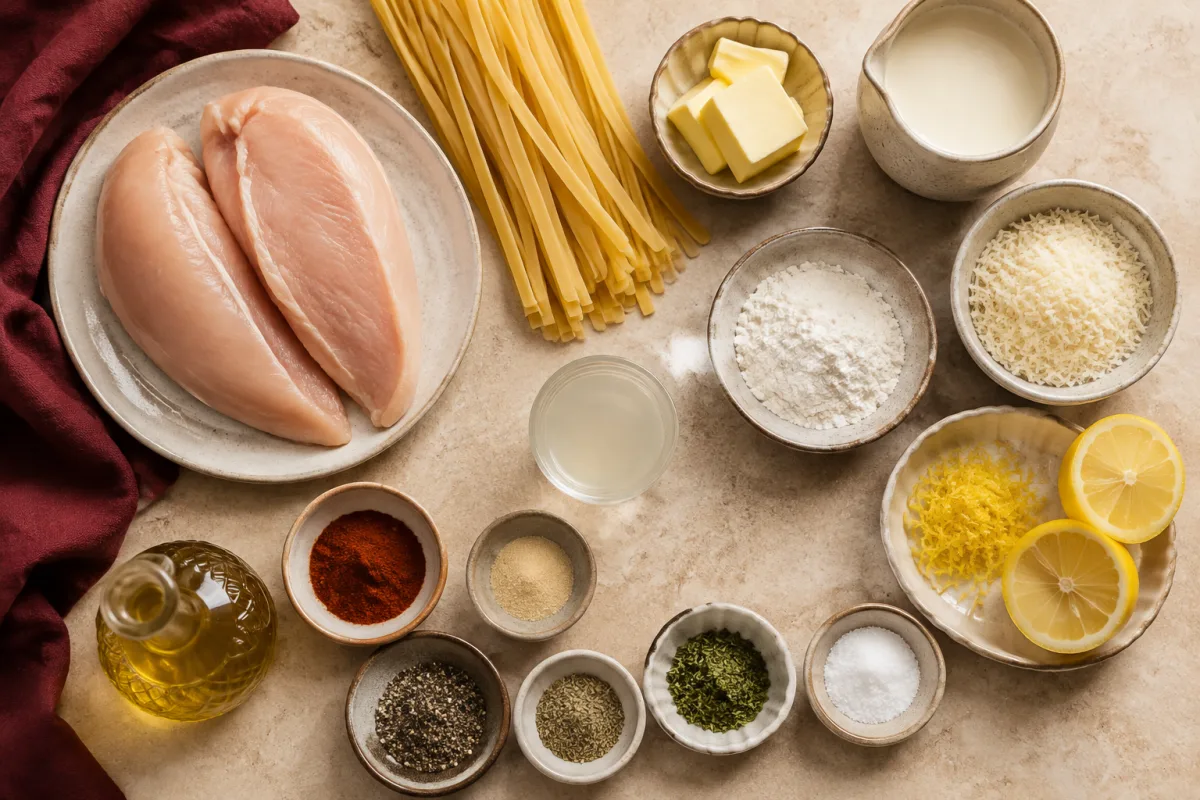
For the chicken, use one chicken breast sliced in half lengthwise, salt, 1 teaspoon each smoked paprika and garlic powder, 1/2 teaspoon black pepper, 1 tablespoon oil for the marinade, and 2 tablespoons oil for cooking. Cutting the breast into two thin cutlets helps it cook evenly.
The pasta and sauce need 9 ounces fettuccine, 5 tablespoons butter, 1 1/2 tablespoons flour, 1 1/2 cups room-temperature heavy cream, 3/4 cup freshly grated Parmesan, 1 tablespoon lemon zest, and 2 teaspoons lemon juice. Season with salt, 1/2 teaspoon black pepper, and 1 teaspoon each garlic powder, Italian seasoning, and dried parsley. Reserve about 1 cup pasta water before draining.
If you enjoy this recipe, you may also like Loaded Stuffed Crust Pizza.
How to Make Lemon Garlic Chicken Alfredo
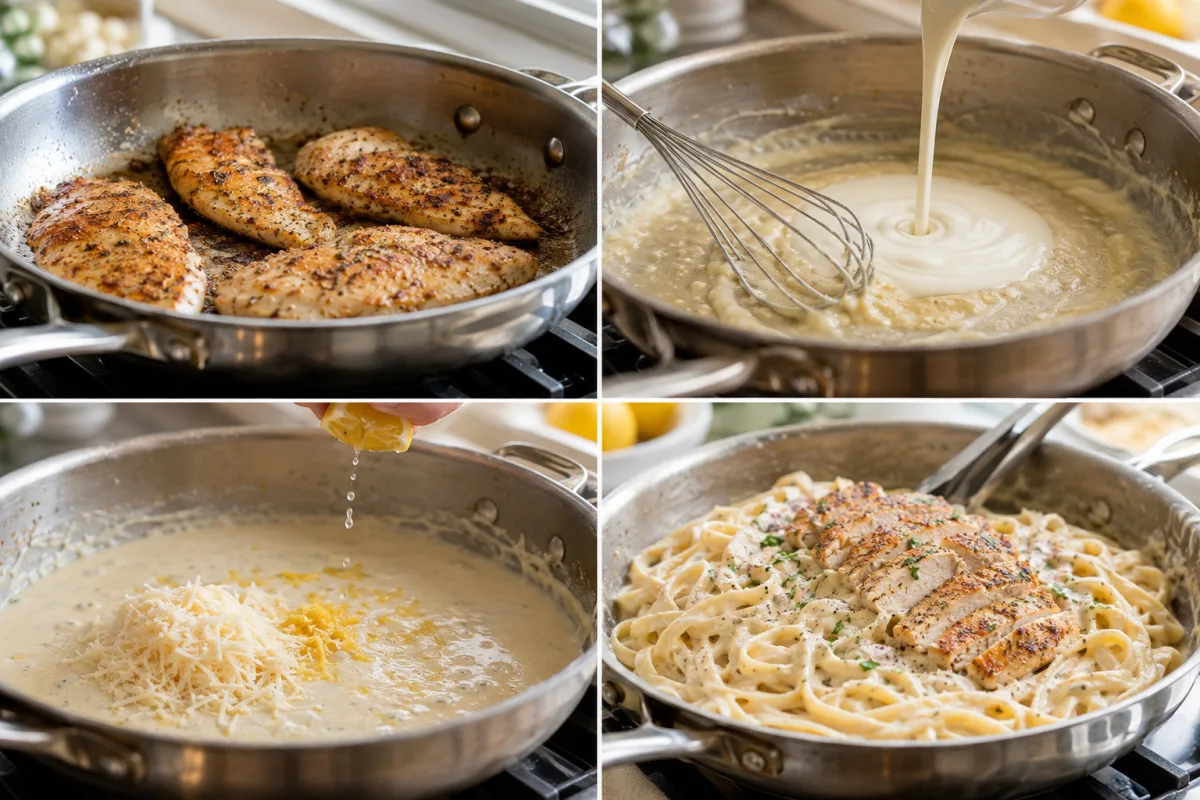
- Season the chicken. Coat the cutlets with salt, paprika, garlic powder, pepper, and 1 tablespoon oil. Refrigerate for 30 minutes.
- Cook the pasta. Boil fettuccine in salted water until al dente. Save 1 cup cooking water, then drain.
- Cook the chicken. Heat 2 tablespoons oil and cook the cutlets for 4 to 5 minutes per side, until browned and 165°F. Rest before slicing.
- Start the sauce. Melt butter over medium-low heat, whisk in flour, and cook for 30 to 40 seconds without browning.
- Add cream. Whisk in room-temperature cream, add the seasonings, and simmer gently for 3 to 4 minutes.
- Finish gently. Lower the heat and stir in Parmesan, lemon zest, and juice until smooth.
- Toss and serve. Add pasta, loosening with reserved water 1/4 cup at a time. Add sliced chicken and warm together for 1 to 2 minutes.
For storage details after serving, the USDA leftovers and food safety guidance.
Prepare Thin, Even Chicken Cutlets
Place the chicken breast flat on a stable board and slice it horizontally into two pieces. If one area is noticeably thicker, cover it and tap gently until the cutlets are close to the same thickness. Even pieces brown at the same rate and are less likely to dry around the edges.
Coat both sides with the seasoning mixture and refrigerate for 30 minutes. This short rest lets the salt and spices adhere while the oil distributes them. Keep the chicken chilled until the skillet is ready, and clean all surfaces that touched the raw poultry.
If you enjoy this recipe, you may also like Quick Italian Vegetable Minestrone Soup.
Cook the Pasta Just to Al Dente
Use a roomy pot of well-salted water and stir soon after adding the fettuccine so the strands separate. Stop when the pasta is tender but still has a slight firmness in the center. It will continue cooking briefly when tossed with the hot Alfredo sauce.
Before draining, scoop out a full cup of starchy cooking water. The starch helps sauce cling and is more useful than plain water for loosening a thick sauce. Do not rinse the noodles, because their surface starch supports a cohesive finish.
Brown the Chicken Without Drying It
Heat the cooking oil until it shimmers, then lay the cutlets in without crowding. Leave the first side undisturbed long enough to develop color. Turn once and continue until the thickest point reaches 165°F on an instant-read thermometer.
Transfer the chicken to a clean board and rest it while the sauce comes together. Resting allows the juices to redistribute. Slice across the grain just before returning it to the pasta, preserving wider pieces for the top if presentation matters.
Create a Smooth Alfredo Base
Melt the butter over medium-low heat and whisk in the flour. Thirty to forty seconds removes the raw flour taste, but the mixture should stay pale. Whisk in room-temperature cream gradually so the butter-flour base disperses without lumps.
Add salt, pepper, garlic powder, Italian seasoning, and parsley, then maintain only a gentle simmer for 3 to 4 minutes. The sauce should lightly coat a spoon but does not need to become very thick in the skillet; Parmesan and cooling both tighten it further.
Add Parmesan and Lemon Carefully
Freshly grate the Parmesan as finely as possible. Pre-shredded cheese often contains anti-caking powders that resist smooth melting. Lower the heat, add the cheese in small handfuls, and stir until each addition disappears before adding the next.
Use finely grated zest with only the yellow outer peel, avoiding bitter white pith. Stir in the zest and measured lemon juice after the cheese is smooth. The amount is designed to brighten the sauce rather than dominate it, so taste before adding any extra.
Use Pasta Water to Control Consistency
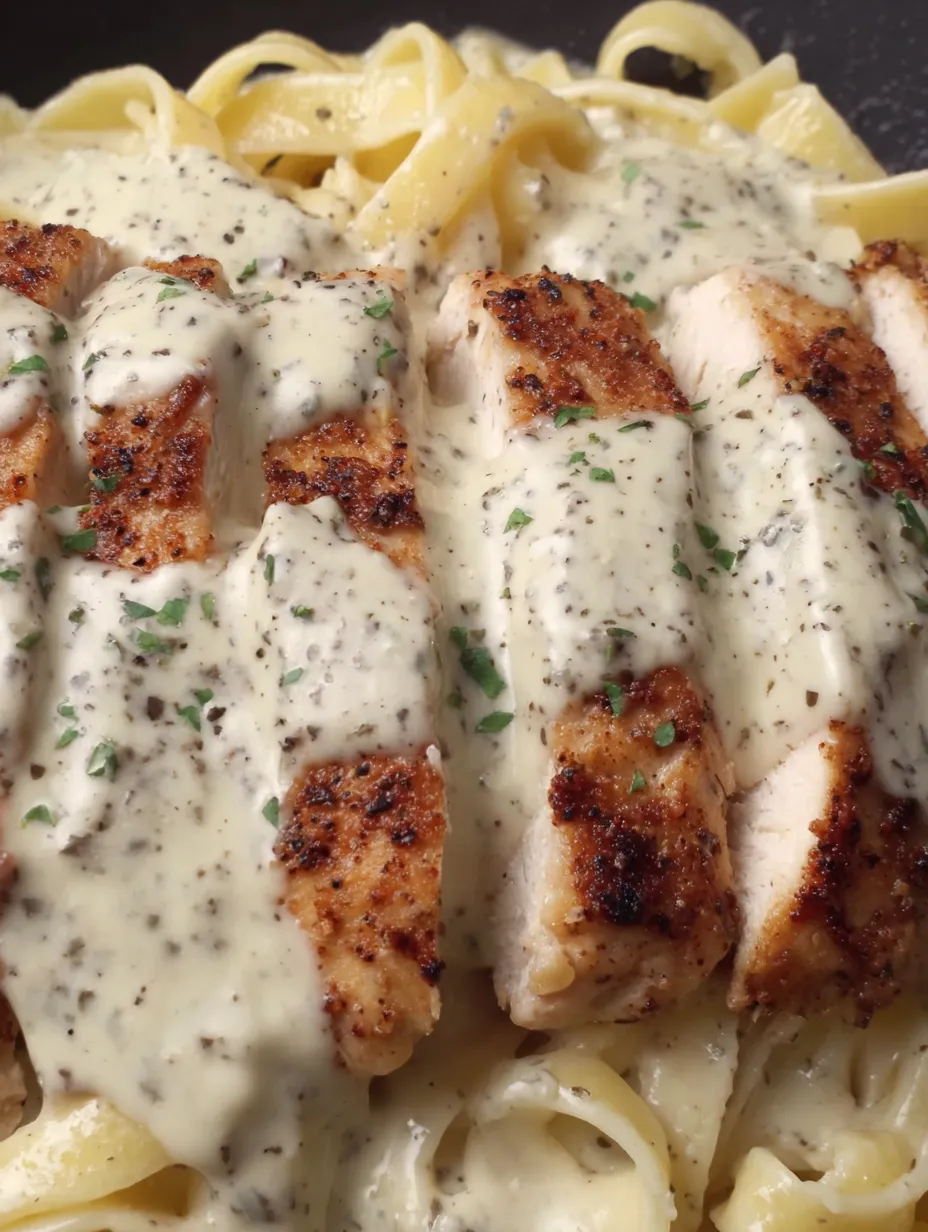
Add the drained fettuccine directly to the sauce and turn it with tongs. If the sauce seems tight, add reserved water about 1/4 cup at a time. Toss after each addition rather than pouring in the entire cup, because the correct amount depends on how much the sauce reduced.
The finished sauce should coat each strand and slowly settle back into the pan. It should not sit as a stiff mass or run like soup. Add the sliced chicken only for the final minute or two so it warms without cooking beyond its ideal temperature.
Serving and Storage
Serve Alfredo immediately in warm bowls with extra Parmesan, parsley, black pepper, or a little lemon zest. A crisp green salad, roasted broccoli, or green beans provides welcome freshness alongside the rich sauce.
Refrigerate leftovers within two hours in a covered container and use within three days. Reheat gently in a saucepan with a splash of cream, milk, or water, stirring often. Avoid a hard boil and heat only until steaming; high heat can separate the sauce and toughen the chicken.
Troubleshooting
- Sauce is grainy: The heat was probably too high or the cheese was added too quickly. Lower the heat and use finely grated Parmesan.
- Sauce is too thick: Toss in reserved pasta water a little at a time.
- Sauce is too thin: Simmer gently before adding the pasta, remembering that cheese will thicken it.
- Chicken is dry: Use even cutlets, verify 165°F, and rest before slicing.
- Lemon tastes bitter: Zest only the yellow peel and avoid the white pith.
Conclusion
Season thin chicken cutlets for 30 minutes, cook fettuccine al dente, and reserve pasta water. Brown the chicken to 165°F, prepare a gentle butter-flour cream sauce, then add Parmesan, lemon, pasta, and sliced chicken over low heat.
Frequently Asked Questions
- → Why did my Alfredo sauce turn grainy?
The heat may have been too high. Lower it before adding finely grated Parmesan and stir in small additions.
- → Can I use bottled lemon juice?
Fresh juice is preferable because the recipe also uses fresh zest, but the measured amount of bottled juice can work if necessary.
- → How do I thin chicken Alfredo sauce?
Add reserved pasta water about 1/4 cup at a time while tossing until the sauce coats the noodles smoothly.
- → How should chicken Alfredo be reheated?
Warm it gently with a splash of cream, milk, or water, stirring often and avoiding a hard boil.