


Maryland crab soup is a tomato-based vegetable soup seasoned with Old Bay and finished with generous pieces of crab. Beef broth gives the base depth, potatoes and mixed vegetables make it substantial, and lemon added at the end brightens the shellfish without turning the broth sour.
This style is different from creamy crab soup: the broth stays red, savory, and relatively light. The vegetables receive a head start, while the crab goes in halfway through the simmer so it heats and seasons the pot without disappearing into fine strands.
Ingredients for Maryland Crab Soup
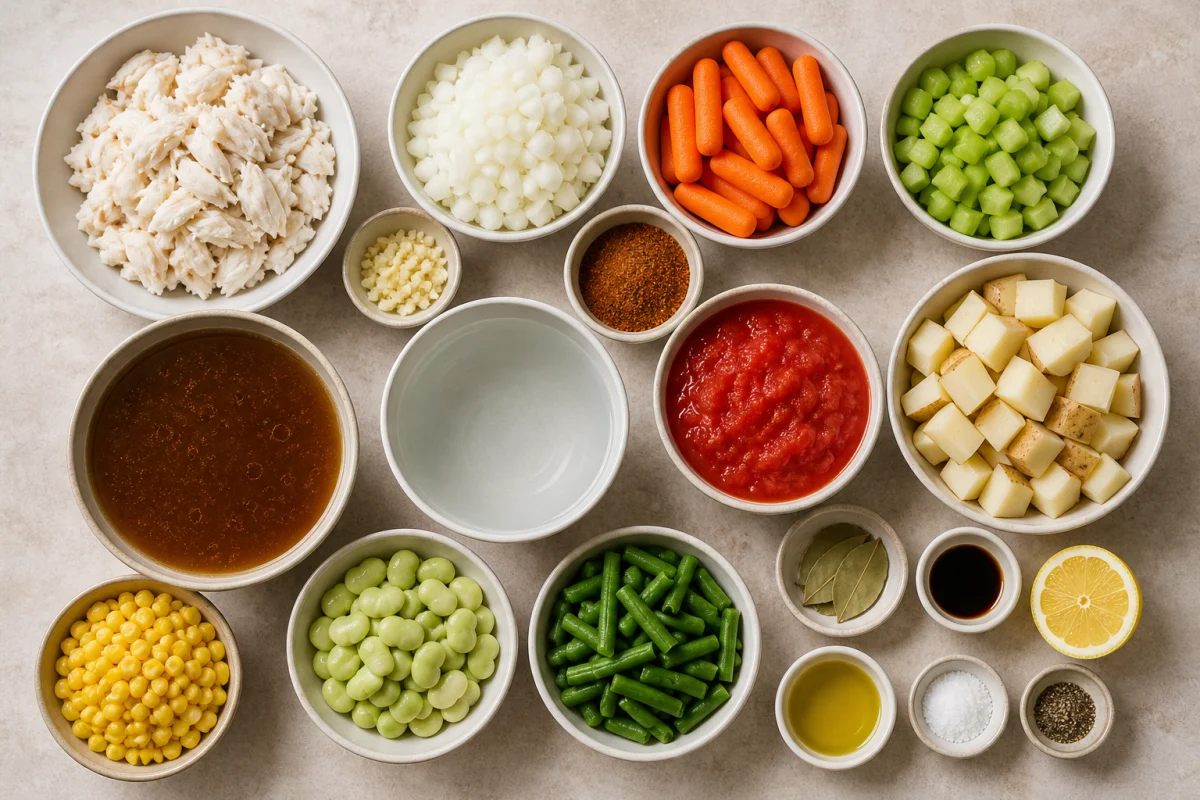
The aromatic base uses 3 tablespoons olive oil, one finely diced onion, 1 cup chopped baby carrots, one finely sliced celery stalk, two minced garlic cloves, and 2 tablespoons Old Bay seasoning, adjusted to taste.
For the soup, gather 4 cups beef broth, 2 cups water, one 28-ounce can crushed tomatoes, two russet potatoes cut into 1-inch cubes, 1 cup frozen corn, 1/2 cup frozen green lima beans, 12 ounces frozen green beans, two bay leaves, 1 teaspoon Worcestershire sauce, salt, and pepper. Finish with 1 pound lump crab meat and juice from half a lemon. Oyster crackers are optional.
If you enjoy this recipe, you may also like Vegetable and Rice Casserole.
How to Make Maryland Crab Soup
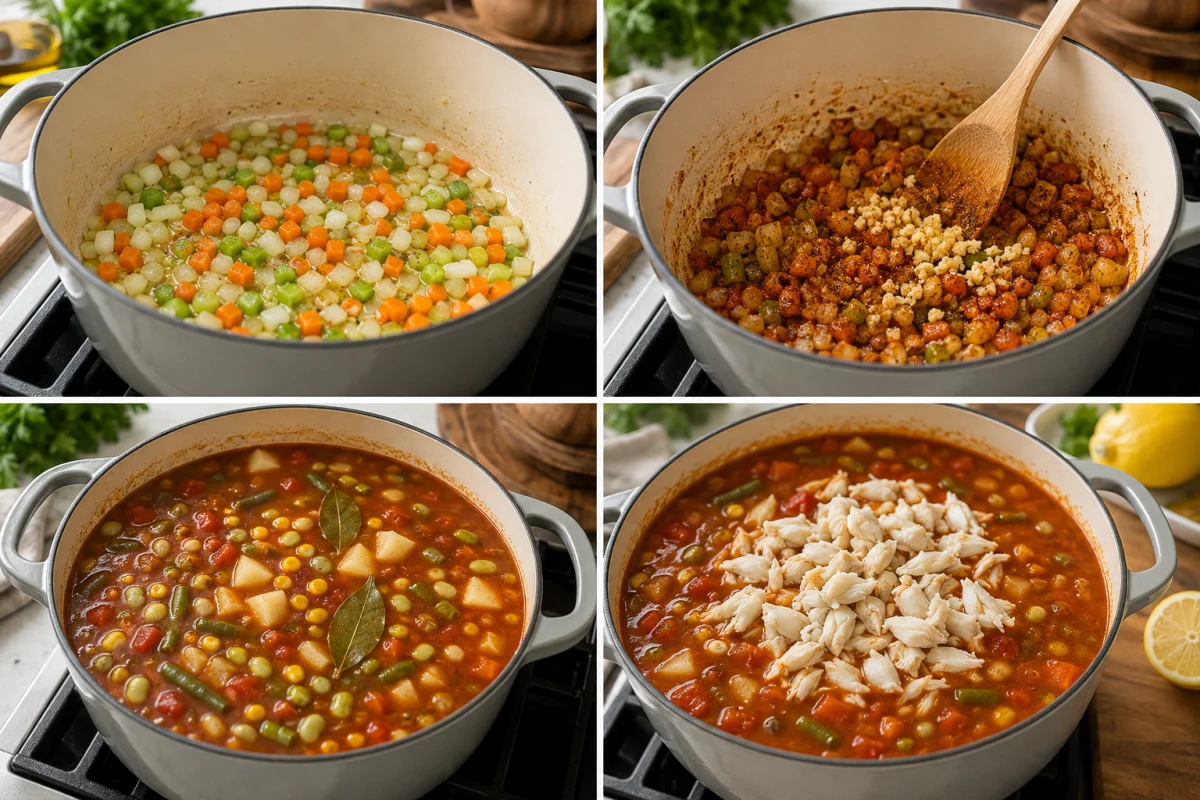
- Soften the vegetables. Heat olive oil in a large Dutch oven over medium-low. Cook onion, carrots, and celery for five to seven minutes.
- Bloom the seasoning. Add Old Bay and garlic and stir constantly for about 45 seconds, adding a little oil if the pot is dry.
- Build the soup. Add broth, water, crushed tomatoes, potatoes, corn, lima beans, green beans, bay leaves, Worcestershire, salt, and pepper.
- First simmer. Bring to a boil, reduce the heat, and simmer for 30 minutes.
- Add crab. Gently fold in the lump crab and simmer for another 30 minutes, stirring occasionally, until potatoes and carrots are tender.
- Finish. Remove bay leaves, stir in lemon juice, taste for seasoning, and serve hot.
For storage details after serving, the USDA leftovers and food safety guidance.
Soften the Aromatic Vegetables
Cut onion, carrot, and celery into pieces small enough to fit on a spoon. The initial five-to-seven-minute sauté starts their softening and draws sweetness from the onion before the large amount of liquid enters.
Use medium-low heat so the vegetables soften without dark browning. Maryland crab soup has a clean tomato and seafood profile; heavily caramelized aromatics can dominate it. Stir occasionally and add the garlic only when the vegetables have begun to soften.
If you enjoy this recipe, you may also like Chicken Pot Pie Puff Pastry.
Bloom Old Bay and Garlic Briefly
Old Bay is central to the soup's identity, bringing celery salt, paprika, and warm spice notes. Stir it through the oil-coated vegetables for about 45 seconds with the garlic. This short contact with heat opens the spice aroma.
Watch the bottom of the pot closely. Garlic and powdered spices can scorch if the pan is dry, so add a small splash of oil when needed. Burned seasoning creates bitterness that extra tomato cannot correct.
Build the Tomato Vegetable Broth
Beef broth may sound unexpected with seafood, but it supplies the robust savory background associated with this red soup. Water keeps it from becoming too concentrated, and crushed tomatoes contribute body without leaving very large pieces.
Add the potatoes, corn, lima beans, green beans, bay leaves, and Worcestershire together. One-inch potato cubes need enough time to become tender while retaining shape. Bring the pot to a boil before lowering it to a steady simmer.
Simmer in Two Stages
The first 30-minute simmer cooks the vegetables and lets the bay, Worcestershire, tomato, and seasoning blend. Stir from the bottom from time to time, especially if the crushed tomatoes are thick.
Add the crab only after this base has developed, then continue for another 30 minutes. Keep the bubbles gentle. Vigorous boiling can break the crab into tiny shreds and batter the tender vegetables against one another.
Choose and Check the Crab Meat
Lump crab offers the best balance of visible pieces and delicate texture. Claw meat is darker and more strongly flavored and can be used for a more economical pot. Whichever you choose, pick through it carefully for stray shell fragments before adding.
Crab meat sold cooked only needs to heat through, but its time in the broth also shares its flavor with the soup. Handle it minimally and keep it refrigerated until the pot is ready.

Finish With Lemon
Remove the bay leaves, then stir in the juice from half a lemon. Adding citrus at the end preserves its brightness and gives you control. Taste after mixing and add only more if the broth needs sharper definition.
Check salt last because Old Bay, beef broth, Worcestershire, and crab can all contribute it. Serve with oyster crackers, crusty bread, or no accompaniment at all.
Adjust the Soup Before Serving
Taste a spoonful that contains broth, potato, and crab instead of sampling only the liquid. If the tomato seems too sharp, another few minutes of gentle simmering may round it out. If the seafood flavor feels muted, add Old Bay in small pinches and allow each addition to dissolve before tasting again.
For a thinner soup, add a little hot water or broth. For a fuller broth, simmer uncovered briefly before adding the lemon. Avoid reducing too aggressively, because the salt from the broth and seasoning becomes more concentrated as water evaporates.
Storage and Reheating
Cool leftovers promptly and refrigerate in a sealed container for up to four days. Reheat gently on the stove until steaming, avoiding a hard boil that could toughen or break the crab.
The soup can be frozen for up to three months, although potato texture may soften after thawing. Defrost overnight in the refrigerator and stir carefully while reheating. Do not refreeze previously frozen crab unless food-safety guidance for the product confirms it is appropriate.
Conclusion
Sauté onion, carrots, and celery, then briefly bloom Old Bay and garlic. Add beef broth, water, crushed tomatoes, potatoes, mixed vegetables, bay leaves, and Worcestershire and simmer 30 minutes. Fold in lump crab, simmer 30 minutes more, and finish with lemon.
Frequently Asked Questions
- → Is Maryland crab soup creamy?
No. This version is a red, tomato-based vegetable and crab soup made with beef broth and water rather than cream.
- → Can I use claw meat instead of lump crab?
Yes. Claw meat is usually less expensive and has a stronger crab flavor, though the pieces are smaller and darker.
- → Why add crab after the soup has simmered?
The vegetables need a head start. Adding crab later keeps it from breaking down during the entire cooking time.
- → How long does Maryland crab soup keep?
Refrigerate promptly and use within four days, reheating gently until steaming hot.