


Nutella brioche loaf combines a buttery enriched dough with milk chocolate chips and a ribbon of chocolate-hazelnut spread. The finished bread has a glossy deep-golden crust, a soft pull-apart crumb, and a visible chocolate swirl in every slice.
Brioche needs more patience than a basic sandwich loaf because butter is worked into the dough gradually and the dough rises twice. The hands-on work and baking take about 65 minutes, with additional proofing and cooling time. Proper milk temperature, complete kneading, and restrained flour make the difference between a light loaf and a dense one.
Ingredients for Nutella Brioche Loaf
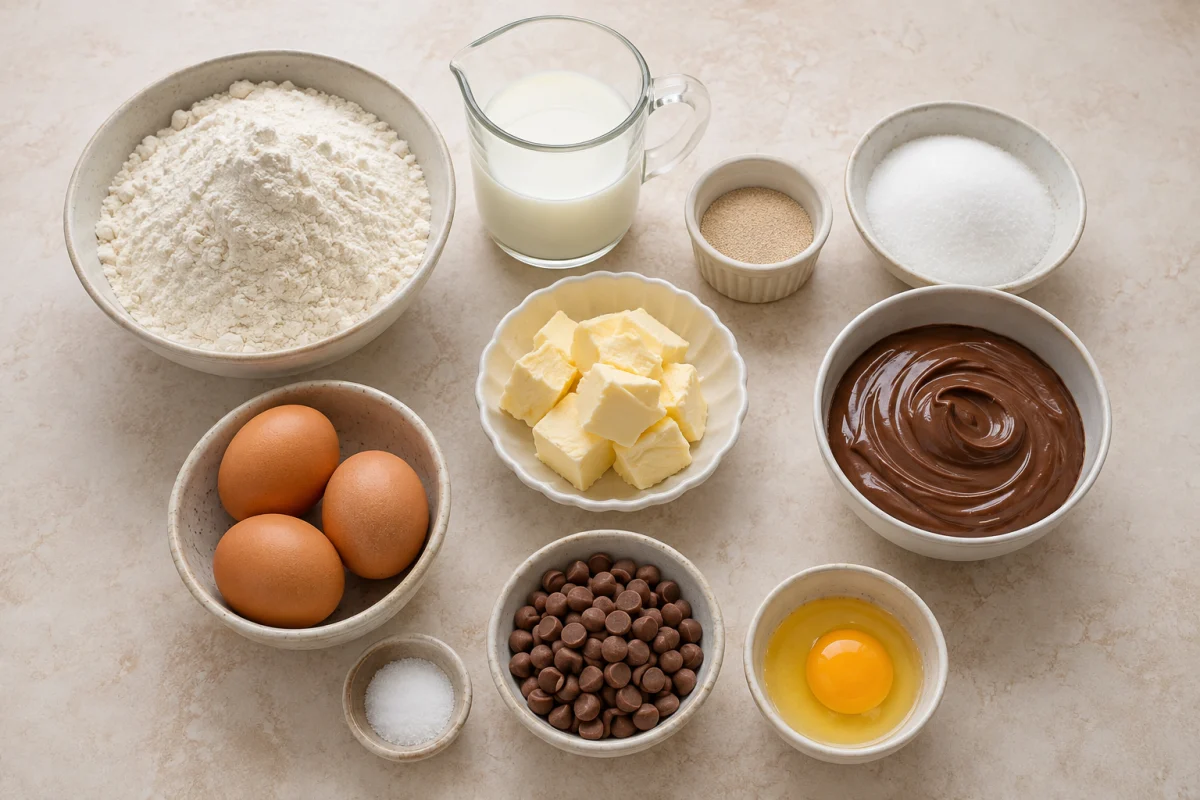
The dough uses 150 grams warm milk, 1 1/2 teaspoons active dry yeast, 1 tablespoon sugar for activating the yeast, 440 grams all-purpose flour, 2 large eggs, 70 grams additional sugar, 1/2 teaspoon fine sea salt, and 115 grams softened unsalted butter. Fold in 150 grams milk chocolate chips.
For filling and finishing, use 250 grams chocolate-hazelnut spread, 1 beaten egg for the wash, and an optional tablespoon melted butter after baking. Weighing flour, milk, butter, chips, and spread gives the most consistent dough.
If you enjoy this recipe, you may also like Mozzarella Stuffed Soft Pretzels.
How to Make Nutella Brioche Loaf
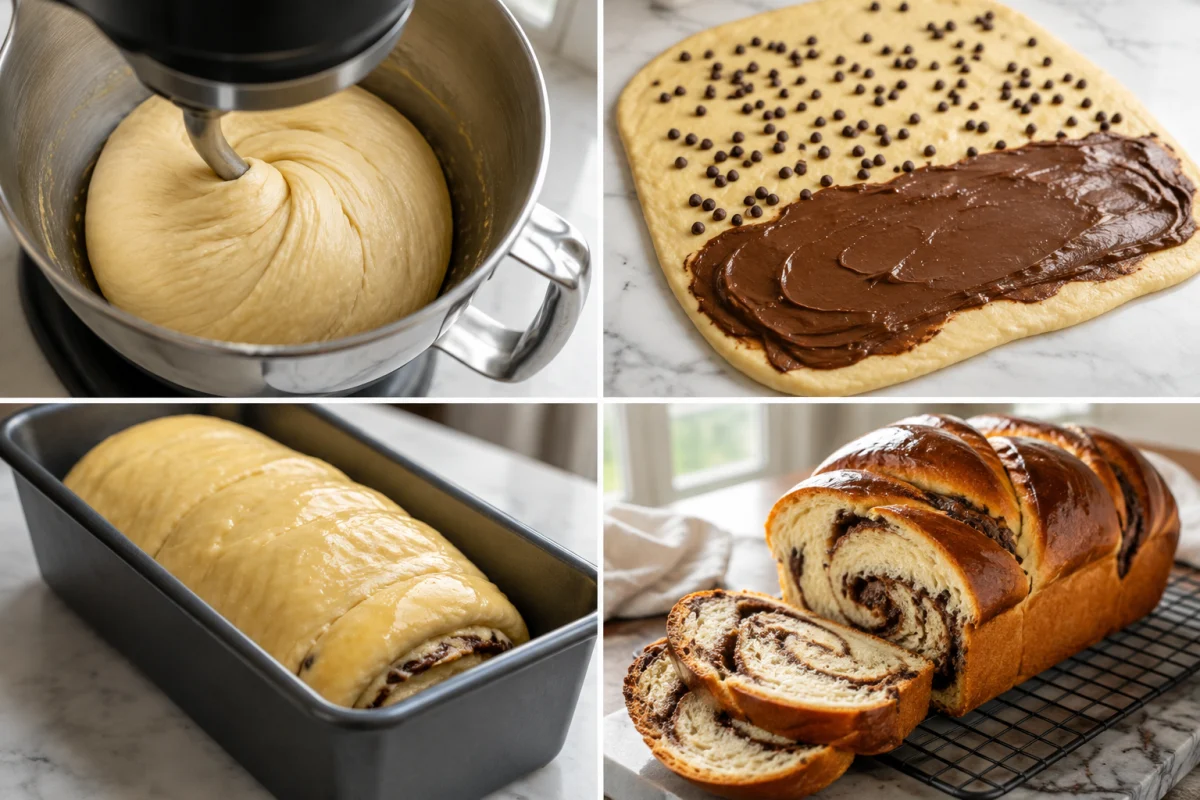
- Activate yeast. Mix warm milk, 1 tablespoon sugar, and yeast; wait 5 to 10 minutes until foamy.
- Form dough. Add flour, remaining sugar, salt, and 2 eggs. Mix on low until shaggy.
- Knead. Mix on medium for 8 to 10 minutes, then add softened butter one tablespoon at a time. Knead 5 to 7 minutes more.
- First rise. Cover in a greased bowl and proof 1 1/2 to 2 hours, until doubled.
- Add chips. Deflate gently and fold in chocolate chips.
- Fill and shape. Roll into a rectangle, spread chocolate-hazelnut filling, shape into a sealed log, and place in a greased loaf pan.
- Second rise. Cover 45 to 60 minutes, until just above the rim.
- Bake. Brush with egg and bake at 350°F for 35 to 40 minutes.
- Cool. Rest 15 to 20 minutes in the pan, then move to a rack before slicing.
For storage details after serving, the USDA leftovers and food safety guidance.
Use Warm, Not Hot, Milk
Warm the milk to roughly 100 to 110°F. It should feel comfortably warm, not hot. Milk that is too cool slows active dry yeast, while very hot liquid can damage it.
Stir in the first tablespoon of sugar and sprinkle yeast over the milk. After 5 to 10 minutes, a creamy foam should appear. If nothing changes and the yeast is within date, the milk temperature may have been wrong; starting again is safer than building a loaf on inactive yeast.
If you enjoy this recipe, you may also like Bourbon Maple Bacon Cinnamon Rolls.
Measure Flour Carefully
A scale is the most reliable way to measure 440 grams. If using cups, spoon flour into the cup and level it rather than scooping directly from the bag, which compresses flour and can add too much.
Brioche dough should be soft and slightly tacky. Resist adding handfuls of flour just because it does not look like lean bread dough at first. Kneading and gradual butter incorporation strengthen it considerably.
Develop the Dough Before Adding Butter
Mix flour, sugar, salt, and eggs into the activated yeast on low speed until no dry flour remains. Knead on medium for 8 to 10 minutes. The dough should begin pulling from the bowl and look smoother.
This first kneading develops gluten before fat coats the flour. If butter is added too early or all at once, the dough takes longer to build enough strength to support its rise.
Add Butter Gradually
Lower the mixer speed and add one piece of softened butter. Wait until it disappears into the dough before adding the next. The mixture may look slippery or separated midway through; continued mixing brings it back together.
After all butter is incorporated, knead on medium for another 5 to 7 minutes. The dough should be glossy, elastic, and able to stretch into a thin translucent window without tearing immediately.

Let the First Rise Finish
Place the dough in a lightly greased bowl, turn it once, and cover tightly. A warm draft-free room helps, but excessive heat can melt the incorporated butter. Aim for a comfortable room temperature rather than placing the bowl on a hot surface.
The dough should approximately double in 1 1/2 to 2 hours. Judge the change in volume, not the clock alone. A cool kitchen may require more time.
Fold in Chocolate Chips Gently
Deflate the risen dough with a light press and turn it onto a barely floured surface. Scatter chocolate chips over it in two additions, folding the dough around them rather than kneading aggressively.
Even distribution prevents heavy pockets that can tear the crumb. If the dough becomes warm and greasy, cover and chill it for 10 to 15 minutes before rolling.
Shape a Neat Chocolate Swirl
Roll the dough into an even rectangle with the short side close to the length of the loaf pan. Spread the chocolate-hazelnut filling in a controlled layer, leaving a clean border at the final edge so the seam can seal.
Roll from the filled side into a snug log without stretching. Pinch the clean edge closed and tuck the ends. Place the seam against the base of the greased pan.
Proof the Shaped Loaf
Cover loosely so the dough has room to rise. Proof for 45 to 60 minutes, until the center is just above the pan rim and a gentle fingertip press springs back slowly.
If the indentation snaps back at once, the dough needs longer. If it collapses or remains deeply sunken, it may be overproofed. Begin preheating the oven to 350°F near the end.
Apply Egg Wash Lightly
Beat one egg until uniform and brush a thin coat over the exposed dough. Avoid letting pools collect along the pan sides, where they can glue the loaf to the metal.
Egg wash creates the bakery-style sheen and deep color. Use a soft brush so the risen surface is not deflated.
Bake and Check the Center
Bake for 35 to 40 minutes. The top should be deep golden and the loaf should sound somewhat hollow when tapped. For certainty, the center of enriched bread should register about 190°F.
If the crust darkens too early, tent loosely with foil for the remaining time. Do not pull the loaf based only on surface color because the chocolate filling can hide an underbaked center.
Cool Before Slicing
Brush with the optional melted butter for a softer glossy crust. Rest in the pan for 15 to 20 minutes, loosen the edges, and transfer to a wire rack.
Wait until the loaf is nearly cool before slicing. Hot brioche is still setting, and cutting too soon compresses the crumb and smears the warm filling.
Storage and Reheating
Store the cooled loaf tightly wrapped at room temperature for up to two days or refrigerate for up to five days. Warm slices briefly to restore softness.
Freeze individual slices separated by parchment for up to two months. Thaw at room temperature and warm in a low oven. Avoid refrigerating uncovered because enriched bread dries quickly.
Troubleshooting
- Loaf is dense: Confirm the yeast foams and allow both rises to finish by volume.
- Dough is greasy: Butter was too warm or added too quickly; chill briefly and continue kneading.
- Filling leaks: Leave a clean border and pinch the seam securely.
- Top browns early: Tent loosely with foil.
- Center is gummy: Bake to about 190°F and cool before slicing.
Conclusion
Activate yeast in warm milk and sugar, then mix with flour, eggs, remaining sugar, and salt. Knead before adding softened butter gradually, proof until doubled, and fold in chocolate chips. Roll, fill with chocolate-hazelnut spread, shape in a loaf pan, proof again, brush with egg, and bake at 350°F until golden and about 190°F inside.
Frequently Asked Questions
- → Why is my brioche dough sticky?
Brioche is naturally soft and tacky. Continue kneading to develop gluten before adding extra flour, which can make the loaf dense.
- → How do I know the yeast is active?
The warm milk mixture should develop a creamy foamy layer within 5 to 10 minutes.
- → Can Nutella brioche be made ahead?
Yes. Refrigerate the dough after the first rise overnight, then let it soften slightly before adding chips, shaping, and completing the second rise.
- → Can Nutella brioche loaf be frozen?
Yes. Freeze cooled slices for up to two months, thaw at room temperature, and warm briefly before serving.