


One-pan American goulash is a tomato-rich ground-beef and macaroni dinner seasoned with onion, garlic, Worcestershire, paprika, Italian herbs, and bay leaves. Unlike Hungarian goulash, this familiar American version cooks pasta directly in the skillet, creating a thick, comforting meal with minimal cleanup.
The recipe serves six in about 35 minutes. A gentle covered simmer lets the elbow macaroni absorb broth and tomato flavor, while occasional stirring prevents sticking. Finish each bowl with shredded cheddar rather than melting it into the full pan so the sauce stays balanced and leftovers remain easier to reheat.
Ingredients for One-Pan American Goulash
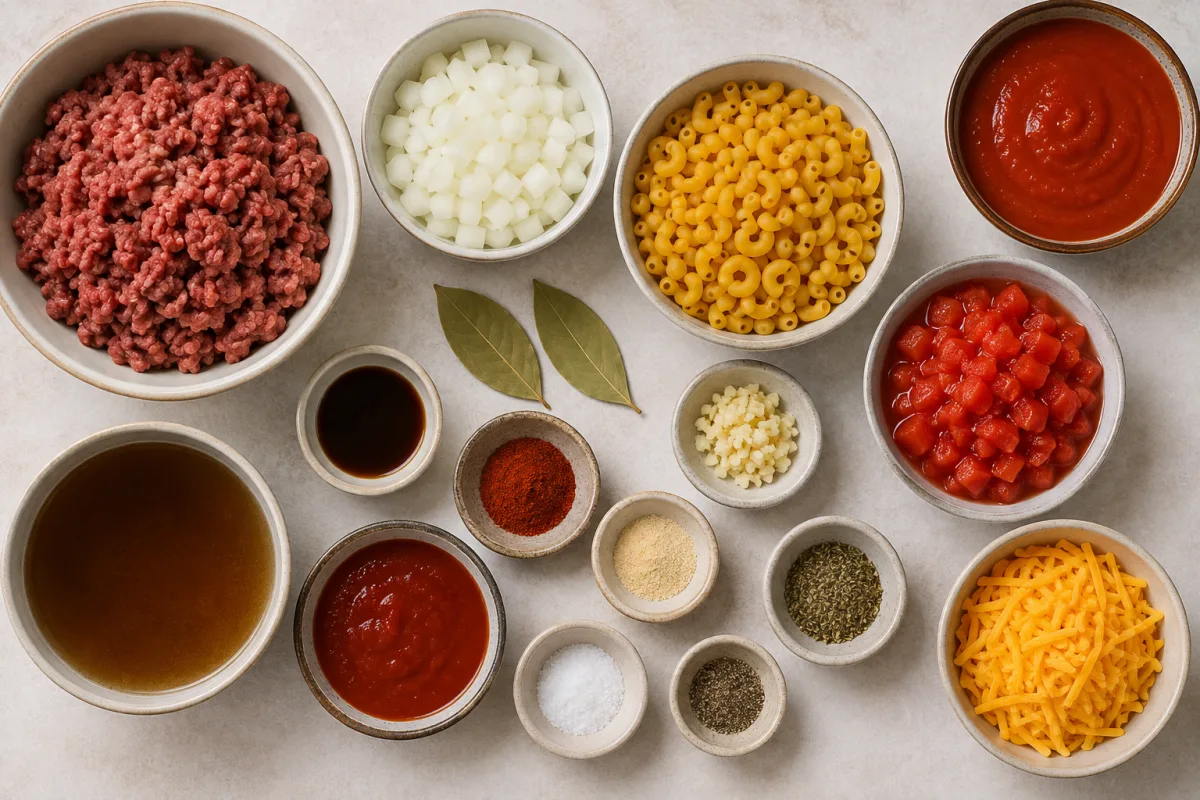
Gather 1 pound ground beef, one diced onion, 1/2 teaspoon each salt and black pepper, 1 teaspoon each onion powder, paprika, and Italian seasoning, 1 tablespoon Worcestershire sauce, and 1 tablespoon minced garlic.
The sauce and pasta need two 8-ounce cans tomato sauce, one 15-ounce can diced tomatoes, 2 bay leaves, 1 1/2 cups beef broth, and 2 cups dry elbow macaroni. Shredded cheddar is optional for serving. Check Worcestershire labels for allergens, and use lower-sodium broth if preferred because the sauce and cheese add seasoning.
If you enjoy this recipe, you may also like Sloppy Joe Potato Skillet.
How to Make One-Pan American Goulash
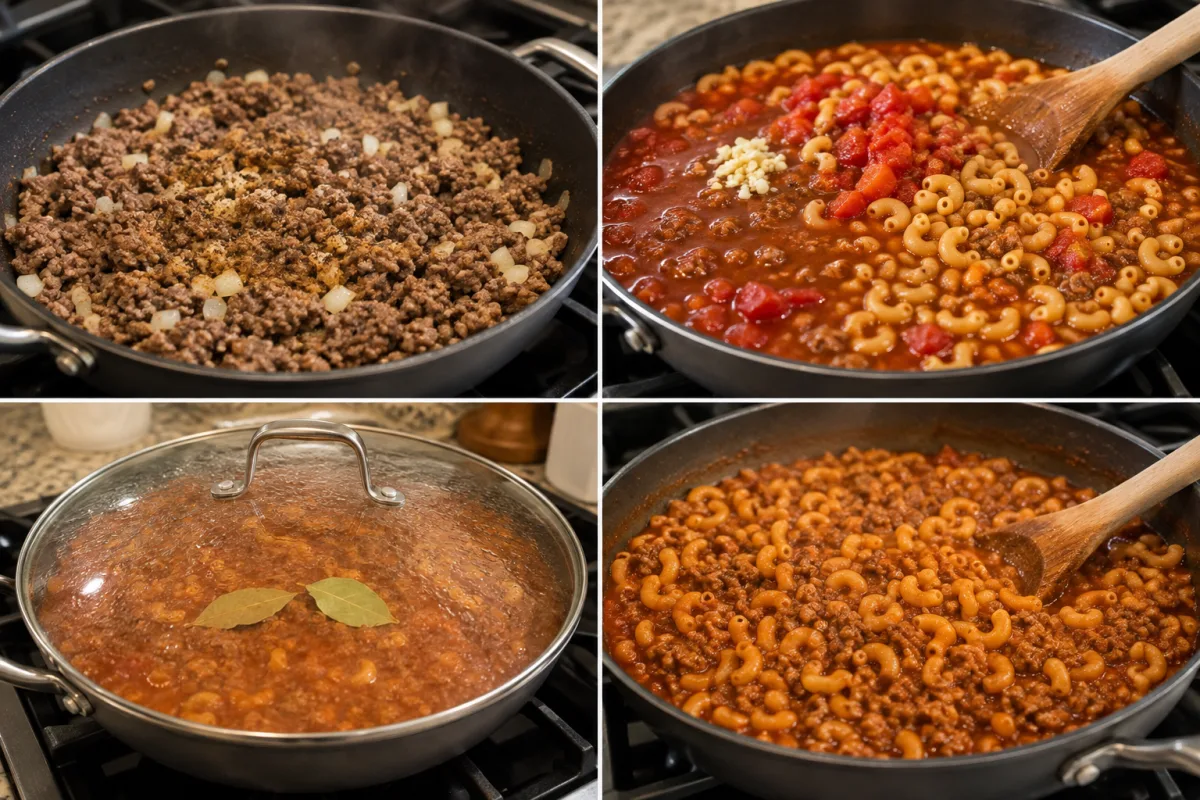
- Brown beef and onion. Cook both over medium heat with salt, pepper, onion powder, paprika, and Italian seasoning.
- Drain. When the beef reaches 160°F, remove excess grease safely.
- Add aromatics. Stir in garlic and Worcestershire for about 30 seconds.
- Build the skillet. Add tomato sauce, diced tomatoes with their juice, broth, and dry macaroni.
- Add bay leaves. Stir well and place both leaves on top where they remain easy to find.
- Simmer. Bring to a bubble, reduce to medium-low, cover, and cook 12 to 15 minutes until pasta is tender.
- Stir occasionally. Scrape the bottom once or twice and replace the lid promptly.
- Finish. Remove both bay leaves, adjust consistency, and serve with cheddar.
For storage details after serving, the USDA leftovers and food safety guidance.
Brown Beef for a Savory Base
Use a large deep skillet with a tight-fitting lid. Break the beef into small crumbles and let them contact the hot surface long enough to brown while the onion softens.
Cook until no pink remains and the meat reaches 160°F. Drain excess fat before adding liquids so the tomato sauce remains robust rather than greasy.
If you enjoy this recipe, you may also like Smoked Crab Stuffed Salmon.
Bloom Garlic and Worcestershire
Add minced garlic and Worcestershire after draining the meat. Stir for about 30 seconds, just until fragrant, before adding the wet ingredients.
This brief step wakes up the garlic without giving it time to scorch. Worcestershire adds savory depth and acidity that balances the sweet tomato sauce.
Use Tomatoes and Broth Together
Stir in both cans of tomato sauce, the undrained diced tomatoes, and beef broth. The combination supplies enough liquid to cook the dry macaroni and still leave a thick sauce.
Do not drain the diced tomatoes. Their juice is included in the balance. Scrape the bottom while adding liquid to release every browned bit.
Distribute Dry Macaroni Evenly
Add two cups dry elbow macaroni and stir until every piece is coated and mostly submerged. Pasta resting above the liquid can cook unevenly.
If the skillet is very wide and evaporation is rapid, keep a little hot broth nearby. Wait until late in cooking before deciding whether more is needed.
Simmer With the Lid On
Bring the skillet just to a bubble, place the bay leaves on top, then reduce to medium-low and cover. Maintain a quiet simmer for 12 to 15 minutes.
A hard boil can make the pasta exterior mushy while liquid disappears too quickly. Keep heat low enough that the sauce does not spit around the lid.
Stir Without Losing Steam
Stir once around the halfway point, scraping the bottom and moving macaroni from the edges toward the center. Replace the lid promptly.
Check again near 12 minutes. Pasta should be tender but not collapsing. If it remains firm, add a splash of broth and continue covered.

Adjust the Final Texture
After removing both bay leaves, stir and let the goulash stand uncovered for several minutes. The pasta continues absorbing sauce as it rests.
If the pan is too thick, add warm broth by the tablespoon. If loose, simmer uncovered briefly. Remember that leftovers will become firmer in the refrigerator.
Add Cheddar by Portion
Spoon hot goulash into bowls and scatter shredded cheddar on top. The residual heat melts it without turning the entire sauce heavy.
Cheddar is optional; grated Parmesan or no cheese also works. A green salad or steamed vegetables make simple sides for this substantial meal.
Storage and Reheating
Transfer leftovers to shallow containers within two hours and refrigerate for up to three days. Store extra cheese separately.
Reheat covered over low heat or in the microwave with a splash of broth, stirring midway, until steaming throughout. Freeze in portions for up to two months, though the pasta will soften slightly.
Plan the Skillet for Consistent Results
A broad, deep skillet gives the beef room to brown and the macaroni space to simmer in an even layer. Choose one with a lid that fits closely, because escaping steam can leave the pasta firm before the sauce has finished thickening.
Measure the broth and macaroni instead of estimating them. Their ratio controls the final texture. Keep the simmer gentle, stir from the bottom, and judge doneness by tasting a piece of pasta. Resting the finished goulash for several minutes lets excess moisture settle without overcooking it on the burner.
Troubleshooting
- Pasta is hard: Add hot broth, cover, and simmer longer.
- Bottom sticks: Lower heat and stir once or twice during cooking.
- Goulash is greasy: Drain browned beef thoroughly.
- Sauce is thin: Rest uncovered or simmer briefly.
- Flavor is flat: Check salt only after Worcestershire, broth, and cheese are considered.
Conclusion
Brown seasoned beef and onion, drain, then add garlic, Worcestershire, tomato sauce, diced tomatoes, broth, and dry elbow macaroni. Simmer covered with two bay leaves until tender, remove both leaves, adjust the sauce, and serve with shredded cheddar.
Frequently Asked Questions
- → What is American goulash?
It is a tomato-based ground-beef and macaroni skillet, distinct from Hungarian meat stew.
- → Do I cook the macaroni first?
No. The dry pasta cooks directly in the tomato sauce and broth.
- → Why must bay leaves be removed?
They remain tough and sharp after cooking and are used only to flavor the sauce.
- → How long does goulash keep?
Refrigerate it for up to three days and reheat with a splash of broth.