


Parmesan Chicken Tortellini brings marinated chicken and cheese-filled pasta together in a homemade Parmesan-mozzarella cream sauce. Italian dressing seasons the chicken before it is sautéed, while a simple roux gives the sauce enough body to cling to every tortellini.
The dish serves 6 and takes about 30 minutes, including at least 15 minutes for marinating and roughly 15 minutes of cooking. Organize the pasta, chicken, and sauce stages so all three components are hot when they are combined.
Parmesan Chicken Tortellini Ingredients
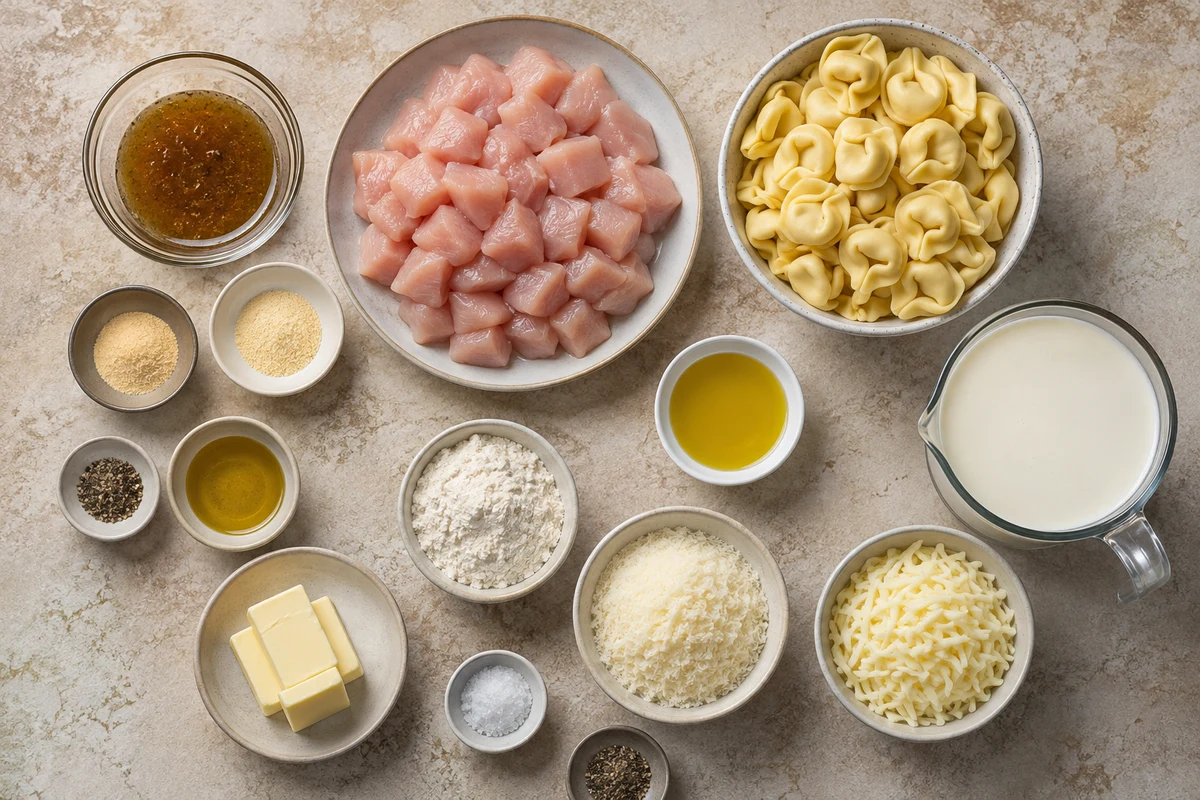
For the chicken, use 3 to 4 boneless skinless chicken breasts, diced, 1 cup Italian dressing, ½ tablespoon onion powder, ½ tablespoon garlic powder, ¼ teaspoon black pepper, and 1 tablespoon olive oil.
Cook one 12-ounce package tortellini and toss it with another 1 tablespoon olive oil. For the sauce, use 3 tablespoons butter, 2 tablespoons flour, 2 cups heavy whipping cream, 1 cup shredded Parmesan, 1 cup shredded mozzarella, and salt and black pepper to taste.
If you enjoy this recipe, you may also like Cajun Sausage Rice.
How to Make Parmesan Chicken Tortellini
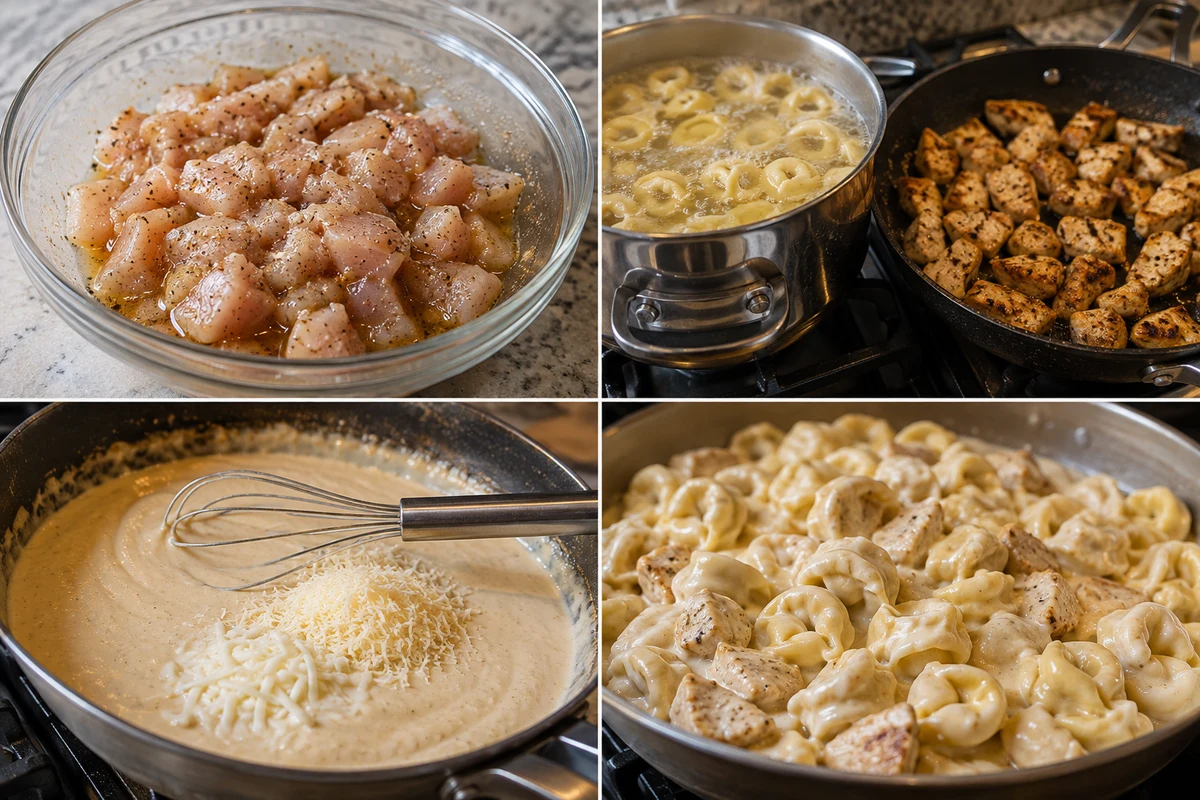
- Combine diced chicken with Italian dressing, onion powder, garlic powder, and ¼ teaspoon black pepper. Marinate at least 15 minutes or up to a few hours.
- Boil salted water and cook the tortellini according to its package directions. Drain and toss with 1 tablespoon olive oil.
- Heat the other tablespoon olive oil over medium-high heat. Cook the marinated chicken for 8 to 10 minutes, until it reaches 165°F. Remove it from the skillet.
- Reduce heat to medium. Melt 3 tablespoons butter in the same skillet, whisk in 2 tablespoons flour, and cook 1 to 2 minutes.
- Gradually whisk in 2 cups cream. Let it thicken and begin to simmer.
- Stir in Parmesan and mozzarella until fully melted and smooth. Season with salt and pepper.
- Return chicken to the skillet, add tortellini, toss until coated, and serve immediately.
For storage details after serving, the USDA leftovers and food safety guidance.
Marinate the Diced Chicken
Cut three to four breasts into similarly sized bites so they cook evenly. Stir them with one cup Italian dressing, the measured onion and garlic powders, and quarter teaspoon pepper. Cover and refrigerate for at least 15 minutes.
A few hours gives the dressing more time to season the surface, but the minimum still makes a noticeable difference. Keep raw chicken cold while it marinates. When ready to cook, move it directly to the heated skillet without reusing uncooked marinade as a finishing sauce.
If you enjoy this recipe, you may also like Chicken Pot Pie Bubble Up.
Cook Tortellini to Package Directions
Bring a generous pot of salted water to a full boil. Add the 12-ounce package and follow its specific timing, since fresh, refrigerated, and frozen tortellini cook at different rates. Stop when the pasta is tender but still holds its shape.
Drain thoroughly and immediately toss with the reserved tablespoon of olive oil. This light coating prevents pieces from adhering while the chicken and sauce are finished. Do not rinse the pasta, because its surface helps the cheese sauce cling.
Sauté Chicken to 165°F
Heat one tablespoon oil in a large skillet over medium-high heat. Add the marinated chicken in an even layer and cook for 8 to 10 minutes, turning pieces so several surfaces brown. Avoid packing a small pan too tightly.
Check a large piece with an instant-read thermometer; chicken must reach 165°F. Transfer all pieces to a clean plate once done. Leave the flavorful browned bits in the skillet because they will dissolve into the cream sauce.
Cook the Roux
Lower the heat to medium and melt three tablespoons butter in the same skillet. Whisk in two tablespoons flour and continue whisking for 1 to 2 minutes. The roux should look smooth and smell lightly toasted without becoming dark.
This cooking removes raw flour flavor and prepares the starch to thicken the cream evenly. Scrape up the chicken's browned bits as you work, but discard anything actually burned before proceeding so the pale sauce remains pleasantly savory rather than bitter.

Whisk a Smooth Two-Cheese Sauce
Add two cups heavy whipping cream gradually while whisking constantly. Let the mixture thicken and approach a gentle simmer; do not boil it aggressively. Sprinkle in one cup Parmesan and one cup mozzarella in stages.
Stir until both cheeses are completely melted and incorporated. Freshly shredded cheese generally melts more smoothly, but the quantities remain unchanged. Taste only after the cheese has melted, then add salt and pepper as needed because Parmesan already contributes salinity.
Combine Without Breaking the Pasta
Return the cooked chicken and any collected juices to the sauce. Add the drained tortellini and fold gently with a broad spoon or silicone spatula. Each piece should become coated without being crushed or torn.
Warm the mixture only long enough to bring all components to serving temperature. The sauce thickens as it stands, and prolonged heat can make cheese stringy or cause filled pasta to soften beyond its ideal texture.
Timing the Three Components
Start the pasta water as the chicken finishes marinating. Cooking the tortellini and chicken in overlapping windows keeps the total near 30 minutes. Have butter, flour, cream, and both cheeses measured before the chicken leaves the skillet.
Mise en place is especially useful for a cream sauce because whisking needs continuous attention. If the pasta finishes early, its olive-oil coating buys time. If the sauce finishes first, hold it over very low heat and stir instead of letting it boil.
Serving and Storage
Serve immediately in warm shallow bowls, distributing chicken and tortellini evenly among six portions. The sauce is substantial, so a plainly cooked green vegetable or crisp salad makes a useful contrast without changing the main dish.
Refrigerate leftovers in a covered container for up to three days. Reheat gently over low heat with a small splash of cream if the sauce has tightened. Stir carefully and stop once hot; repeated high heat can separate the dairy and split the tortellini.
Common Sauce Problems
Lumps often come from adding cream too quickly or failing to whisk. Graininess can result from excessive heat after the cheese enters. A thin sauce may not have simmered long enough before the cheeses were added, while an overly thick sauce likely stood too long.
Control the heat, add liquids and cheese gradually, and keep the exact roux quantities. Those steps produce a smooth coating without substituting jarred sauce, even though the original recipe notes two 15-ounce Alfredo jars as an optional shortcut.
Conclusion
Marinate diced chicken in Italian dressing and seasonings for at least 15 minutes. Cook tortellini and toss with oil, then sauté chicken 8 to 10 minutes to 165°F. Make a butter-flour roux, whisk in cream, Parmesan, and mozzarella, then gently combine the chicken and tortellini.
Frequently Asked Questions
- → How long should the chicken marinate?
Marinate it for at least 15 minutes, or up to a few hours for more flavor.
- → How do I keep cooked tortellini from sticking?
After draining, toss the 12-ounce portion with the separate tablespoon of olive oil.
- → What temperature should the chicken reach?
The diced chicken must reach 165°F.
- → Can Alfredo sauce replace the homemade sauce?
Yes. The original recipe permits two 15-ounce jars of Alfredo sauce as a time-saving substitute.