


Greek pastitsio layers cinnamon-scented beef, egg-bound pasta, grated kasseri, and a thick baked béchamel in a generous casserole. The structure resembles lasagna, but warm cinnamon in the long-simmered tomato meat sauce and the custardy white topping give pastitsio its own character.
This large recipe serves about 12 and requires planning: the meat sauce simmers for three hours and is best refrigerated overnight, while assembly and baking take additional time. A 12-by-18-inch pan provides enough space. Resting after baking is essential because it allows the pasta, meat, and béchamel to settle into clean layers.
Ingredients for Greek Pastitsio
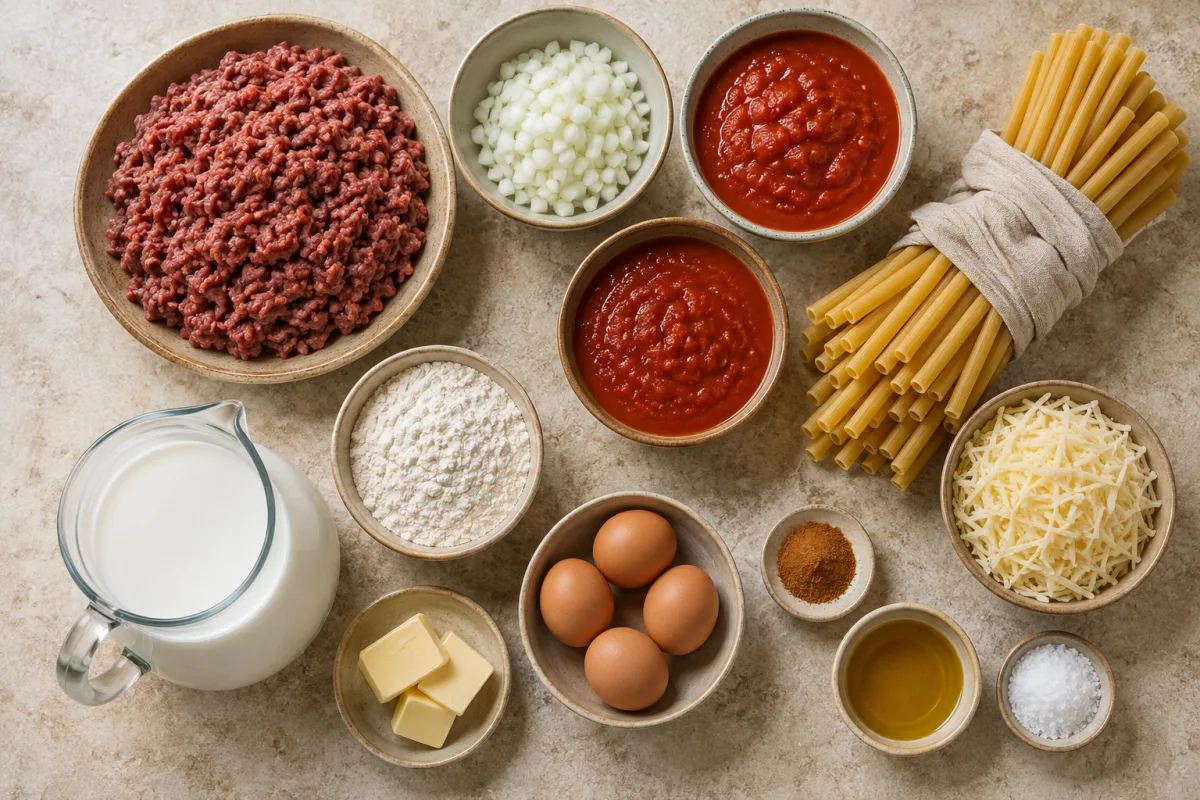
The meat sauce uses 3 pounds ground beef, one chopped large onion, two 15-ounce cans tomato sauce, 1 tablespoon cinnamon, kosher salt, and olive oil. Prepare it a day ahead when possible.
The pasta layer needs one package pastitsio noodles or mostaccioli, one beaten egg, and salted cooking water. Use at least 1/2 pound grated kasseri, about 4 cups; asiago or an Italian blend may substitute. For béchamel, gather 1 1/2 sticks unsalted butter divided, 1 cup flour, 5 1/2 cups whole milk divided, and 3 eggs.
If you enjoy this recipe, you may also like Bacon Chicken Chipotle Quesadillas.
How to Make Greek Pastitsio
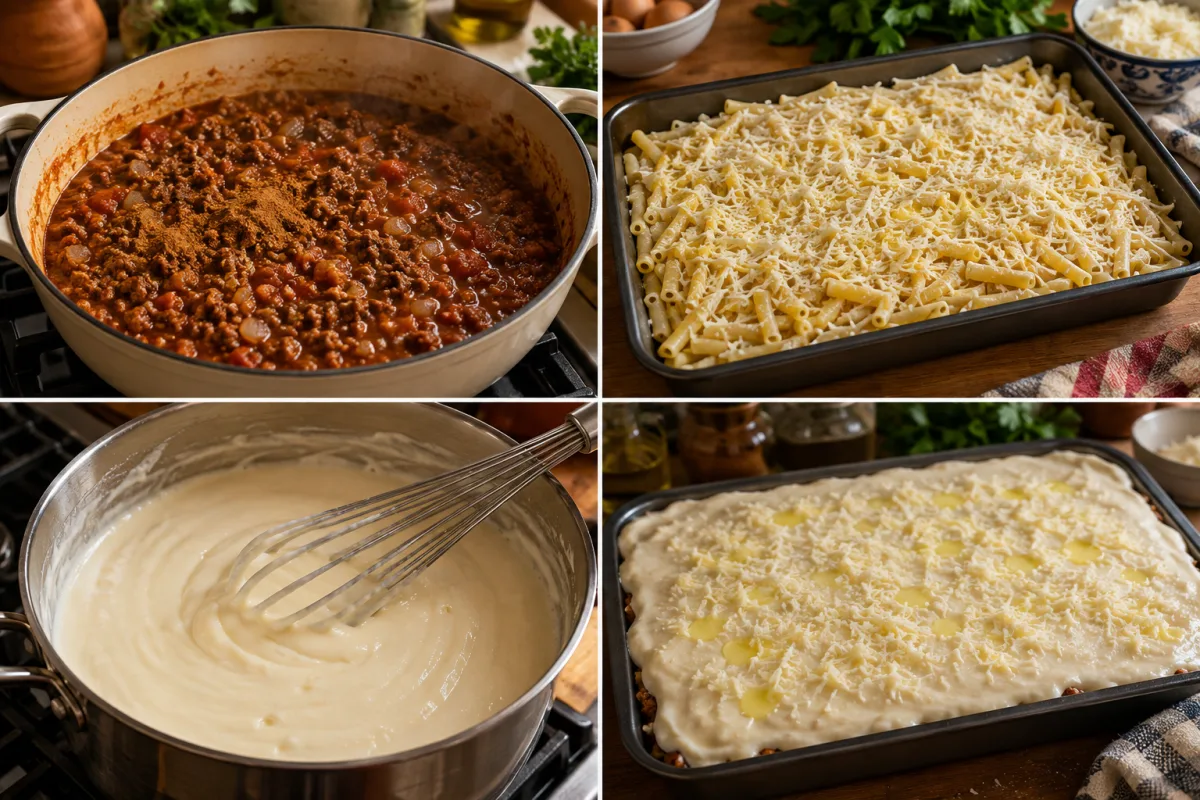
- Make meat sauce. Soften onion in oil with salt, brown beef, add tomato sauce and cinnamon, and simmer three hours with the lid slightly askew. Cool and refrigerate overnight.
- Prepare. Warm the sauce, grate cheese, heat oven to 350°F, and grease a large pan.
- Cook pasta. Boil until al dente, drain, cool slightly, and toss with one beaten egg.
- Layer. Spread pasta in the pan, add one-third cheese, meat sauce, then another third cheese.
- Make béchamel. Melt one stick butter, whisk in flour, then slowly add 5 cups milk and cook until bubbling.
- Temper eggs. Beat 3 eggs with remaining 1/2 cup milk, whisk into the sauce gradually, and cook until thick.
- Finish. Spread béchamel over the meat, add remaining cheese and melted butter.
- Bake. Cook one hour until browned and hot, then rest at least 10 minutes.
For storage details after serving, the USDA leftovers and food safety guidance.
Make the Meat Sauce Ahead
Cook onion in olive oil with a generous pinch of salt until translucent, then add beef and break it into fine crumbles. Continue until no pink remains and the meat reaches 160°F.
Stir in tomato sauce and cinnamon, bring to a simmer, and cover with the lid slightly askew. A three-hour gentle cook develops a thick, cohesive layer rather than a loose pasta sauce.
If you enjoy this recipe, you may also like Sloppy Joe Potato Skillet.
Cool Sauce Safely
After simmering, divide the sauce into shallow containers so it cools promptly. Refrigerate within two hours and keep chilled overnight.
Warm gently before assembly until spreadable, but do not make it piping hot. A moderate temperature keeps the pasta egg from setting prematurely while layers are built.
Cook Pasta Just to Al Dente
Boil pastitsio noodles or mostaccioli in salted water one to two minutes less than the package direction. The pasta continues cooking during the hour in the oven.
Drain thoroughly and cool until safe to handle, then coat with one beaten egg. The egg helps bind the base into slices rather than loose tubes.
Use a Very Large Pan
A 12-by-18-inch lasagna pan accommodates the full quantity. Place it on a rimmed baking sheet before filling to catch drips and make the heavy casserole easier to move.
For a smaller pan, halve every ingredient rather than crowding the full recipe. Excess depth makes the center slow to heat and increases spill risk.
Layer Cheese in Thirds
Spread all egg-coated pasta evenly, then add one-third of the grated kasseri. Use a slotted spoon to distribute the thick meat sauce, leaving excess loose liquid behind, and add the second third of cheese.
Reserve the final third for the béchamel top. Kasseri gives traditional flavor; asiago or a balanced Italian blend is a practical substitute.
Cook the Roux Thoroughly
Melt one stick butter in a heavy pot, add flour, and whisk for one to two minutes. Keep the mixture pale while removing the raw flour taste.
Slowly add 5 cups milk, whisking continuously and scraping the pot corners. Gradual addition prevents lumps. Continue until the sauce reaches its first gentle bubbles.
Temper the Egg Mixture
Beat three eggs with the remaining half cup milk. Whisk a small amount of hot béchamel into the eggs first, then add the warmed mixture back to the pot in a slow stream.
Return to medium-high heat and whisk until thick and bubbly. Tempering lowers the chance of scrambled egg pieces in the smooth topping.

Finish the Top Evenly
Let the béchamel stand several minutes, then pour it over the meat layer and spread to every corner. Add remaining cheese.
Melt the final half stick butter and drizzle it over the cheese. This promotes an evenly browned surface without requiring a long broil.
Bake and Brown Carefully
Bake at 350°F on the rimmed sheet for one hour, until the center is hot and the top browned. The casserole should reach 165°F in the middle.
If more color is needed, broil for 3 to 5 minutes while watching continuously. Béchamel can go from pale to scorched quickly under direct heat.
Rest Before Cutting
Rest at least 10 minutes, and preferably 15, before cutting. The sauce and egg-bound pasta continue setting while the temperature becomes comfortable.
Use a sharp knife to cut deep through all layers and lift portions with a broad spatula. The first piece may be less tidy; later slices hold more cleanly.
Storage and Reheating
Refrigerate covered leftovers within two hours for up to three days. Reheat covered at 325°F until the center reaches 165°F, removing the cover near the end.
Freeze individual slices for up to two months. Thaw overnight in the refrigerator before reheating so the béchamel warms without drying around the edges.
Troubleshooting
- Pastitsio is watery: Simmer meat sauce fully and drain pasta well.
- Béchamel is lumpy: Add milk gradually while whisking.
- Eggs scramble: Temper them with hot sauce before returning to the pot.
- Top stays pale: Add the butter drizzle and broil briefly.
- Slices collapse: Use the correct pan and allow a longer rest.
Conclusion
Slow-simmer cinnamon beef sauce and chill it overnight. Layer egg-coated al dente pasta with kasseri and meat sauce, prepare a thick tempered-egg béchamel, spread it over the casserole, add cheese and butter, then bake at 350°F and rest before slicing.
Frequently Asked Questions
- → Can pastitsio meat sauce be made ahead?
Yes. It is best simmered, cooled safely, and refrigerated overnight.
- → What can replace kasseri cheese?
Asiago or a balanced Italian cheese blend can be used.
- → Why did my bechamel become lumpy?
Milk was likely added too quickly or the sauce was not whisked continuously.
- → How long should pastitsio rest?
Rest at least 10 minutes, preferably 15, for cleaner layers.