


Quick Italian vegetable minestrone soup fills one pot with onion, carrots, celery, zucchini, green beans, tomatoes, kidney beans, chickpeas, and ditalini. Beef broth, tomato paste, herbs, Worcestershire, and a small amount of balsamic vinegar create a savory base in about 30 minutes.
The short cooking time depends on small, evenly cut vegetables and a logical order of additions. Firm aromatics soften first, tomato paste cooks against the hot pot, beans and green beans warm through, and pasta simmers only until al dente. The result is hearty enough for dinner without losing the distinct textures of the vegetables.
Ingredients for Quick Minestrone Soup
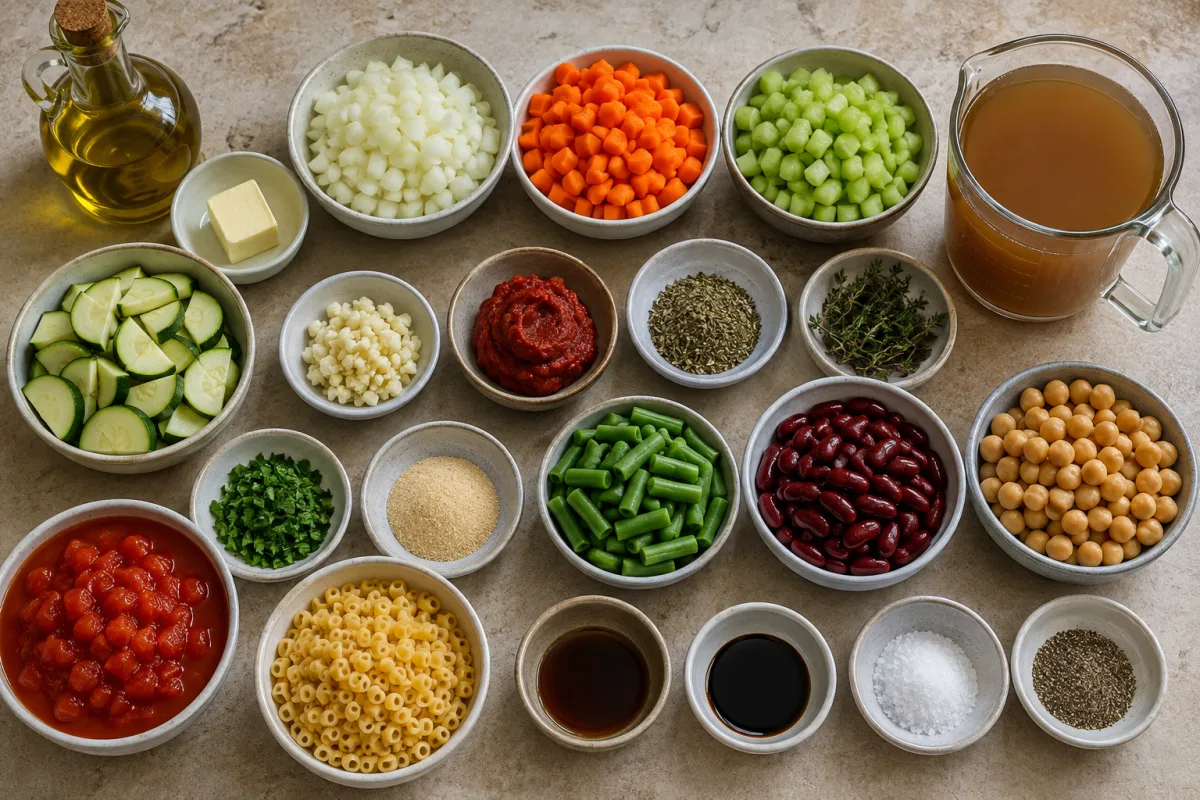
The vegetable base uses 1 tablespoon each extra-virgin olive oil and butter, 1 cup each diced yellow onion and carrots, 1/2 cup diced celery, one large zucchini halved lengthwise and sliced, and 3 teaspoons minced garlic. Keep the cuts small and similar so the vegetables soften within the brief cooking window.
Add 1 tablespoon tomato paste, 1 tablespoon Italian seasoning, 1 teaspoon dried thyme, 2 tablespoons chopped parsley, 1 teaspoon each onion and garlic powder, 2 tablespoons Worcestershire sauce, 1 teaspoon balsamic vinegar, salt, and pepper. The soup also needs 1 cup chopped green beans, one 14.5-ounce can each kidney beans and chickpeas, one 15-ounce can diced tomatoes, 1 cup ditalini, and 4 cups beef broth.
If you enjoy this recipe, you may also like Creamy Shrimp Enchiladas.
How to Make Quick Italian Minestrone
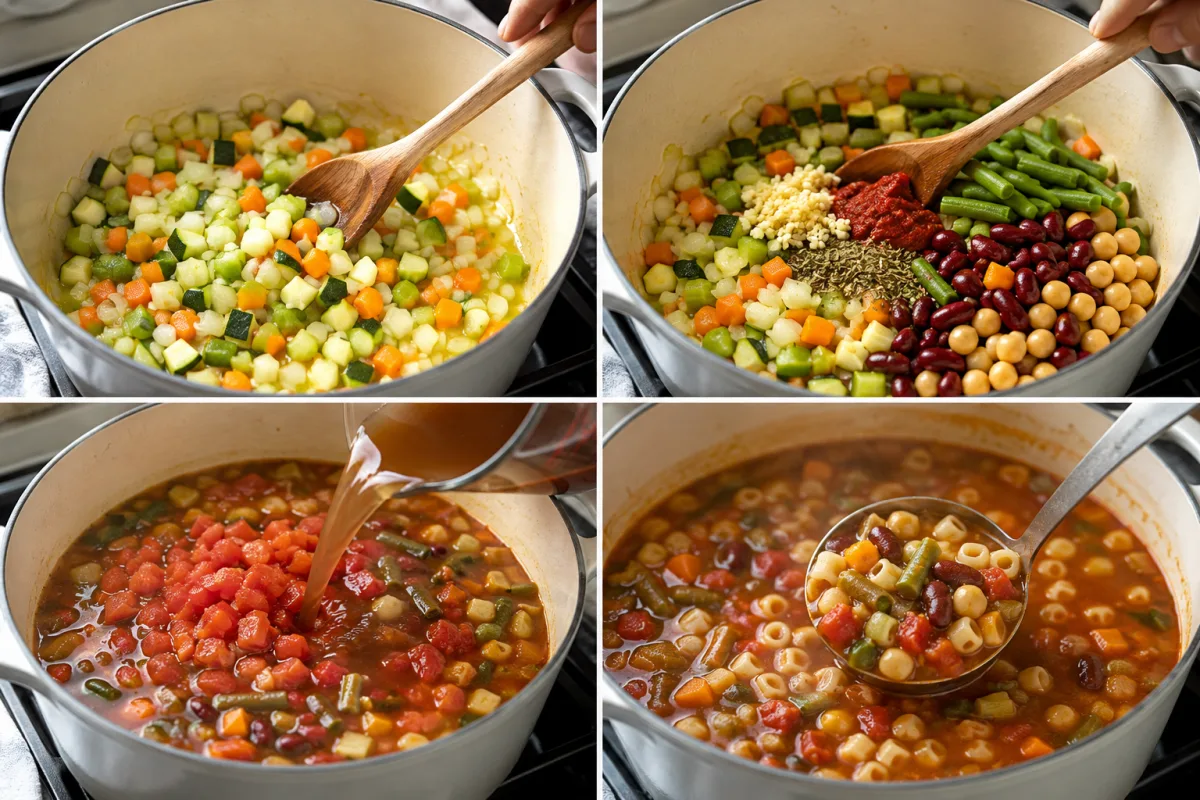
- Sauté the vegetables. Heat olive oil and butter in a Dutch oven over medium-high. Add onion, carrots, celery, and zucchini and cook about 5 minutes, stirring often.
- Add garlic. Stir it in and cook for 1 minute, just until fragrant.
- Build flavor. Add tomato paste and Italian seasoning, then stir in green beans, drained kidney beans, and drained chickpeas. Cook for another 5 minutes.
- Add liquids. Pour in diced tomatoes and beef broth, add thyme and parsley, and bring to a boil.
- Simmer with pasta. Reduce to a gentle simmer. Add onion powder, garlic powder, Worcestershire, balsamic, and ditalini. Cook 8 to 10 minutes until the pasta is al dente.
- Season and serve. Taste, add salt and pepper as needed, and ladle into bowls.
For storage details after serving, the USDA leftovers and food safety guidance.
Cut Vegetables for a 30-Minute Soup
Dice onion and carrots into small pieces, then cut celery to a similar size. Halve the zucchini lengthwise before slicing so each piece is easy to fit on a spoon. Trim the green beans and cut them into short lengths rather than leaving them whole.
Uniform pieces are not only cosmetic. They expose a similar amount of surface to the heat and become tender at roughly the same time. Prepare everything before heating the pot, because the recipe moves quickly once the oil and butter are hot.
If you enjoy this recipe, you may also like Swamp Potatoes with Sausage.
Build the Aromatic Base
The combination of olive oil and butter provides both flavor and a useful cooking medium. Add onion, carrots, celery, and zucchini to the heated pot and stir often for about 5 minutes. The onion should soften, while the carrots can retain some firmness because they continue cooking in broth.
Add garlic only for the final minute. Minced garlic cooks faster than the vegetables and may become bitter if browned heavily. Keep it moving, and proceed as soon as its aroma becomes noticeable.
Cook the Tomato Paste Before Adding Broth
Stir tomato paste and Italian seasoning directly into the vegetables so the paste coats the bottom of the warm pot. Brief cooking takes away its raw edge and concentrates its savory sweetness. Keep stirring so it darkens slightly without scorching.
Add green beans, kidney beans, and chickpeas and cook for another 5 minutes. Drain and rinse both canned beans first to remove the thick packing liquid. Fold gently to avoid crushing them, especially once they become warm.
Use Balsamic for Balance
Worcestershire adds deep savory notes, while one teaspoon balsamic vinegar brightens the tomato and broth. The amount is small enough that the soup should not taste distinctly vinegary. Add both with the dried powders and pasta after the broth reaches a boil and the heat has been reduced.
Wait until the end to judge salt. Beef broth, Worcestershire, canned tomatoes, and optional Parmesan can all contribute sodium. Taste a spoonful containing both broth and vegetables, then adjust gradually with salt and black pepper.

Cook Ditalini Without Making It Soft
Add the dry ditalini directly to the gently simmering soup and stir well so pasta does not settle on the bottom. Cook for 8 to 10 minutes, checking at the lower end of the range. It should be tender but retain a slight bite.
Pasta continues absorbing liquid as the soup stands. If dinner will be delayed or most of the pot is intended for leftovers, cook the ditalini separately and add it to individual bowls. That keeps the broth looser and prevents the pasta from swelling during storage.
Useful Vegetable Variations
Minestrone is flexible, but substitutions need to respect cooking time. Small diced potatoes should join the early vegetables and may need extra simmering. Kale or spinach belongs near the end, while broccoli florets can be added with enough time to become just tender.
Keep the total volume reasonably close to the original so four cups of broth can circulate. If extra vegetables make the soup too crowded, add more broth and adjust seasoning. Frozen vegetables can be used selectively, but introduce them later because many are already blanched.
Serving Ideas
Ladle the soup into warm bowls and finish with fresh parsley or grated Parmesan. Crusty bread, garlic toast, or a simple green salad rounds out the meal. A Parmesan rind may be simmered in the pot for extra savory flavor, but remove it before serving.
Keep garnishes separate when serving a group so dietary needs are easy to manage. The soup itself contains butter, gluten from pasta, and possible fish in Worcestershire; labels should be checked when allergies or specific diets are involved.
Storage and Reheating
Cool the soup promptly and refrigerate it in a covered container for up to four days. The beans and pasta continue absorbing broth, so leftovers will be thicker. Add a splash of broth or water during reheating to restore the preferred consistency.
Warm over medium-low heat, stirring occasionally, until steaming throughout. If the pasta was stored separately, add it only for the final minutes. Freeze portions without pasta for the best texture; thaw in the refrigerator and cook fresh ditalini when reheating.
Troubleshooting
- Vegetables are still firm: Cut them smaller or simmer a few extra minutes before adding pasta.
- Pasta becomes mushy: Stop at al dente or cook it separately for leftovers.
- Soup is too thick: Add warm broth a little at a time.
- Flavor seems flat: Check salt first, then add a few drops of balsamic if needed.
- Tomato paste sticks: Stir continuously and add the beans promptly after the brief toasting stage.
Conclusion
Sauté onion, carrots, celery, and zucchini in olive oil and butter, add garlic, tomato paste, herbs, green beans, kidney beans, and chickpeas, then pour in tomatoes and beef broth. Simmer ditalini with Worcestershire and balsamic for 8 to 10 minutes and season to taste.
Frequently Asked Questions
- → Can minestrone soup be made vegetarian?
Yes. Use vegetable broth, vegetarian Worcestershire, and either plant-based butter or additional olive oil.
- → How do I keep pasta from getting mushy in minestrone?
Cook it only to al dente, or prepare it separately and add it to each bowl when you expect leftovers.
- → Can I add different vegetables to minestrone?
Yes. Add firm vegetables early and leafy greens near the end, while keeping enough broth for the total volume.
- → How long does homemade minestrone keep?
Refrigerate it promptly in a covered container and use within four days, adding broth when reheating if it has thickened.