


This hearty shepherd's pie layers seasoned ground beef, vegetables, rich gravy, cheddar, and creamy mashed potatoes in one bubbling casserole. The fork-textured potato top develops golden peaks while the thick filling remains spoonable beneath it.
Because this version uses beef rather than lamb, it is also traditionally known as cottage pie, though shepherd's pie is the familiar recipe name used here. It serves six in about an hour. A properly cooked roux and well-drained potatoes keep the two layers distinct instead of watery.
Ingredients for Shepherd's Pie
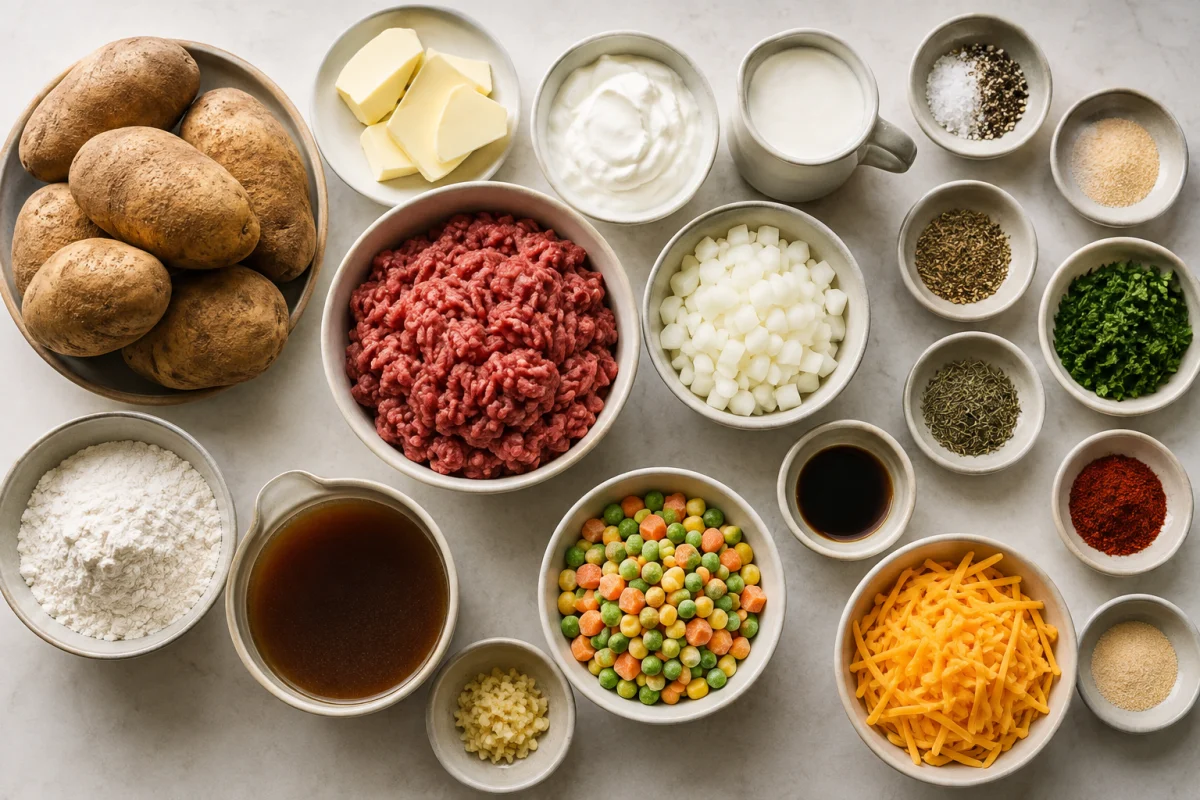
For the topping, use 6 russet potatoes, 1/2 cup butter, 1/2 cup sour cream, 1/2 cup milk, 1/2 teaspoon each salt and pepper, 1 teaspoon garlic powder, and 1 tablespoon dried parsley.
The filling needs 1 pound ground beef, 1 onion, salt, pepper, oregano, thyme, paprika, onion powder, parsley, 2 tablespoons each butter and flour, 1 cup beef broth, 1 tablespoon each minced garlic and Worcestershire, one 12-ounce bag frozen mixed vegetables, and 1 cup cheddar.
If you enjoy this recipe, you may also like Cheesy Enchilada Hamburger Helper.
How to Make Shepherd's Pie
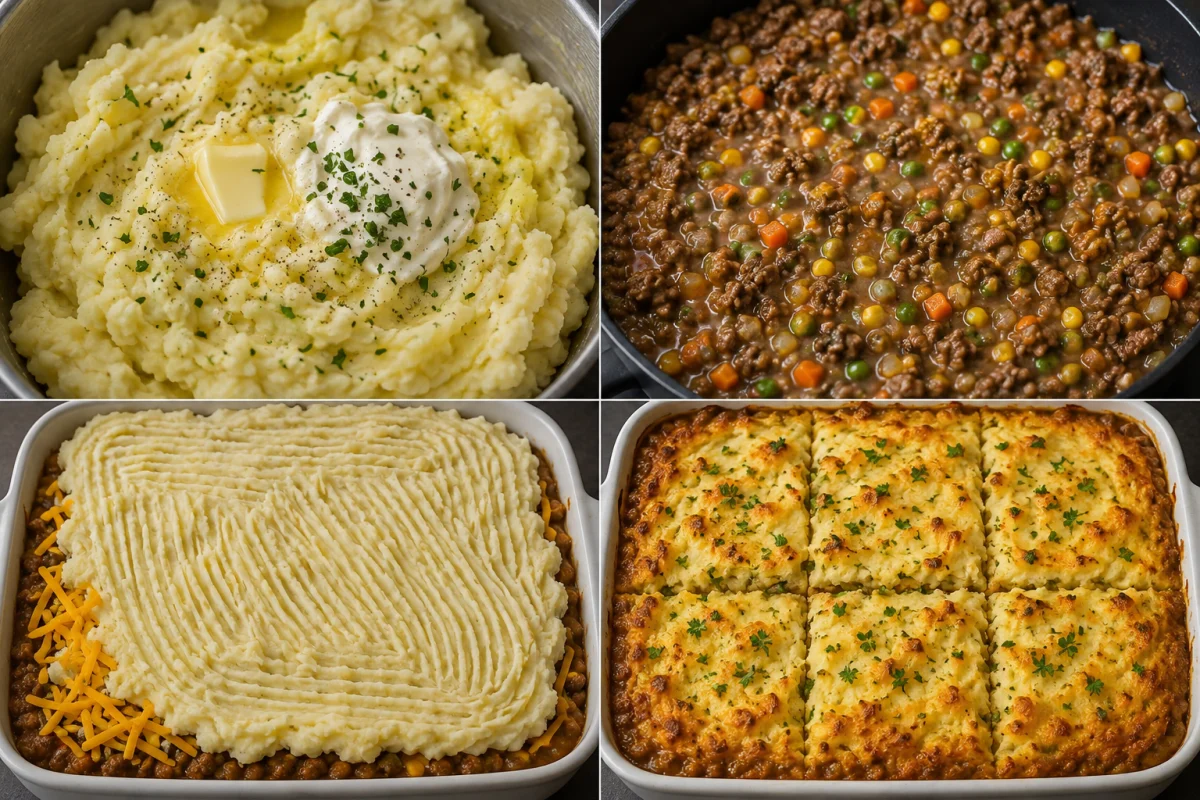
- Boil potatoes. Peel, cut, and boil until fork-tender, then drain thoroughly.
- Mash. Add butter, sour cream, milk, salt, pepper, garlic powder, and parsley; mash to the preferred texture.
- Brown beef. Cook beef and onion with the dried seasonings in an oven-safe skillet. Drain fat.
- Make a roux. Clear the center, melt 2 tablespoons butter, stir in flour, and cook 1 to 2 minutes.
- Build gravy. Add broth, garlic, Worcestershire, and frozen vegetables. Simmer until thick.
- Layer. Add cheddar, then spread mashed potatoes edge to edge and texture with a fork.
- Bake. Bake at 375°F for about 20 minutes, until bubbling. Broil 1 to 2 minutes if desired.
- Rest. Wait before serving.
For storage details after serving, the USDA leftovers and food safety guidance.
Choose Russets for a Fluffy Topping
Russet potatoes contain enough starch to mash light and fluffy while supporting a clean casserole layer. Peel and cut them into similar chunks so they become tender together. Very small pieces absorb excess water and can produce a loose mash.
Start in cool salted water, bring to a steady boil, and reduce to a simmer. The potatoes are ready when a fork slides through the center without resistance.
If you enjoy this recipe, you may also like Cheesy Pizza Tortellini.
Drain and Dry the Potatoes
Drain the pot completely, then return potatoes to the warm empty pot for a minute over low heat. Gentle tossing allows surface moisture to evaporate. This step matters because watery mash can sink into the meat filling.
Add butter first so fat coats the hot starch, followed by sour cream and warmed milk. Begin with slightly less milk and add the rest only as needed.
Mash Without Making the Potatoes Gluey
Use a hand masher or ricer and stop when the desired texture is reached. A food processor breaks starch cells aggressively and creates a sticky paste. Small lumps are acceptable in a rustic topping.
Season with salt, pepper, garlic powder, and dried parsley while warm. Taste before adding more salt because butter, cheddar, broth, and Worcestershire all contribute seasoning elsewhere in the dish.
Brown the Beef Properly
Cook ground beef and chopped onion over medium-high heat in a wide oven-safe skillet. Break the beef into small pieces but leave some against the pan long enough to brown. Add salt, pepper, oregano, thyme, paprika, onion powder, and parsley.
Cook until no pink remains and the meat reaches 160°F. Drain excess grease carefully. A small film can remain for flavor, but pooled fat prevents the roux from thickening the broth predictably.

Cook the Roux for Two Minutes
Push beef to the perimeter and make a clear space in the center. Melt 2 tablespoons butter, sprinkle in 2 tablespoons flour, and stir into a smooth paste. Cook for 1 to 2 minutes while stirring.
This removes the raw flour taste and prepares the starch to thicken broth. Keep the heat moderate so the roux stays golden rather than scorching. Mix it through the beef before adding liquid.
Add Broth Gradually
Pour in beef broth in several additions while stirring. Gradual dilution prevents flour lumps. Scrape the skillet base to dissolve browned residue into the gravy, then add garlic and Worcestershire.
Bring the mixture to a gentle simmer. It should become thick enough that a spoon drawn across the pan leaves a path for a moment. Thin filling bubbles through the potato layer; overly thick filling can seem dry after baking.
Use Frozen Vegetables Without Thawing
Add the frozen mixed vegetables directly to the simmering gravy. Peas, carrots, and corn warm quickly and maintain more shape than fully thawed vegetables. Stir until they are evenly distributed and beginning to soften.
Allow the filling to return to a simmer so any released ice is incorporated. Taste at this point and adjust pepper, herbs, or Worcestershire. The mixture should be savory but not overly salty before cheddar is added.
Create a Cheese Barrier
Scatter shredded cheddar over the hot meat filling before adding potatoes. The cheese melts into a savory layer and also helps separate moist gravy from the mash. Use an even cup rather than a thick mound.
Cheddar is optional in more traditional versions, but it gives this beef-based casserole extra richness. A sharp cheese provides more flavor with the same quantity.
Spread Potatoes Edge to Edge
Add mashed potatoes in spoonfuls around the skillet rather than dropping one heavy mound in the center. Gently join the portions and spread all the way to the edge. This seal reduces bubbling through the top.
Drag a fork over the surface to create ridges and peaks. Raised areas brown more readily than a completely smooth layer. Work lightly so the cheese and filling remain underneath.
Bake and Broil Carefully
Bake at 375°F for about 20 minutes, until gravy bubbles at the edges and the center reaches 165°F. Place the skillet on a sheet pan if it is filled close to the rim.
For a deeper golden top, broil for only 1 to 2 minutes. Stay beside the oven because potato peaks can change from browned to burned quickly. Confirm that the pan is broiler-safe.
Rest Before Scooping
Let the pie stand for 10 minutes. The gravy thickens slightly and the potato layer becomes easier to portion. Scooping immediately causes the layers to flow together, even when they were prepared correctly.
Use a wide spoon and reach to the bottom so each serving includes beef, vegetables, cheese, and potatoes. A green salad or steamed beans provide a fresh contrast.
Make-Ahead and Storage
Assemble the casserole up to one day ahead, cover, and refrigerate. Bake until the center reaches 165°F, allowing additional time for the cold filling. Avoid moving a cold glass dish directly into a very hot oven.
Refrigerate leftovers for up to four days or freeze portions for up to two months. Thaw overnight and reheat covered at 350°F, uncovering near the end to restore the potato surface.
Troubleshooting
- Watery filling: Simmer the gravy until it clearly coats a spoon.
- Loose potatoes: Drain and dry them, then add milk gradually.
- Gluey mash: Use a hand masher and stop once smooth enough.
- Filling erupts through top: Spread potatoes fully to the edge.
- Top stays pale: Make fork ridges and broil briefly while watching.
Conclusion
Boil and mash russet potatoes with butter, sour cream, milk, and seasoning. Brown seasoned beef and onion, drain, make a butter-flour roux, then add broth, Worcestershire, garlic, and frozen vegetables. Top the thick filling with cheddar and mashed potatoes, bake at 375°F, and rest before serving.
Frequently Asked Questions
- → Is shepherd's pie made with beef or lamb?
Traditional shepherd's pie uses lamb, while the beef version is traditionally called cottage pie. This recipe uses the familiar shepherd's pie name and ground beef.
- → How do I keep shepherd's pie from becoming watery?
Drain the beef, cook the roux, simmer the gravy until thick, and dry the boiled potatoes before mashing.
- → Can shepherd's pie be made ahead?
Yes. Assemble and refrigerate it for up to one day, then bake until the center reaches 165°F.
- → Can shepherd's pie be frozen?
Yes. Freeze cooled portions for up to two months, thaw overnight, and reheat covered before uncovering to refresh the top.