


Sloppy Joe stuffed bread encloses a thick, tangy beef filling and cheddar inside homemade skillet-cooked flatbread. The soft yeast dough browns directly in a heavy pan, creating a crisp-speckled exterior while the center stays tender and the cheese melts around the savory filling.
The recipe makes six to eight stuffed breads in about two hours, including the rise and cooling time. The essential details are a well-kneaded dough, a filling reduced until thick, clean dough edges, and moderate skillet heat. Cooling the beef before assembly prevents steam and sauce from weakening the seal.
Ingredients for Sloppy Joe Stuffed Bread
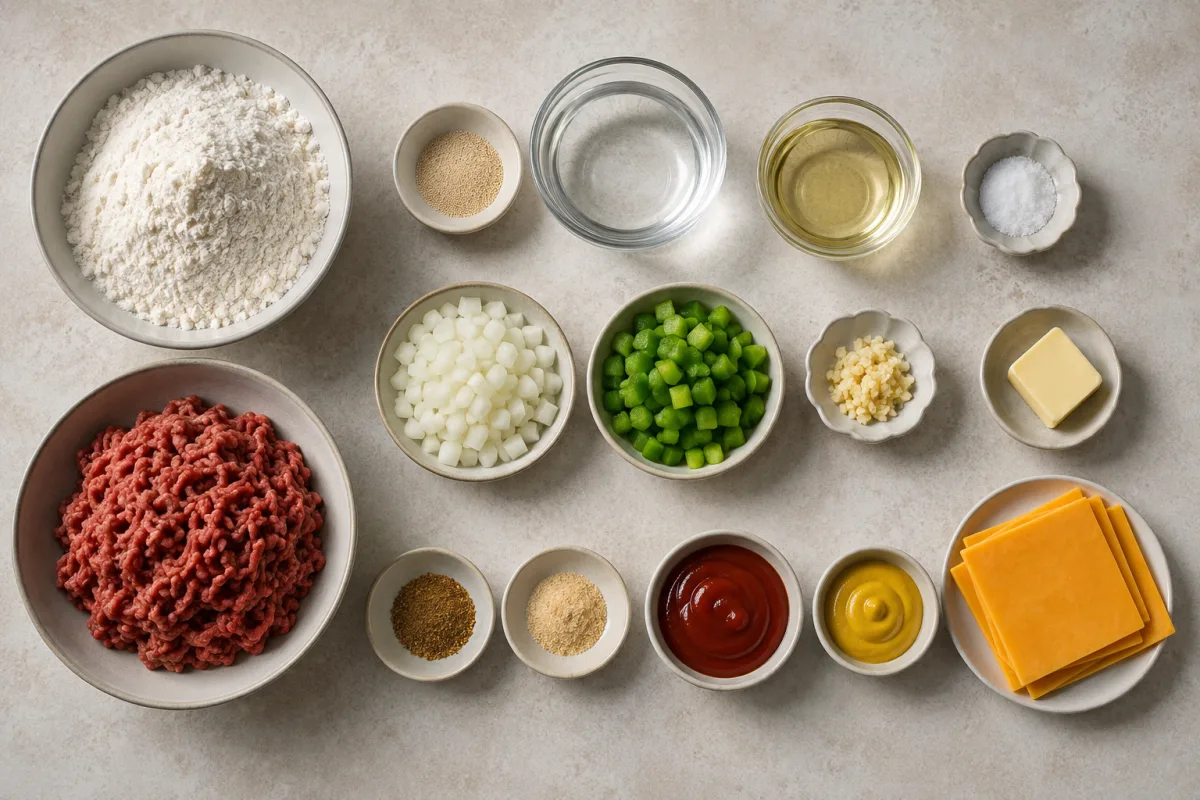
The dough uses 2 1/2 cups all-purpose flour, 1 teaspoon salt, 2 teaspoons instant yeast, 2 1/2 tablespoons sunflower oil, and 3/4 cup lukewarm water.
For the filling, gather 2 tablespoons butter, 1 pound ground beef, one diced small onion, half a diced green bell pepper, one minced garlic clove, 1 teaspoon each cumin, onion powder, and salt, 1/2 teaspoon black pepper, 3/4 cup ketchup, 1 tablespoon mustard, and 1/3 cup water. Cheddar cheese slices go inside each bread. Measure filling portions conservatively; excess makes sealing and pan cooking difficult.
If you enjoy this recipe, you may also like Cheesy Chicken Parmesan Tortellini.
How to Make Sloppy Joe Stuffed Bread
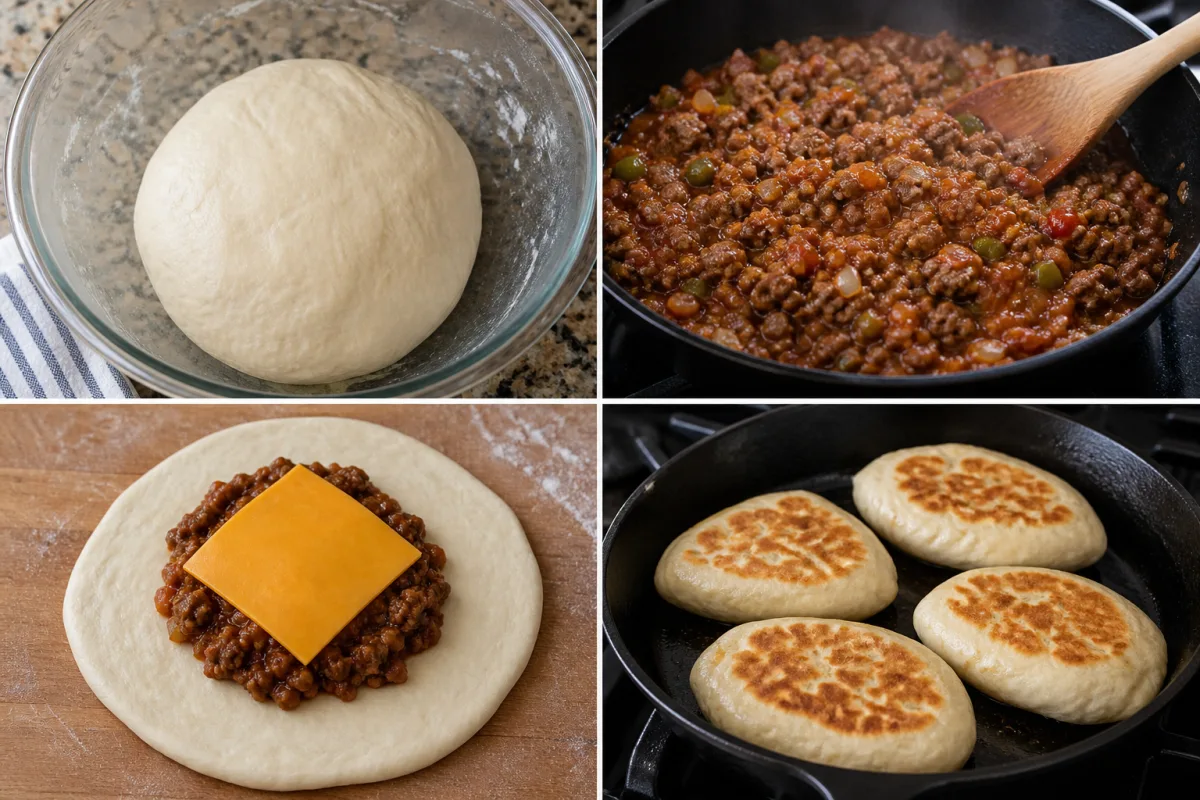
- Mix the dough. Combine flour, salt, and yeast, then add oil and lukewarm water.
- Knead and rise. Knead 10 to 12 minutes until elastic, cover, and let double for about one hour.
- Cook vegetables. Melt butter and soften onion, pepper, and garlic over medium heat.
- Brown beef. Add the meat, crumble, and cook fully to 160°F.
- Thicken. Stir in seasonings, ketchup, mustard, and water; simmer until the mixture is thick, then cool.
- Portion dough. Divide into six to eight pieces and flatten into discs.
- Fill and seal. Add a controlled spoonful of beef and cheddar, gather clean edges, pinch, and flatten gently.
- Cook. Brown in a heavy skillet over medium heat for 3 to 4 minutes per side until the bread is cooked through.
For storage details after serving, the USDA leftovers and food safety guidance.
Knead for a Flexible Dough
Knead the combined ingredients for the full 10 to 12 minutes. At first the dough may look rough, but it should become smooth, elastic, and slightly tacky as gluten develops.
A flexible dough stretches around the filling without tearing. Add extra flour only in tiny amounts if the dough is truly wet; a stiff dough is harder to seal and produces a dense flatbread.
If you enjoy this recipe, you may also like Bisquick Impossible Pizza Pie.
Judge the Rise by Volume
Cover the bowl and place it in a warm, draft-free location. The dough is ready when approximately doubled, usually near one hour, though a cool kitchen can take longer.
Press a lightly floured fingertip into the surface. A slow partial spring-back indicates adequate fermentation. Keep the dough covered after dividing so individual portions do not form a dry skin.
Build Flavor in the Filling
Soften onion, green pepper, and garlic in butter before adding beef. This removes their raw edge and distributes the vegetables through the meat rather than leaving firm pieces near the seam.
Break the beef into small crumbles and cook to 160°F. Drain excess fat before adding ketchup and mustard so the filling remains rich but not greasy.
Reduce Until Spoonable
Add cumin, onion powder, salt, pepper, ketchup, mustard, and water, then simmer uncovered. Stir frequently as the mixture thickens to prevent sugary ketchup from catching on the pan.
Drag a spoon through the skillet: the path should stay visible briefly rather than filling immediately with liquid. Spread the beef on a wide plate to cool faster.
Divide Dough Evenly
Deflate the risen dough gently and divide it into six large or eight smaller portions. A scale provides the most consistent results and helps every bread cook at the same rate.
Shape the portions into balls, cover, and let them relax for five minutes. Relaxed dough rolls more easily and is less likely to spring back.
Keep the Border Clean
Flatten one piece into a disc with a slightly thicker center. Place cooled beef in the middle and add a cheddar slice, leaving a generous clean margin all around.
Oil or sauce on the border prevents dough from sticking to itself. If filling touches the edge, wipe it away before gathering and pinching the seam firmly.
Flatten Without Breaking Through
Turn the sealed ball seam-side down and press gently into a thick disc. Work from the center outward, stopping before the filling shows through.
An evenly thick bread cooks more reliably than one with a thin center and heavy rim. Keep shaped pieces covered while finishing the rest.

Use Moderate Skillet Heat
Preheat a thick-bottomed or cast-iron pan over medium heat. Cook the breads in batches with space around them for about 3 to 4 minutes per side.
If the outside darkens before the dough feels set, lower the heat and cover briefly to trap warmth. Check that the center is hot and the bread has no gummy raw layer.
Serve and Reheat
Rest the breads for several minutes because the beef and cheese are very hot. Serve with a crisp salad, pickles, or raw vegetables to balance the rich filling.
Refrigerate leftovers within two hours for up to three days. Reheat in a covered skillet over low heat or in a 325°F oven until hot throughout; the microwave softens the crust.
Make-Ahead Plan
Prepare and chill the filling one day ahead. Bring it only to cool room temperature while the dough rises; very cold filling can slow the center from heating.
The dough can be refrigerated after kneading for a slow first rise. Let it warm enough to become pliable before dividing and filling. Cooked breads can also be frozen, thawed overnight, and reheated.
Troubleshooting
- Dough tears: Knead fully, let portions relax, and avoid overfilling.
- Filling leaks: Cool it, reduce it well, and keep the border clean.
- Outside burns: Lower the skillet heat and cook more slowly.
- Center is doughy: Make thinner even discs and cover briefly during cooking.
- Bread is dense: Verify yeast activity and allow the dough to double.
Conclusion
Knead a simple yeast dough and let it double while preparing a thick beef, onion, pepper, ketchup, and mustard filling. Cool the filling, seal it with cheddar inside evenly divided dough, flatten gently, and cook in a heavy skillet until golden and fully done.
Frequently Asked Questions
- → Can I make the filling ahead?
Yes. Refrigerate the cooked filling for up to three days and cool it before stuffing.
- → Why does my stuffed bread leak?
The filling may be warm or loose, the portion too large, or the dough border dirty.
- → Can I bake these instead of pan cooking?
The tested recipe uses a skillet. Baking would require separate time and temperature testing.
- → How should stuffed bread be reheated?
Use a covered low skillet or 325°F oven until the center is hot.