


Slow cooker pot roast with goat cheese mashed potatoes pairs fork-tender chuck roast, carrots, celery, onion, and rich gravy with creamy potatoes that carry a gentle tang. Browning the beef builds the roasted flavor a slow cooker cannot create by itself, then low, steady heat turns a well-marbled roast tender enough to pull apart.
The mashed potatoes are prepared near serving time, not in the slow cooker. Warm cream, butter, and goat cheese keep them smooth and give the dish a fresh contrast to the deeply savory beef. It is a complete comfort-food dinner designed for six generous portions.
Ingredients for Slow Cooker Pot Roast and Goat Cheese Mashed Potatoes
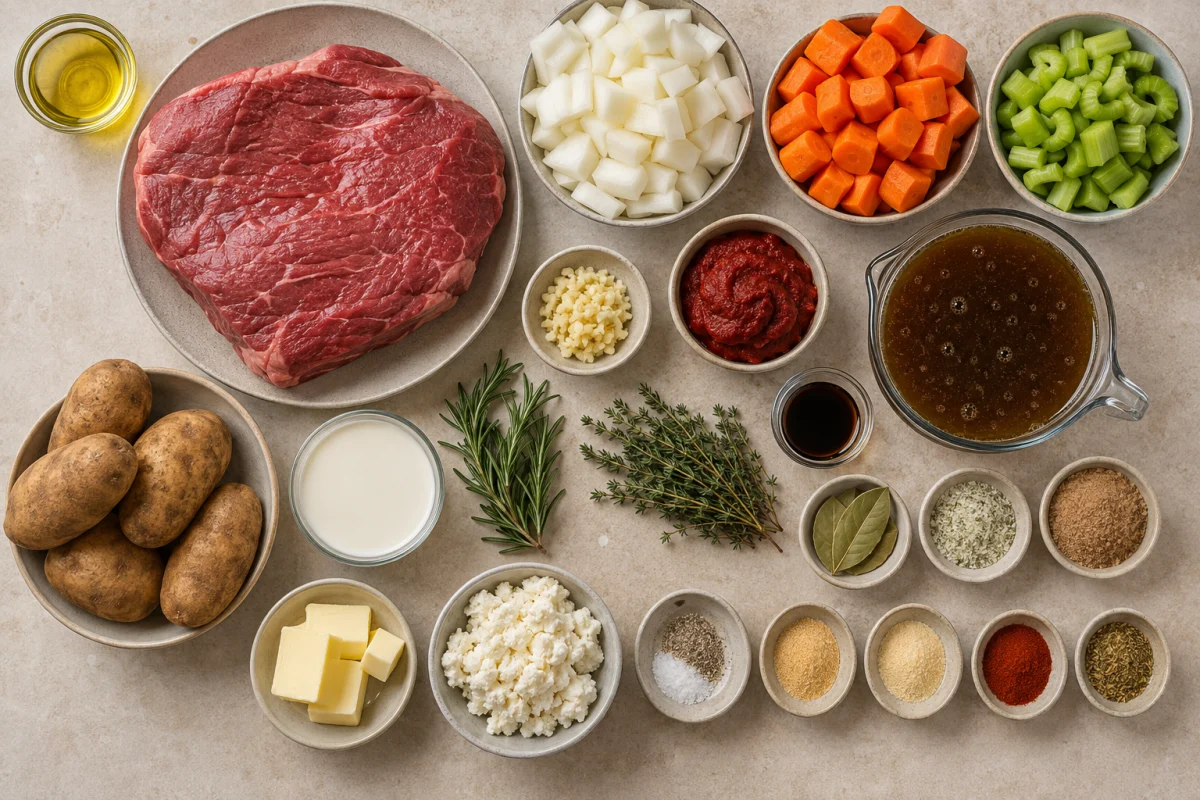
For the roast, use a 3-pound boneless chuck roast, one large yellow onion, four carrots, three celery stalks, four garlic cloves, 1 tablespoon tomato paste, 1 1/2 cups beef stock, 2 teaspoons Worcestershire, rosemary, thyme, granulated garlic, onion powder, paprika, oregano, two bay leaves, one packet ranch seasoning, one packet brown gravy powder, salt, pepper, and 3 tablespoons oil.
The potatoes need five to six large russets, 1 cup warmed heavy cream, 4 tablespoons butter, 4 tablespoons goat cheese, and salt. Cut the vegetables into large chunks so they withstand the long cook.
If you enjoy this recipe, you may also like Broccoli Cheddar Orzo.
How to Make Slow Cooker Pot Roast With Goat Cheese Mashed Potatoes
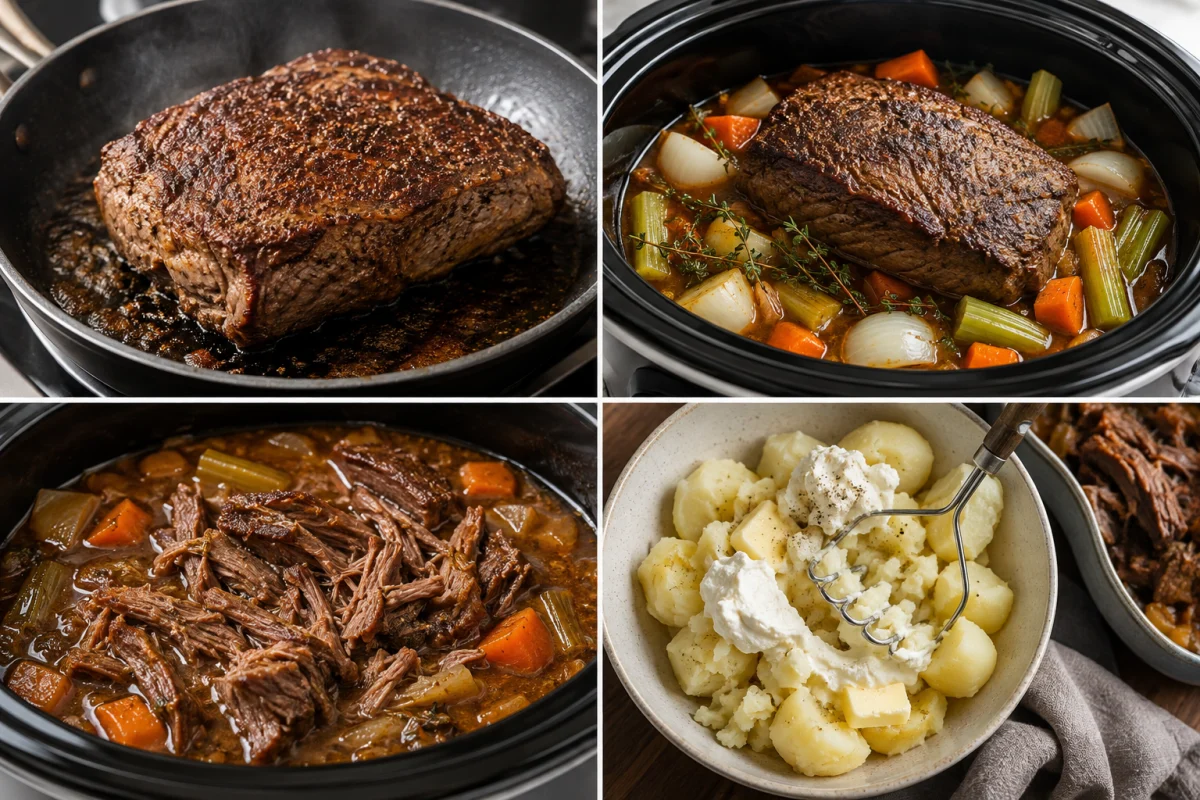
- Brown the roast. Pat the beef dry, season with salt and pepper, and sear in hot oil for four to five minutes per side.
- Mix the sauce. Combine stock, Worcestershire, tomato paste, garlic, dry spices, ranch seasoning, and gravy powder until smooth.
- Load the cooker. Set in the browned roast, pour over the sauce, and arrange onion, carrots, celery, rosemary, thyme, and bay leaves around it.
- Slow-cook. Cover and cook five hours on high or eight to nine hours on low, until fork-tender.
- Finish the roast. Remove large pieces of fat, taste the gravy, and keep warm.
- Boil the potatoes. Peel and quarter russets, cover with salted cold water, and boil until easily pierced.
- Mash. Drain thoroughly, add butter, then mash with goat cheese and warm cream added gradually. Salt to taste.
- Serve. Spoon roast, vegetables, and gravy over the potatoes.
For storage details after serving, the USDA leftovers and food safety guidance.
Choose Chuck Roast for Slow Cooking
Chuck contains the connective tissue and marbling needed for a long cook. As the roast reaches tenderness, collagen converts to gelatin and enriches the surrounding sauce. A lean roasting cut can become dry before it ever reaches the same pull-apart texture.
Select a compact roast of fairly even thickness so it cooks uniformly. Trim only unusually thick exterior fat before browning; internal marbling is part of what protects the meat during eight or nine hours on low.
If you enjoy this recipe, you may also like Maryland Crab Soup.
Dry and Brown the Beef
Surface moisture turns to steam and delays browning, so blot the roast thoroughly with paper towel. Season both sides, heat the oil until shimmering, and give the meat four to five undisturbed minutes per side.
Do not force the roast to release too early. Once a dark crust forms, it lifts more readily. Browning does not seal in juices, but it creates complex roasted flavors that dissolve into the slow-cooker gravy.
Mix the Sauce Before Adding It
Whisk tomato paste, gravy powder, ranch seasoning, garlic, Worcestershire, stock, and the dry spices together before pouring. Pre-mixing prevents pockets of powder on the roast and spreads the seasonings through the full cooker.
Ranch seasoning and brown gravy powder both contain salt, so season the raw roast sensibly and make the final adjustment only after cooking. Fresh rosemary and thyme go in as sprigs and can be removed along with the bay leaves before serving.
Cook Until a Fork Meets Little Resistance
Use five hours on high when time is limited or eight to nine hours on low for the gentlest result. Slow cookers vary, and the clock is only a guide. The roast is ready when a fork twists easily and the meat begins separating along its natural seams.
If it still feels firm, it usually needs more time rather than less. Keep the lid closed as much as possible because each long inspection releases heat and steam. Remove obvious pieces of softened exterior fat when the beef is done.
Adjust the Gravy
Taste the cooking liquid after removing the herb stems and bay leaves. If it is thinner than you prefer, mix 2 teaspoons cornstarch with 2 teaspoons cold water, stir the slurry into the hot cooker, and allow several minutes to thicken.
Never add dry cornstarch directly because it forms lumps. Keep the slow cooker on warm while making the potatoes, but avoid holding the fully cooked meat on high heat.
Make Goat Cheese Mashed Potatoes
Start peeled, quartered russets in cold salted water so the centers and exteriors heat at a similar rate. Boil until a fork slides through without resistance, then drain completely. Trapped water dilutes the dairy and can make the potatoes loose.
Add butter to the hot potatoes, mash, then blend in goat cheese. Pour in half the warm cream, assess the texture, and add the rest gradually. Warm cream absorbs more readily than cold cream. Stop mashing once smooth enough, since excessive agitation can make potatoes gluey.

Serve the Roast and Potatoes
Spoon a broad bed of mashed potatoes onto each plate, add pulled or sliced pot roast and vegetables, then ladle gravy over the top. The goat cheese should provide a gentle tang rather than dominate the beef.
A crisp green salad or steamed green vegetable is enough alongside this rich meal. Remove bay leaves and woody herb stems before the serving dish reaches the table.
Storage and Reheating
Refrigerate cooled beef, vegetables, and gravy in a covered container for up to four days. Store mashed potatoes separately so their texture can be adjusted during reheating. Reheat the beef gently in its gravy until steaming.
Warm potatoes with a splash of cream or milk, stirring only as needed. The roast and gravy freeze well for up to three months. Mashed potatoes can be frozen, but may need extra butter or cream after thawing.
Conclusion
Brown a seasoned chuck roast, place it in a slow cooker with a savory stock mixture, large vegetables, and herbs, then cook five hours on high or eight to nine hours on low. Serve the fork-tender beef and gravy over russet potatoes mashed with warm cream, butter, and goat cheese.
Frequently Asked Questions
- → Should I cook pot roast on high or low?
Either works: allow about five hours on high or eight to nine hours on low. The beef is done when a fork twists easily in it.
- → Why is my pot roast still tough?
Chuck roast often feels firm before its connective tissue fully softens. Keep cooking it covered and check again later.
- → How can I thicken the gravy?
Stir together 2 teaspoons each cornstarch and cold water, add the slurry to the hot liquid, and cook several minutes.
- → Can I make the mashed potatoes ahead?
Yes. Refrigerate them separately and reheat gently with a splash of cream or milk to restore softness.