

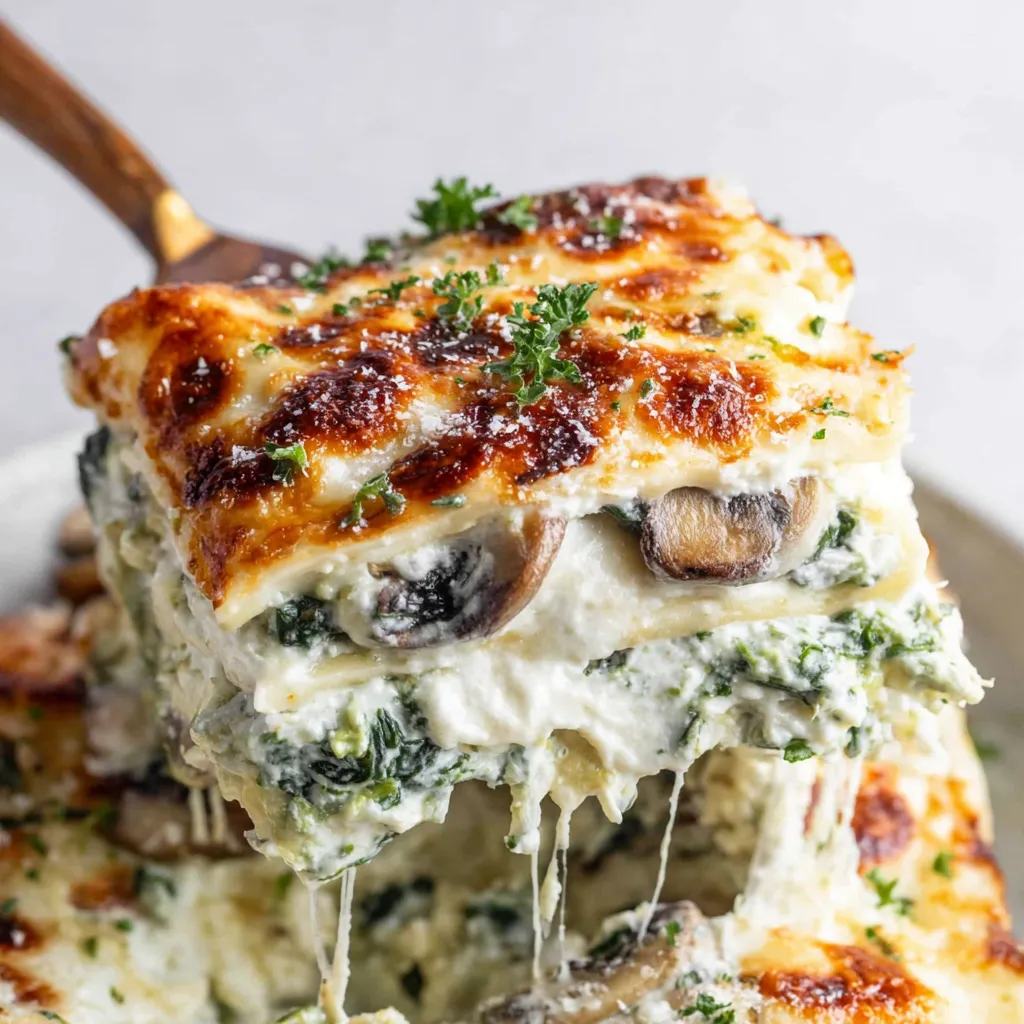
Spinach mushroom lasagna layers tender noodles with a savory ricotta filling and a smooth Parmesan white sauce. Mushrooms, onion, garlic, and spinach make the filling substantial, while mozzarella creates a bubbling golden top without relying on tomato sauce.
The recipe serves about 12 and takes roughly 85 minutes, plus a necessary cooling period. Removing moisture from the vegetables, building the white sauce gradually, and resting the baked lasagna are what produce distinct slices instead of a watery casserole.
Ingredients for Spinach Mushroom Lasagna
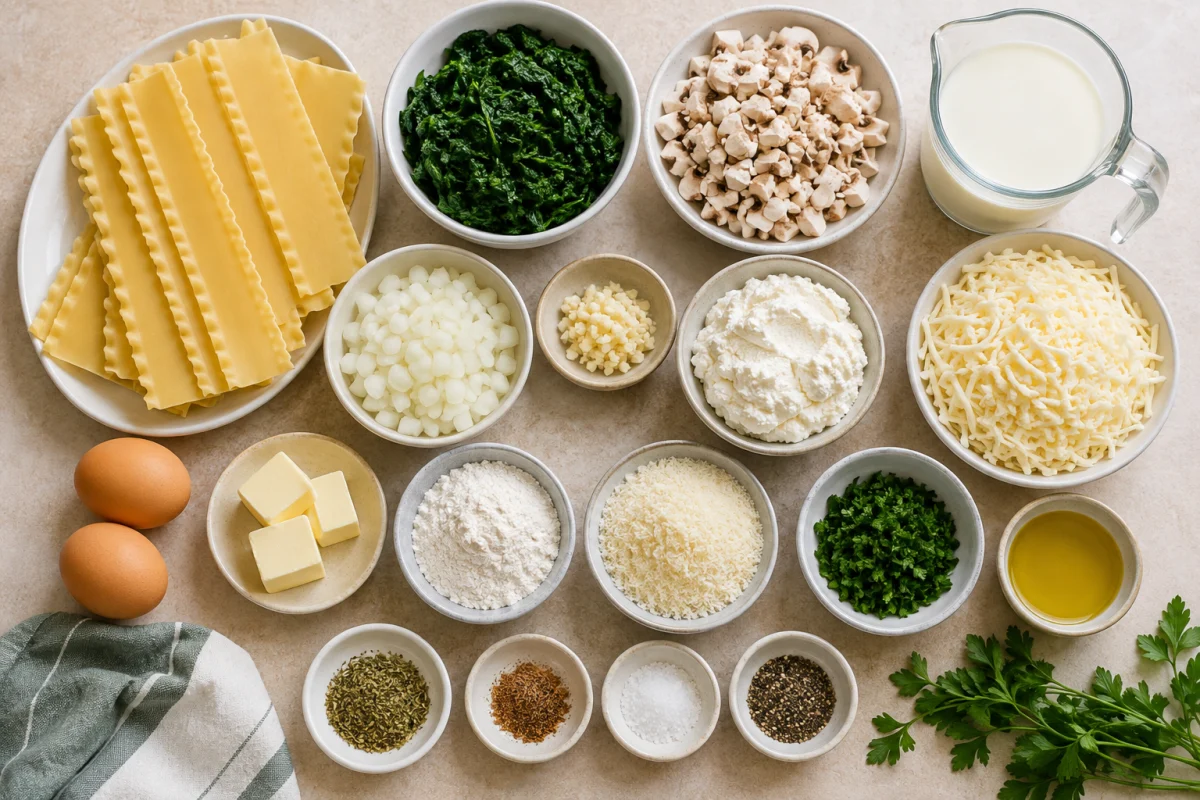
The filling begins with 4 tablespoons butter, 1/2 cup finely diced onion or shallot, 6 minced garlic cloves, 8 ounces finely chopped white mushrooms, 1 tablespoon Italian seasoning, 16 ounces thawed and drained frozen spinach, 1 teaspoon kosher salt, and black pepper.
For the ricotta layer, use 30 ounces whole-milk ricotta, 1/2 cup finely grated Parmigiano Reggiano, 2 eggs, 1/4 cup chopped parsley, and half of 8 ounces shredded low-moisture mozzarella. The white sauce needs 5 tablespoons each butter and flour, 5 cups room-temperature whole milk, another 1/2 cup Parmesan, 1 teaspoon salt, black pepper, and 1/2 teaspoon nutmeg. Finish with 1 pound lasagna noodles, olive oil, and cooking spray.
If you enjoy this recipe, you may also like Beef Enchilada Casserole.
How to Make Spinach Mushroom Lasagna
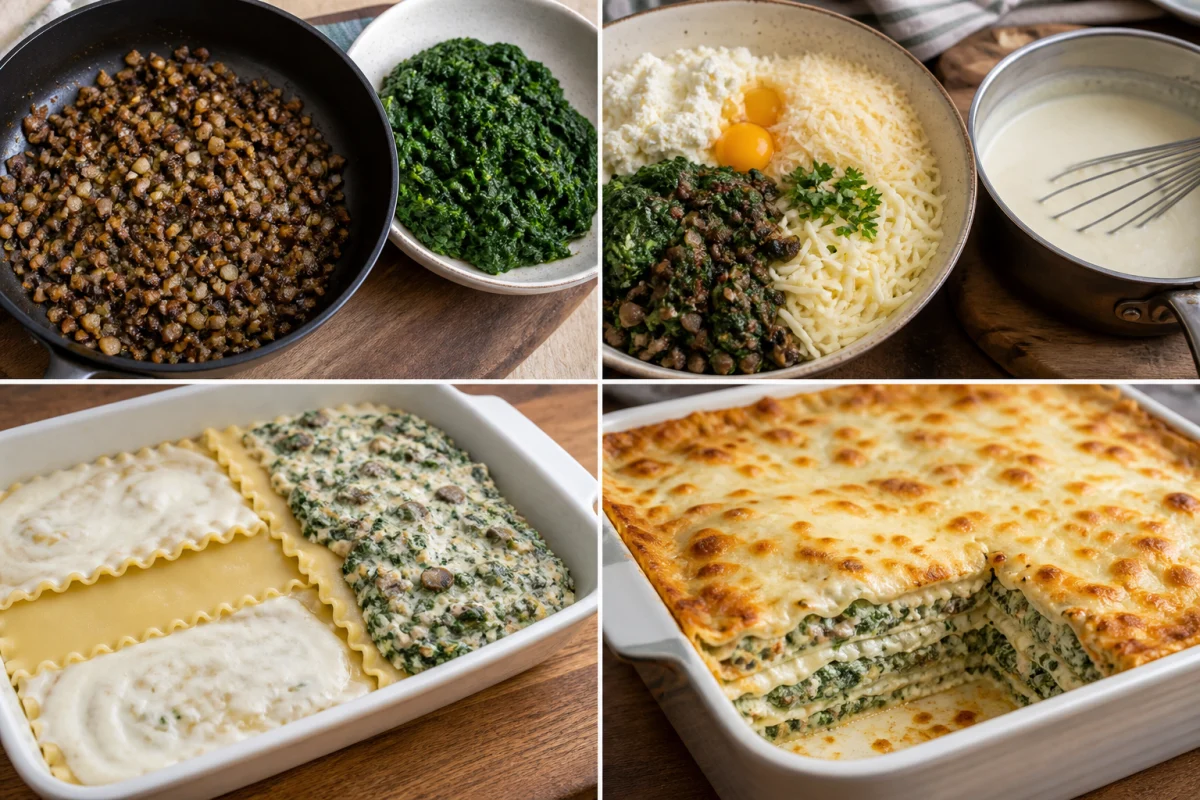
- Dry spinach. Thaw completely and squeeze out as much water as possible.
- Cook noodles. Boil until al dente, drain, cool, and lay flat with a light coating of olive oil.
- Cook vegetables. Sauté onion, garlic, mushrooms, and seasonings until all mushroom moisture evaporates. Stir in spinach and cool.
- Mix filling. Combine ricotta, Parmesan, eggs, parsley, half the mozzarella, and the cooled vegetables.
- Make white sauce. Cook butter and flour for 1 minute, then whisk in milk gradually. Thicken and add Parmesan, nutmeg, salt, and pepper.
- Layer. Alternate sauce, noodles, filling, and more sauce in a greased 9-by-13-inch dish.
- Top. Finish with noodles, remaining white sauce, and mozzarella.
- Bake. Cover and bake at 375°F for 30 minutes, uncover, and bake about 10 minutes more.
- Rest. Wait at least 15 minutes before cutting.
For storage details after serving, the USDA leftovers and food safety guidance.
Squeeze the Spinach Very Dry
Thaw frozen spinach fully, then place it in a clean kitchen towel or cheesecloth. Twist and squeeze repeatedly until liquid stops running. A metal potato ricer used only for this task can also press out water effectively.
Loosen the compact spinach with your fingers after draining. Moisture that remains hidden in the leaves will enter the ricotta mixture and can make the baked layers slide apart.
If you enjoy this recipe, you may also like Quick Easy Chicken Burritos.
Cook the Noodles Until Al Dente
Boil the lasagna noodles in well-salted water according to the package, stopping while they still have a little firmness. They continue cooking in the oven while surrounded by white sauce.
Drain and rinse briefly with cool water to stop the cooking. Lay noodles flat on parchment in a single layer and brush or drizzle lightly with olive oil. Stacked warm noodles stick and tear when separated.
Drive Moisture From the Mushrooms
Melt 4 tablespoons butter in a wide skillet and soften the diced onion with salt and pepper for 2 to 3 minutes. Add garlic for 1 minute, then stir in finely chopped mushrooms and Italian seasoning.
Cook over medium-high heat for 7 to 10 minutes. The mushrooms first release liquid; continue until that liquid has evaporated and the pieces begin to brown. Stopping early is a common cause of watery lasagna.
Cool the Vegetable Mixture
Remove the skillet from heat and stir in the drained spinach. Taste carefully and adjust salt or pepper, remembering that Parmesan and mozzarella add more seasoning later.
Spread the mixture on a plate or shallow tray so it cools faster. Hot vegetables can partially cook the eggs and loosen the ricotta before assembly.
Mix the Ricotta Filling
Combine whole-milk ricotta, 1/2 cup Parmesan, eggs, parsley, and half the mozzarella in a large bowl. Fold in the cooled spinach and mushroom mixture until evenly distributed.
The eggs help the filling set so portions hold their shape. Whole-milk ricotta gives a creamier texture than low-fat. If the ricotta has visible whey in the container, drain it briefly before measuring.
Cook the Roux for One Minute
Melt 5 tablespoons butter in a heavy saucepan over medium heat. Add 5 tablespoons flour and whisk into a smooth paste. Cook for about 1 minute while whisking, without allowing the roux to turn dark.
This short cooking removes the raw flour taste while preserving a pale sauce. Reach into the corners of the pan so no dry flour remains.
Add Milk Gradually
Pour room-temperature milk into the roux a small amount at a time, whisking each addition smooth before adding more. The mixture will first become thick, then loosen as the remaining milk is incorporated.
Continue whisking over medium heat until the sauce reaches a gentle boil and thickens enough to coat a spoon. Scrape the base often so milk solids do not scorch.
Finish the White Sauce Off the Heat
Remove the pan from direct heat and stir in 1/2 cup finely grated Parmesan, nutmeg, salt, and black pepper. Finely grated cheese melts quickly and reduces the chance of a grainy texture.
The sauce should pour easily because the noodles absorb moisture during baking. If it becomes too thick before assembly, whisk in a small splash of milk.
Layer in a Consistent Pattern
Grease a 9-by-13-inch baking dish and spread about 1/2 cup white sauce over the bottom. Add noodles, trimming or overlapping slightly to cover the surface. Spread one-third of the ricotta mixture, then drizzle with about 1/2 cup sauce.
Repeat the noodle, filling, and sauce sequence twice more. Use a measuring cup or divide the filling visually before starting so the early layers do not receive too much.
Seal the Top With Sauce
Place a final noodle layer over the filling, spread the remaining white sauce to every edge, and scatter the reserved mozzarella evenly. Exposed noodles dry and become hard in the oven, so cover all corners.
Spray one side of a sheet of foil with nonstick cooking spray and place that side toward the cheese. The coating helps prevent melted mozzarella from lifting away when the foil is removed.
Bake Covered, Then Uncovered
Bake at 375°F for 30 minutes with the foil in place. Remove it carefully, releasing hot steam away from your face, then bake for about 10 minutes more until the edges bubble and the top begins to brown.
For deeper color, broil for 1 to 2 minutes while watching continuously. Only use a broiler-safe dish and keep the cheese well away from the heating element.
Rest Before Cutting
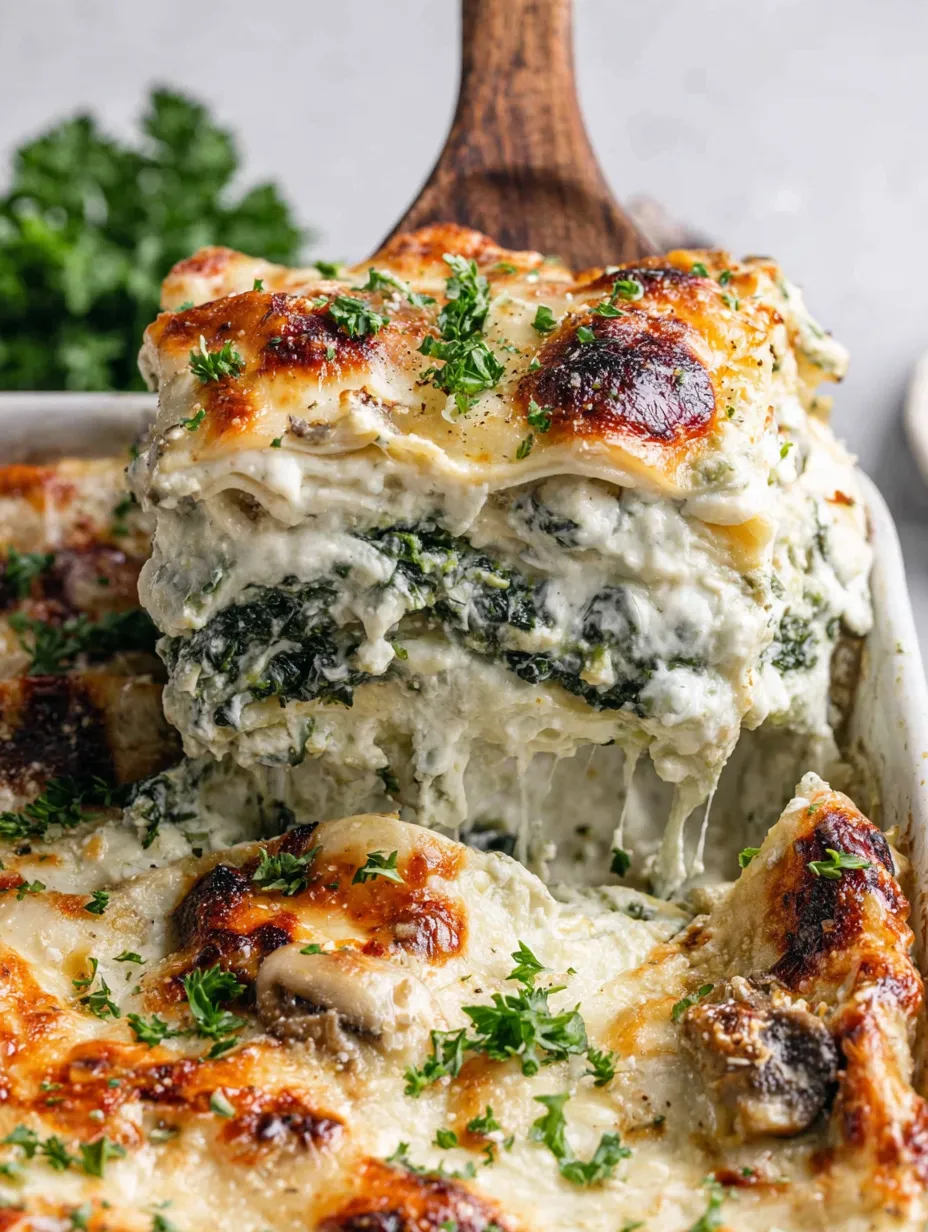
Let the lasagna stand for at least 15 minutes. The white sauce and egg-bound ricotta firm as they cool, allowing the layers to remain distinct. Cutting immediately causes filling to flow into the empty space.
Use a sharp knife to cut through the noodle edges, then lift portions with a broad spatula. Wipe the knife between cuts for cleaner squares.
Make-Ahead and Storage
Assemble the lasagna up to one day ahead, cover, and refrigerate. Bake until the center reaches 165°F, allowing additional time because the dish starts cold. Avoid moving a cold glass dish directly into a hot oven unless the manufacturer says it is safe.
Refrigerate leftovers for up to four days or freeze portions for up to three months. Reheat covered at 350°F until 165°F, uncovering near the end. Thaw frozen portions overnight for more even heating.
Troubleshooting
- Watery layers: Squeeze spinach firmly and cook mushroom liquid away completely.
- Lumpy white sauce: Add milk gradually and whisk each addition smooth.
- Dry top noodles: Spread sauce fully to every edge before adding mozzarella.
- Cheese sticks to foil: Spray the side facing the lasagna.
- Slices collapse: Rest for at least 15 minutes before cutting.
Conclusion
Dry the thawed spinach thoroughly, cook lasagna noodles until al dente, and sauté onion, garlic, and mushrooms until their moisture evaporates. Combine the cooled vegetables with ricotta, eggs, Parmesan, parsley, and mozzarella. Make a gradual butter-flour-and-milk white sauce, layer everything in a 9-by-13-inch dish, bake covered then uncovered at 375°F, and rest before slicing.
Frequently Asked Questions
- → How do I keep spinach mushroom lasagna from becoming watery?
Squeeze thawed spinach very dry, cook mushrooms until their released liquid evaporates, and drain any visible whey from ricotta.
- → Can spinach mushroom lasagna be assembled ahead?
Yes. Assemble, cover, and refrigerate for up to one day, then bake until the center reaches 165°F.
- → Why should lasagna rest before cutting?
A 15-minute rest lets the white sauce and ricotta filling set so the layers hold together in neat portions.
- → Can spinach mushroom lasagna be frozen?
Yes. Freeze cooled portions for up to three months, thaw overnight, and reheat covered to 165°F.