
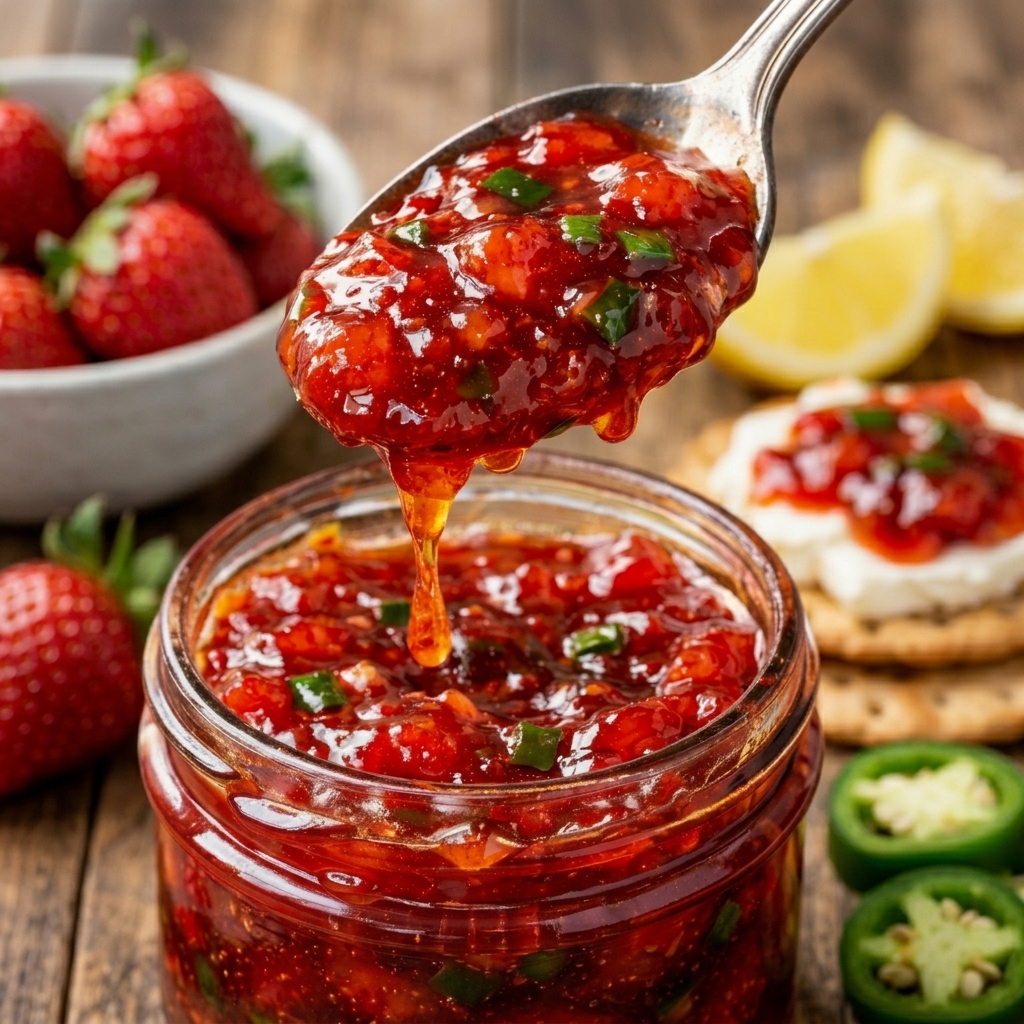
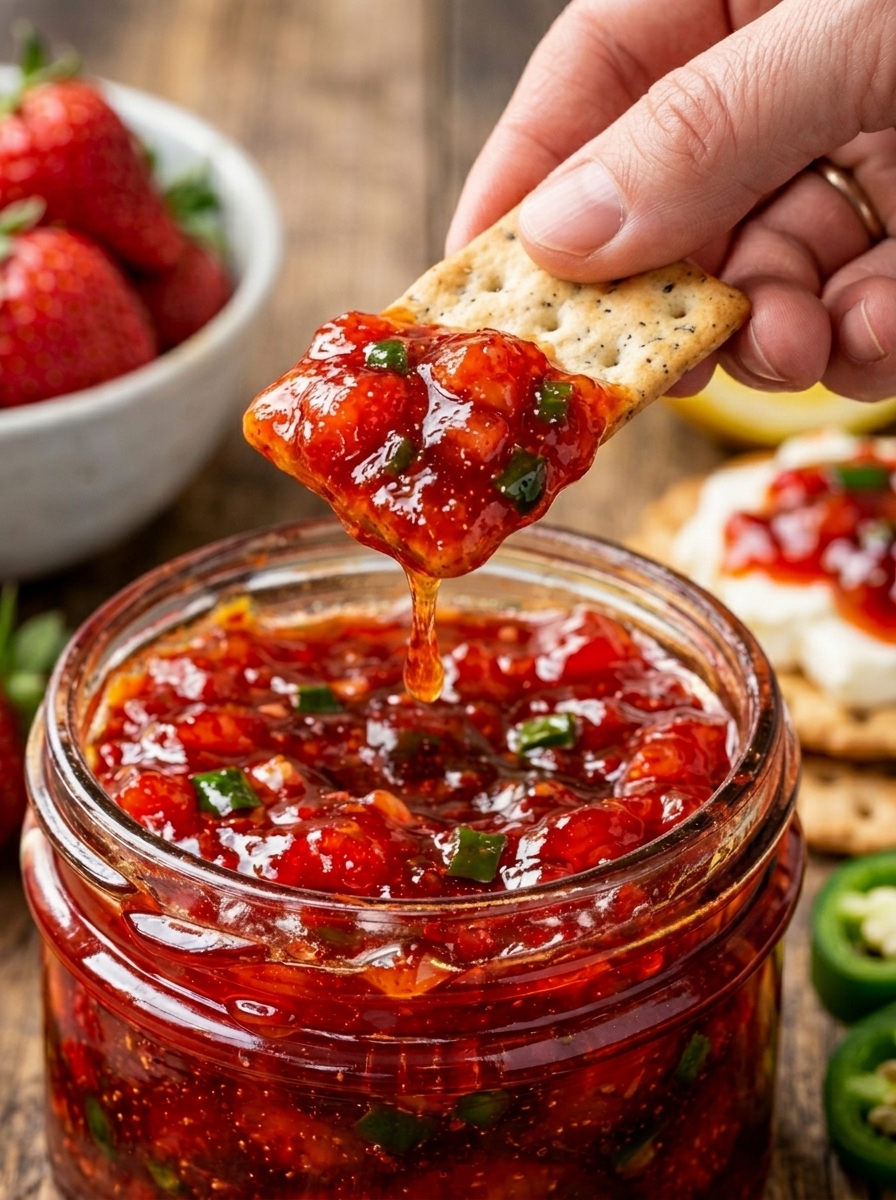
Strawberry jalapeño jam balances ripe berries with a measured amount of fresh green chile. This small refrigerator batch uses five ingredients and no commercial pectin: strawberries, jalapeños, sugar, lemon juice, and salt simmer until glossy and naturally thickened.
The result is sweet first, followed by a gentle, adjustable warmth. Removing the pepper ribs and seeds keeps the heat moderate, while leaving some in produces a stronger finish. A cold-plate test is more reliable than judging the hot jam by sight because the mixture continues to thicken as it cools.
Five Ingredients for a Small Batch
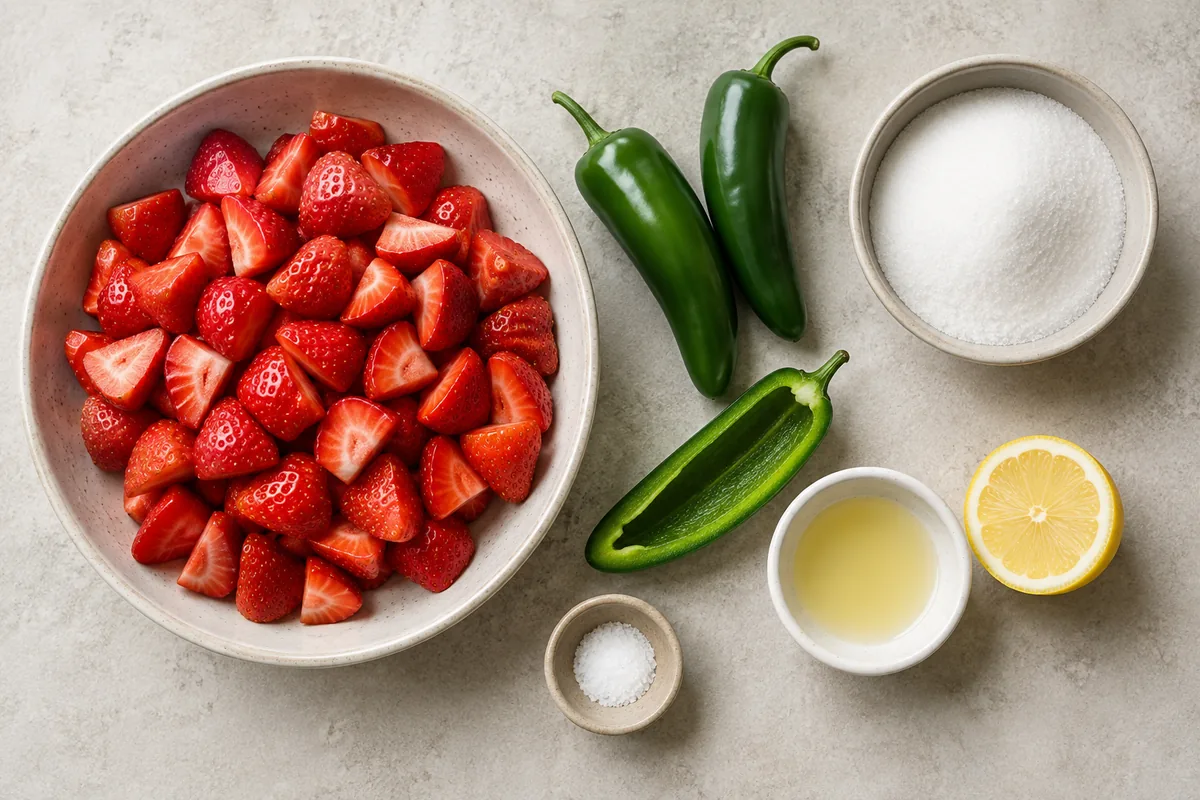
Measure 3 cups fresh strawberries after removing the stems and quartering the fruit. Add 1/2 cup finely diced jalapeños, usually 2 to 3 medium peppers, 1/2 cup granulated sugar, 1 tablespoon fresh lemon juice, and 1/8 teaspoon salt.
- Strawberries: Fragrant, red berries with firm flesh provide the cleanest fruit flavor and enough structure to leave small pieces in the jam.
- Jalapeños: Heat varies from pepper to pepper. Removing every pale rib and seed makes the batch milder; retaining a little increases warmth.
- Sugar: The modest amount sweetens, draws juice from the berries, and supports the thick texture. Reducing it further changes both flavor and consistency.
- Lemon juice: Fresh juice brightens the berries and supplies acidity that helps their natural pectin work during cooking.
- Salt: Just 1/8 teaspoon sharpens the fruit and pepper flavors without making the spread taste savory.
If you enjoy this recipe, you may also like Old Fashioned Banana Pudding.
How to Make Strawberry Jalapeño Jam
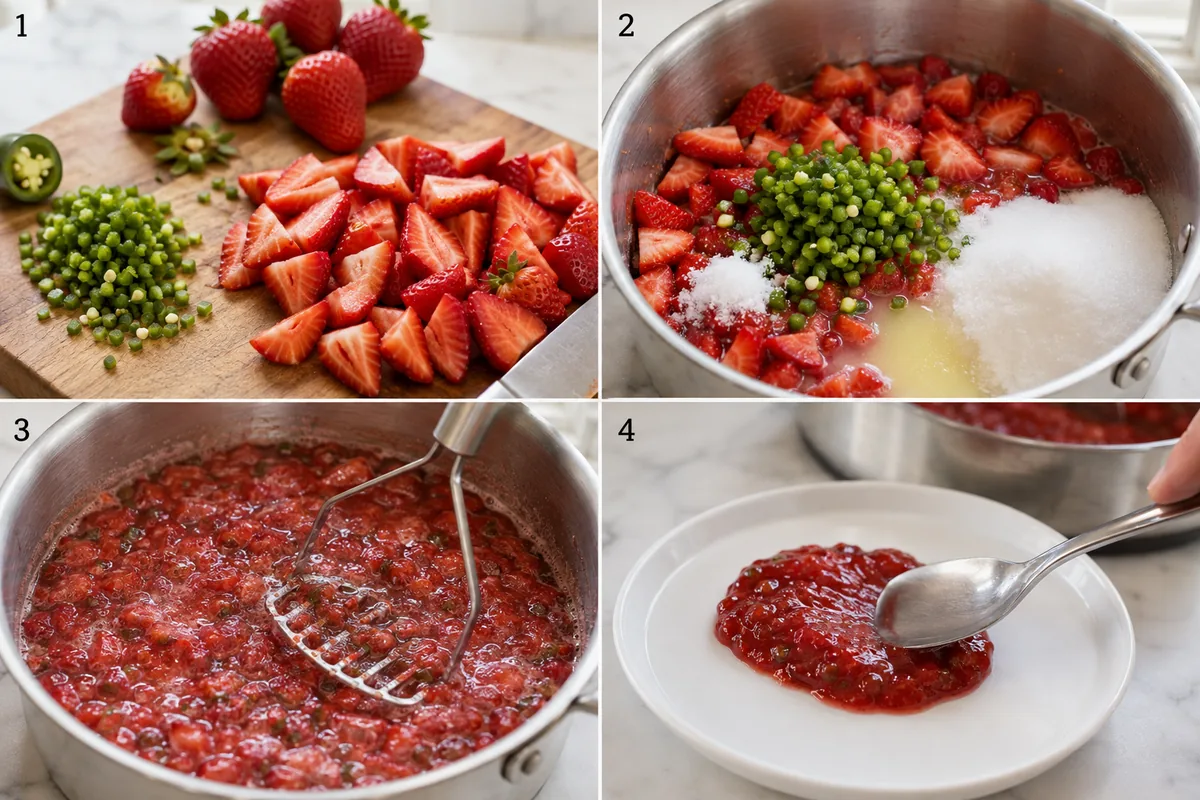
- Prepare a test plate. Put a small clean plate in the freezer before cooking so it is ready when the jam begins to thicken.
- Prepare the produce. Rinse and dry the strawberries, remove their green tops, and cut them into quarters. Wearing gloves, halve the jalapeños, remove ribs and seeds for moderate heat, and dice the flesh very finely.
- Combine. Put the strawberries, jalapeños, sugar, lemon juice, and salt in a large heavy-bottomed saucepan. Stir and let the mixture stand for several minutes to draw out berry juice.
- Heat and mash. Set the pan over medium-high heat. As liquid appears, mash the berries with a potato masher, leaving as much or as little texture as you prefer.
- Boil, then simmer. Bring the entire surface to a rolling boil, stirring frequently. Reduce the heat to maintain a steady simmer and cook for about 20 minutes, stirring more often as it thickens.
- Test the set. Spoon a small amount onto the frozen plate, wait about 30 seconds, and push it with a fingertip. The jam is ready when the surface wrinkles slightly and the trail closes slowly.
- Cool safely. Remove from the heat and let the jam cool briefly. Transfer to clean heat-safe jars, refrigerate once no longer steaming, and keep chilled.
For storage details after serving, the USDA leftovers and food safety guidance.
Control the Jalapeño Heat
Most of a jalapeño's concentrated heat sits in the pale inner ribs, with seeds picking up capsaicin through contact. Scraping out both creates a gentler jam that still tastes distinctly peppery. For medium heat, leave a small section of rib in one pepper. It is easier to add warmth intentionally than to correct an overly hot finished batch.
Wear disposable gloves while cutting and avoid touching your face. Wash the knife, board, and your gloved hands with hot soapy water when finished. Dice the pepper to pieces roughly the size of grains of rice so the heat is distributed; larger chunks create unexpectedly spicy bites.
If you enjoy this recipe, you may also like Strawberry Banana Pudding.
Choose and Prepare the Strawberries
Use berries that smell sweet and have red color near the stem. Very pale fruit makes a flatter jam, while damaged or moldy berries should be discarded rather than trimmed into the batch. Rinse before hulling so water does not enter the cut fruit, then dry well.
Quartering gives the masher manageable pieces and lets sugar draw out juice evenly. Small berries may only need halving; very large ones can be cut into six pieces. Exact shape matters less than keeping the pieces similar enough to soften at the same rate.
Use a Wide, Heavy Saucepan
A heavy base spreads heat and reduces scorching, while high sides leave room for bubbling. The pan should be much larger than the uncooked mixture appears to require. Fruit foam rises quickly when the jam reaches a rolling boil, and an undersized pot can overflow.
Stir with a heat-resistant spatula that can sweep the corners and bottom. Early in cooking, occasional stirring is enough. Near the end, sugar and fruit solids are concentrated, so stir more frequently and lower the heat if you notice sticking. Do not walk away during the final minutes.
Understand the Cold-Plate Test
Hot jam always looks thinner than cooled jam. To test without overcooking the whole batch, remove the saucepan from the burner, place a small spoonful on the frozen plate, and wait about 30 seconds. Push through the sample. A ready jam wrinkles at the leading edge and does not immediately flood the path.
If the sample runs like syrup, return the pan to a steady simmer for 2 minutes and test again with a clean cold area of the plate. A candy thermometer can provide another cue near 220°F at sea level, but altitude changes boiling temperature. The plate test shows the actual cooled texture.
Refrigerator Jam, Not a Canning Formula
This recipe is written for refrigerated storage. Pouring hot jam into a jar does not make it shelf-stable, and the jalapeño changes the fruit-and-acid balance compared with plain strawberry jam. Keep every jar refrigerated and use clean utensils each time.
For shelf-stable preservation, use a laboratory-tested strawberry-pepper jam recipe from a university extension service or other recognized canning authority and follow its jar size, acid, headspace, elevation adjustment, and processing time exactly. Do not adapt this refrigerator formula for water-bath canning.
Ways to Serve the Sweet Heat
Spread the jam on toast, biscuits, English muffins, or scones. Its gentle heat is especially good with cream cheese on a bagel or with brie, goat cheese, sharp cheddar, or manchego on a cheese board. Serve it in a small bowl so crumbs do not enter the storage jar.
For savory meals, brush a little onto cooked pork tenderloin or grilled chicken during the last moments of cooking, or spoon it beside roasted meat after it comes off the heat. It can also brighten a turkey sandwich. For dessert, use a restrained spoonful over vanilla ice cream or plain cheesecake.
Troubleshooting
- Jam remains runny after cooling: Return it to a clean pan, simmer a few more minutes, and repeat the cold-plate test.
- Jam becomes too firm: It cooked too long. Warm a serving gently with a teaspoon of water, but do not dilute the entire stored batch repeatedly.
- Bottom scorches: Use a heavy pan, reduce the heat after boiling, and stir more often near the end.
- Heat is uneven: Dice the jalapeño more finely and stir thoroughly before filling the jars.
- Flavor tastes flat: Confirm the berries were ripe and the measured lemon juice and salt were included.
Cooling and Storage
The jam thickens noticeably while cooling, so stop cooking when the cold sample reaches a soft spreadable set. Transfer it to clean heat-safe jars with room at the top, leave the lids loose until the strongest heat dissipates, then cover and refrigerate. Follow safe handling for hot glass and do not place a very hot jar directly on a cold surface.
Keep refrigerated for up to 2 to 3 weeks. Always use a clean spoon, return the jar promptly to the refrigerator, and discard the jam if you see mold, fermentation bubbles, a swollen lid, or an unusual odor. For longer storage, freeze in a freezer-safe container with expansion space and thaw in the refrigerator.
Conclusion
Finely dice seeded jalapeños, simmer them with ripe strawberries, sugar, lemon, and salt, and use a frozen-plate test to judge the set. Cool in clean jars and keep this small-batch jam refrigerated; use a separately tested formula if shelf-stable canning is the goal.
Frequently Asked Questions
- → How can I make strawberry jalapeño jam milder?
Remove all seeds and pale inner ribs from the peppers and use 2 rather than 3 jalapeños. Dice the flesh finely so no bite has a concentrated piece.
- → Does this jam need commercial pectin?
No. The recipe relies on the strawberries' natural pectin, lemon juice, sugar, and evaporation during the simmer. Use the cold-plate test rather than the clock alone.
- → Can I water-bath can this recipe?
This formula is intended for refrigerator storage, not shelf-stable canning. Use a tested pepper-jam recipe from a recognized canning authority for water-bath processing.
- → How long does strawberry jalapeño jam keep?
Keep it in a clean covered jar in the refrigerator for up to 2 to 3 weeks, using a clean spoon each time. Discard it at any sign of mold or fermentation.