

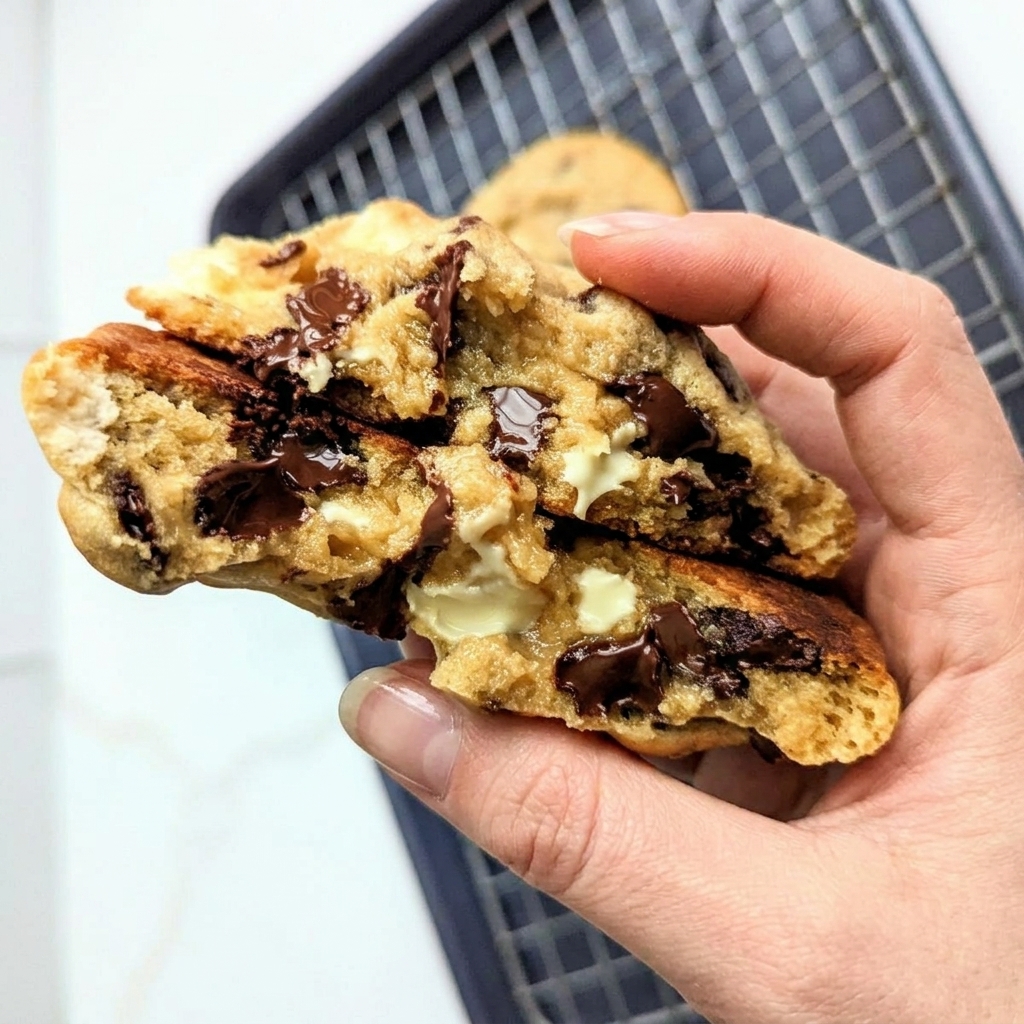
Triple chocolate chip cookies put white, semisweet, and dark chocolate into one thick bakery-style cookie. Despite the name, the dough itself is a classic pale brown-sugar dough with no cocoa. Using both all-purpose flour and cake flour keeps the oversized cookies sturdy at the edge and tender through the middle.
Each portion weighs about 140 grams, so these are far larger than everyday drop cookies. A full hour of chilling and a hot 400°F oven help the mounds bake upward before they spread. The goal is a lightly browned rim, an underdone-looking center, and distinct pieces of all three chocolates in every cookie.
Ingredients for Triple Chocolate Chip Cookies
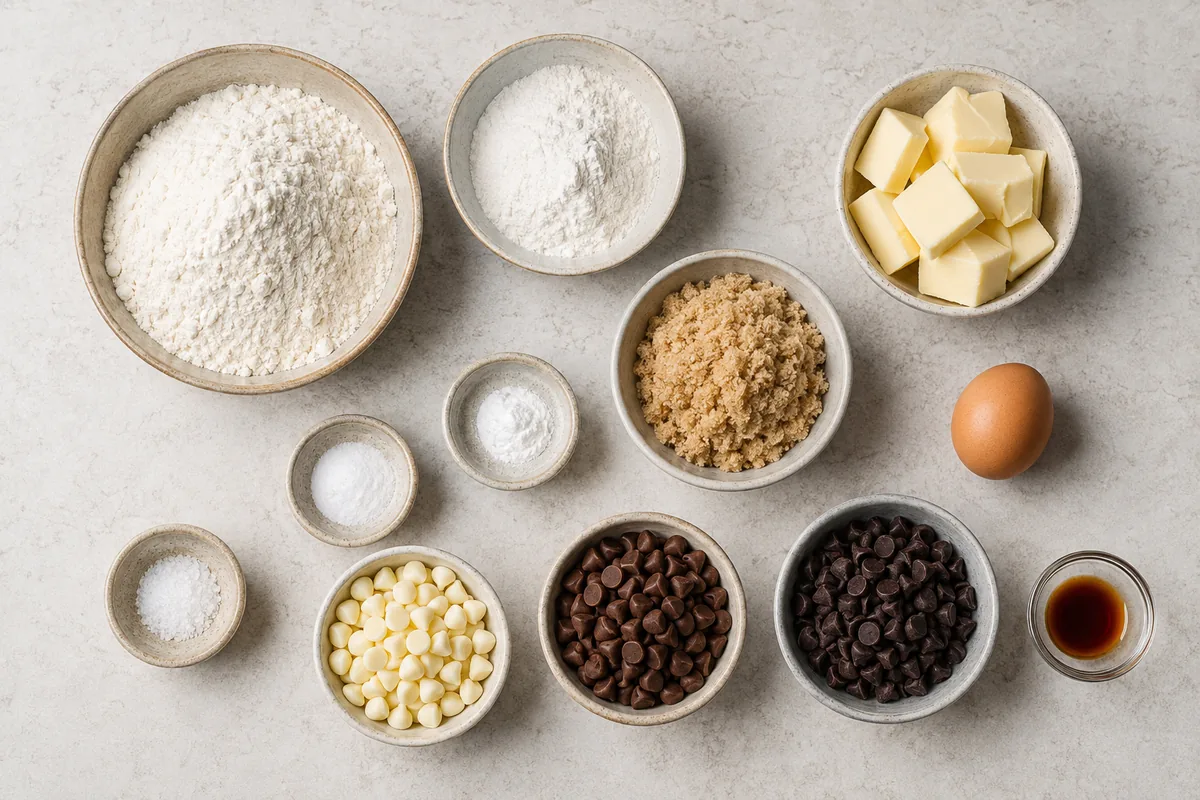
The dry mixture contains 1 cup all-purpose flour (120 grams), 3/4 cup cake flour (80 grams), 1/2 teaspoon baking powder, 1/2 teaspoon baking soda, and 1/2 teaspoon kosher salt. The dough base uses 1/2 cup softened butter (113 grams), 2/3 cup packed light brown sugar (130 grams), 1 room-temperature egg, and 1 tablespoon vanilla.
Fold in 1/4 cup white chocolate chips (40 grams), 1/4 cup semisweet chocolate chips (40 grams), and 1/2 cup dark chocolate chips (80 grams). The unequal amounts are deliberate: dark chocolate provides the main cocoa flavor, while smaller portions of white and semisweet chocolate create contrast without making the cookie excessively sweet.
- Cake flour: Its lower protein level softens the crumb of a cookie large enough to otherwise become bready.
- Brown sugar: It brings moisture and caramel notes while supporting a chewy center.
- Two leaveners: Baking powder adds lift; baking soda encourages spread and browning.
- Room-temperature egg: It blends into the butter evenly instead of causing the mixture to look curdled.
If you enjoy this recipe, you may also like The Ultimate Sweet Heat Strawberry Jalapeño Jam.
How to Make the Cookies
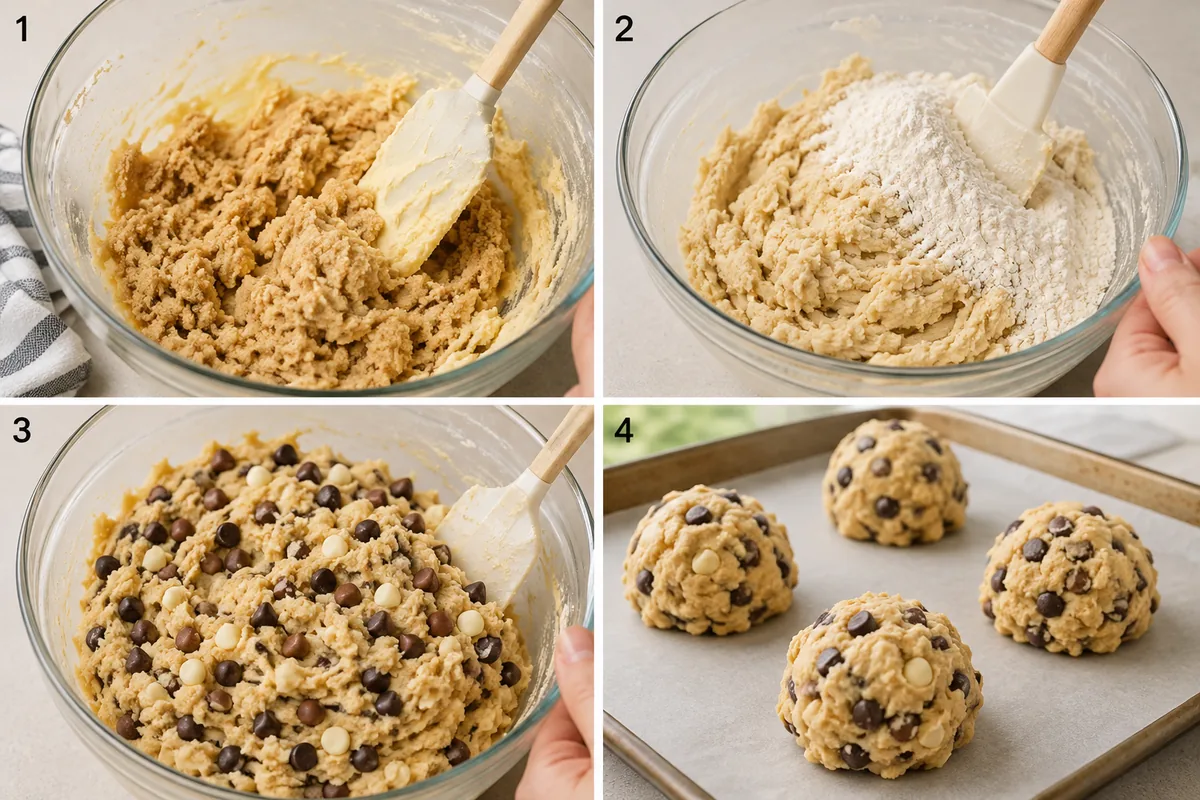
- Whisk the dry ingredients. In a medium bowl, combine the all-purpose flour, cake flour, baking powder, baking soda, and kosher salt until evenly blended.
- Cream butter and sugar. Beat the softened butter with the packed brown sugar for 2 to 3 minutes, until smooth and slightly lighter.
- Add egg and vanilla. Mix in the room-temperature egg and tablespoon of vanilla only until combined. Scrape the bowl once.
- Make the dough. Add the dry mixture and mix on low speed or fold by hand until the last streaks of flour disappear. The dough should remain pale golden; there is no cocoa in the recipe.
- Add three chocolates. Fold in the white, semisweet, and dark chocolate chips, working from the bottom of the bowl so the types stay evenly distributed.
- Chill. Cover the dough and refrigerate for at least 1 hour. It may be chilled overnight for a deeper, more developed flavor.
- Heat the oven. Place a rack in the middle, heat the oven to 400°F, and line a light-colored baking sheet with parchment.
- Portion large cookies. Weigh about 140 grams of dough for each cookie. Shape into tall, rough mounds rather than smooth, flattened balls and space them at least 2 inches apart.
- Bake and cool. Bake for 10 to 11 minutes, until the edges are lightly browned while the centers still look underdone. Rest on the pan for 5 minutes before moving carefully to a rack.
For storage details after serving, the USDA leftovers and food safety guidance.
Why Two Flours Work Better
All-purpose flour gives the cookie enough protein to hold an oversized shape. Cake flour has less protein and dilutes that strength, producing a softer bite through a thick center. Together they create a structure that is neither fragile like a very tender cake nor firm like a bread dough.
Weighing is especially helpful because 3/4 cup cake flour is easy to compact. If using cups, fluff each flour, spoon it into the cup, and level without tapping. Do not substitute an equal volume of bread flour; its higher protein can make the center dense. If cake flour is unavailable, a tested homemade substitute may work, but commercial cake flour gives the most consistent texture.
If you enjoy this recipe, you may also like Banana Pudding Banana Split Boats.
Cream without Over-Aerating
The butter should be cool-soft: a fingertip leaves an indentation, but the surface does not look oily. Beat it with brown sugar for 2 to 3 minutes, enough to remove dense lumps and introduce modest air. Excessive whipping can make a large cookie rise and collapse unevenly.
Add the room-temperature egg and vanilla together, then stop as soon as the mixture is cohesive. If the egg is cold, place it in a bowl of warm tap water for 5 to 10 minutes before cracking. Scrape the bowl after mixing because butter often clings beneath the beater and leaves uneven pockets in the dough.
Distribute Three Chocolates in Every Portion
Measure the chocolates separately before adding them. White chocolate supplies creamy sweetness, semisweet bridges the flavors, and the larger quantity of dark chocolate keeps the overall profile balanced. Chips hold visible shapes; chopped bars make irregular pools. Either style works if the total weights stay the same.
Fold from the bottom and rotate the bowl after each pass. When portioning, look at the cut face of each mound and redistribute a few pieces if one cookie has only white chips or another has almost all dark. Press loose pieces onto the surface rather than leaving them on the baking sheet, where they can scorch.
Chill Fully before the Hot Bake
A 140-gram mound needs a firm exterior when it reaches the oven. The one-hour chill solidifies the butter and hydrates both flours, slowing the initial spread. An overnight rest deepens the brown-sugar flavor; keep the bowl tightly covered so the surface does not dry.
The 400°F oven sets the outer ring quickly while the middle remains soft. Confirm the oven has fully preheated and bake only a few cookies per tray so hot air can circulate. Do not place chilled dough on a pan that is still hot from a previous batch. Cool the pan completely or alternate between two sheets.
Shape and Bake 140-Gram Cookies
A scale makes eight to ten consistent cookies, depending on the final dough weight. Build each mound upward, leaving a craggy top. A tall shape produces a thick middle, and the rough surface creates appealing ridges where the chocolates stay visible. Do not compress the dough more than needed to hold it together.
At 10 to 11 minutes, the outside should be lightly browned but the middle may look glossy in small areas. That is expected. The pan rest carries heat inward and makes the cookie safe to lift. Moving it immediately can break the center; baking until it looks firm in the oven can leave it dry after cooling.
Troubleshooting
- Cookies spread flat: Chill for the full hour, verify the butter was not melted, and use a cool baking sheet.
- Centers stay raw: Confirm each portion is near 140 grams, use the middle rack, and allow the full 5-minute pan rest. Add one minute for the next tray if necessary.
- Cookies are dry: Flour may have been packed or the cookies baked until the centers looked completely done.
- Bottoms burn: Choose a light aluminum pan, parchment, and the center rack; dark nonstick sheets absorb more heat.
- Chips collect in one area: Fold from the bottom and check each portion while shaping.
Serving, Storage, and Make-Ahead Options
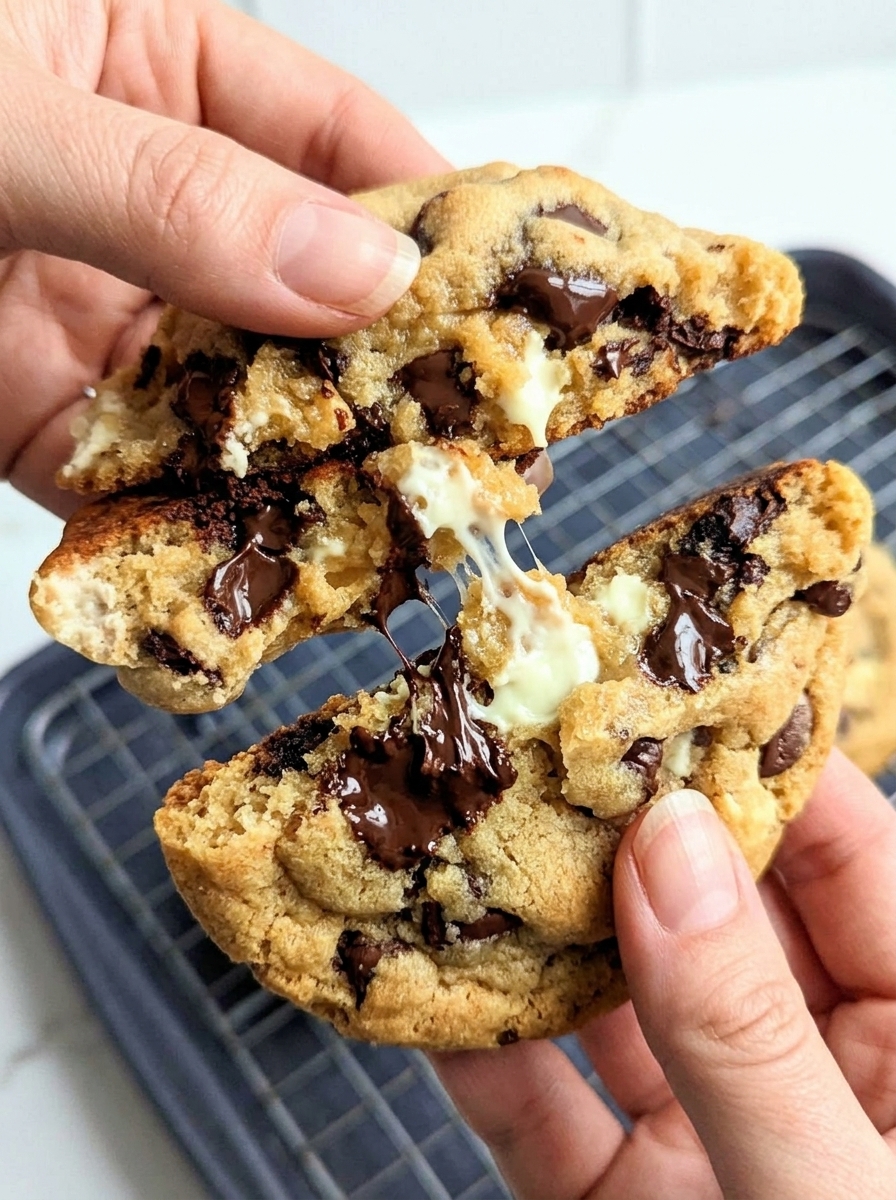
One cookie is large enough to share. Let them cool until the centers can support a clean break, then serve with coffee or cold milk. A few seconds of gentle warming will soften the chocolate again, but avoid overheating because white chocolate melts faster than the surrounding dough.
Store cooled cookies airtight at room temperature for up to five days. Slip parchment between layers and keep the container away from direct sun or a warm appliance. Refresh a cookie in a 300°F oven for about 3 minutes for a lightly crisp edge.
The covered dough can rest in the refrigerator overnight. For longer storage, freeze 140-gram portions until firm and transfer them to a freezer bag for up to two months. Thaw overnight in the refrigerator before baking for the most predictable spread. If baking directly from frozen, lower speed is not possible; instead allow a few minutes at room temperature and expect to add 1 to 3 minutes while watching the edges.
Conclusion
Combine all-purpose and cake flour for a sturdy but tender oversized cookie, chill the pale brown-sugar dough for at least one hour, and distribute white, semisweet, and dark chips evenly. Shape tall 140-gram mounds and bake hot until the rims brown while the centers remain soft.
Frequently Asked Questions
- → Does triple chocolate chip cookie dough contain cocoa?
No. Triple chocolate refers to the white, semisweet, and dark chocolate chips. The dough is a pale brown-sugar cookie dough with no cocoa powder.
- → Why use cake flour and all-purpose flour together?
All-purpose flour provides enough structure for the large cookie, while lower-protein cake flour keeps its thick center tender rather than bready.
- → How large should each cookie be?
Portion about 140 grams of dough per cookie and shape it into a tall rough mound. The recipe yields roughly eight to ten large cookies.
- → Can triple chocolate cookie dough chill overnight?
Yes. Cover it tightly and refrigerate overnight. The longer rest firms the butter and can deepen the brown-sugar flavor.