

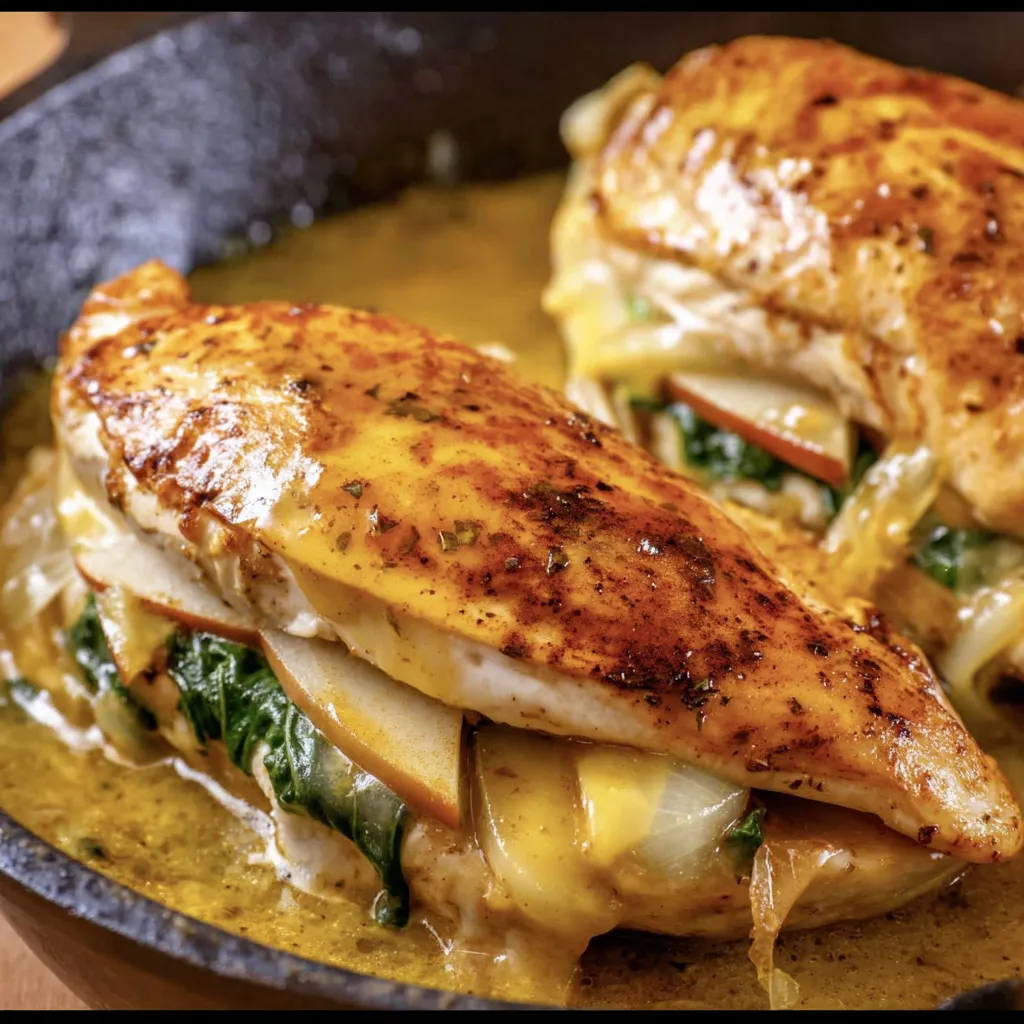
Apple and Brie stuffed chicken pairs four tender chicken breasts with tart green apple, creamy Brie, optional greens, thyme, and a two-mustard crust. The filled breasts are seared until browned, then covered and gently finished in the same skillet so the cheese melts while the chicken stays juicy.
The recipe serves four and takes about 15 minutes to prepare and 15 minutes to cook. Careful butterflying, restrained filling, and steady heat are the keys. The pan juices become a simple sauce for spooning over each serving.
Ingredients for Apple and Brie Stuffed Chicken
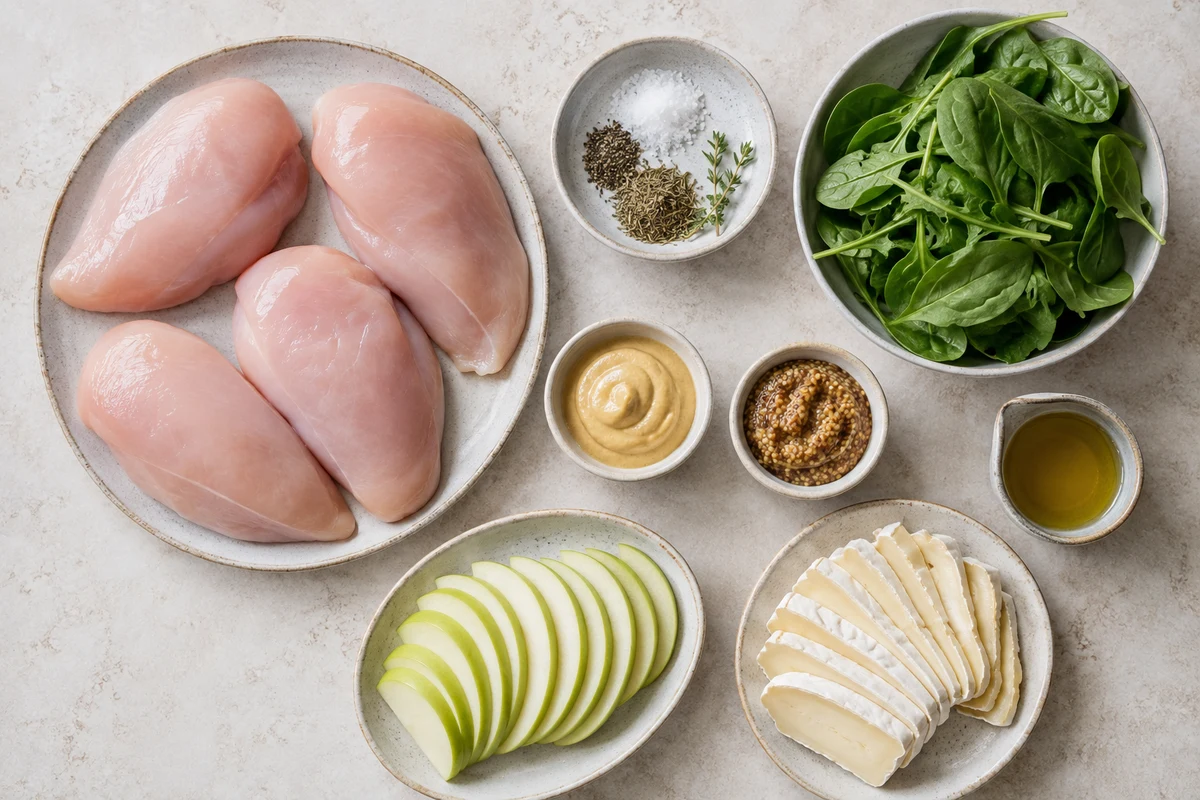
Use 4 boneless, skinless chicken breasts weighing about 6 ounces each. Season with a heaping ½ teaspoon kosher salt, ⅓ teaspoon black pepper, and ½ teaspoon dried thyme or 2 teaspoons fresh thyme. A handful of baby spinach or arugula is optional.
For the filling, thinly slice ½ green apple into about 12 pieces and cut ½ wheel Brie into about 12 slices. The crust combines 2 tablespoons Dijon mustard with 1 heaping tablespoon coarse-ground mustard. You also need 1 tablespoon extra-virgin olive oil for searing.
If you enjoy this recipe, you may also like Bacon Cheeseburger Grilled Cheese Casserole.
How to Make Apple and Brie Stuffed Chicken
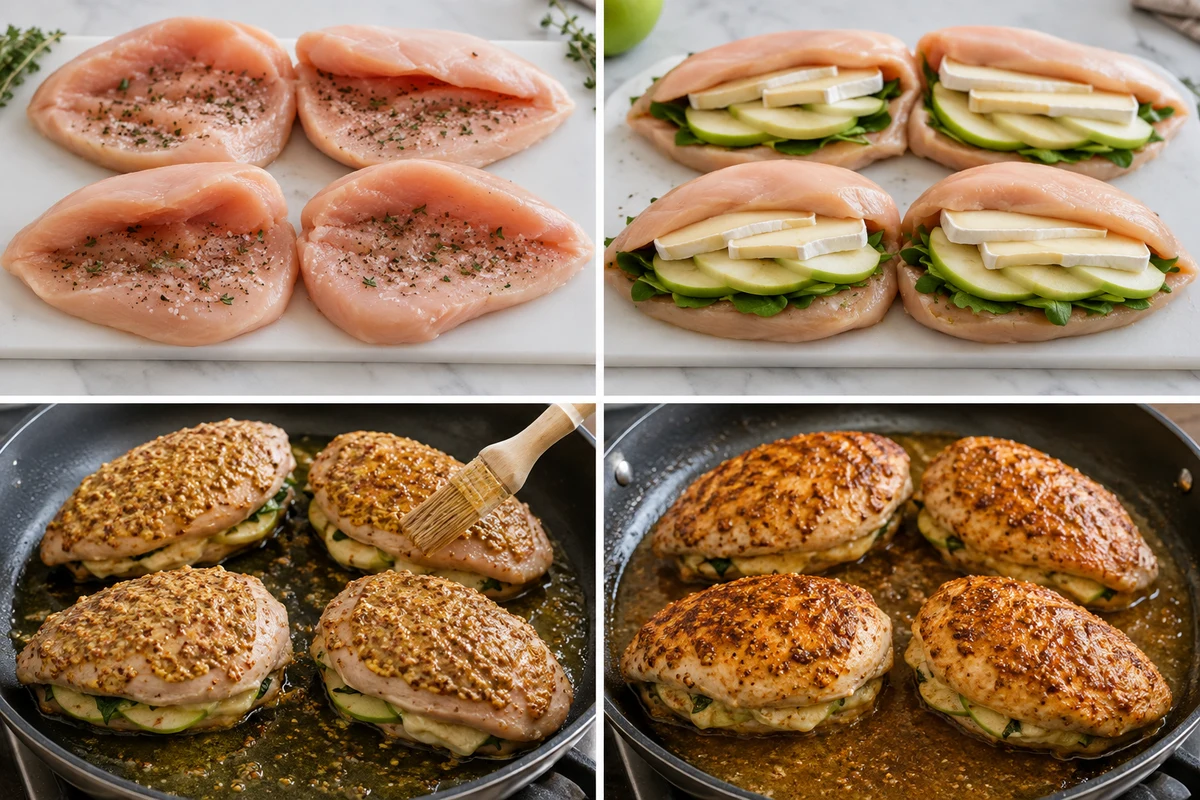
- Butterfly. Slice each breast horizontally, stopping before the far edge so it opens like a book.
- Season and fill. Season the insides with salt, pepper, and thyme. Add optional greens, then about 3 apple slices and 3 Brie slices per breast.
- Close. Fold each breast over. Secure with toothpicks if desired.
- Coat. Mix both mustards and brush half over the tops.
- Sear. Heat olive oil over medium-high. Put chicken mustard-side down in the skillet and brush the exposed sides with the remaining mustard.
- Brown. Sear 3 to 4 minutes per side, flipping carefully.
- Finish. Cover, reduce heat to just under medium, and cook 5 to 8 minutes more, depending on thickness, until cooked through.
- Serve. Spoon the pan sauce over the hot chicken.
For storage details after serving, the USDA leftovers and food safety guidance.
Butterfly Without Cutting Through
Place one breast flat and stabilize it with your palm held safely above the knife. Cut horizontally through the thickest side, keeping the blade parallel to the board. Stop before reaching the opposite edge so the two halves remain joined by a hinge.
Open the chicken like a book and repeat with the other three pieces. Even thickness helps the four portions cook at a similar rate. A sharp knife creates a cleaner pocket and requires less pressure than a dull blade.
If you enjoy this recipe, you may also like Honey Sesame Chicken and Broccoli.
Season the Interior
Distribute the heaping ½ teaspoon kosher salt, ⅓ teaspoon black pepper, and thyme across the opened interiors. Season before adding the filling so flavor reaches the chicken beneath the apple and cheese.
If using the optional handful of baby spinach or arugula, place a light layer on one side of each breast. Spinach is mild, while arugula contributes a peppery note. Do not create a bulky mound that prevents the chicken from closing.
Layer Apple and Cold Brie
Divide the approximately 12 thin green-apple slices evenly, arranging about three on each portion. Green apple keeps a pleasant tartness against the rich Brie and thin pieces warm through during the short skillet cook.
Add about three of the 12 Brie slices to every breast. Cold cheese is easier to slice and position. Fold the unfilled half over the layers and press gently. Toothpicks are optional, but they can support a piece with a loose edge; remember to remove them before serving.
Mix and Apply the Mustard Coating
Stir 2 tablespoons Dijon mustard with 1 heaping tablespoon coarse-ground mustard until evenly combined. Brush half over the upward-facing side of all four closed breasts. The Dijon supplies smooth tang while the coarse mustard adds visible texture.
Reserve the other half for the exposed sides after the chicken enters the skillet. Applying the coating in two stages keeps mustard on both surfaces without making the filled breasts difficult to handle.
Sear Both Sides Carefully
Heat 1 tablespoon extra-virgin olive oil in a large skillet over medium-high heat. Once hot, lower the breasts mustard-side down. Brush the remaining mustard over the upward sides and leave the first surface undisturbed for 3 to 4 minutes.
Flip each breast carefully so the filling remains inside, then sear the second side for another 3 to 4 minutes. Work with enough space to turn each piece cleanly; crowding makes browning and safe handling harder.
Cover and Finish Gently
After both sides are browned, cover the skillet and reduce the heat to just under medium. Continue cooking for 5 to 8 minutes. Thicker portions need the longer end of the range, while thinner ones may finish sooner.
Check the thickest chicken area rather than pushing into the melted center. Poultry should reach 165°F. Avoid extending the cook once it is done, because lean breast meat dries when overcooked.
Serve with the Pan Juices
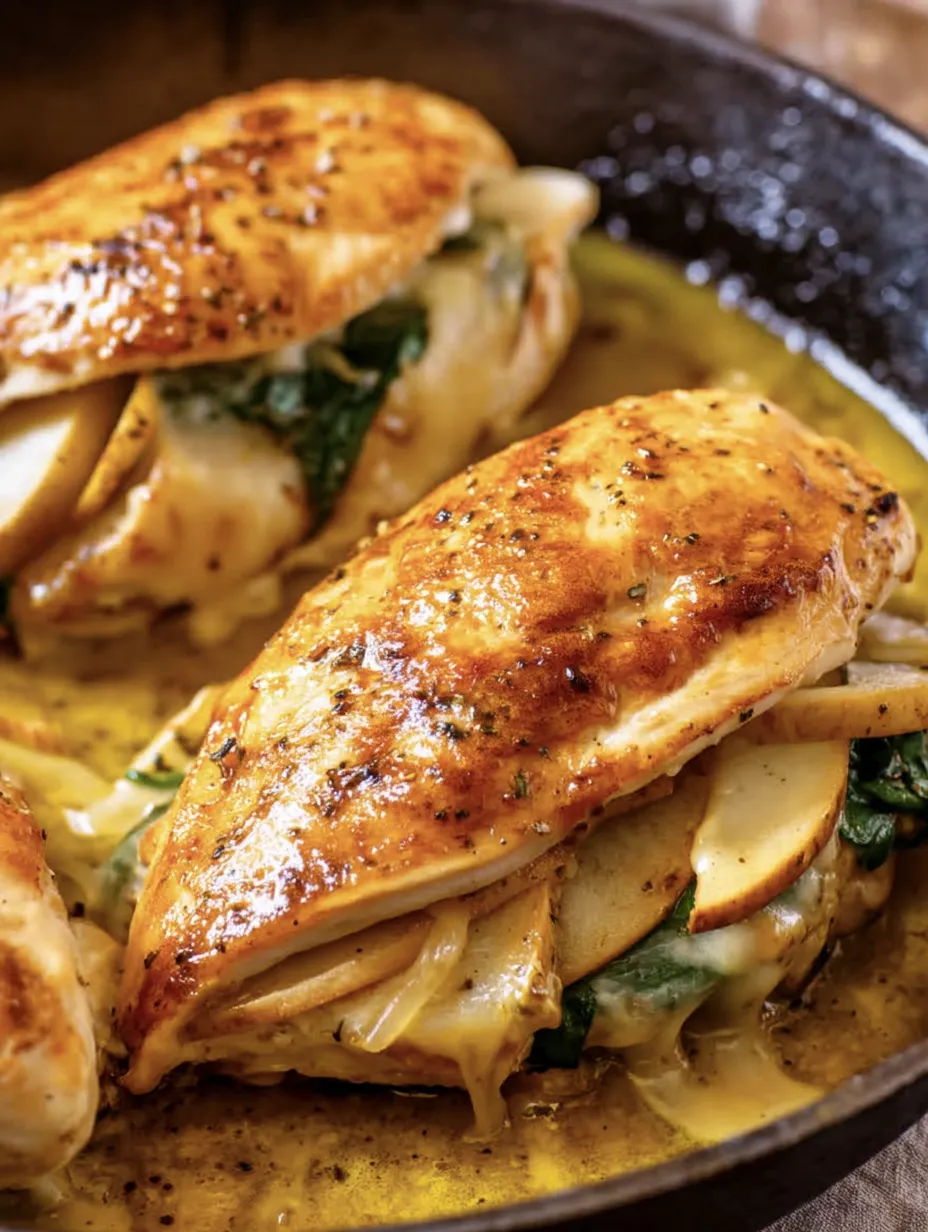
Transfer the cooked chicken to plates and spoon the savory liquid from the skillet over each portion. The juices carry mustard, thyme, and browned flavors, so they complete the dish without a separate sauce.
Serve hot while the Brie is melted. Mashed potatoes or rice can catch the pan sauce, while a simple green side keeps the focus on the apple-and-cheese filling.
Storage and Reheating
Refrigerate leftovers in a covered container for up to 3 days. Keep any pan juices with the chicken to help protect it from drying. The stuffed breasts can also be chilled and sliced over a salad.
Reheat gently in a covered skillet or use reduced microwave power. High heat can overcook the chicken before the Brie center becomes warm.
Conclusion
Butterfly four 6-ounce chicken breasts without cutting through. Season inside with salt, pepper, and thyme; add optional greens, then about three thin green-apple slices and three Brie slices per breast. Fold closed. Mix Dijon and coarse mustard, brush half on top, and sear mustard-side down in olive oil over medium-high heat. Brush the other side, cook 3 to 4 minutes per side, then cover, reduce heat to just under medium, and finish for 5 to 8 minutes. Serve with pan juices.
Frequently Asked Questions
- → How do I butterfly chicken without cutting it in half?
Slice horizontally through the thick side with the blade parallel to the board, stopping before the far edge so a connected hinge remains.
- → How much apple and Brie goes in each breast?
Divide about 12 slices of each across four breasts, using roughly three thin apple slices and three Brie slices per portion.
- → Do stuffed chicken breasts need toothpicks?
No. Toothpicks are optional if the folded chicken stays closed. Use them for loose edges and always remove them before serving.
- → How do I know the stuffed chicken is cooked?
After searing and 5 to 8 covered minutes, verify 165°F in the thickest chicken meat without placing the thermometer in the filling.