

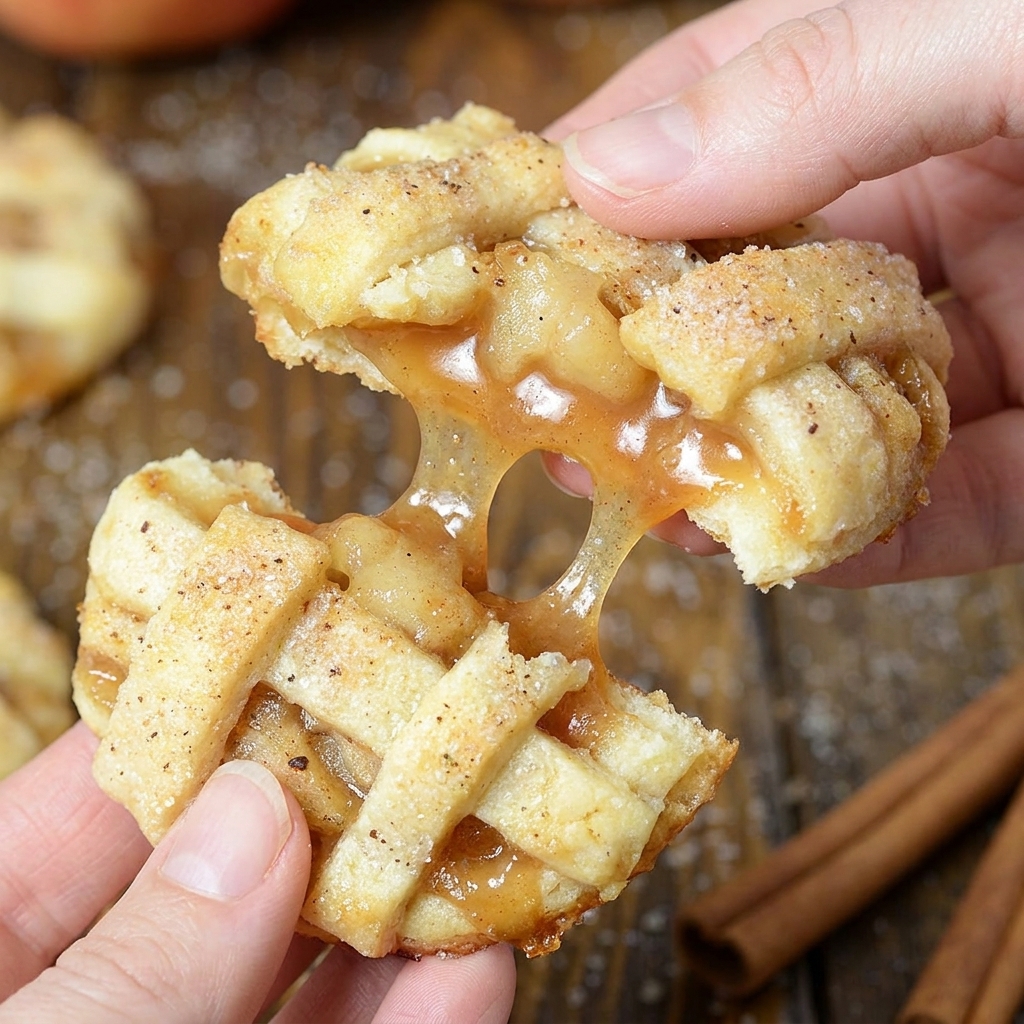
Apple pie cookies turn a full caramel apple pie into small hand-held rounds. Flaky pastry surrounds a layer of caramel and finely chopped cinnamon apples, while a woven lattice, egg wash, and cinnamon sugar give each piece the finish of a traditional pie.
The recipe is easiest when divided into stages: cook and cool the filling, make and chill two pastry discs, then assemble one large lattice before cutting individual cookies. Building the pattern first is faster and cleaner than weaving sixteen tiny tops one at a time.
Ingredients for Filling, Pastry, and Assembly
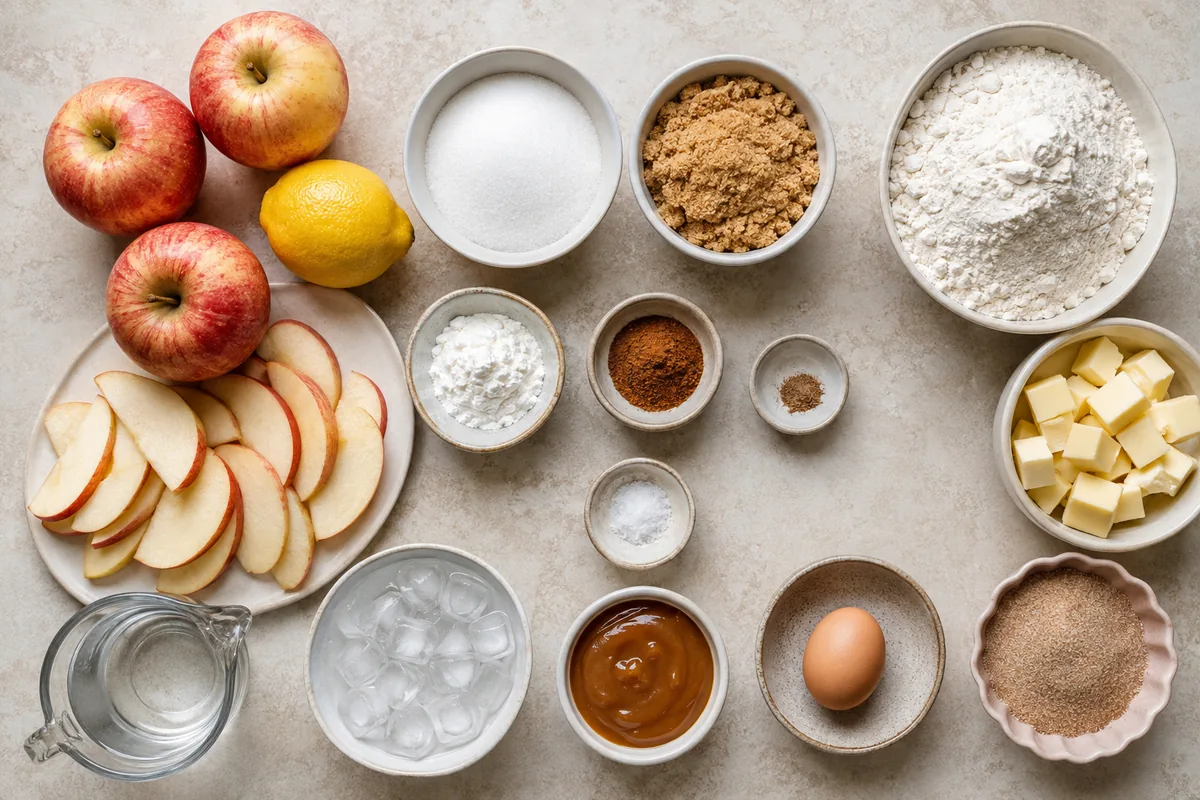
The filling uses 3 apples, about 1 pound total, peeled and cut into eight slices each. Add 1 to 2 tablespoons fresh lemon juice, 3 tablespoons white sugar, 3 tablespoons brown sugar, 3 tablespoons cornstarch, 1/2 teaspoon cinnamon, a dash of nutmeg, and 3/4 cup water.
- Homemade crust: Keep 1 cup or two sticks unsalted butter cubed and cold. Combine it with 2 1/2 cups all-purpose flour, 1 teaspoon salt, 1 teaspoon sugar, and about 1/4 cup ice water.
- Shortcut option: One refrigerated package containing two pie crusts can replace the homemade dough.
- Measured filling: For assembly, use 1 3/4 cups of the cooked apples, drained and chopped small so the cutter can pass through cleanly.
- Caramel: One cup forms a thin layer beneath the apples. A thick caramel sauce stays in place better than a very fluid syrup.
- Finish: Brush with one lightly beaten egg and sprinkle with a mixture of 1 teaspoon cinnamon and 1/4 cup sugar.
If you enjoy this recipe, you may also like Triple Chocolate Chip Cookies.
How to Make Apple Pie Cookies
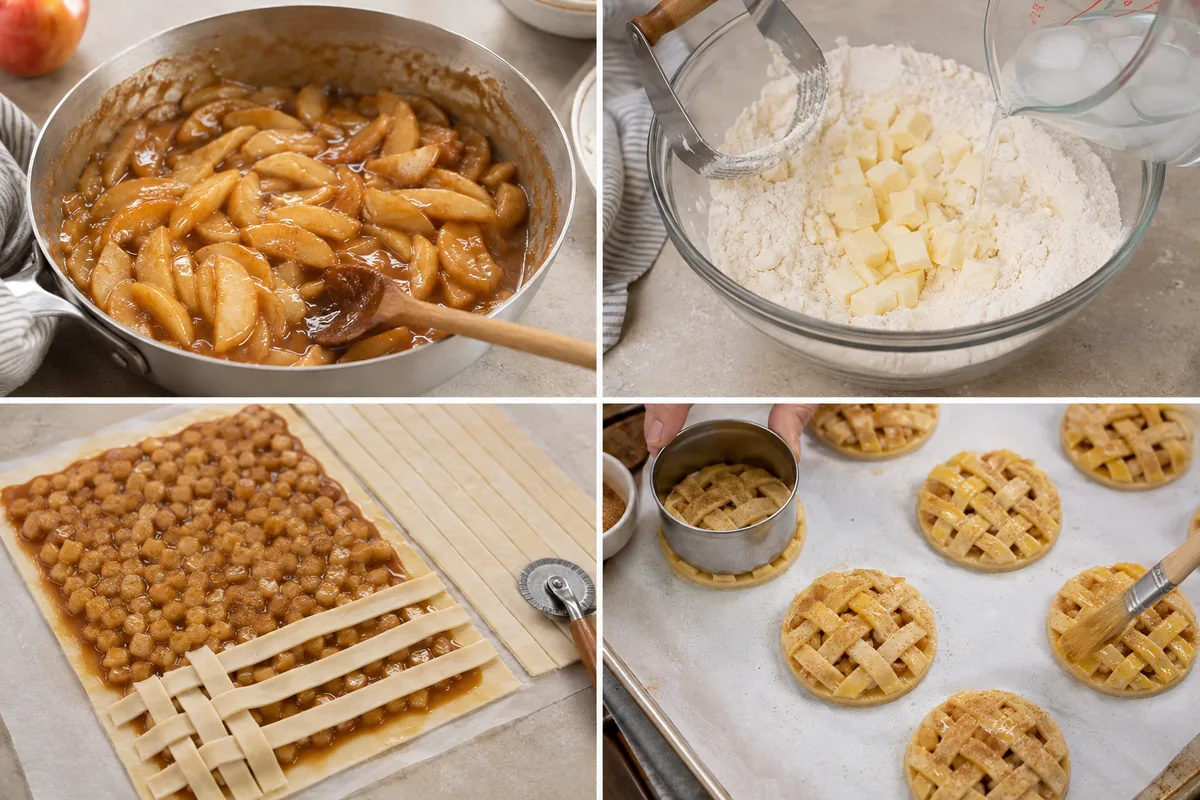
- Start the apples. Toss the peeled apple slices with lemon juice. In a saucepan, whisk white sugar, brown sugar, cornstarch, cinnamon, nutmeg, and water. Bring to a boil over medium-high heat, whisking constantly, and boil for 2 minutes until thick.
- Cook and cool the filling. Stir in the apples, reduce the heat to low, cover, and simmer about 10 minutes. The slices should be tender but not mushy. Cool covered, drain away excess sauce, and chop enough apples to measure 1 3/4 cups.
- Make the pastry. Mix 2 1/2 cups flour with salt and sugar. Cut in the cold butter with a pastry blender or fork until the mixture resembles coarse meal with some pea-size pieces.
- Add ice water carefully. Drizzle in 2 tablespoons ice water and toss, then add another 2 tablespoons. Squeeze a handful; if it holds together, stop. Add more water only 1 tablespoon at a time if still crumbly.
- Chill the dough. Divide into two equal portions, flatten into discs, wrap, and refrigerate for 1 hour.
- Roll both sheets. On a lightly floured surface, roll each disc to about 1/8-inch thickness, turning the dough to prevent sticking. Heat the oven to 350°F and line a sheet pan with parchment.
- Build the lattice. Spread caramel thinly over one pastry sheet, then distribute the chopped drained apples and pat them gently into place. Cut the second sheet into 1/2-inch strips and weave them over the filling.
- Cut and finish. Use a 2 1/2-inch round cutter to stamp out the cookies. Transfer them to the pan, brush with beaten egg, and sprinkle with cinnamon sugar.
- Bake. Bake for 20 to 30 minutes, until the pastry is deeply golden and crisp. Cool slightly before serving because the caramel filling will be very hot.
For storage details after serving, the USDA leftovers and food safety guidance.
Cook Apples That Hold Their Shape
Use a firm baking apple that softens without collapsing. The slices cook in a cornstarch-thickened sauce, then are drained and chopped, so they need to remain intact through both steps. Ten minutes is a guide; stop when a knife enters with slight resistance.
Cooling before chopping keeps the pieces cleaner and protects the pastry from heat. Drain enough sauce that the filling holds together on a spoon without a puddle. The caramel provides additional moisture, so overly saucy apples can make the bottom crust soft.
If you enjoy this recipe, you may also like Perfectly Soft Toll House Cookies.
Add Only as Much Ice Water as Needed
The exact amount of water changes with flour, humidity, and the size of the butter pieces. Begin with the stated 1/4 cup in two additions and toss rather than knead. The mixture may still look rough, but it is ready when a squeezed handful stays together without crumbling.
Too much water creates a sticky dough and encourages gluten development, making the cookies tough. Too little causes cracking and a lattice that breaks. Press each portion into a disc with minimal handling, wrap it tightly, and let the hour-long chill hydrate the dry spots.
Roll and Weave One Large Lattice
Turn the dough a quarter-turn as you roll and dust only when it starts to stick. Both sheets should be close in size and about 1/8 inch thick. Spread a thin, even layer of caramel over the base, leaving a narrow edge so it does not run onto the counter.
Lay half the strips in one direction. Fold back alternating strips, place a cross strip, and return them; repeat to create the over-under pattern. A relaxed lattice is easier to cut than strips pulled tight. Once woven, chill the whole sheet briefly if it has softened.
Cut Clean Rounds with Minimal Waste
Press the cutter straight down through lattice, apples, and base without twisting. Twisting can seal the pastry edges and smear caramel. Wipe the cutter between rounds if filling sticks to it. Place the shapes on parchment with a little room for browning.
Pastry scraps containing filling are difficult to reroll into another neat lattice, but they do not need to be wasted. Bake small irregular pieces beside the cookies as cook's treats, checking them earlier because their size varies.
Egg Wash, Cinnamon Sugar, and Doneness
Brush only the exposed lattice with a thin coat of beaten egg, avoiding large puddles around the edges. Mix the topping cinnamon evenly into the sugar before sprinkling. The crystals add both flavor and a delicate crisp surface.
Look for a truly golden crust, not just a pale dry surface. The range of 20 to 30 minutes reflects differences in pastry temperature and thickness. If caramel bubbles at the edges, that is normal. Let it settle for several minutes before moving or tasting the cookies.
Troubleshooting
- Pastry is tough: Too much water or mixing developed the gluten. Toss gently and stop adding water as soon as the dough holds.
- Butter leaks: The pastry became warm. Chill the assembled sheet before cutting and bake in a fully heated oven.
- Bottom is soggy: Drain the apples well and use a thin layer of thick caramel.
- Lattice breaks: Let rock-hard dough soften for a minute, but rechill if the butter becomes greasy.
- Cookies stick: Use parchment and let hot caramel set briefly before lifting with a thin spatula.
Shortcut, Storage, and Reheating
Refrigerated pie crust makes the assembly substantially faster. Use both rounds, roll them only enough to create similarly sized sheets, and proceed with the caramel, apples, and lattice. Homemade filling can be cooked two days ahead and refrigerated after cooling.
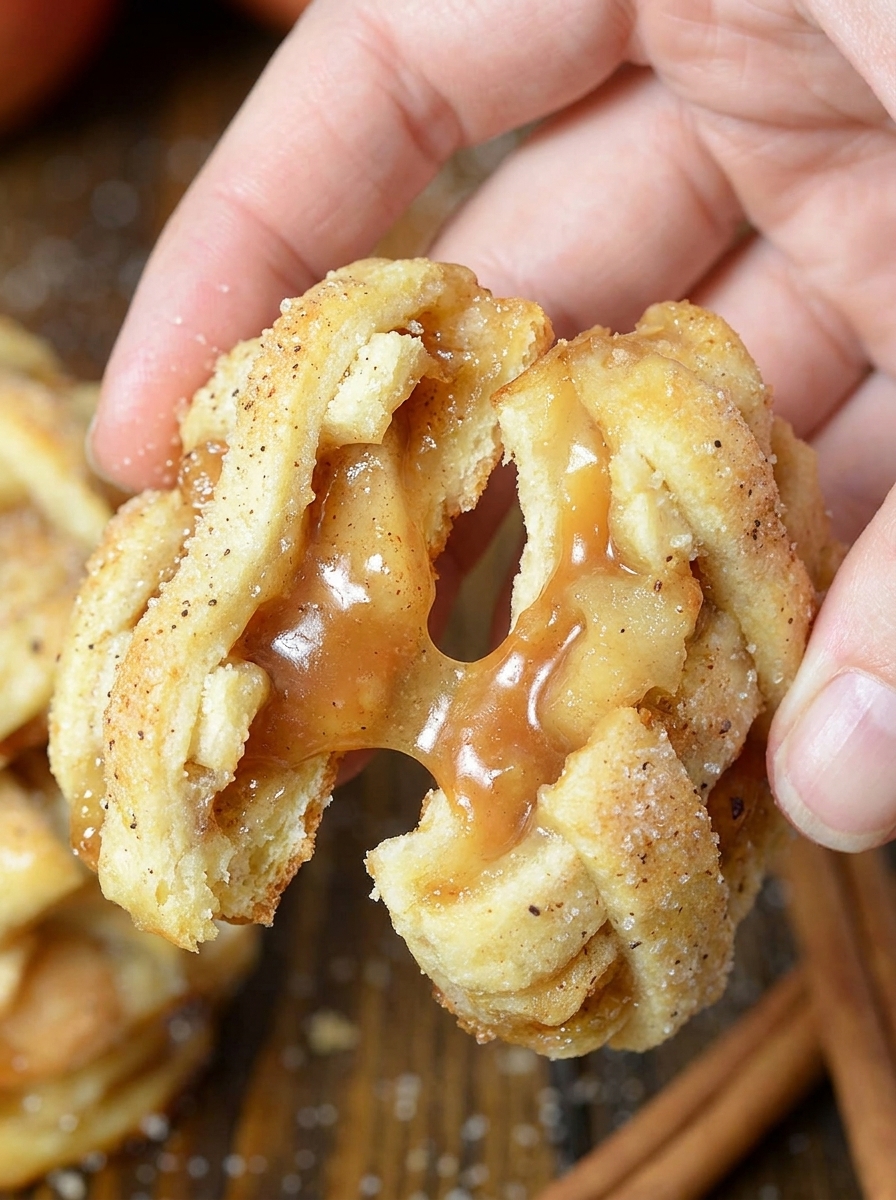
Store cooled cookies airtight at room temperature for up to three days. Reheat them on a sheet pan in a 325°F oven for several minutes to restore crispness; a microwave softens the pastry. Freeze baked cookies for up to two months, thaw in the refrigerator, and refresh them in the oven.
Conclusion
Cook the apples until tender but intact, drain and chop them, and keep the homemade pastry cold through rolling. Assemble caramel, apples, and one large woven lattice before cutting 2 1/2-inch rounds, then brush with egg, add cinnamon sugar, and bake until deeply golden.
Frequently Asked Questions
- → Can I use refrigerated pie crust for apple pie cookies?
Yes. Use a package with two crusts: one for the caramel-and-apple base and one cut into strips for the lattice. Keep both cold and roll them to similar sizes.
- → Why does the homemade dough need to chill for an hour?
Chilling firms the butter, relaxes the gluten, and gives the flour time to absorb the water. The dough rolls more cleanly and bakes into flakier layers.
- → What apples work best?
Choose firm baking apples that soften without turning to sauce, such as Granny Smith, Honeycrisp, Braeburn, or a combination of tart and sweet varieties.
- → How should apple pie cookies be reheated?
Warm them on a sheet pan in a 325°F oven for several minutes. Oven heat restores pastry crispness better than a microwave.