

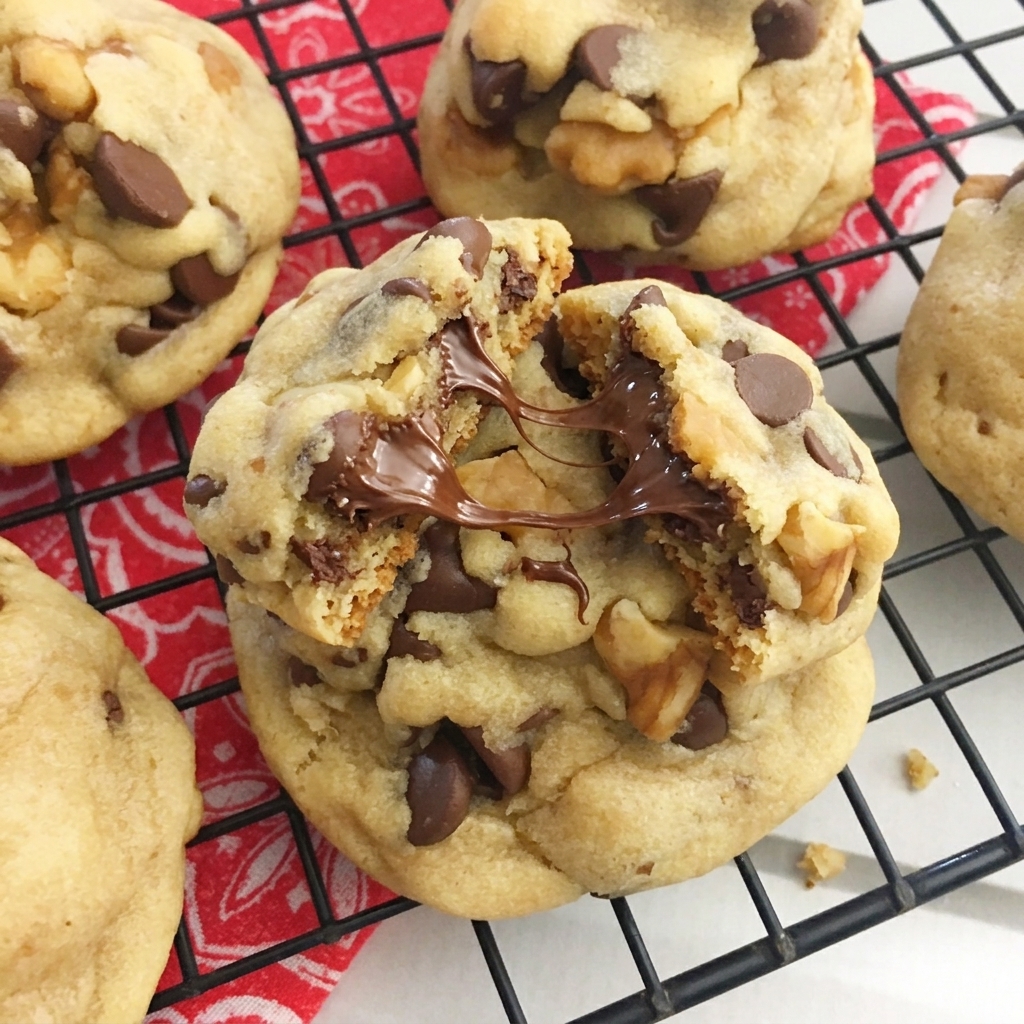
Perfectly soft Toll House-style chocolate chip cookies should have lightly browned edges, a tender center, and enough structure to hold pockets of semisweet chocolate and chopped walnuts. This version gets there with an unusual but useful butter shortcut: warm the butter only until part of it melts while the rest remains soft.
The dough comes together without a long chill, so the details that protect its texture matter. Measure the flour lightly, mix the egg only until incorporated, stop as soon as the dry ingredients disappear, and pull the cookies from the oven while the centers still look a little underdone. The short rest on the hot pan finishes the bake without drying them out.
Ingredients for Soft Chocolate Chip Cookies
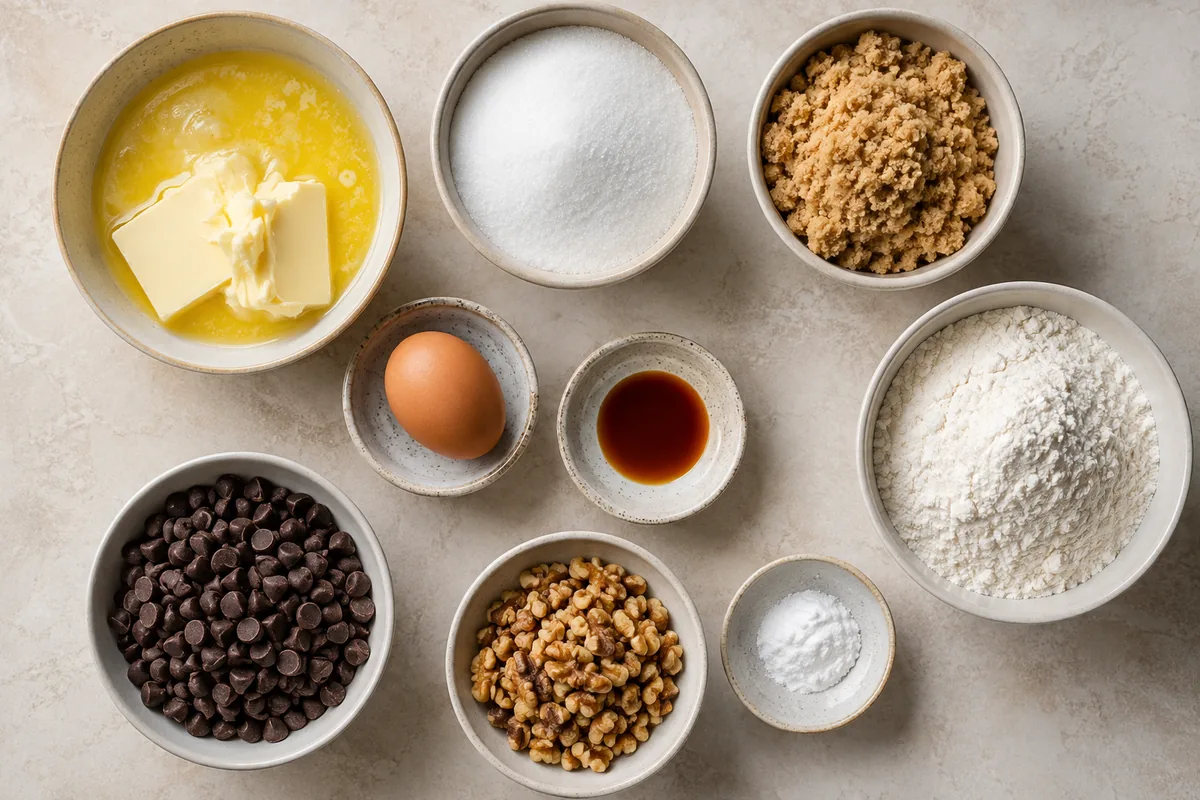
The base uses 1/2 cup salted butter, 1/2 cup granulated sugar, and 1/4 cup packed light brown sugar. One large egg and 1 tablespoon vanilla bring the dough together. The dry ingredients are 1 1/2 cups all-purpose flour and 3/4 teaspoon baking soda, followed by 1 cup semisweet chocolate chips and 1/2 cup chopped walnuts.
- Salted butter: It supplies both richness and seasoning. Warm it briefly so roughly half is liquid and half is very soft, then stir the two textures together.
- Two sugars: Granulated sugar helps the edges set, while brown sugar contributes moisture and a mild caramel flavor.
- Vanilla: A full tablespoon is intentional. It rounds out the chocolate and gives the simple dough a bakery-style aroma.
- Semisweet chips: They balance the sweet dough better than milk chocolate. Keep a few aside to press into the tops if you want more visible chocolate.
- Walnuts: Chop them into small, even pieces so every cookie gets crunch without large pieces breaking the soft center.
If you enjoy this recipe, you may also like Banana Pudding Banana Split Boats.
How to Make Them
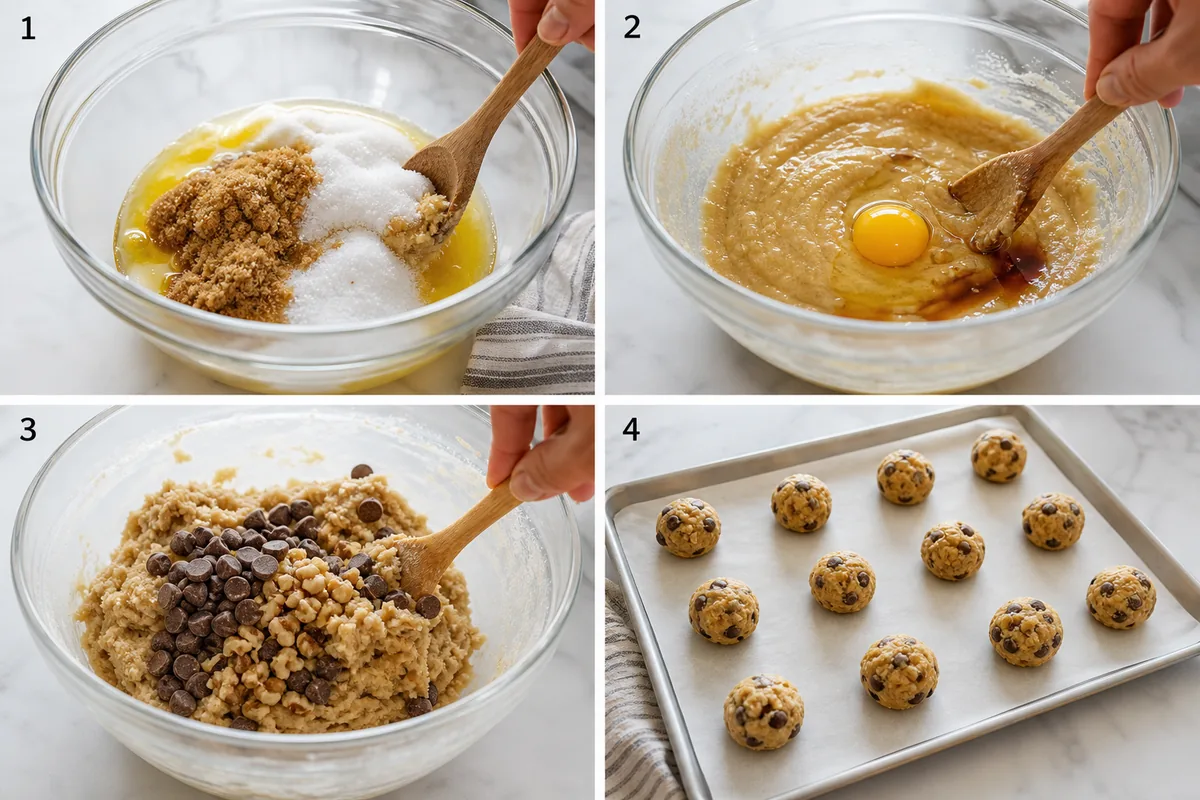
- Prepare the oven. Heat the oven to 350°F and line one or two baking sheets with parchment paper.
- Soften the butter carefully. Microwave the salted butter for about 15 seconds, just until about half looks melted and the remaining half is soft. Stir to combine; it should be warm and creamy, not hot.
- Mix the sugars. Add the granulated and brown sugars to the butter and stir or beat until evenly blended and slightly thickened.
- Add egg and vanilla. Mix in the egg and tablespoon of vanilla only until no separate streaks remain. Avoid whipping extra air into the mixture.
- Finish the dough. Add the flour and baking soda. Mix on low or fold by hand until the last dry streak nearly disappears.
- Fold in chocolate and walnuts. Add the semisweet chips and chopped walnuts, folding just enough to distribute them through the dough.
- Portion. Roll or scoop the dough into even balls and arrange them several inches apart on the parchment. Keep the portions tall rather than pressing them flat.
- Bake and rest. Bake for 10 to 12 minutes. For the softest centers, begin checking at 10 minutes. Remove the pan when the edges are set and pale gold but the centers still look soft. Cool on the sheet for 5 minutes before transferring to a rack.
For storage details after serving, the USDA leftovers and food safety guidance.
The Half-Melted Butter Technique
Fully softened butter can trap a lot of air when creamed, while fully melted butter often produces a denser dough that spreads quickly. Using butter that is partly melted and partly soft lands between those two results. The liquid portion dissolves some sugar and supports chewiness; the soft portion keeps enough body to prevent the cookies from becoming thin.
Temperature matters more than the exact number of seconds in the microwave. A powerful microwave may need less than 15 seconds, and cold butter may need a few seconds more. Stop when a shallow pool has formed around a soft center. If the butter becomes completely liquid or feels hot, let it cool and thicken before adding the sugars.
If you enjoy this recipe, you may also like Chocolate Cake with Strawberry Buttercream.
Measure Flour without Packing It
Too much flour is the most common reason a soft cookie turns cakey or dry. Fluff the flour in its container, spoon it into the measuring cup, and level the top without pressing. If you have a scale, 1 1/2 cups of all-purpose flour is approximately 180 grams, although the brand and measuring standard can create small differences.
Add the flour all at once with the baking soda and mix gently. Stop while one or two faint streaks remain, then let the final folds with the chocolate and walnuts finish incorporating them. Continued mixing develops gluten and changes a tender center into a tougher one.
Keep the Chocolate and Walnuts Evenly Distributed
Chop walnut halves or pieces to roughly the size of the chocolate chips. Large chunks can make the dough balls split, while finely ground nuts disappear into the dough and absorb moisture. Toasting is optional; raw walnuts give a softer crunch, while a brief toast gives deeper flavor. Let toasted nuts cool completely before adding them.
Fold the chips and nuts through the entire bowl, scraping from the bottom where dry flour can hide. If you prefer nut-free cookies, leave out the walnuts without changing the flour. The cookies will be slightly flatter because there is less solid filling, but the bake time remains about the same.
Judge Doneness by the Edges
The center of a soft cookie should not look fully baked when the tray leaves the oven. Look for a set outer ring, a matte rather than wet surface, and the first hint of gold underneath. The middle may still appear puffy and delicate. Residual heat from the metal sheet continues setting the dough during the 5-minute rest.
Ovens and pans behave differently, so check the first tray at 10 minutes. Dark pans brown bottoms faster than light aluminum, and a convection fan can shorten the time. Bake one test cookie if your portions are especially large. Once you know how it spreads, adjust spacing or add a minute rather than guessing with the entire batch.
Troubleshooting Soft Cookies
- Cookies spread too far: The butter was likely hot, the flour was undermeasured, or the baking sheet was warm before the raw dough went on it. Cool the dough for 15 minutes before the next tray.
- Cookies stay in round mounds: Too much flour may have been packed into the cup. Measure by spooning and leveling, and press the next portions only slightly if needed.
- Centers turn dry: Remove the cookies when the edges set rather than waiting for the top to brown completely.
- Bottoms get dark: Use a light-colored pan, line it with parchment, and place the rack in the center of the oven.
- Nuts taste bitter: Check that the walnuts are fresh and store the remainder in the refrigerator or freezer, where their oils keep longer.
Serving, Storage, and Freezing
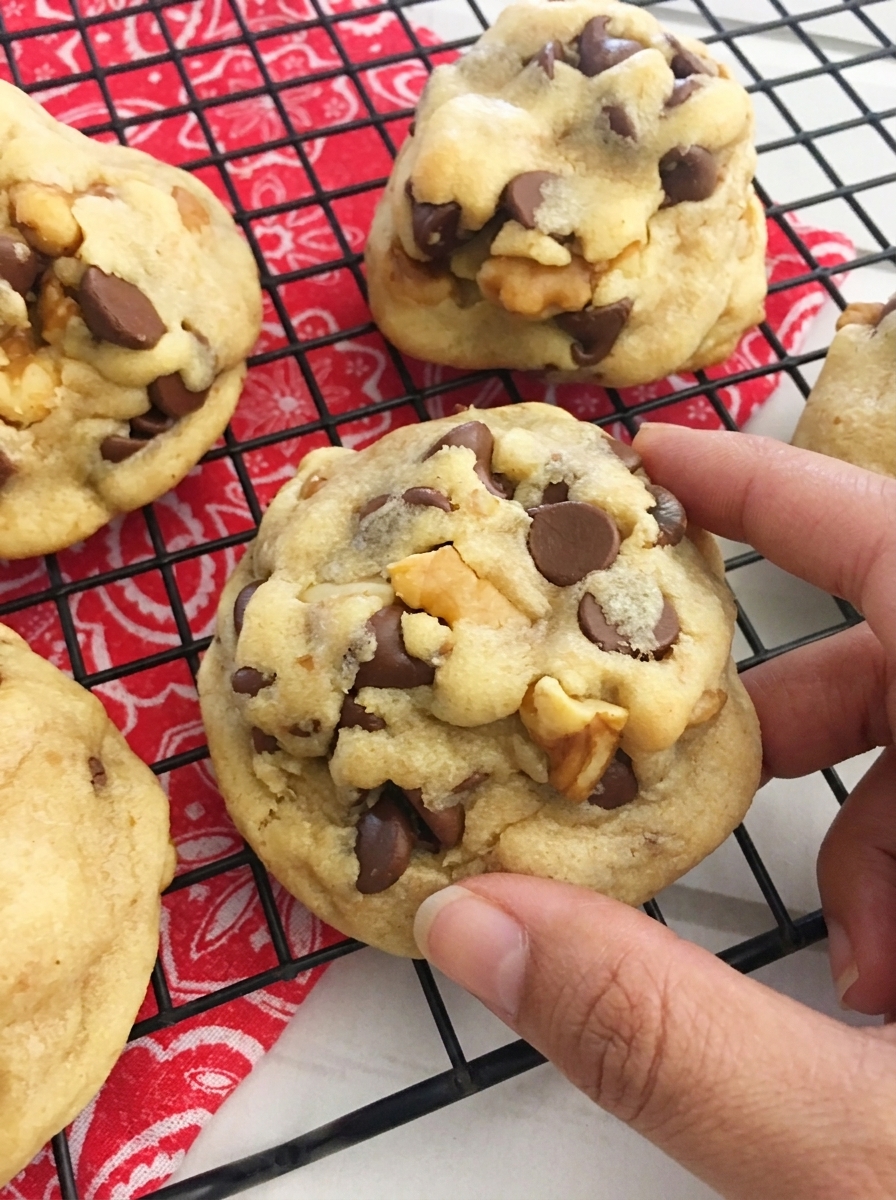
Let the cookies cool until the chocolate is no longer molten before stacking them. They are especially good slightly warm with milk or coffee, but their flavor becomes more balanced after they cool and the vanilla settles into the dough.
Store completely cooled cookies in an airtight container at room temperature for up to five days. Place parchment between layers and include a small piece of bread only if your climate is dry; replace it daily and keep it from touching the cookies. To refresh one cookie, warm it for a few seconds in the microwave or 2 to 3 minutes in a 300°F oven.
For make-ahead baking, freeze portioned dough balls on a tray, then move them to a freezer container for up to two months. Bake from frozen at 350°F, allowing an extra 1 to 3 minutes. You can also freeze baked cookies for up to two months and thaw them covered at room temperature.
Conclusion
Use butter that is partly melted and partly soft, measure the flour lightly, and stop mixing as soon as the dough comes together. Bake only until the edges set, then let the cookies finish on the hot pan for tender centers with semisweet chocolate and walnuts in every bite.
Frequently Asked Questions
- → Why is the butter only partly melted?
Partly melted butter gives the dough chewiness without making it as loose as fully melted butter. The remaining soft butter provides enough structure to limit spreading.
- → Can I make these chocolate chip cookies without walnuts?
Yes. Omit the 1/2 cup walnuts and keep the other measurements the same. The cookies may spread a little more because the dough contains less solid filling.
- → How do I know when soft cookies are done?
The outer edge should be set and lightly golden while the center still looks soft and slightly puffy. Let the cookies rest on the hot sheet for 5 minutes so the centers finish setting.
- → Can the cookie dough be frozen?
Yes. Freeze portioned dough balls until firm, store them airtight for up to two months, and bake from frozen at 350°F with 1 to 3 extra minutes.