

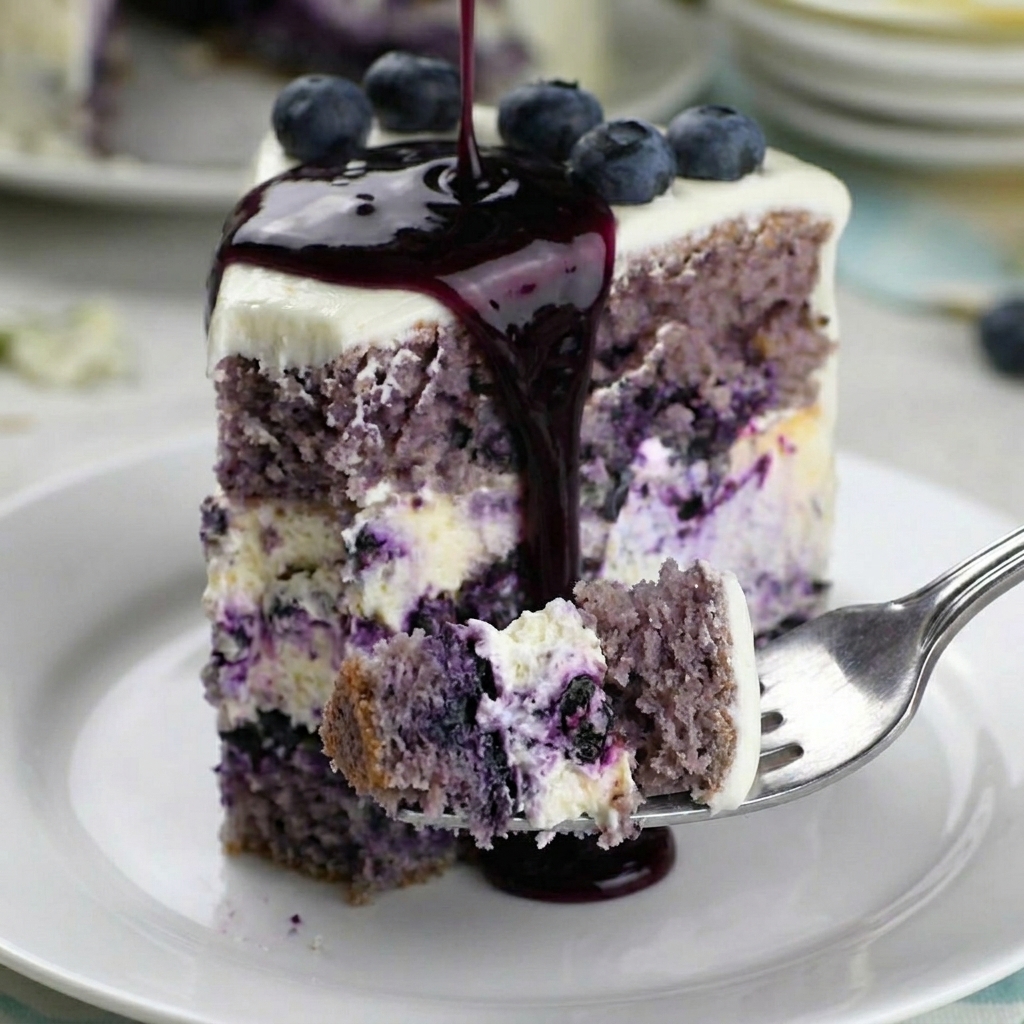
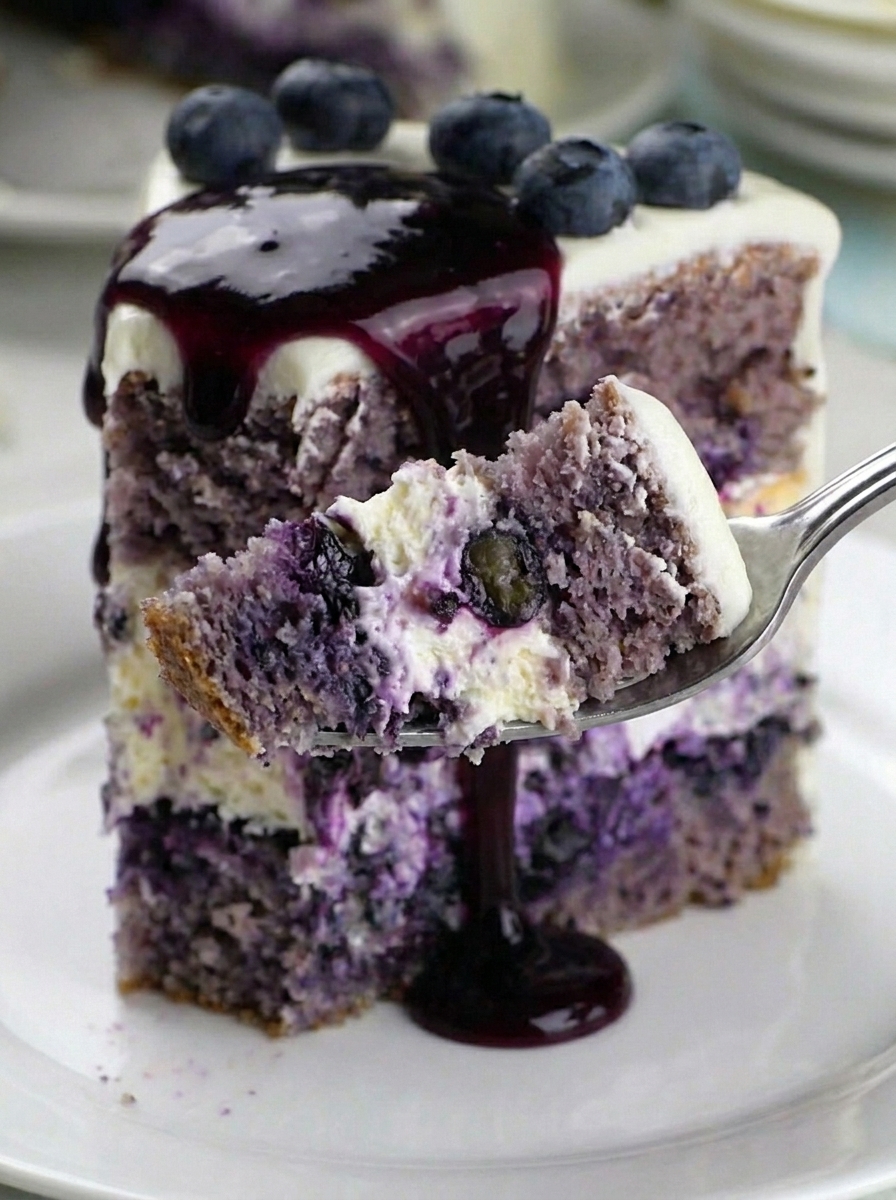
Blueberry cheesecake cake is a three-layer celebration dessert: two tender blueberry cake layers surround a full baked blueberry cheesecake, and cream cheese buttercream holds everything together. The contrast is the point—soft cake, dense chilled cheesecake, juicy berries, and a smooth tangy frosting in each slice.
The recipe is manageable when treated as three separate projects. Bake and chill the cheesecake first, prepare the cake layers, then make the buttercream and assemble only when every component is completely cool. Rushing the cooling stages is the quickest way to make the layers slide or the frosting soften.
Ingredients Organized by Component
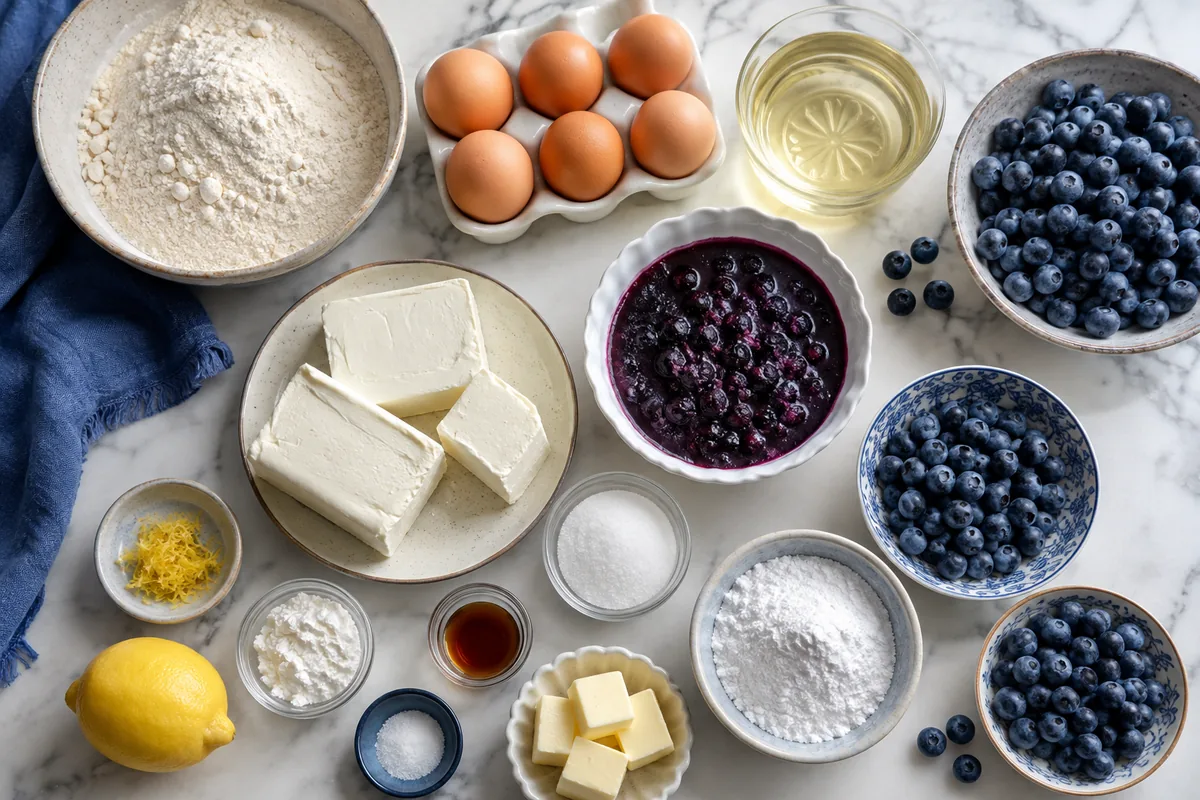
The two cake layers use a vanilla or white cake mix, three eggs, vegetable oil, blueberry puree, and fresh berries. One cup of thawed frozen blueberries is combined with enough water to measure 1 1/4 cups, then pureed. That mixture replaces the usual clear liquid and gives the crumb blueberry flavor throughout.
- Cake layer berries: Use thawed frozen blueberries for the puree and one cup of fresh blueberries for distinct pockets of fruit.
- Cheesecake layer: Twenty-four ounces of softened cream cheese, three-quarter cup sugar, cornstarch, vanilla, three eggs, and 1 1/4 cups fresh berries create the center.
- Buttercream: Twelve ounces of full-fat brick cream cheese, one cup softened unsalted butter, salt, powdered sugar, and vanilla make a stable frosting.
- Lemon zest: One tablespoon is optional, but its aroma keeps the cream cheese frosting from tasting flat.
- Fresh garnish: Add clean, thoroughly dry blueberries only after frosting the cake.
If you enjoy this recipe, you may also like Lemon Blueberry Cheesecake Cake.
The Four Key Stages
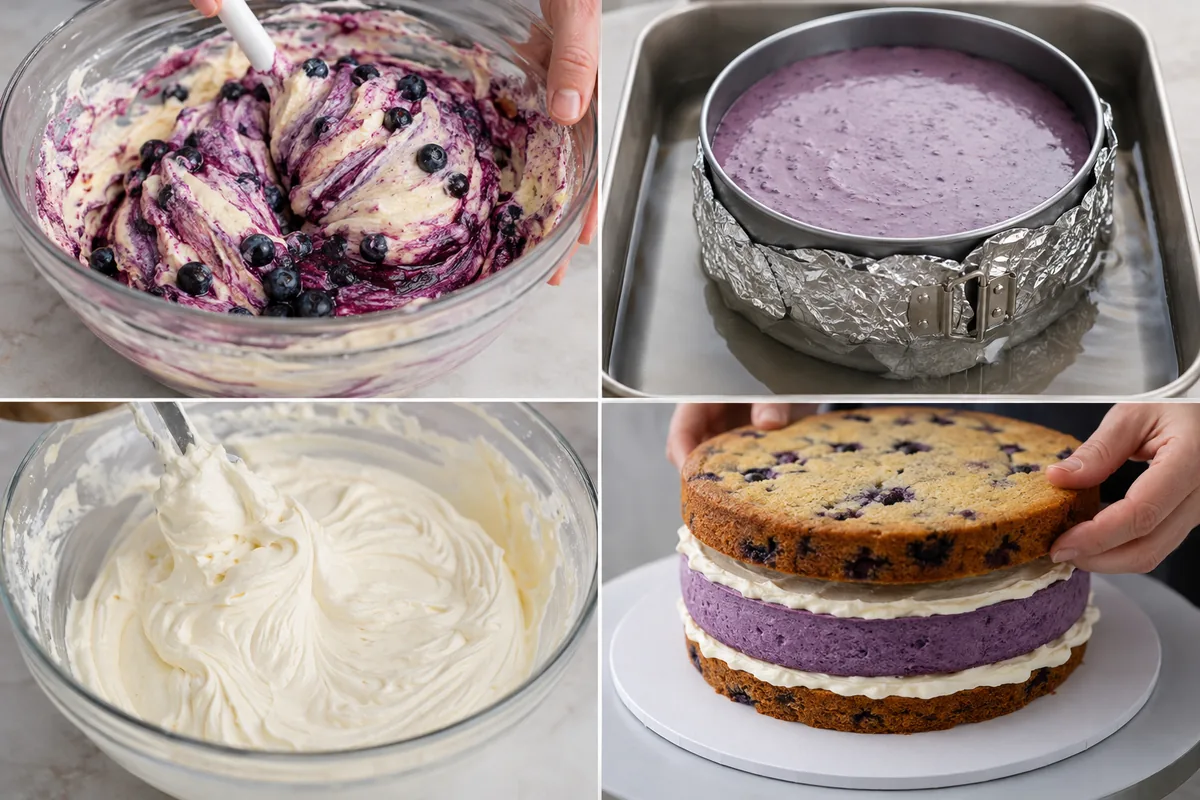
- Bake the blueberry cakes. Heat the oven to 350°F. Grease two 8-inch round pans and line their bottoms with parchment. Puree one cup thawed frozen blueberries with enough water to make 1 1/4 cups total. Beat the puree with the cake mix, oil, and three eggs for 2 minutes, fold in one cup fresh berries, divide between the pans, and bake about 35 minutes. Cool completely.
- Prepare the cheesecake pan. Grease an 8-inch springform pan, line the bottom with parchment, and wrap the outside securely with heavy-duty foil.
- Mix and bake the cheesecake. Beat 24 ounces softened cream cheese with sugar, cornstarch, and vanilla until smooth. Mix in three lightly beaten eggs just until combined, then fold in 1 1/4 cups blueberries. Pour into the pan, set it in a roasting pan, and add boiling water halfway up the outside. Bake 50 to 60 minutes, until the center is set but still slightly jiggly.
- Cool gradually. Turn off the oven, crack the door, and leave the cheesecake inside for 30 minutes. Cool to room temperature, then refrigerate at least 4 hours or overnight.
- Make the buttercream. Beat the softened butter and 12 ounces cream cheese only until smooth. Add vanilla, salt, optional lemon zest, and enough powdered sugar—3 1/2 to 4 1/2 cups—to reach a spreadable consistency.
- Stack and chill. Add a thin frosting layer to the first cake, place the cold cheesecake on top, add another thin layer of frosting, then the second cake. Frost the outside, garnish, and chill for at least 45 minutes before cutting.
For storage details after serving, the USDA leftovers and food safety guidance.
Build a Cheesecake Layer That Releases Cleanly
Softened cream cheese is essential because cold blocks resist blending and leave small lumps. Beat the cream cheese, sugar, cornstarch, and vanilla smooth before the eggs go in. Once eggs are added, mix only until the batter is uniform; excess air can expand during baking and contribute to cracks as the cheesecake cools.
The foil wrap needs to reach high around the springform pan so water cannot seep through its seam. Place the wrapped pan in the larger roasting pan before adding boiling water. The humid, even heat helps the thick center cook at nearly the same rate as the edge.
If you enjoy this recipe, you may also like Strawberry Sponge Cake.
Getting Blueberry Flavor into the Cake
Thawed frozen fruit releases more juice than firm fresh berries, which makes it useful for the puree. Measure the berries and water together to 1 1/4 cups so the cake mix receives the intended quantity of liquid. Pulse until smooth enough to distribute through the batter.
Fresh blueberries are folded in after the batter has been mixed for 2 minutes. Use a spatula and a light hand so the berries remain intact. Optional pink gel coloring can deepen the purple tone, but it is not necessary for flavor and should be added one small drop at a time.
Cream Cheese Buttercream without a Runny Finish
Use full-fat brick-style cream cheese rather than the softer product sold in tubs. Both the butter and cream cheese should yield to gentle pressure but should not look glossy or partially melted. Mix them only until the lumps disappear before adding sugar.
Begin with 3 1/2 cups of powdered sugar and add more as needed. Warm kitchens and very soft dairy may require the upper end of the range. If the frosting starts to feel loose, refrigerate it briefly instead of adding so much sugar that the flavor becomes overly sweet.
Level, Stack, and Frost
If the cake layers have domed, trim their tops with a long serrated knife so the stack sits flat. Place the first layer on a sturdy board or plate. A thin coat of buttercream acts as both glue and a moisture barrier beneath the cheesecake.
Release the chilled cheesecake, remove the parchment, and transfer it with a wide spatula. Add the second thin frosting layer and top cake before applying a crumb coat around the entire stack. Chill briefly, then add the final buttercream. The required 45-minute final chill firms the three layers enough for clean slices.
Serving and Clean Slices
Keep the cake refrigerated until shortly before serving. For neat wedges, dip a long sharp knife in hot water, wipe it completely dry, and cut straight down. Clean and warm the blade again between slices so blueberry crumbs and cheesecake do not streak the frosting.
Fresh blueberries make a simple garnish, and a small amount of lemon zest can echo the buttercream. Avoid adding wet berry sauce far in advance because it can bleed into the white frosting. Serve modest slices; the central cheesecake makes this dessert richer than an ordinary layer cake.
Troubleshooting the Three Components
- Cheesecake cracks: Avoid overmixing after the eggs, use the water bath, and complete the gradual 30-minute oven cool.
- Water reaches the pan: Use wide heavy-duty foil in overlapping layers and keep the seam above the waterline.
- Buttercream is loose: Chill it briefly and confirm brick-style cream cheese was used.
- Layers slide: Work with a cold cheesecake and cooled cakes, use thin buttercream layers, and chill the assembled cake.
- Berries sink or burst: Fold them in gently at the end and avoid crushing them while mixing.
Make-Ahead and Storage
The cheesecake can be baked and chilled one day ahead. The cake rounds can also be baked ahead, cooled, wrapped individually, and held at room temperature overnight. Make the buttercream and assemble the dessert when all components are ready and cold.
Store the finished cake covered in the refrigerator for up to four days. For longer storage, freeze well-wrapped individual slices without fresh garnish, then thaw them overnight in the refrigerator. Do not leave the cream-cheese-frosted cake at warm room temperature for extended periods.
Conclusion
Treat blueberry cheesecake cake as three separate recipes: fully chill the water-bath cheesecake, cool the blueberry cake layers, and mix a firm brick-cream-cheese buttercream. Stack only cold components, use thin frosting layers between them, and chill the completed cake for 45 minutes before slicing.
Frequently Asked Questions
- → Can I make blueberry cheesecake cake over two days?
Yes. Bake and chill the cheesecake first, and bake and wrap the cooled cake rounds separately. Make the buttercream and assemble the cold components the next day.
- → Why does the cheesecake need a water bath?
The hot water moderates the oven heat and creates humidity, helping the thick cheesecake layer bake evenly with less risk of dry edges or a cracked center.
- → Can I use spreadable cream cheese for the frosting?
Brick-style full-fat cream cheese is the better choice. Spreadable tubs contain more moisture and can make the buttercream too loose to support the layers.
- → How long does the finished cake keep?
Keep it covered in the refrigerator for up to four days. Individual slices can be frozen without fresh garnish and thawed overnight in the refrigerator.