

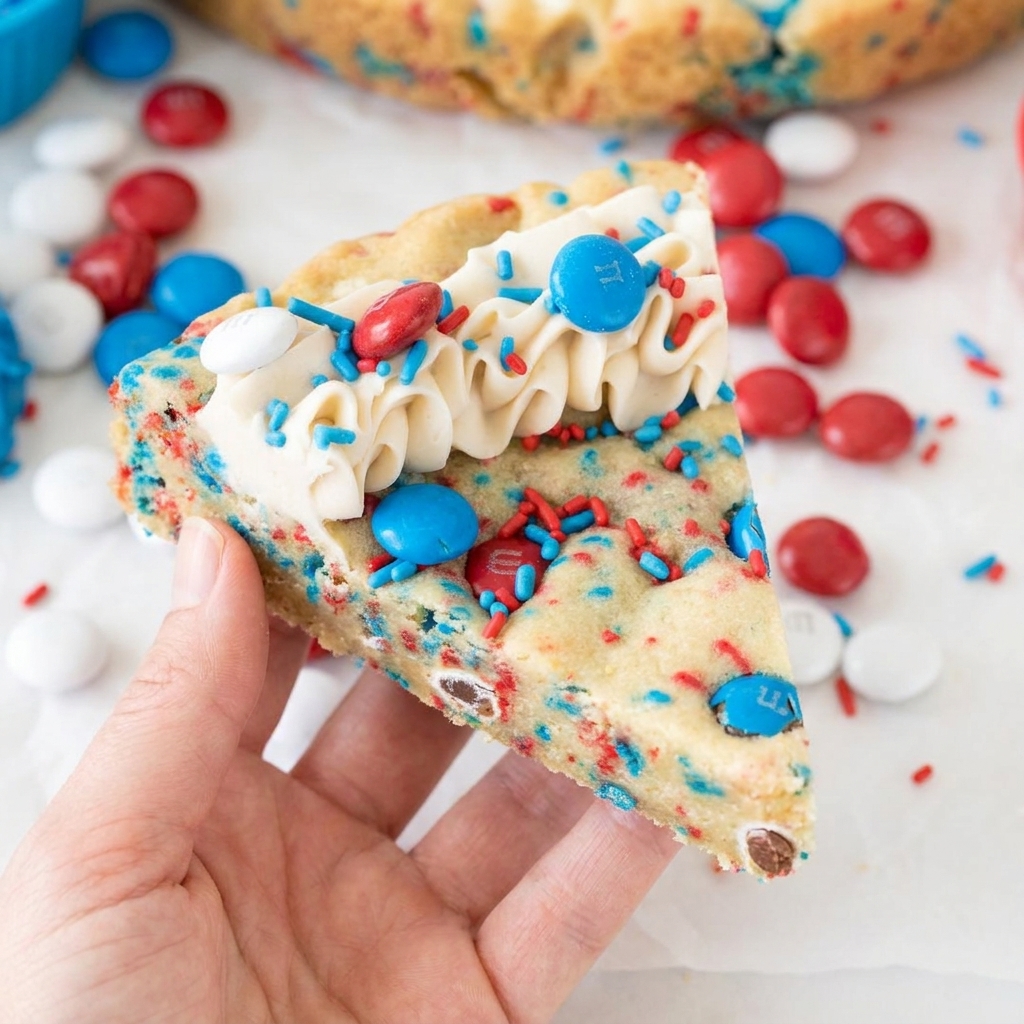
Fireworks Sugar Cookie Cake turns a soft sugar-cookie dough into one thick 9-inch round, then finishes it with a buttercream border, candy-coated chocolates, and crisp sprinkles. It is easier to portion than individual cookies, but the same baking rule matters: remove it when the edge is only lightly golden so the center stays tender as it cools.
The Key to a Soft Cookie-Cake Center
The cake continues to cook in the hot pan after it leaves the oven. Baking until the entire surface looks firm produces a dry slice once it cools. Look instead for a pale center, a set surface, and a narrow light-golden ring around the edge after 19 to 22 minutes.
Cream of tartar gives the dough the slight tang and tenderness associated with classic sugar cookies, while baking soda provides enough lift for a thick round. Mixing the flour only until no dry streaks remain protects that soft texture.
If you enjoy this recipe, you may also like Blueberry Cheesecake Cake.
Ingredients and What They Do
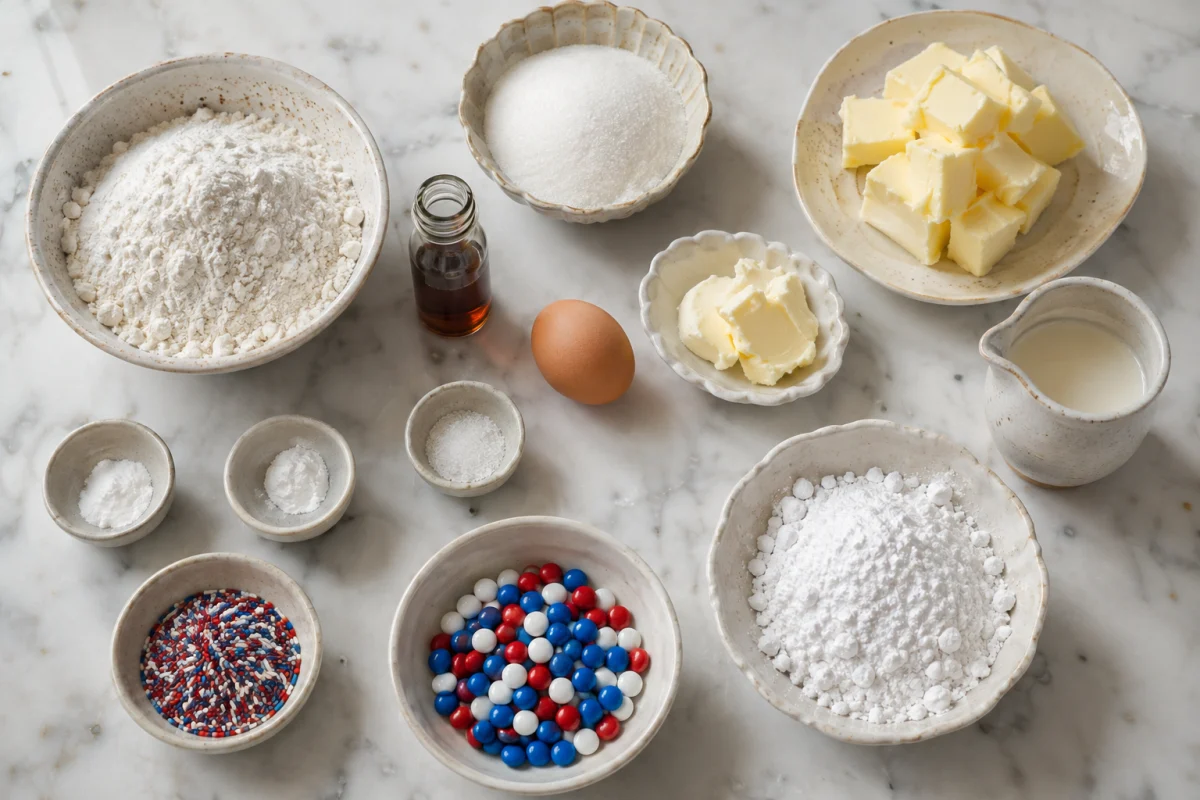
- Unsalted butter: Soften the larger portion for the dough and the smaller portion for frosting. It should yield to pressure but should not look oily or melted.
- Granulated sugar: Creaming it with butter for 2 to 3 minutes builds tiny air pockets and an even crumb.
- Egg: One large egg binds the thick dough. Room-temperature egg blends into the creamed butter more smoothly.
- Vanilla: A full tablespoon flavors the cookie base, while a teaspoon seasons the frosting.
- Baking soda: This provides gentle lift and helps the edge color during the short bake.
- Cream of tartar: Its acidity keeps the cookie tender and balances the sweetness.
- Salt: Small amounts in both the dough and frosting sharpen the vanilla and prevent a flat sugary flavor.
- All-purpose flour: Measuring by weight is most reliable. If using cups, spoon the flour in and level it rather than packing it down.
- Candy-coated chocolates: Red, white, and blue pieces create the fireworks look. Fold most into the dough and press a few into the top.
- Jimmie sprinkles: Jimmies hold their shape better than tiny nonpareils and are less likely to bleed heavily into the dough.
- Powdered sugar: Add it gradually to the frosting so it mixes smoothly instead of leaving dry pockets.
- Heavy cream or milk: Add one tablespoon first, then use teaspoons only as needed for a frosting that holds piped ridges.
For storage details after serving, the USDA leftovers and food safety guidance.
How to Make Fireworks Sugar Cookie Cake
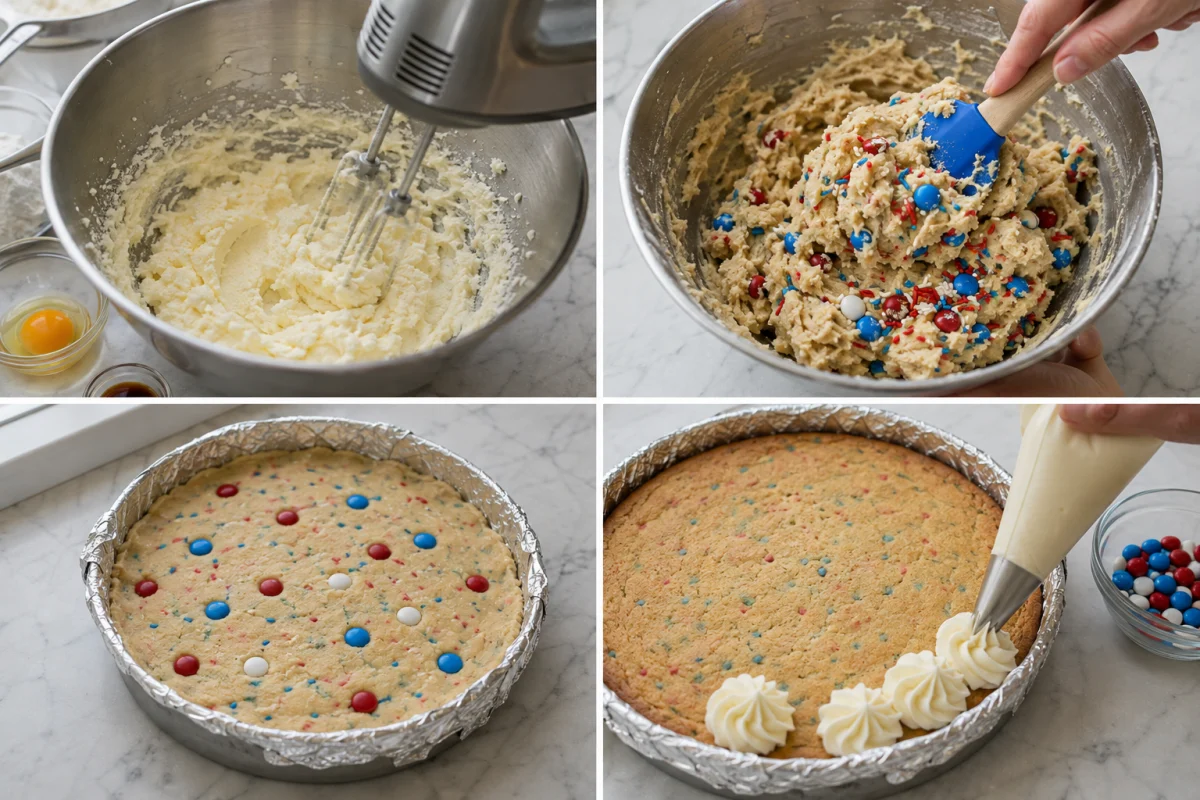
- Prepare the pan. Heat the oven to 350°F. Line a 9-inch round cake pan with foil and coat it lightly with nonstick spray, leaving enough foil to lift the cooled cake.
- Cream butter and sugar. Beat 3/4 cup softened butter with the granulated sugar for 2 to 3 minutes, until lighter in color and creamy.
- Add egg and vanilla. Beat in the egg and one tablespoon vanilla, scraping down the bowl so the mixture is even.
- Add the leaveners. Mix in baking soda, cream of tartar, and salt until fully distributed.
- Mix in the flour gently. Add the flour in stages on low speed and stop as soon as the dough comes together.
- Fold in the decorations. Use a spatula to fold in one cup candy-coated chocolates and 1/2 cup jimmie sprinkles without crushing them.
- Press into the pan. Distribute the dough in small portions, then press it into an even layer. Add a few extra candies to the surface.
- Bake without overdoing it. Bake 19 to 22 minutes, until the edge is barely golden and the center looks set but still soft.
- Cool completely. Leave the cake in the pan for at least 30 minutes. Lift it out only after it can hold its shape, then let it reach room temperature before frosting.
- Mix the buttercream. Beat the remaining softened butter smooth. Add powdered sugar gradually, followed by vanilla, salt, and one tablespoon cream. Add more cream by the teaspoon until pipeable.
- Decorate and serve. Pipe a restrained border with a 1M star tip and add the remaining candies and sprinkles. Cut with a long sharp knife, wiping it between slices.
If you enjoy this recipe, you may also like 4th of July Rice Krispie Treats.
How to Press the Dough Evenly
Place spoonfuls of dough around the pan before pressing, rather than dropping one mound in the center. Work outward with lightly greased fingertips or the flat bottom of a measuring cup. The surface should be level and the edge should not be substantially thicker than the middle.
Press gently. Compacting the dough firmly removes the air created during creaming and can make the finished cookie dense. A few natural ridges are fine because they settle while baking.
Common Problems and Simple Fixes
- The cookie cake is dry: It baked too long or contained too much flour. Measure accurately and remove it when only the rim is light golden.
- The middle sinks deeply: Creamed butter may have been too warm, or the center may be substantially underbaked. Use softened, not melted, butter and check that the surface is set.
- The candy colors bleed: Fold gently and avoid very wet sprinkles. Jimmies are more stable in dough than tiny nonpareils.
- The frosting feels stiff: Beat in cream one teaspoon at a time. Stop once the ridges are smooth but still hold their shape.
- The frosting spreads: The cake or butter may be too warm. Chill the frosting briefly and confirm the cake is at room temperature.
Decorating and Serving Variations
Red, white, and blue candy makes this version suitable for a summer celebration, but the base can follow any color theme. Keep the total quantity of candy and sprinkles the same so the dough-to-mix-in ratio does not change.
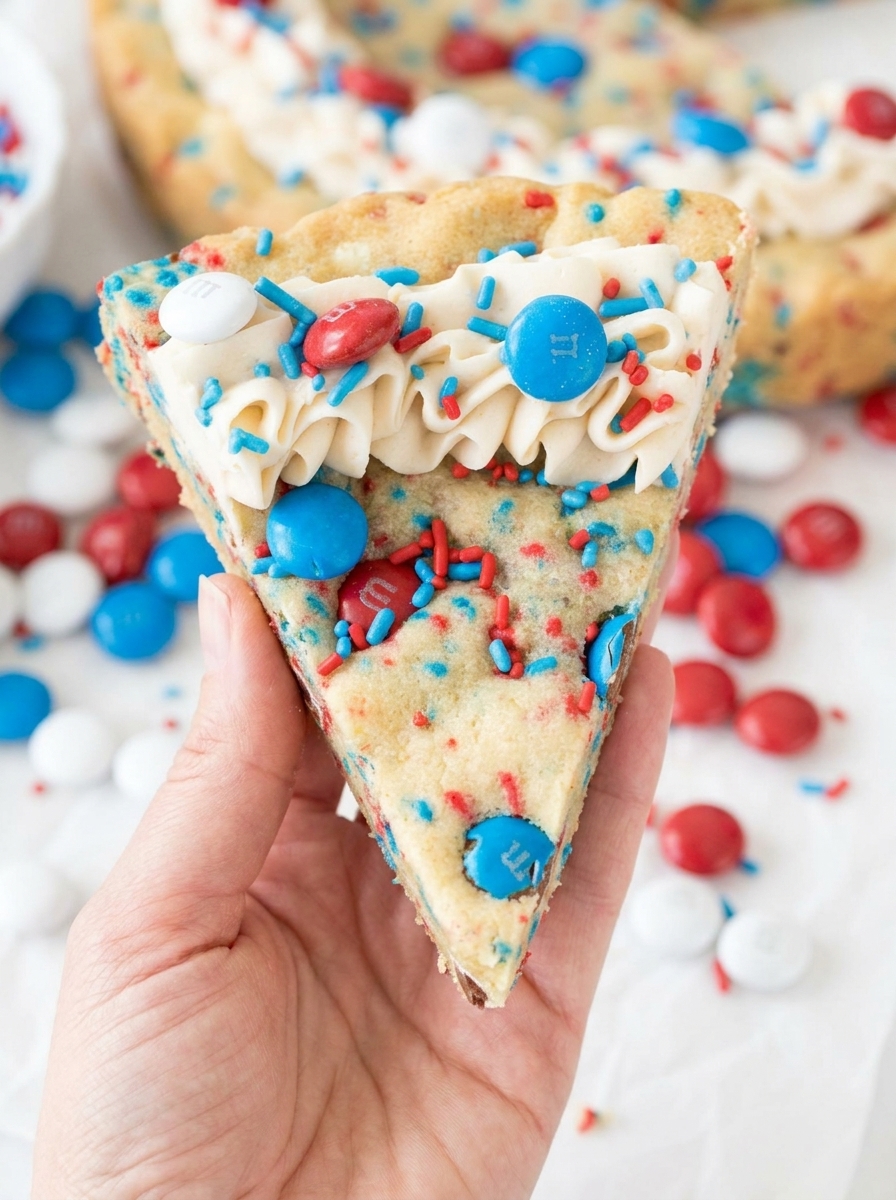
A simple buttercream border leaves the soft cookie visible and keeps every slice balanced. For cleaner cuts, wait until the frosting crusts lightly, then cut the round into eight wedges with a sharp knife.
Make-Ahead and Storage
The unfrosted cookie cake can be baked one day ahead. Cool it completely, wrap it tightly, and keep it at room temperature. Prepare the buttercream separately or decorate the cake a few hours before serving.
Store the finished cake covered at room temperature for up to two days, or refrigerate it for up to four days if the room is warm. Let chilled slices return toward room temperature so the buttercream softens and the cookie regains its tender texture.
Conclusion
Cream the softened butter and sugar thoroughly, mix the flour only until the dough forms, and press it gently into an even 9-inch round. Pull the cookie cake when the edge is barely golden, cool it completely, and use a firm but smooth buttercream for a clean decorative border.
Frequently Asked Questions
- → How do I know when a sugar cookie cake is done?
The edge should be light golden and the center should look set but still soft. It continues to cook and firm as it cools in the pan.
- → Can the cookie cake be baked ahead?
Yes. Bake and cool it one day ahead, then wrap it tightly at room temperature. Frost it closer to serving.
- → Can I use different candy colors?
Yes. Change the colors to suit another event, but keep the total quantity of candy and sprinkles unchanged so the dough stays balanced.
- → Does the cookie cake need refrigeration?
It can remain covered at room temperature for up to two days. Refrigerate it in a warm kitchen or for longer storage, then bring slices toward room temperature before serving.