


Breakfast crescent rolls wrap soft scrambled eggs, crisp bacon, and melted cheese in golden refrigerated crescent dough. They turn a familiar breakfast plate into eight tidy portions that are easy to serve at brunch or take along on a busy morning.
The filling is fully cooked before assembly, so the short bake is focused on puffing and browning the dough. Slightly undercooked eggs, well-drained bacon, and a secure seam keep the centers tender without making the pastry soggy.
Ingredients for Breakfast Crescent Rolls
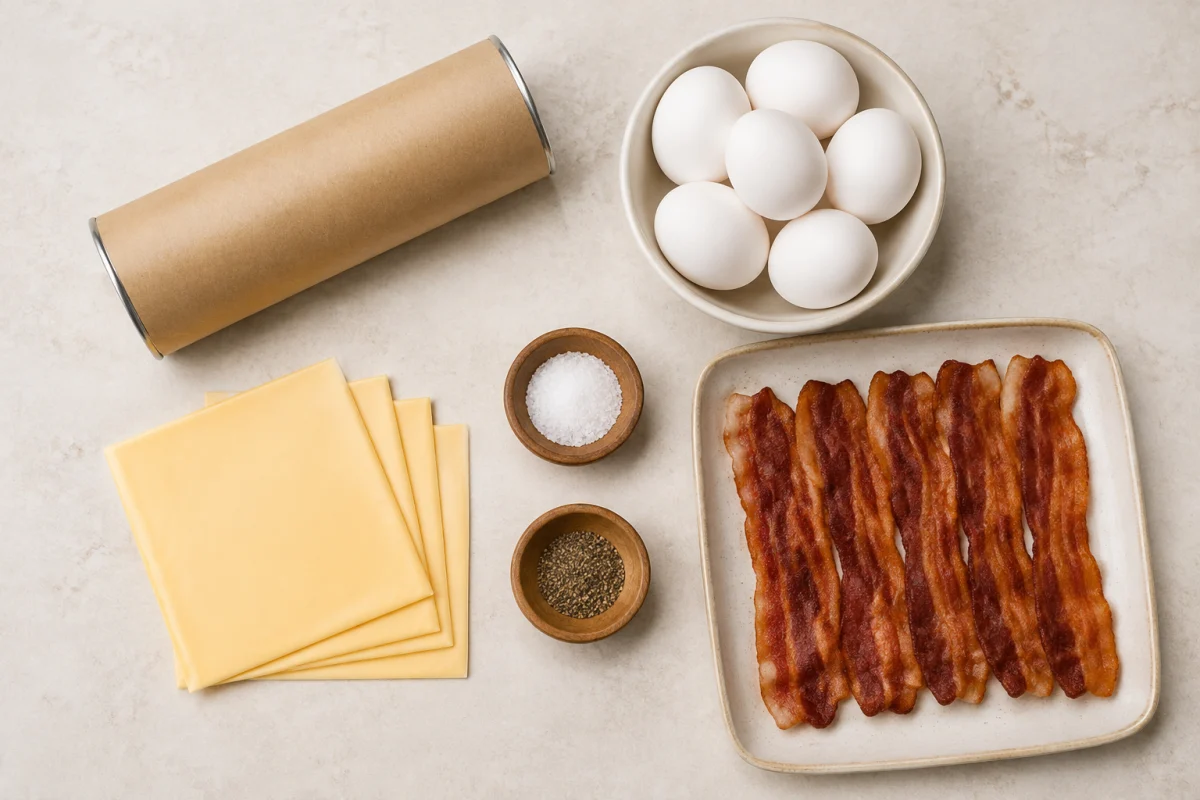
You need one standard can of refrigerated crescent-roll dough, 6 large eggs, 4 slices American cheese, 6 strips cooked bacon, salt, and black pepper. The dough should divide into eight triangles, and each cheese slice is cut in half to make eight portions.
American cheese melts smoothly and stays creamy, but cheddar, Monterey Jack, Swiss, or pepper Jack can be substituted. Whatever cheese you choose, keep the pieces within the wide end of the dough so melted cheese does not run onto the baking sheet.
If you enjoy this recipe, you may also like Chocolate Granola Peanut Butter Cups.
How to Make Breakfast Crescent Rolls

- Preheat. Heat the oven to 375°F and line a baking sheet with parchment.
- Cook the bacon. Fry until crisp, drain well, and break the strips into pieces that fit the dough.
- Scramble the eggs. Season lightly and cook just until softly set. Divide into eight portions.
- Prepare the dough. Separate the refrigerated dough along its perforations into eight triangles.
- Fill. Place half a cheese slice, one portion of egg, and bacon on the wide end of each triangle.
- Roll. Starting at the wide end, roll toward the point and tuck the tip underneath. Place seam-side down.
- Bake. Bake for about 13 minutes, until deeply golden and cooked through.
- Rest. Cool for 2 to 3 minutes before serving.
For storage details after serving, the USDA leftovers and food safety guidance.
Cook the Bacon Before Assembly
The bacon must be fully cooked before it goes into the dough. The pastry bakes quickly and does not provide enough time or airflow to cook raw bacon safely. Fry the strips until crisp enough to hold their shape, then drain them on paper towels.
Remove visible surface grease before assembly. Greasy bacon can prevent the inner dough from setting and encourage the seam to slide open. Six strips are enough when broken or cut to match the width of each triangle.
If you enjoy this recipe, you may also like Blueberry Cinnamon Roll Casserole.
Keep the Scrambled Eggs Tender
Whisk the eggs until the whites and yolks are uniform, season with salt and pepper, and cook over medium-low heat. Pull the pan from the heat when the eggs are softly set and still look slightly moist.
The eggs continue cooking inside the rolls, so a dry scramble becomes firmer in the oven. Let them cool for a few minutes and divide the mixture into eight equal portions before opening the dough.
Work With Cold, Flexible Dough
Keep the crescent dough refrigerated until the filling is ready. Cold dough separates more cleanly and holds its shape around the eggs. Open the can carefully and unroll the sheet on a clean surface.
Follow the perforations rather than stretching the triangles. If a seam tears, pinch it closed with cool fingers. Dough that becomes sticky can be returned to the refrigerator for five minutes.
Choose and Portion the Cheese
Cut four square cheese slices in half to create eight smaller rectangles. Place one piece over the wide end of each triangle before adding the egg. This forms a creamy base and helps hold small egg curds in place.
For firmer natural cheese, use thin slices or finely shredded cheese so it melts during the 13-minute bake. Avoid a thick block at the center, which can remain cool while the pastry becomes brown.

Fill Without Overloading the Dough
Arrange the eight dough triangles first, then distribute the cheese and egg among them before adding bacon. This prevents the final rolls from receiving either too much or too little filling.
Keep the ingredients on the widest third of each triangle and leave the edges exposed. If an egg portion is too large to wrap comfortably, remove a spoonful rather than stretching the pastry until it tears.
Roll and Seal Securely
Lift the wide corners slightly around the filling, then roll toward the narrow point. The dough should spiral around the filling without being pulled tight. Tuck the pointed tip beneath the roll and set it against the parchment.
Leave several inches between rolls so hot air can circulate. A seam facing upward can unfold as the dough expands, while seam-side-down placement uses the roll's own weight to hold it closed.
Bake Until Deeply Golden
Bake on the center rack at 375°F for about 13 minutes. Look for an even golden-brown surface, especially around the lower folds. Pale dough at the seams may still be soft inside.
Ovens and baking sheets vary, so begin checking at 11 minutes and add time as needed. If the bottoms darken quickly on a thin pan, place a second empty baking sheet beneath it for insulation.
Rest Before the First Bite
Move the pan to a rack and wait 2 to 3 minutes. The pastry firms, the cheese settles, and the very hot steam inside has time to dissipate.
Serve the rolls warm with fruit, salsa, or a simple green salad for brunch. They are designed to be handheld, but a napkin or small plate is useful while the cheese is still soft.
Make-Ahead Options
Cook the bacon and eggs up to one day ahead and refrigerate them separately. Assemble with cold dough shortly before baking. Fully assembled unbaked rolls can wait covered in the refrigerator for a few hours, but the best lift comes from baking soon after opening the can.
For a crowd, prepare multiple filling portions first and work with one can of dough at a time so each batch stays cold.
Storage and Reheating
Refrigerate leftovers within two hours and use them within three days. Reheat in a 325°F oven or air fryer until the center reaches 165°F. These methods restore the flaky exterior better than a microwave.
If using a microwave, heat in short intervals and let the roll stand before eating because the cheese can become much hotter than the pastry.
Troubleshooting
- Dough is soggy: Drain bacon and cook eggs until softly set without pooled liquid.
- Rolls open: Tuck the pointed end underneath and place seam-side down.
- Centers feel doughy: Bake until the lower folds are golden, not merely the tops.
- Filling escapes: Use smaller portions and keep the dough edges clear.
- Eggs are dry: Remove them from the skillet while still slightly moist.
Conclusion
Cook and drain the bacon, then softly scramble six seasoned eggs. Divide refrigerated crescent dough into eight triangles and top each wide end with cheese, egg, and bacon. Roll toward the point, tuck the seam underneath, and bake on parchment at 375°F for about 13 minutes until deeply golden.
Frequently Asked Questions
- → Can breakfast crescent rolls be assembled ahead?
Yes. Assemble them a few hours ahead, cover, and refrigerate until baking. For the best rise, do not leave opened dough at room temperature.
- → Can I replace the bacon?
Yes. Fully cooked sausage, diced ham, or turkey bacon can be used. Drain any excess fat before filling the dough.
- → Why are my crescent rolls doughy inside?
Too much hot or wet filling can slow baking. Use modest cooled portions and bake until the folds near the base are golden.
- → How do I reheat breakfast crescent rolls?
Warm them in a 325°F oven or air fryer until the center reaches 165°F. This keeps the outside crisper than microwaving.