


Cheesy chicken Parmesan tortellini combines golden flour-coated chicken, cheese-filled pasta, tomato sauce, Parmesan, and mozzarella in one generous skillet. It carries the flavor of chicken Parmesan but replaces breading and long baking with bite-size chicken and frozen tortellini for a faster dinner.
The recipe serves four in about 30 minutes. Browning the chicken in olive oil and butter creates crisp edges, while cooking the tortellini directly in sauce keeps cleanup simple. The most important details are evenly sized chicken, a light flour coating, a covered gentle simmer, and a final temperature check of 165°F.
Ingredients for Chicken Parmesan Tortellini
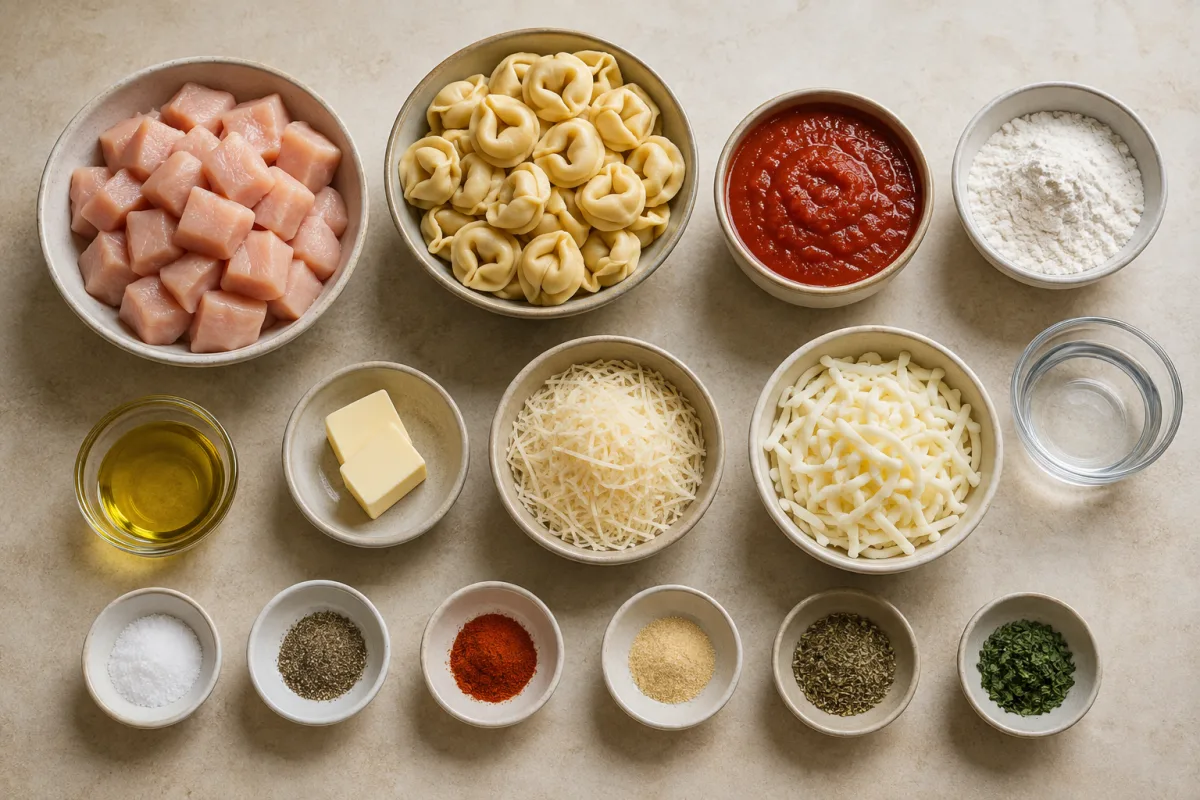
For the chicken, use 2 large breasts cut into cubes, salt, pepper, garlic powder, 2 tablespoons olive oil, and 2 tablespoons butter. The dredging mixture combines 1/2 cup flour with 1/2 teaspoon each salt, black pepper, paprika, and garlic powder plus 1 teaspoon Italian seasoning.
For the pasta, gather one 19-ounce bag frozen tortellini, one 24-ounce jar pasta sauce, and 1/4 cup water. Finish with 1 cup shredded Parmesan plus more for serving, 3/4 cup shredded mozzarella, and dried parsley. Keep raw chicken and its flour separate from ready-to-eat ingredients.
If you enjoy this recipe, you may also like Greek Pastitsio.
How to Make Chicken Parmesan Tortellini
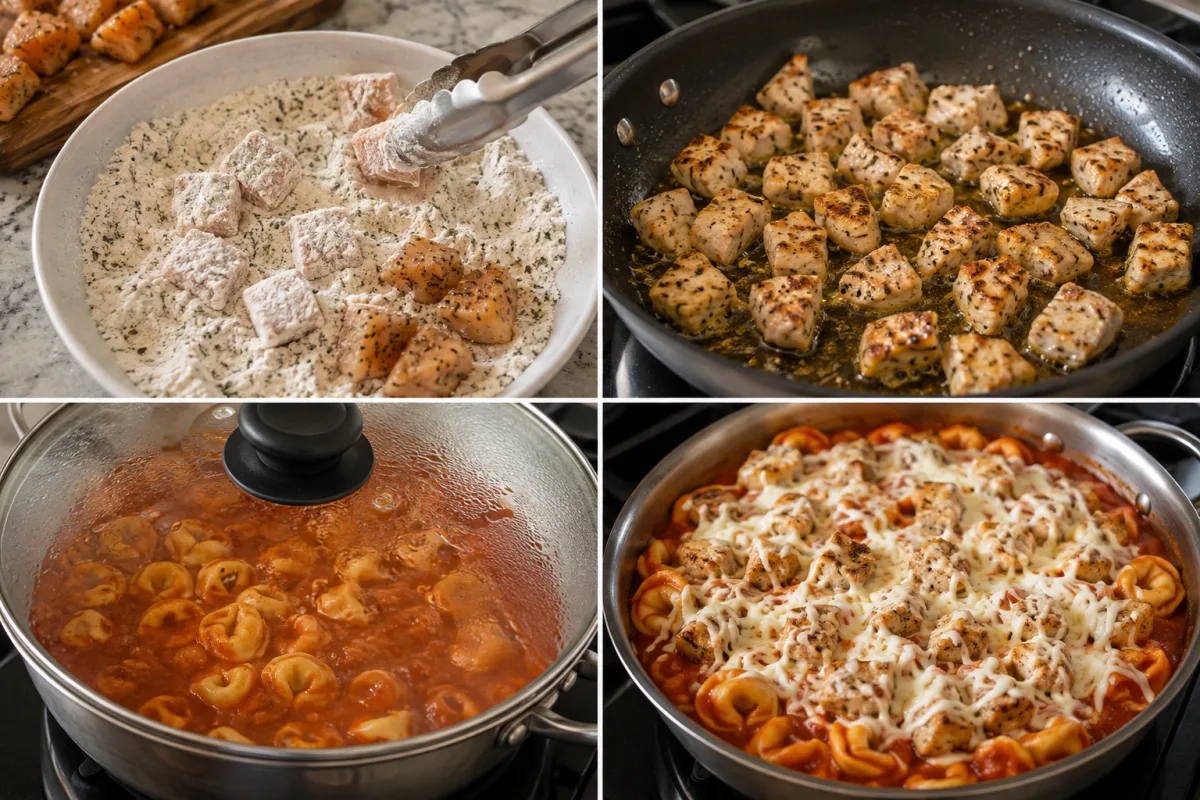
- Season chicken. Cut breasts into even cubes and add salt, pepper, and garlic powder.
- Prepare dredge. Mix flour, salt, pepper, paprika, garlic powder, and Italian seasoning in a shallow dish.
- Coat. Toss chicken lightly in the flour and shake off excess.
- Brown. Heat oil and butter over medium-high and cook chicken for 4 to 5 minutes per side, working in batches if needed, until 165°F.
- Add Parmesan. Sprinkle 1 cup Parmesan over the chicken and stir briefly, then transfer to a clean plate.
- Cook tortellini. Add frozen pasta, sauce, and water to the skillet. Cover and simmer about five minutes until tender.
- Finish. Add mozzarella and chicken, sprinkle with Parmesan and parsley, cover until melted, and serve hot.
For storage details after serving, the USDA leftovers and food safety guidance.
Cut Chicken Into Even Cubes
Trim the chicken and cut it into pieces of similar thickness. Even cubes brown at the same rate and make it easier to reach 165°F without drying the smallest pieces.
Blot the chicken dry before seasoning. Moisture turns flour into a thick paste and encourages steaming instead of the light golden coating needed here.
If you enjoy this recipe, you may also like One Pan American Goulash.
Use a Light Flour Coating
Combine the dredging ingredients thoroughly so paprika and Italian seasoning are distributed. Add chicken in small groups, turn to coat, and shake off loose flour.
A thin film is enough to create color and help Parmesan adhere. Discard leftover flour that contacted raw poultry; it cannot be saved for another use.
Brown in Oil and Butter
Olive oil raises the cooking fat's tolerance, while butter contributes flavor and color. Heat both until the butter foams, then arrange chicken in one layer.
Leave space between pieces. Crowding lowers the skillet temperature and produces a pale, damp coating. Cook in two rounds if necessary and adjust heat if the butter begins to darken too quickly.
Coat With Parmesan Briefly
Once the chicken is fully cooked, sprinkle the cup of shredded Parmesan over it and toss just until the cheese clings and begins to melt. Do not leave it on high heat long enough to scorch.
Transfer the chicken before starting the pasta. This prevents the cubes from overcooking during the covered tortellini simmer.
Loosen Sauce With Water
Add frozen tortellini to the same skillet, followed by the full jar of pasta sauce and 1/4 cup water. Scrape up flavorful browned bits while stirring.
The water gives the frozen pasta enough steam and keeps the sauce from reducing before the tortellini becomes tender. Use the measured amount first; additional liquid is rarely needed.
Cover for a Gentle Simmer
Reduce to medium, cover, and simmer for about five minutes. Stir once if the skillet has hot spots, then replace the lid promptly.
Check a tortellini rather than relying only on time. It should be hot through and tender without splitting. Different brands and sizes may require a few extra minutes.

Melt the Final Cheese Gently
Return chicken and any juices to the skillet, scatter mozzarella evenly, and add a little more Parmesan and parsley. Cover over low heat just until the mozzarella softens.
Avoid vigorous stirring after the tortellini is tender because the filled pasta can tear. Fold gently from the bottom so chicken and sauce remain evenly distributed.
Serve Without Overcooking
Take the skillet off direct heat as soon as the cheese melts. Residual heat continues cooking both chicken and tortellini, so delaying at the burner can toughen them.
Serve with a green salad, steamed broccoli, or roasted vegetables. Warm bread is optional because the filled pasta already makes a substantial meal.
Storage and Reheating
Cool leftovers promptly in shallow containers and refrigerate for up to three days. The pasta absorbs sauce as it rests, so reserve a little extra sauce if planning for leftovers.
Reheat covered over low heat with a spoonful of water or sauce until steaming and 165°F. Stir carefully. Freezing is possible, but tortellini may soften after thawing.
Timing the Chicken and Tortellini
Have the sauce, water, and cheeses measured before the chicken reaches the skillet. The recipe moves quickly once browning begins, and keeping those ingredients ready prevents cooked chicken from sitting out longer than necessary.
Use the chicken cooking time to bring the frozen tortellini and sauce within reach. When the chicken comes out, lower the heat before adding the tomato sauce so splattering stays controlled. This simple order also preserves the browned bits that give the finished sauce extra savory flavor.
Troubleshooting
- Chicken coating falls off: Dry the meat and shake off excess flour.
- Chicken does not brown: Preheat the skillet and cook in batches.
- Tortellini is firm: Add a splash of water, cover, and simmer longer.
- Sauce is watery: Rest uncovered briefly before adding cheese.
- Pasta splits: Lower heat and stir gently after it becomes tender.
Conclusion
Lightly dredge seasoned chicken cubes, brown them in olive oil and butter to 165°F, and coat briefly with Parmesan. Simmer frozen tortellini in tomato sauce and water, return the chicken, add mozzarella and more Parmesan, then cover only until melted.
Frequently Asked Questions
- → Can I use refrigerated tortellini?
Yes, but it may cook faster than frozen; follow its package timing and reduce the covered simmer.
- → Why is my chicken coating soggy?
Dry the chicken, use a light dredge, preheat the pan, and avoid crowding.
- → Can I make this ahead?
It is best fresh, but leftovers keep refrigerated for up to three days.
- → How do I reheat chicken Parmesan tortellini?
Warm it covered over low heat with a little sauce or water until 165°F.