

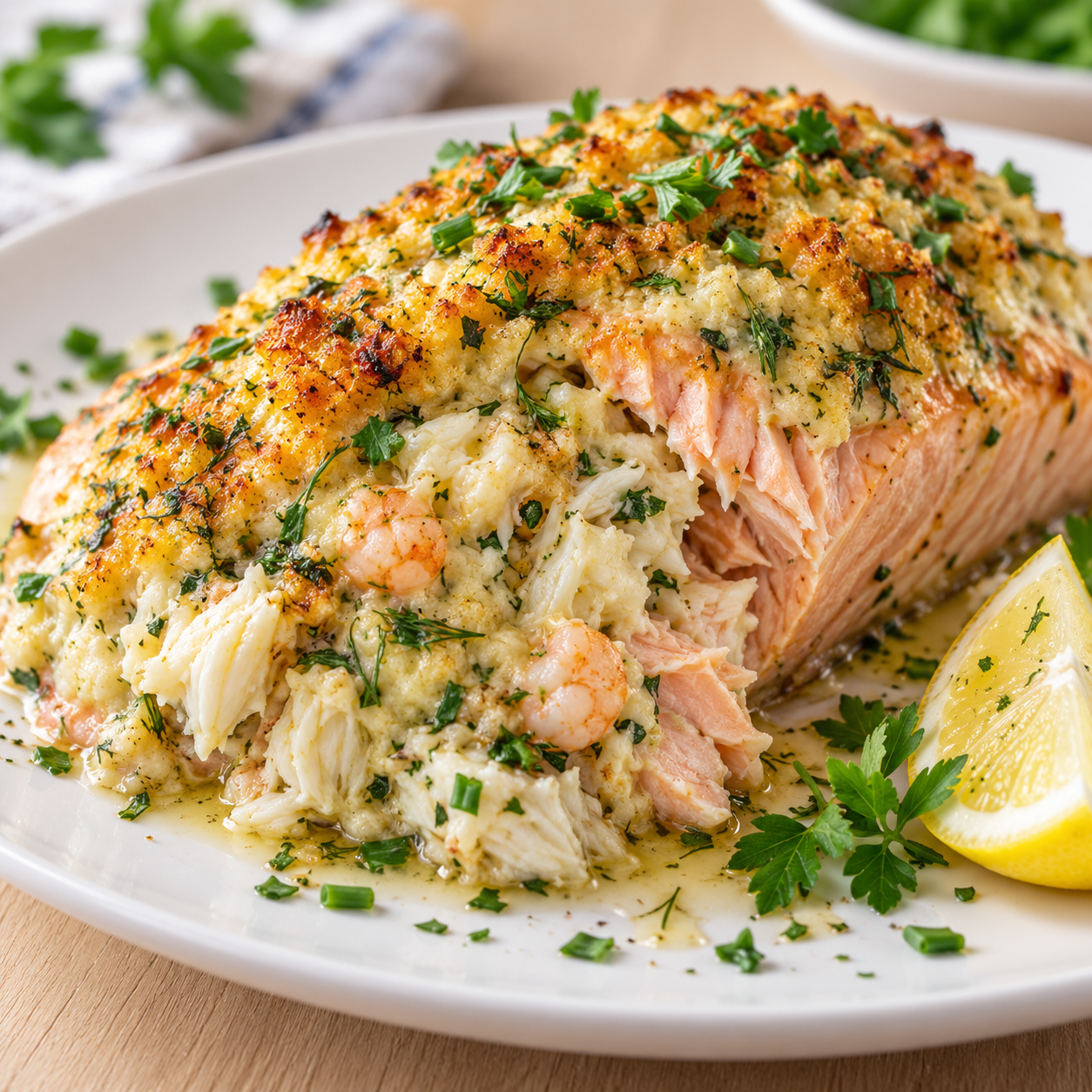
Stuffed salmon looks like something from a seafood restaurant, but it comes together with ingredients most grocery stores already carry. A rich crab and shrimp filling gets packed into a deep pocket in each fillet, then the whole thing bakes under a brush of garlic butter until the top turns golden.
This is a good dinner for a weeknight that feels a little special, or for a small holiday table that needs one dish nobody has to babysit. Once the filling is mixed, the rest is just cutting, stuffing, and baking.
What makes it work is restraint. Big pieces of crab stay visible instead of disappearing into a paste, and the chopped shrimp adds a little bite so every forkful has texture.
What Fills Every Stuffed Fillet
Good stuffed salmon starts with good crab. Pick through lump crab meat for stray bits of shell, and buy the thickest salmon fillets you can find so each one holds a deep pocket of filling without falling apart.
If you enjoy this recipe, you may also like Loaded Pizza Spaghetti Bake.
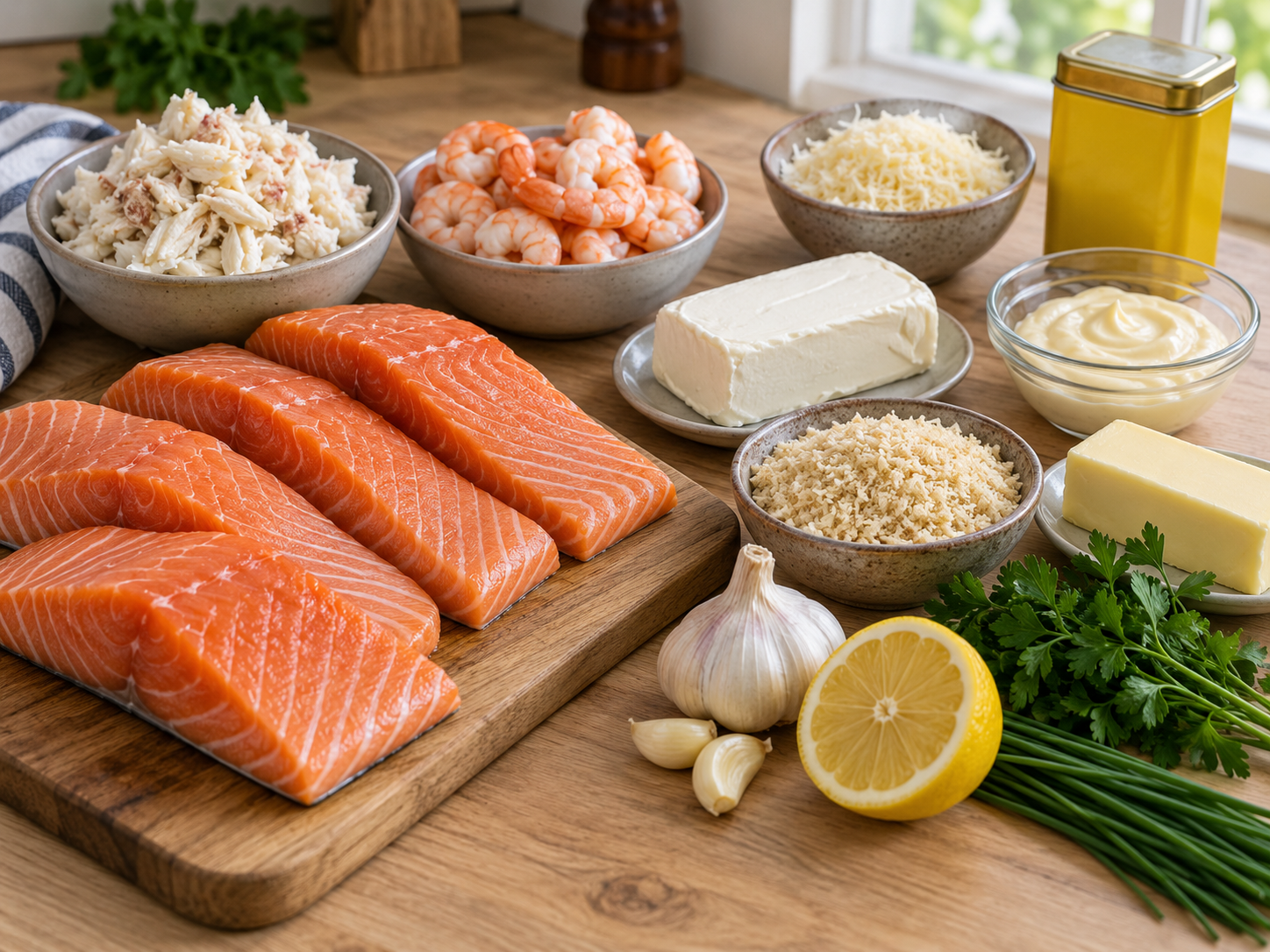
- Salmon fillets. Choose thick, center-cut pieces so each one can hold a deep pocket of filling without breaking apart.
- Lump crab meat. Picked over for shell, it is the main event. Keep the pieces large for texture.
- Cooked shrimp. Chopped small, it adds a briny bite between the crab and the cheese.
- Cream cheese. Binds the filling and keeps it rich without turning heavy.
- Mayonnaise. Loosens the filling just enough to spread, and keeps it moist as it bakes.
- Parmesan cheese. Adds salt and a savory edge, and helps the top turn golden.
- Panko breadcrumbs. Gives the filling enough structure to stay in the pocket instead of sliding out.
- Garlic and lemon juice. Brighten the whole dish and cut through the richness of the filling.
- Chives and parsley. Fresh color and a mild onion note, in the filling and as a finish.
- Old Bay seasoning. The classic seafood spice blend that ties the crab, shrimp, and salmon together.
- Butter. Melted with garlic and brushed over the fillets for a glossy, savory crust.
For storage details after serving, the USDA leftovers and food safety guidance.
Stuffing and Baking the Salmon
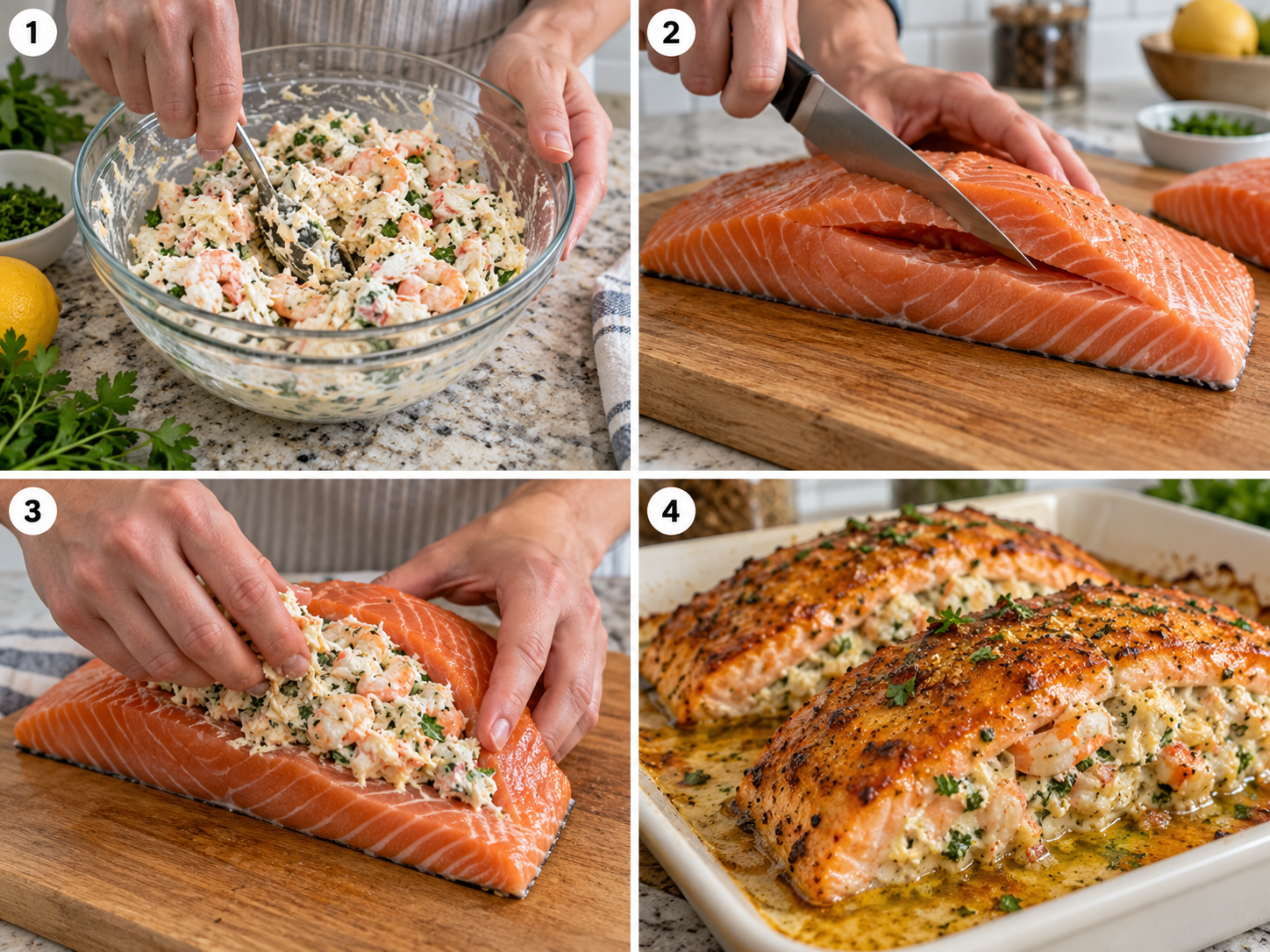
- Mix the filling. In a bowl, fold together the crab, chopped shrimp, cream cheese, mayonnaise, parmesan, panko, chives, parsley, garlic, Old Bay, and lemon juice. Stir gently so the crab stays in chunks instead of turning to paste.
- Cut the pocket. Pat each salmon fillet dry. Using a sharp paring knife, slice horizontally into the thickest side to create a deep pocket, stopping about half an inch from the far edge and the bottom so it holds together.
- Pack the filling. Spoon the crab and shrimp mixture into each pocket, pressing gently and mounding any extra on top. Secure the opening with a toothpick if the filling wants to spill out.
- Make the garlic butter. Whisk melted butter with the remaining garlic and a splash of lemon juice, then brush it over the top and sides of each stuffed fillet.
- Bake until done. Arrange the fillets in a baking dish and bake at 400°F (200°C) for 18 to 22 minutes, until the salmon is opaque and reaches 145°F at the thickest part, the benchmark the FDA sets for safely cooked seafood, and the filling is hot and lightly golden.
- Rest, then serve. Let the fillets sit for 5 minutes before moving them. Finish with a squeeze of lemon and a scatter of parsley.
If you enjoy this recipe, you may also like Cheesy Tater Tots BBQ Sausage.
Cutting a Pocket That Holds
The pocket is the one step that intimidates people, and it is simpler than it looks. Lay the fillet flat and cut into the thickest long side, keeping the knife level and parallel to the cutting board. Stop short of the opposite edge and the bottom so you end up with a hinge, not two separate pieces.
A fillet that is at least an inch and a half thick gives you room to work. Thinner tail-end pieces tear easily and hold less filling, so save those for a different meal and pick the thicker center cuts for stuffing.
Why the Filling Stays Chilled
Cream cheese and mayonnaise firm up in the cold, which is exactly what holds big pieces of crab together when you pack them into the pocket. A filling that sits out and warms up turns soft and runny, and it slumps out of the fillet before it ever reaches the oven.
Mix the filling first and let it chill for ten or fifteen minutes while you prep the salmon. Stuff the fillets right before they go into the oven rather than letting raw fish sit stuffed on the counter.
Smart Swaps for This Recipe
Canned or pasteurized crab meat is a fine stand-in for fresh lump crab and costs a lot less. If panko is the only thing keeping this recipe from being gluten-free, swap in gluten-free breadcrumbs or crushed gluten-free crackers in the same amount.
No Old Bay on hand? A mix of paprika, celery salt, and a pinch of cayenne gets close. Cottage cheese or mascarpone can stand in for the cream cheese if that is what is in the fridge, and either one keeps the filling just as rich.
What to Serve Alongside
This dish is rich on its own, so simple sides work best. A squeeze of lemon and something green balances the butter and cheese without competing with the crab and shrimp.
Steamed green beans or roasted asparagus take about the same time as the salmon, so they can go into the oven together. A plain rice pilaf or a loaf of crusty bread is useful for scooping up any filling that escapes onto the plate.
Storing and Reheating Leftovers
Move leftovers into the refrigerator within two hours of cooking, which is the window the FDA recommends for any cooked seafood, and keep the fridge at 40°F or below. Store the fillets in a sealed container and plan to eat them within a few days.
Reheat gently in a 300°F oven until just warmed through, about 10 minutes. A microwave works in a pinch, but it tends to firm up the shrimp and crab more than the oven does.
Frequently Asked Questions
- → Can I use frozen crab and shrimp for this recipe?
Yes. Thaw both in the refrigerator overnight, then pat them very dry before mixing the filling. Extra moisture is the main reason a filling turns watery and slides out of the pocket during baking.
- → What can I substitute for lump crab meat?
Canned or pasteurized crab meat works well and keeps the cost down. Imitation crab is an option too, though the texture is softer and the flavor is sweeter than real crab.
- → How do I know when the stuffed salmon is fully cooked?
Check the thickest part of the fillet with a food thermometer. The flesh should be opaque and separate easily with a fork once it is done.
- → Can I make the filling ahead of time?
Yes, mix the crab and shrimp filling up to a day ahead and keep it covered in the refrigerator. Stuff the fillets just before baking rather than letting raw fish sit stuffed for hours.
- → What should I serve with crab and shrimp stuffed salmon?
Something simple works best next to a rich filling. Steamed green beans, a lemony rice pilaf, or a plain green salad all let the salmon stay the main event.
- → Why did the filling leak out while baking?
The pocket was probably cut too shallow or too close to the edge. Cut deep into the center of the fillet without slicing through the bottom, and mound the filling rather than overstuffing past the opening.
- → Can I make this with a different fish?
Thick fillets of halibut or a firm white fish like cod work in place of salmon. Keep the thickness similar so the cooking time and filling temperature stay about the same.