

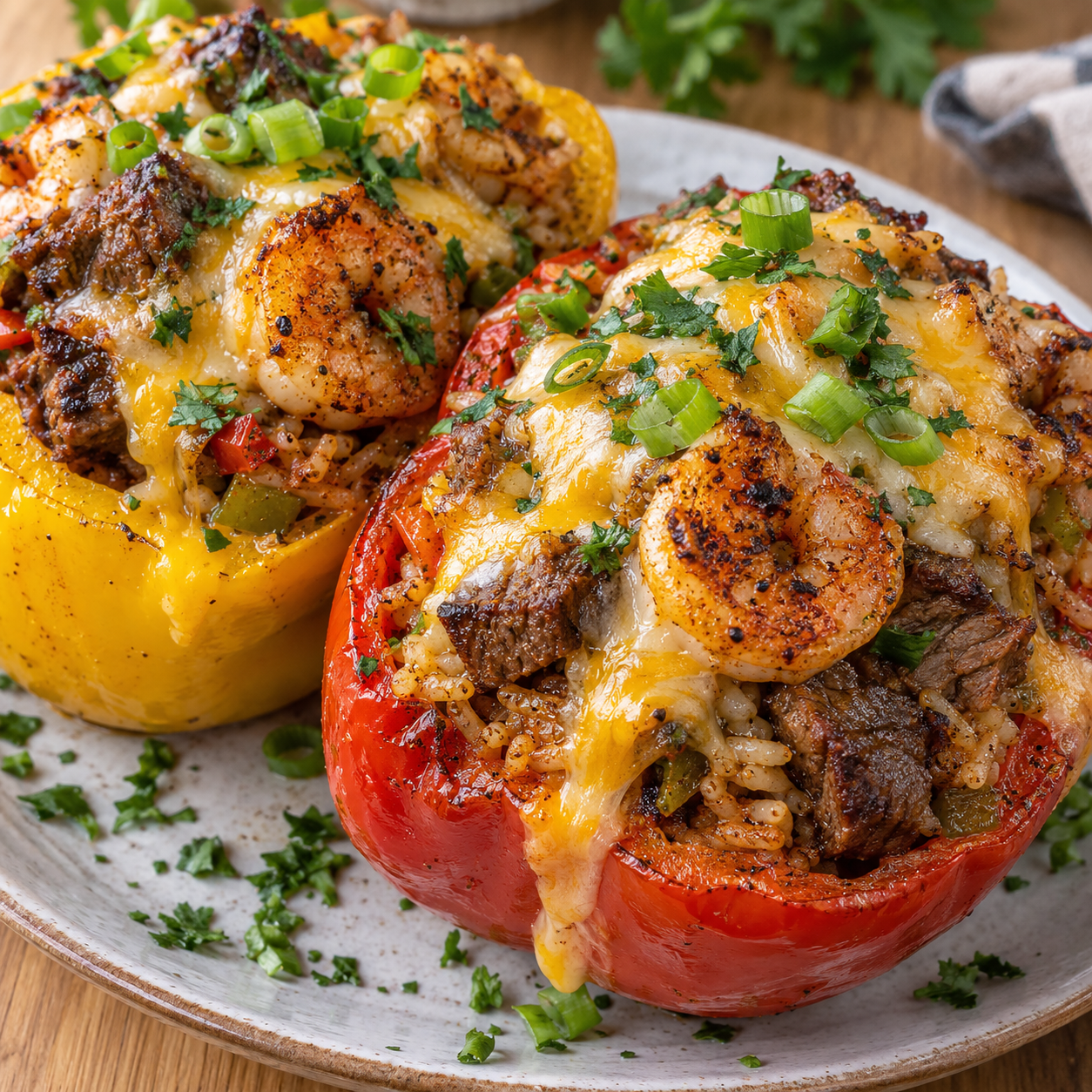
Surf and turf used to mean a steakhouse splurge. This version turns it into a weeknight dinner you stuff into bell peppers.
Diced sirloin gets a hard sear, shrimp go in just long enough to turn pink, and a Cajun-spiced rice base holds everything together under a layer of melted cheese. It looks like it took all afternoon but comes together in under an hour.
Make it for a casual night in or a Sunday dinner that feels like an occasion.
What Fills These Peppers
Look for bell peppers with flat bottoms so the halves stand steady in the baking dish. Buy the shrimp and steak the same day you plan to cook for the best texture.
If you enjoy this recipe, you may also like Crab and Shrimp Stuffed Salmon.
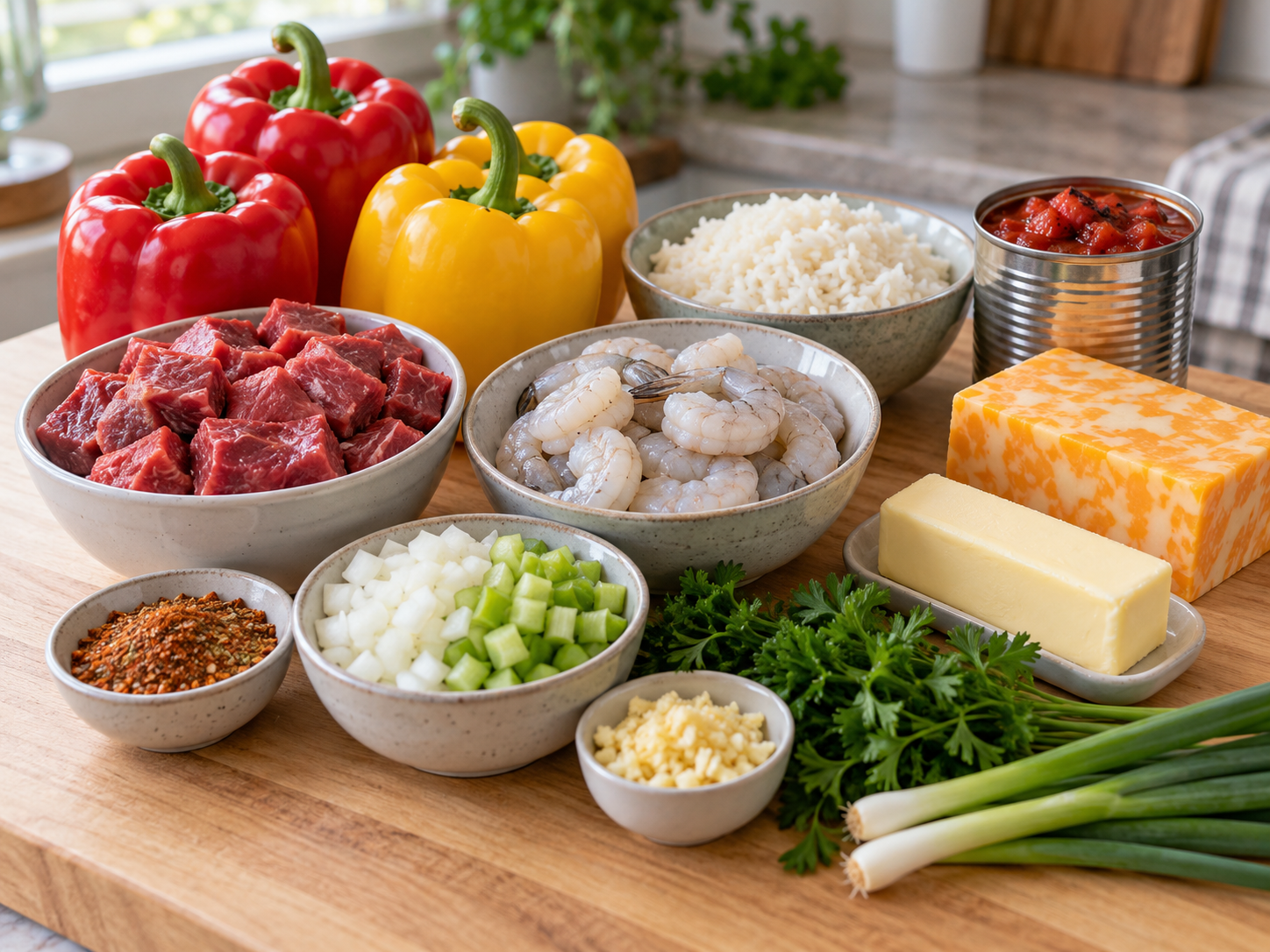
- Bell peppers. Large ones with flat sides sit steadier once halved and filled.
- Sirloin steak. A lean cut that sears fast and stays tender when diced small.
- Large shrimp. Brings the "surf" side of the dish and cooks in minutes.
- Cajun seasoning. Paprika, cayenne, garlic and onion powder, thyme and oregano build the backbone of flavor.
- Onion, celery and garlic. The aromatic base that gives the filling depth.
- Cooked white rice. Stretches the filling and soaks up the Cajun flavors.
- Fire-roasted diced tomatoes. Adds moisture and a touch of sweetness against the heat.
- Chicken broth. Loosens the filling so it doesn't bake dry.
- Hot sauce. A splash for extra heat you can adjust to taste.
- Colby jack cheese. Melts into a gooey layer over the filling.
- Butter. Carries the aromatics and adds richness to the base.
- Green onions and parsley. A fresh, sharp finish once the peppers come out of the oven.
For storage details after serving, the USDA leftovers and food safety guidance.
Building The Cajun Filling
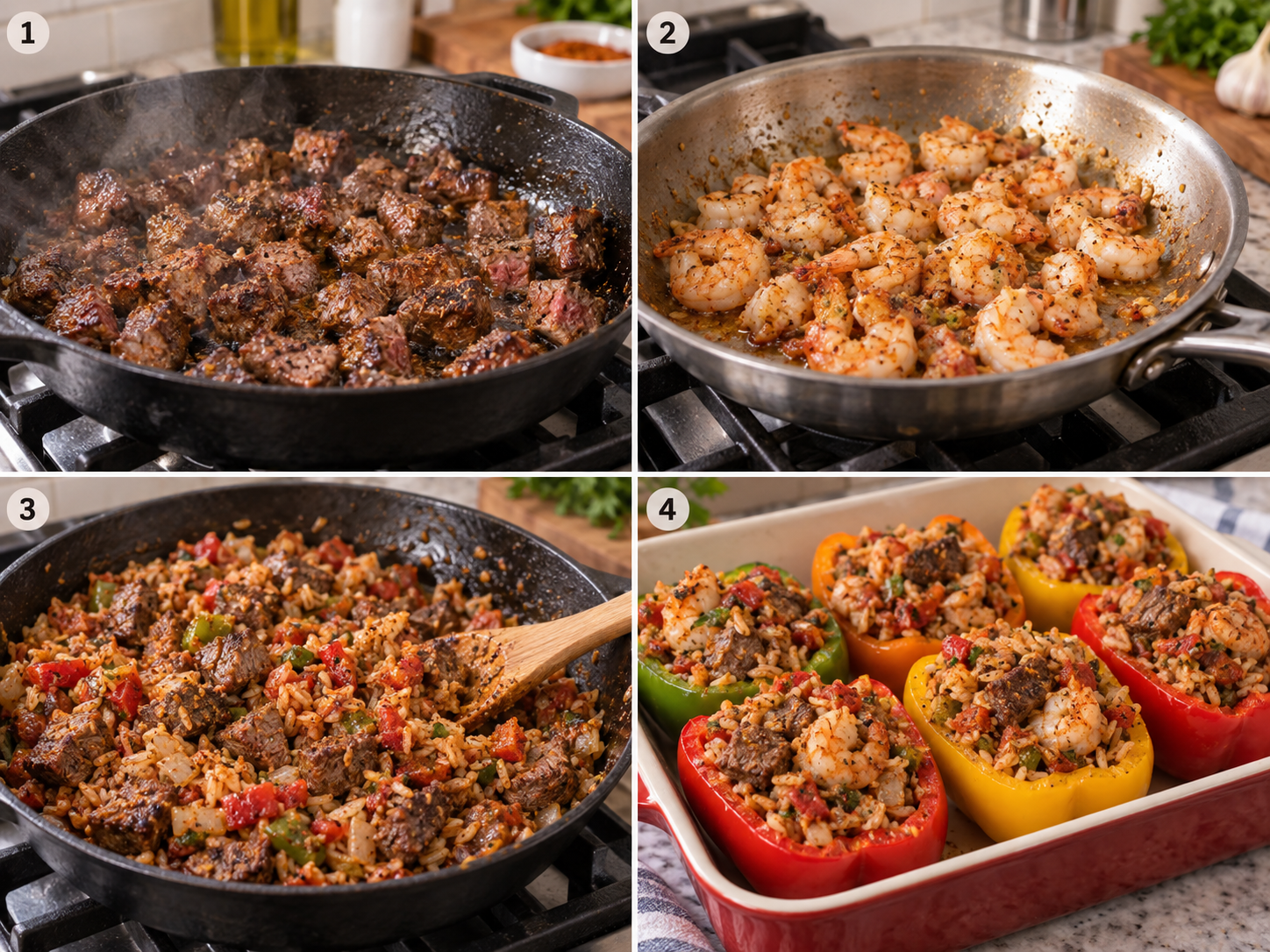
- Prep the peppers. Halve the bell peppers lengthwise, remove the cores and seeds, and arrange cut side up in a baking dish. Bake at 375°F for 10 minutes to soften slightly while you build the filling.
- Sear the steak. Toss the diced sirloin with half the Cajun seasoning and sear in a hot skillet for 2 to 3 minutes, turning once, until browned outside but still rare in the center. Remove to a plate; it will finish cooking in the oven.
- Build the Cajun base. In the same skillet, melt the butter and cook the onion, celery, and garlic for 4 to 5 minutes until softened.
- Simmer the rice. Stir in the cooked rice, diced tomatoes, chicken broth, remaining Cajun seasoning, and hot sauce. Simmer for 5 minutes so the flavors meld.
- Cook the shrimp separately. In a second pan, cook the chopped shrimp over medium-high heat for 1 to 2 minutes per side until the flesh is pearly and opaque, then remove from the heat right away.
- Fold everything together. Stir the seared steak and cooked shrimp into the rice base off the heat so neither one overcooks.
- Stuff and bake. Divide the filling among the pepper halves, pressing gently. Cover with foil and bake at 375°F for 15 minutes, then uncover, top with cheese, and bake 8 to 10 more minutes until the cheese is melted and the filling is bubbling.
- Rest and garnish. Let the peppers rest 5 minutes, then scatter with green onions and parsley before serving.
If you enjoy this recipe, you may also like Pizza Stuffed Peppers with Beef and Cheese.
Why The Steak Gets Seared Hot
A hot pan and a dry steak surface are what give you real browning instead of gray, steamed meat. Pat the diced sirloin dry before it hits the pan and resist the urge to crowd the skillet, since too much meat at once traps steam and stalls the sear.
Because the steak finishes cooking inside the pepper, it only needs a quick sear at this stage. Whole beef steaks are safe at a minimum internal temperature of 145°F followed by a 3-minute rest, according to Texas A&M's Dinner Tonight program, and the diced pieces here reach well past that once the peppers finish baking.
Keep The Shrimp From Turning Rubbery
Shrimp go from tender to rubbery in about thirty seconds, so the biggest mistake here is cooking them with the steak and rice for the full bake time. Cook them alone just until the flesh turns pearly and opaque, which the FDA's seafood safety guidance points to as the sign they're done, then pull them off the heat immediately.
Folding them in at the very end, after the rice base has simmered, means they only pick up a little extra heat in the oven rather than cooking twice.
Easy Swaps For This Recipe
Poblano or Anaheim peppers give a milder, thinner-walled version of this dish if bell peppers feel too sweet against the Cajun spice. Ground beef can stand in for the diced sirloin for a cheaper, faster version, just brown it in the same skillet and drain any excess fat before building the rice base.
Andouille sausage is a natural addition if you want a smokier, more traditional Cajun profile. Slice it thin and brown it alongside the steak. For a milder dish, cut the cayenne in the seasoning blend by half and leave the hot sauce on the side at the table instead of mixing it in.
Make It Ahead And Reheat Well
The filling keeps well on its own in the fridge for up to 2 days, which makes this an easy recipe to stage ahead of a busy night. Stuff the peppers close to baking time rather than letting raw-stuffed peppers sit too long, so the pepper walls don't turn soft and watery.
Leftover baked peppers hold for about 3 days refrigerated in a sealed container. Reheat covered in the oven rather than the microwave to keep the shrimp from going tough and the cheese from turning greasy.
What To Serve Alongside
A simple green salad with a sharp vinaigrette cuts through the richness of the cheese and butter in the filling. Warm, crusty bread is good for mopping up any extra Cajun sauce left in the baking dish.
If you want to stretch the meal further, a side of buttery corn or a light coleslaw rounds things out without competing with the Cajun flavors already in the peppers.
Frequently Asked Questions
- → Can I use chicken or sausage instead of steak?
Yes. Diced chicken thigh or andouille sausage both work well in place of the sirloin. Chicken needs a slightly longer sear since it must be fully cooked before it goes into the filling, while andouille just needs browning since it's already cured.
- → Can I make this ahead of time?
Build the filling and pre-bake the pepper shells a day ahead, then store them separately in the fridge. Stuff the peppers right before the final bake so the cheese melts fresh instead of going rubbery from a second reheat.
- → What's the best way to reheat leftovers?
Reheat covered in a 350°F oven for about 15 minutes so the peppers warm through without drying out. A microwave works in a pinch, but the shrimp can turn a little tough.
- → Can I use a different pepper?</p>
Poblano or Anaheim peppers make a milder, thinner-walled swap for bell peppers. They cook a bit faster, so check them a few minutes early.
- → How do I keep the shrimp from turning rubbery?
Cook the shrimp on their own just until the flesh turns pearly and opaque, about 1 to 2 minutes per side, then pull them off the heat. They finish gently in the oven once stuffed, so starting them underdone protects the texture.
- → Can I freeze stuffed peppers?
Freeze the stuffed, unbaked peppers on a tray until firm, then transfer to a freezer bag for up to 3 months. Bake from frozen at 375°F, adding about 15 extra minutes and checking that the filling is hot throughout before adding the cheese topping.