

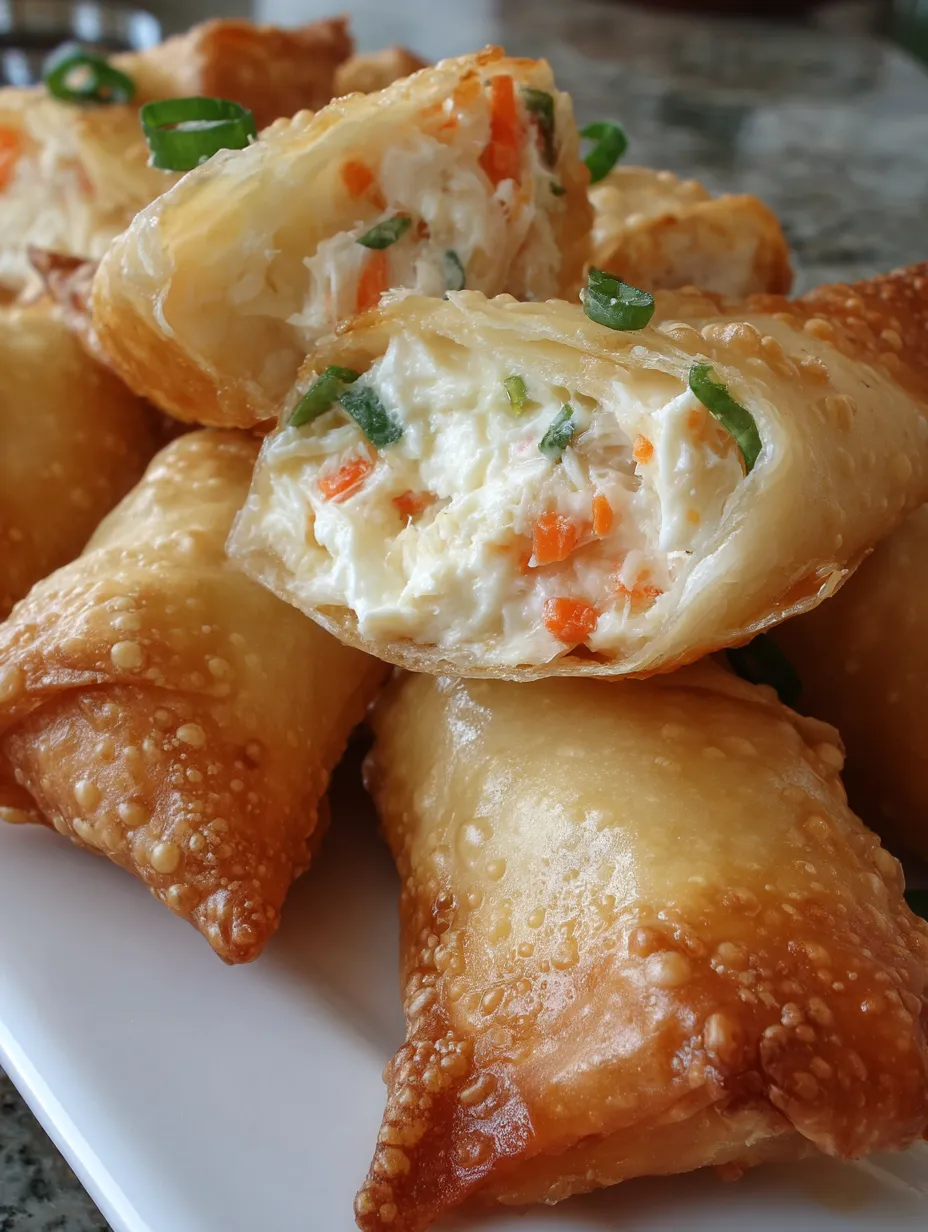
Crab Rangoon Egg Rolls turn a smooth seasoned cream-cheese filling and one-half pound of cooked white crabmeat into 8–10 crisp rolls. The recipe serves 4 and records 25 minutes total: 15 minutes of preparation and 10 minutes of cooking. Worcestershire sauce, garlic powder, onion powder, and three green onions season the filling, while egg-roll wrappers provide a larger, sturdier shell than a traditional wonton.
Crab Rangoon Egg Rolls Ingredients
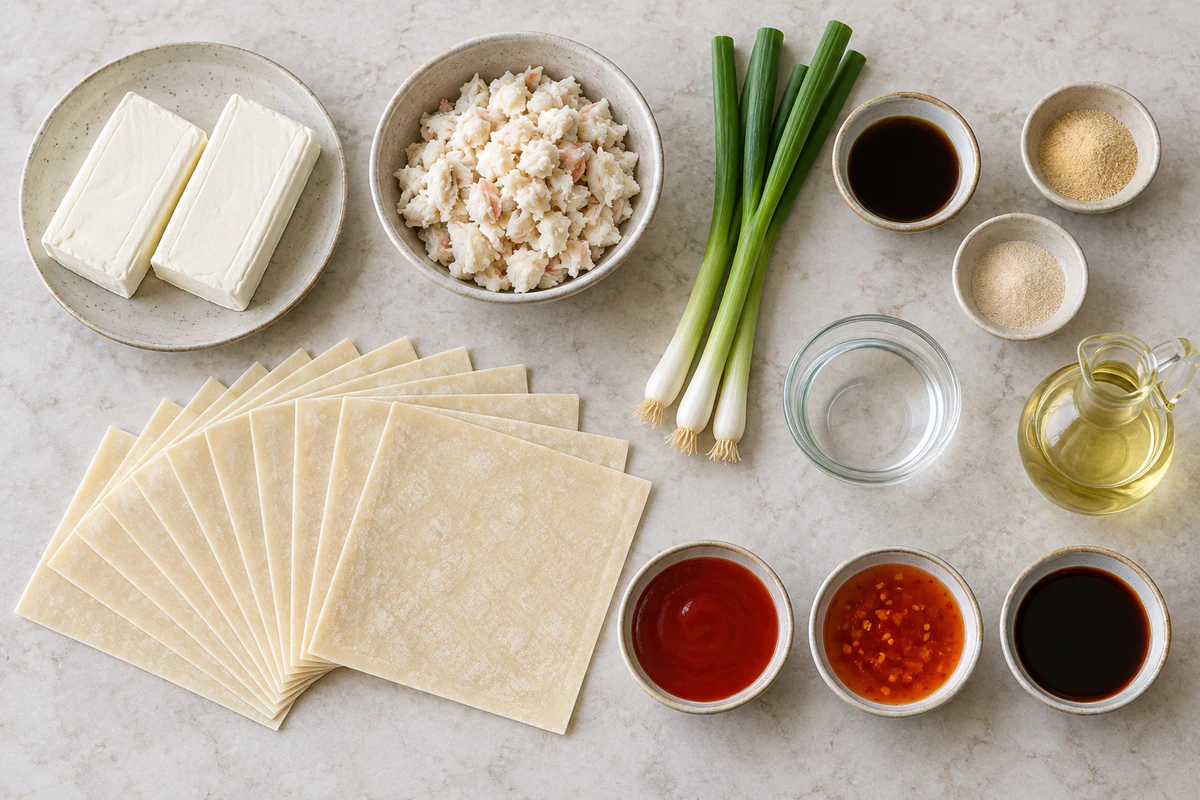
For the Filling: 16 ounces (2 packages) cream cheese, softened to room temperature; 1-2 tablespoons Worcestershire sauce (adjust to taste); 1 teaspoon garlic powder; 1/2 teaspoon onion powder; 3 green onions, finely chopped (both white and green parts); 1/2 pound fresh white crabmeat, cooked and flaked or diced.
For Assembly and Cooking: 8-10 egg roll wrappers (found in the refrigerated section of most grocery stores); Small bowl of water (for sealing wrappers); Vegetable oil for frying (about 2-3 cups, depending on your pot size).
Optional Dipping Sauces: Sweet and sour sauce; Sweet chili sauce; Soy sauce mixed with a little rice vinegar.
If you enjoy this recipe, you may also like Ham And Cheese Crescent Rolls.
How to Make Crab Rangoon Egg Rolls
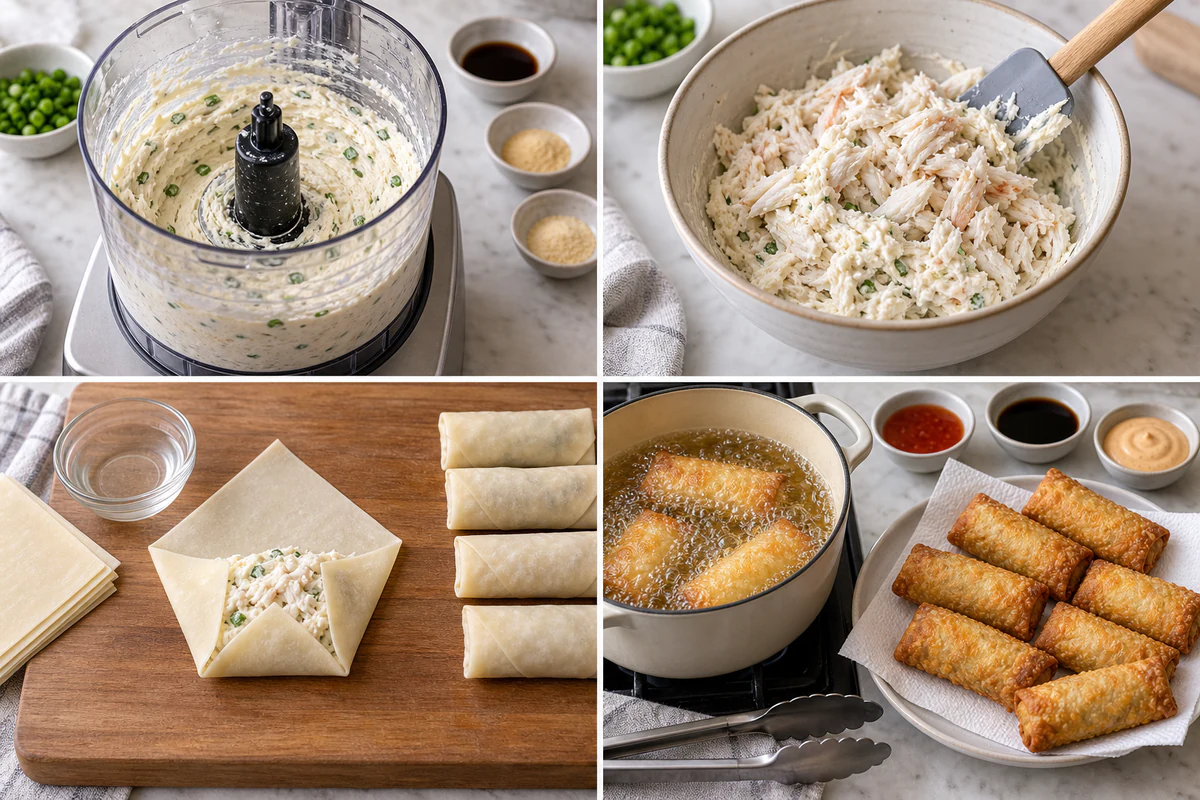
- Prepare the filling: In a food processor, combine the softened cream cheese, Worcestershire sauce, garlic powder, and onion powder. Pulse several times until the mixture is smooth and well-blended. Add the chopped green onions and pulse just a few times to incorporate them without completely puréeing them. This will maintain some texture in the filling.
- Add the crab: Transfer the cream cheese mixture to a mixing bowl. Gently fold in the crabmeat using a spatula or spoon, being careful not to break up the crab pieces too much. You want to preserve some of the crab texture for the best flavor experience. Taste the mixture and adjust seasonings if needed.
- Set up your wrapping station: Create a clean, flat workspace for assembling the egg rolls. Place a small bowl of water nearby to use for sealing the wrappers. Have a baking sheet or plate ready to hold the assembled egg rolls before cooking.
- Fill and wrap the egg rolls: Place an egg roll wrapper on your work surface with one corner pointing toward you (in a diamond orientation). Scoop about 3 rounded tablespoons of the crab filling onto the center of the wrapper, forming a short horizontal mound. Fold the bottom corner (the one pointing toward you) up and over the filling, tucking it under the filling slightly. Fold in the left and right corners toward the center, then continue rolling upward until only the top corner remains.
- Seal the egg rolls: Dip your finger in the bowl of water and moisten the edges of the final corner of the wrapper. Complete the roll, pressing gently to seal the edge. The water acts as a glue to keep the egg roll closed during frying. Place the finished egg roll seam-side down on your prepared baking sheet or plate. Repeat with the remaining wrappers and filling.
- Prepare for frying: In a heavy-bottomed pot or deep saucepan, add enough vegetable oil to reach a depth of about 2 inches. Heat the oil over medium-high heat until it reaches 375°F (190°C). If you don't have a thermometer, you can test if the oil is ready by dipping the handle end of a wooden spoon into it - if small bubbles form around the wood, the oil is ready.
- Fry the egg rolls: Carefully lower 2-3 egg rolls into the hot oil (depending on the size of your pot - don't overcrowd them). Fry for 1-2 minutes, turning occasionally with tongs or a slotted spoon, until they are golden brown and crispy on all sides. The filling is already fully cooked, so you're just frying until the wrapper is crisp and golden.
- Drain and cool: Remove the egg rolls using a slotted spoon or tongs and place them on a plate lined with paper towels to absorb excess oil. Allow the oil to return to 375°F before frying the next batch. Continue until all egg rolls are cooked.
- Serve: Let the egg rolls cool for a few minutes - the filling will be extremely hot right after frying. Slice them diagonally in half if desired for a more appetizing presentation. Serve warm with your choice of dipping sauces.
For storage details after serving, the USDA leftovers and food safety guidance.
Why the Order Matters
The cream cheese, Worcestershire sauce, garlic powder, and onion powder are pulsed first so the base becomes smooth before delicate crab enters. Green onions receive only a few pulses, retaining texture. Folding the crab by hand prevents it from becoming a paste. A diamond-oriented wrapper creates a long rolling path: filling sits in a short horizontal mound, the bottom corner comes up, both sides fold inward, and the top corner is moistened and sealed. Resting every raw roll seam-side down helps it stay closed. Frying only two or three at a time protects the oil temperature and leaves space to turn each roll. The oil returns to 375°F between batches before more rolls enter.
If you enjoy this recipe, you may also like Loaded Cheesy Pocket Tacos.
Critical Visual and Timing Cues
Use softened room-temperature cream cheese and stop processing once smooth. Fold in visible flakes of crab gently, then use about three rounded tablespoons of filling per wrapper. Keep the package of unused wrappers covered so they do not dry out while shaping. Moisten only the final corner and press the seam securely. Heat about two inches of vegetable oil to 375°F (190°C). Each small batch fries for one to two minutes, turning occasionally, until every side is evenly golden and crisp. Drain on paper towels and allow a few minutes of cooling because the cream-cheese center remains much hotter than the wrapper suggests.
Serving and Storage
Serve the 8–10 rolls warm, whole or sliced diagonally, with the recorded optional sweet-and-sour, sweet chili, or soy-and-rice-vinegar sauce. Keep the sauces on the side so the wrappers stay crisp. Refrigerate cooked leftovers promptly in a shallow airtight container after steam has dissipated. Reheat with dry oven or air-fryer heat when practical instead of adding moisture. The recipe contains dairy, shellfish, gluten, and soy; Worcestershire sauce and individual wrapper brands can introduce additional allergens, so inspect their labels. Cool frying oil completely before handling it, and never leave hot oil unattended.
Recorded Recipe Tips
- These Crab Rangoon Egg Rolls combine two popular Asian-inspired appetizers into one delicious treat - the creamy crab filling of crab rangoon with the crispy wrapper of an egg roll.
- For the best flavor, use real lump crabmeat rather than imitation crab. If you must use imitation crab, chop it finely and consider adding a pinch of sugar to mimic the natural sweetness of real crab.
- The amount of Worcestershire sauce can be adjusted to your taste - start with 1 tablespoon and add more if you prefer a stronger flavor.
- These egg rolls can be prepared ahead of time and frozen before cooking. Freeze them in a single layer, then transfer to a freezer bag for storage up to 3 months. When ready to cook, fry them directly from frozen, adding 1-2 minutes to the cooking time.
Conclusion
Crab Rangoon Egg Rolls makes 8-10 egg rolls in 25 minutes of recorded preparation and cooking, plus any separately stated chilling or resting time. Follow the exact ingredient list and ordered method for the intended texture and doneness.
Frequently Asked Questions
- → How many servings does Crab Rangoon Egg Rolls make?
It serves 4 and makes 8-10 egg rolls.
- → How long does Crab Rangoon Egg Rolls take?
The recipe records 15 minutes of preparation, 10 minutes of cooking, and 25 minutes total, plus any separately stated chilling, resting, or cooling time.
- → What equipment should be ready?
Prepare Food processor; Mixing bowl; Heavy-bottomed pot or deep saucepan for frying; Cooking thermometer (optional but helpful); Tongs or slotted spoon; Paper towels; Baking sheet or plate for holding assembled egg rolls before starting.
- → Can I change the recorded method?
For the verified result, keep the listed quantities, temperatures, timing, and ordered instructions exactly as written. Use only optional variations explicitly recorded in the recipe tips.